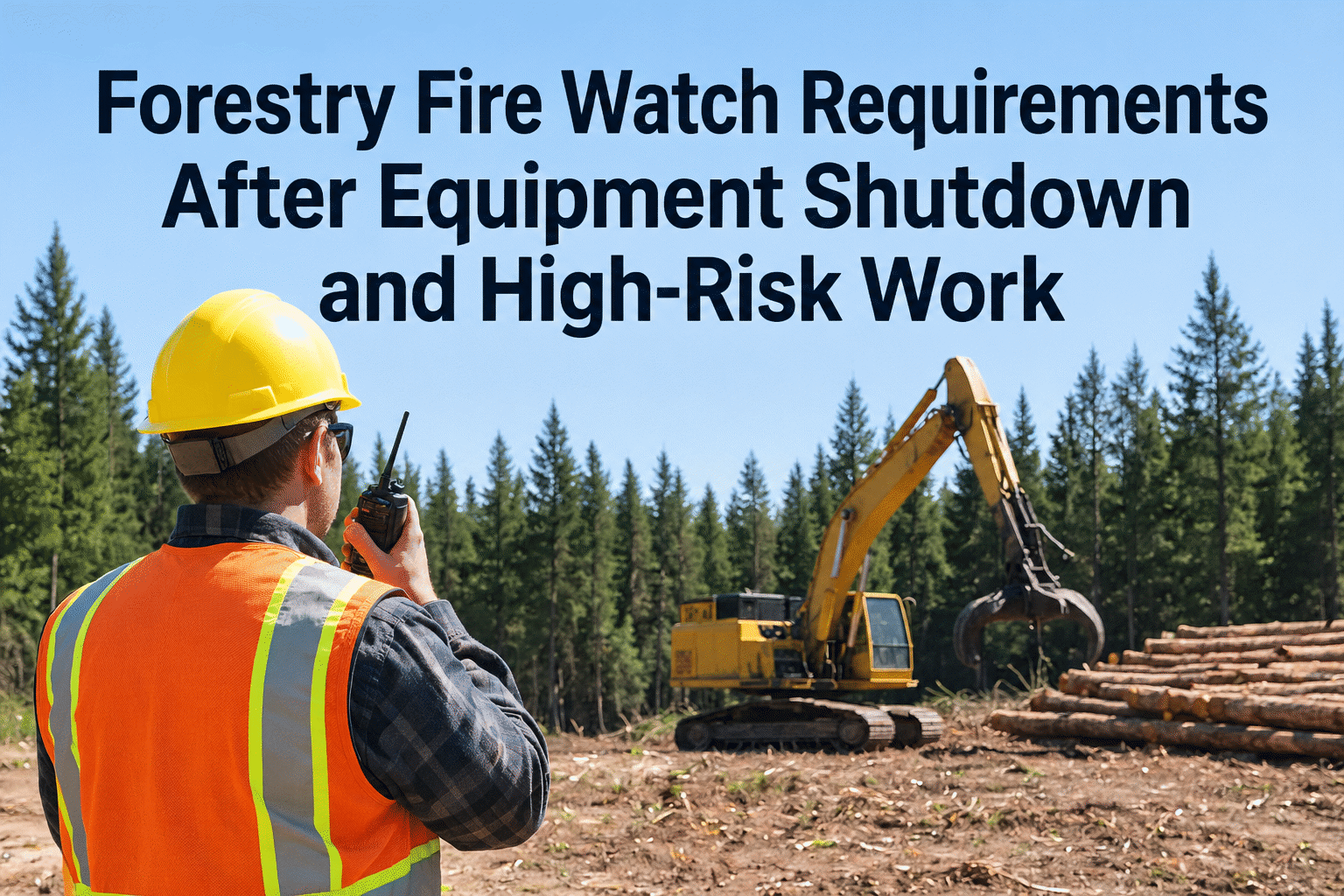
Forestry fire watch requirements help logging crews catch smoldering debris and ignition hazards after equipment shutdown, welding, grinding or other high-risk activities. The correct watch duration and staffing depend on local rules, permits, fire-danger conditions and the work performed. A reliable program defines who patrols, what they inspect, when the watch ends and how each check is recorded.
Fire watch starts when the machine stops—not when the crew leaves.
Turn shutdowns and high-risk tasks into a clear patrol assignment, documented checks and an authorized closeout. Understand what must be confirmed before anyone stands down.
What determines forestry fire watch requirements?
There is no single fire watch duration that applies to every logging site. Requirements can change with jurisdiction, landowner, permit conditions, industrial activity and current wildfire restrictions.
Jurisdiction and permits
Check forestry agency directions, applicable legislation, landowner conditions and any hot-work permit before setting a watch period.
Activity and ignition risk
Welding, grinding, exhaust heat, hot bearings and machine debris may require different controls and post-work checks.
Weather and fire danger
Wind, dry fuels, humidity and declared restrictions may require stronger controls, longer observation or stopping work entirely.
Site-specific fire plan
Document watch coverage, trained personnel, communications, suppression equipment, escalation and who can authorize closeout.
A practical patrol map for forestry equipment
After shutdown, inspect areas where retained heat, fuel, hydraulic oil or combustible debris could lead to a delayed ignition. Follow the machine manufacturer's shutdown and access procedures.
Use a Start Free HVI inspection checklist to record observations and identify defects for maintenance follow-up.
Engine2
Underside3
Ground4
Fuel
From last operation to authorized stand-down
Assign ownership to each stage. The watch is not complete simply because the equipment has cooled or the planned shift has ended.
Confirm trigger
Identify the activity, local watch rule and any active permit conditions.
Assign watcher
Name a trained person, communication method and covered area.
Patrol and observe
Inspect machine and surrounding fuels at the required intervals.
Escalate findings
Stop, report and follow emergency procedures for smoke, embers or unsafe conditions.
Close out
Log checks and obtain the required supervisor or permit closeout.
What a useful fire watch log should capture
A defensible record links the location, activity and required watch period to the person completing the checks. Use the site-approved format and preserve any required permit references.
Illustrative fields only; not a substitute for a legally required permit or official form.
Keep shutdown checks and equipment findings together.
Capture operator observations, preserve inspection history and follow up on equipment defects with a documented maintenance process.
When to continue, extend or stop a fire watch
Use your jurisdiction's actual requirements as the baseline. A changing condition can require more protection—or a full stop—even if the original watch plan looked adequate.
Routine patrol, no new hazards
Continue the assigned watch and log observations until the applicable minimum and closeout conditions are satisfied.
Wind rises, access changes or watch coverage is interrupted
Reassess with the supervisor; adjust staffing, patrol coverage or watch duration as required by the site plan.
Smoke, embers, active ignition or prohibited conditions
Follow the emergency response plan, alert the responsible authority and do not resume until cleared.
Connect field observations to maintenance follow-up
HVI can help teams retain inspection observations and equipment service history. Configure checklists around your site procedure; keep legally required permits and approvals in the approved system of record.
For recurring exhaust heat, fluid leaks or debris accumulation, book a demo to discuss inspection-to-maintenance follow-up. For crews starting a daily record routine, sign up for HVI.
Record machine condition and post-operation observations.
Flag issues requiring repair, cleaning or supervisor review.
Document corrective work and the asset's service history.
Use documented status to inform the next operator's checks.
A simple four-week fire watch documentation rollout
Verify rules
Collect local regulations, permit conditions and site fire plans.
Assign coverage
Define triggers, watcher roles, patrol areas and communication.
Test records
Trial checklists on representative machines and high-risk tasks.
Audit closeouts
Review missing checks, unresolved defects and supervisor sign-offs.
Forestry fire watch requirements: FAQs
How long must a fire watch continue after forestry equipment shuts down?
There is no universal duration. The required period depends on the jurisdiction, fire-danger restrictions, permits, landowner rules and the activity. Check the current site fire plan and responsible authority before setting or ending the watch.
Is a fire watch required after welding or grinding in the bush?
Hot work frequently triggers additional controls, including permits, fire watch coverage and post-work observation. Exact requirements depend on local rules and permit conditions. Stop work if those conditions cannot be met.
What should a forestry fire watcher inspect?
Watchers generally check the work area, nearby vegetation and combustible debris, equipment hot spots, and signs of smoke or embers, following safe access and site procedures. Their duties and patrol coverage must be clearly assigned.
What information belongs in a fire watch record?
Record the activity, site and equipment, applicable watch requirement, assigned watcher, patrol times, observations, actions, communications and authorized closeout. Retain any required permit or incident records separately as directed.
Can HVI automatically enforce fire watch regulations or issue permits?
Do not assume so. HVI can support digital equipment inspections and maintenance records, but legal permit authorization, jurisdiction-specific watch durations and compliance decisions must be handled through the appropriate approved procedures and authorities.
Make every forestry shutdown check easier to document.
Give crews a consistent inspection routine and keep equipment findings visible for maintenance follow-up. See how HVI fits your forestry operation.