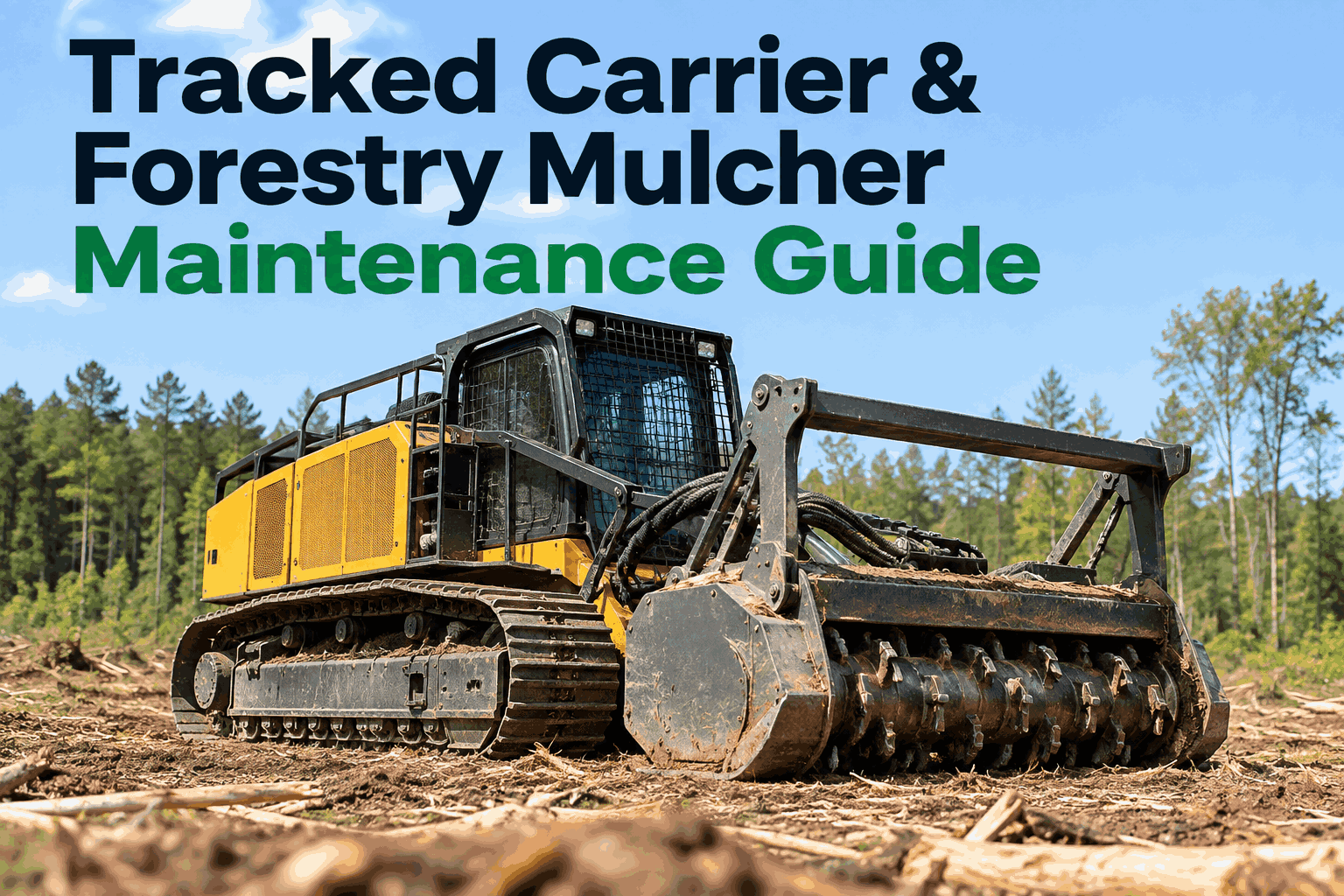
Everybody babies the mulching head — new teeth, rotor balanced, belt tensioned — and then the machine dies anyway, because nobody looked after the thing carrying it. The tracked carrier runs hotter, dirtier and harder than almost anything in your fleet, and when its cooling packs with mulch or a hose lets go, the head on the front doesn't matter. Good tracked carrier maintenance comes down to four systems — cooling, hydraulics, undercarriage and hoses — in the worst conditions a machine sees. This guide covers all four — book a walkthrough to see it run in HVI.
The head gets the glory. The carrier gets you home.
Four systems decide whether a mulching carrier finishes the day — cooling, hydraulics, undercarriage and hoses. HVI keeps all four on a preventive schedule, with inspections, work orders and a full service record per machine.
A forestry mulching carrier works a duty cycle that would wreck most machines: continuous high hydraulic load to spin the head, in a cloud of fine wood debris, over stumps and slopes, often for a full shift without a break. There's no highway cruising to let things cool off. That's why tracked carrier maintenance isn't the same as maintaining a dozer or an excavator — the failure modes are harsher, faster and almost always start in one of four places. Get ahead of those four and the machine stays productive; ignore them and you're renting a replacement while yours sits in the shop.
The four systems that make or break tracked carrier maintenancewhere forestry mulchers actually fail — and what to check
Nearly every unplanned mulcher breakdown traces back to one of these four systems. Here's what goes wrong in each, and what a real forestry mulcher maintenance routine watches for.
Cooling system
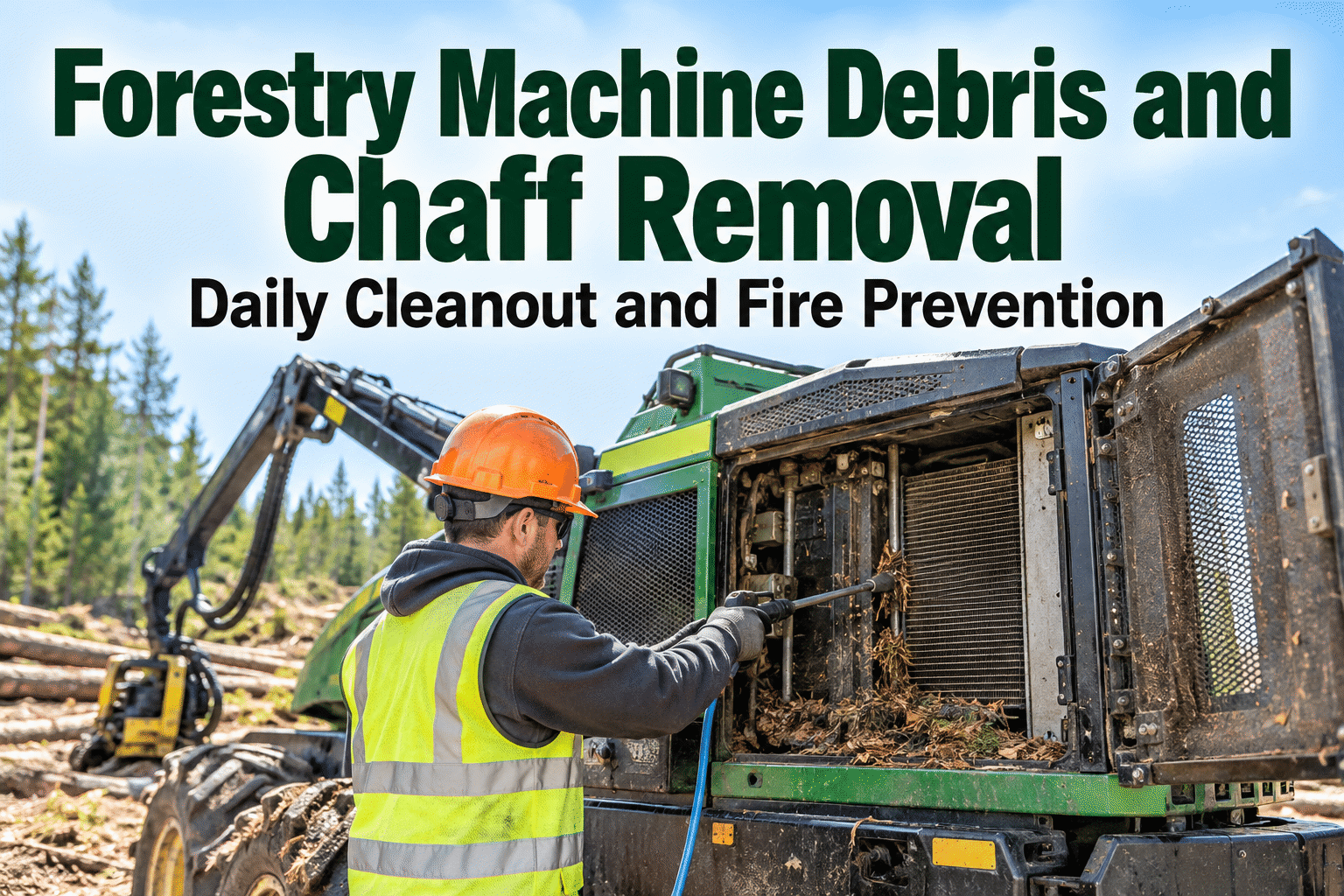
Fine mulch debris packs radiators, hydraulic oil coolers and screens solid in hours. Blocked cooling is the number-one cause of mulcher downtime — once airflow drops, everything else overheats.
Watch: daily cooler cleanout, screen condition, reversing-fan function, coolant & oil temps.
Hydraulic system
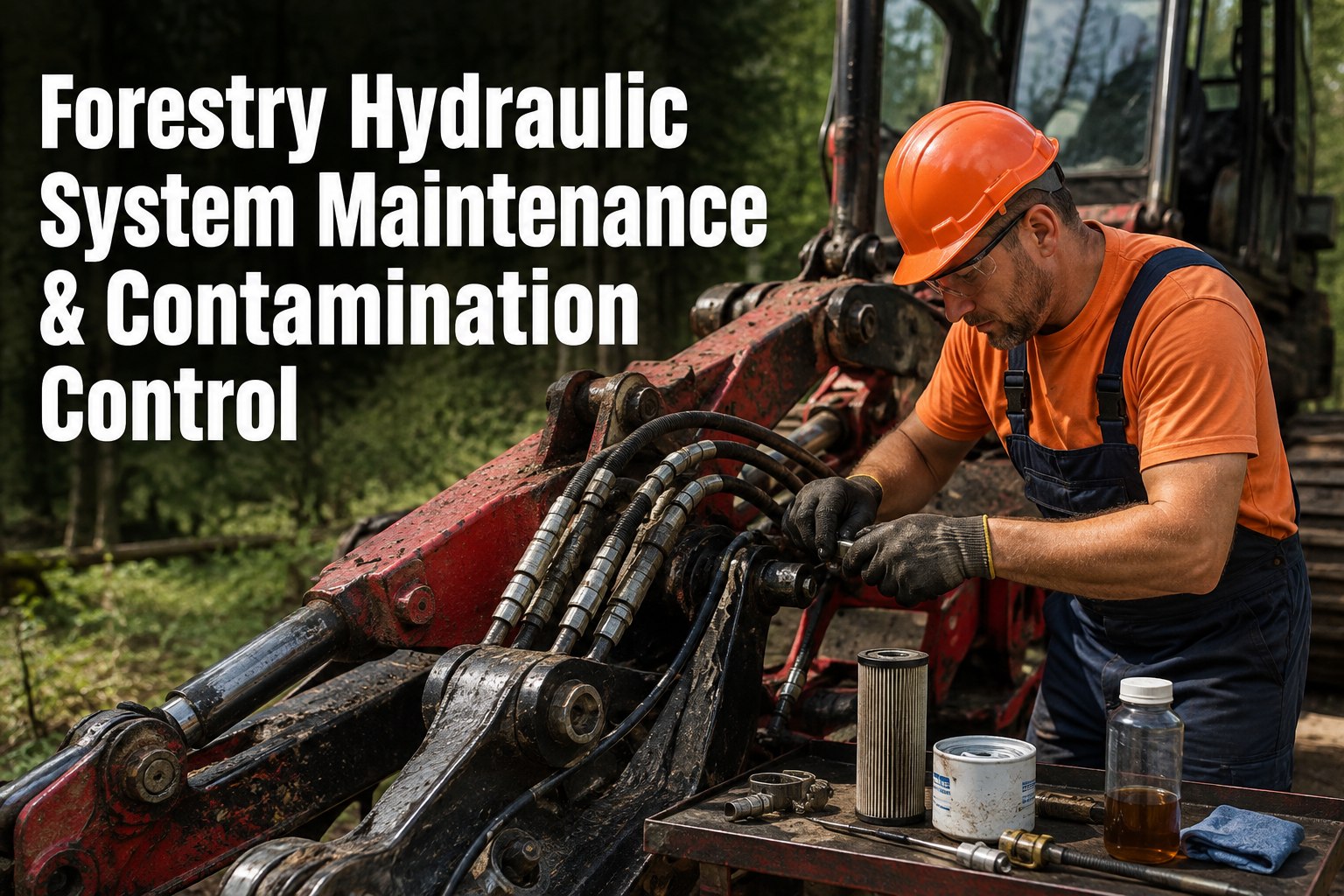
High-flow hydraulics drive the head and generate enormous heat under continuous load. Oil that overheats thins out, loses lubrication and cooks seals — so oil and filter condition is everything.
Watch: oil level & condition, filter intervals, oil temperature, pump & motor for noise or leaks.
Undercarriage
Stumps, slopes and abrasive ground chew through tracks, rollers, idlers and sprockets. Wrong track tension accelerates wear on every component at once, and the undercarriage is a major slice of lifetime cost.
Watch: track tension, roller/idler leaks, sprocket & pad wear, packed debris.
Hydraulic hoses
Hoses run at 3,000+ PSI next to hot, moving parts. Chafing, a missing guard or bad routing turns into a burst — spraying hot oil, stopping the machine and creating a fire risk in dry brush.
Watch: chafe points, guard condition, routing, weeping fittings, cover cracks.
The head is one more system on top of these four — covered in depth in HVI's mulcher and masticator maintenance guide, and the tracks in the forestry undercarriage and track-wear guide. For the carrier as a whole, keeping all four on a preventive maintenance schedule is what prevents the breakdown — book a walkthrough to see the four-system schedule set up per machine.
The overheating spiral every forestry crew knowswhy one blocked cooler takes the whole machine down
Cooling is the #1 killer for a reason: a mulcher overheats in a loop that feeds itself. Once it starts, it accelerates — which is why catching it early, at the cooler, is the whole game.
The fix is almost always upstream: clean the cooler daily and the spiral never starts. A preventive routine that forces that daily cleanout — and logs when it's skipped — is worth more than any sensor alarm after the fact. Start free and put the daily cooler check on every operator's list →
A tracked carrier maintenance schedule that holds upwhat to do daily, weekly and by engine hours
Forestry runs on hours, not calendar dates — so a mulcher preventive maintenance schedule is built around engine hours, with a hard daily routine on top because of the debris. Here's a baseline interval plan to adapt to your OEM's manual.
The schedule only works if it's tracked by hours and nobody can quietly skip the daily cooler blow-out. HVI triggers each service by meter reading and holds operators to the daily equipment inspection, so the plan on paper is the plan that actually happens. Book a walkthrough to see hour-based PM triggers for your carriers →
Forestry maintenance, tracked in HVIPM by hours, inspections, work orders and a record per machine
This is what BOFU buyers actually want to see — not another checklist PDF, but the system that runs the whole program: PM due by hours, daily inspections coming in from the field, and work orders opening the second something's flagged.
Every machine carries its own history — PM done, inspections signed, hoses replaced, oil results — so when a carrier comes up for resale or a warranty claim, the record is right there. That's the service history reporting and analytics is built on across your whole forestry equipment fleet. Start free and build a record per machine →
Tracked carrier maintenance checklistthe daily forestry machine inspection that prevents the big repairs
Here's a baseline mulcher maintenance checklist, grouped by the four systems, that an operator can run in a few minutes before the shift — each item logged against the machine in HVI.
- Radiator & oil-cooler screens blown out
- Coolant level & no debris packing
- Reversing fan working
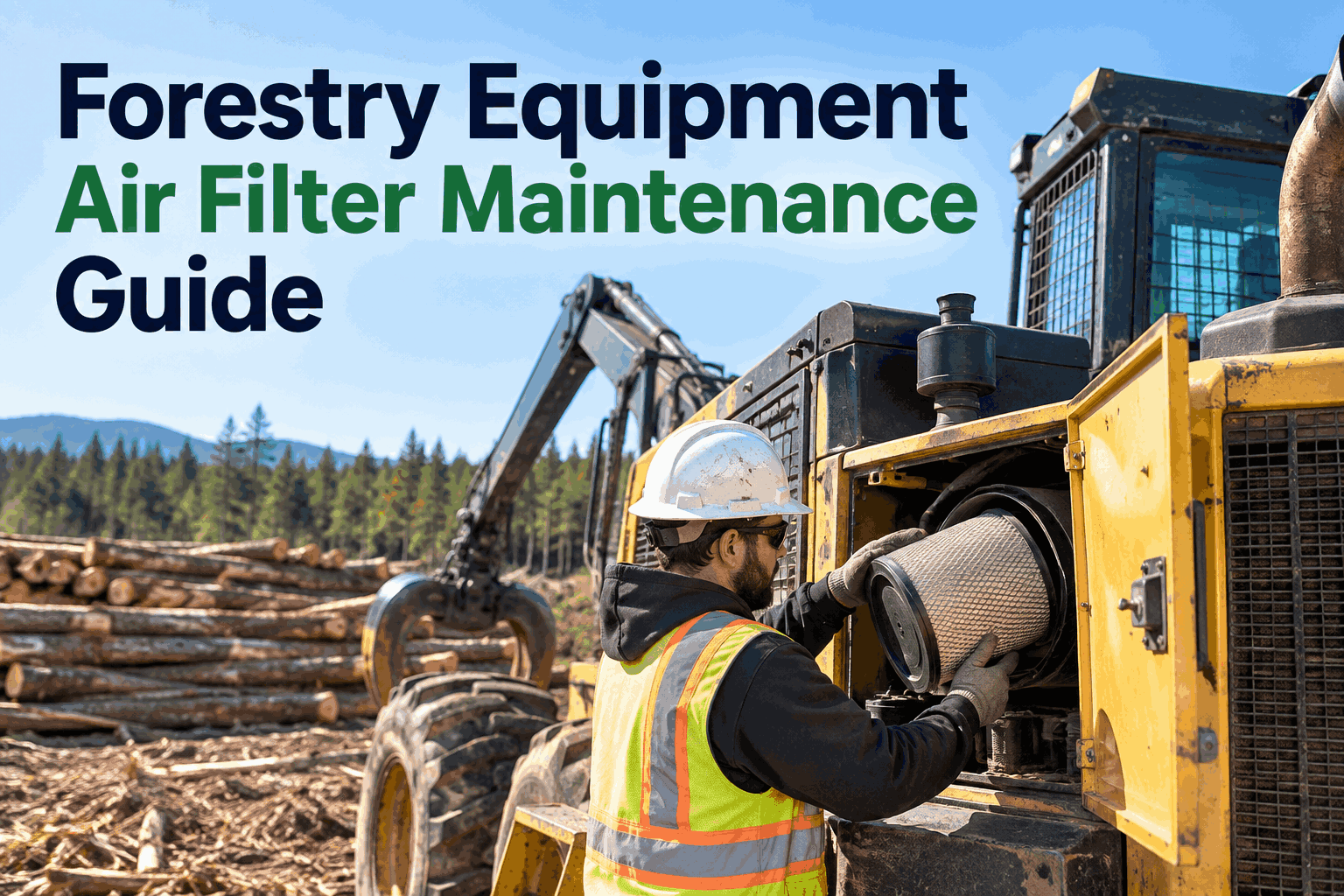
- Air filter clean / indicator checked
- Oil level & temperature normal
- No weeping fittings or leaks
- Hoses scanned for chafe & guards intact
- Head drive & couplers checked
- Track tension & no packed debris
- Rollers/idlers for leaks, pads for wear
- Issues raised as work orders
- Hours logged, next PM updated
On paper, the daily check gets signed without being done and the cooler slowly packs; in HVI the inspection is logged with the hour reading, a flag becomes a work order, and the next service updates automatically. It runs the same as the rest of your equipment maintenance management. Book a walkthrough to load your carrier checklist →
From a forestry equipment manager
We lost a carrier for nine days one summer to a hydraulic pump that cooked — and when we pulled the records, the coolers hadn't been properly cleaned in weeks. Nobody skipped it on purpose; the paper sheet just got signed in the truck without anyone actually doing it.
Now the daily cooler cleanout is a photo on the inspection, PM triggers off the hour meter, and a chafed hose becomes a work order before lunch. The heads were never our problem — it was always the carrier, and now the carrier's the part we can actually see.
Tracked carrier maintenance — FAQs
What is the most common cause of forestry mulcher downtime?
Overheating from a cooling system packed with mulch debris. Fine wood particles blanket the radiator and hydraulic oil coolers, airflow drops, and temperatures spiral until the machine derates or a component fails. Daily cooler cleanout is the single highest-value task in tracked carrier maintenance.
How often should a tracked carrier be serviced?
Forestry runs on engine hours, not dates. A typical plan is a hard daily routine (cooler cleanout, walkaround, hose scan), weekly checks around 10–50 hours, a service at 250 hours, and major service at 500–1000 hours — always adapted to the OEM manual. Tracking it by hour meter is what keeps it honest.
Why do hydraulic hoses fail so often on mulching carriers?
They run at very high pressure next to hot, moving parts, in a debris-heavy environment. Chafing, missing guards or poor routing wear through the cover until the hose bursts — which stops the machine, sprays hot oil and creates a fire risk in dry brush. Daily hose inspection catches most failures early.
Is the tracked carrier different from the mulching head for maintenance?
Yes. The head (rotor, teeth, bearings, drive) is the attachment; the carrier is the tracked base machine that powers and moves it. This guide covers the carrier's four systems — cooling, hydraulics, undercarriage and hoses — while the head has its own inspection routine. Both need to be on the same maintenance schedule.
How does HVI help with forestry equipment maintenance?
HVI schedules preventive maintenance by engine hours, runs daily operator inspections from a phone (with photos), turns any flagged issue into a work order, and keeps a complete service record per machine. For a mulching fleet that means the daily cooler check actually happens, PM never gets missed, and every carrier has an audit- and resale-ready history.
Keep the carrier in the cut, not in the shop
HVI puts tracked carrier maintenance on one system — cooling, hydraulics, undercarriage and hoses all on a preventive schedule, daily inspections from the field, work orders the moment something's flagged, and a full service record per machine. Live on your forestry fleet in under two weeks.
See it on your own machines · Works offline in the bush · Service records from day one