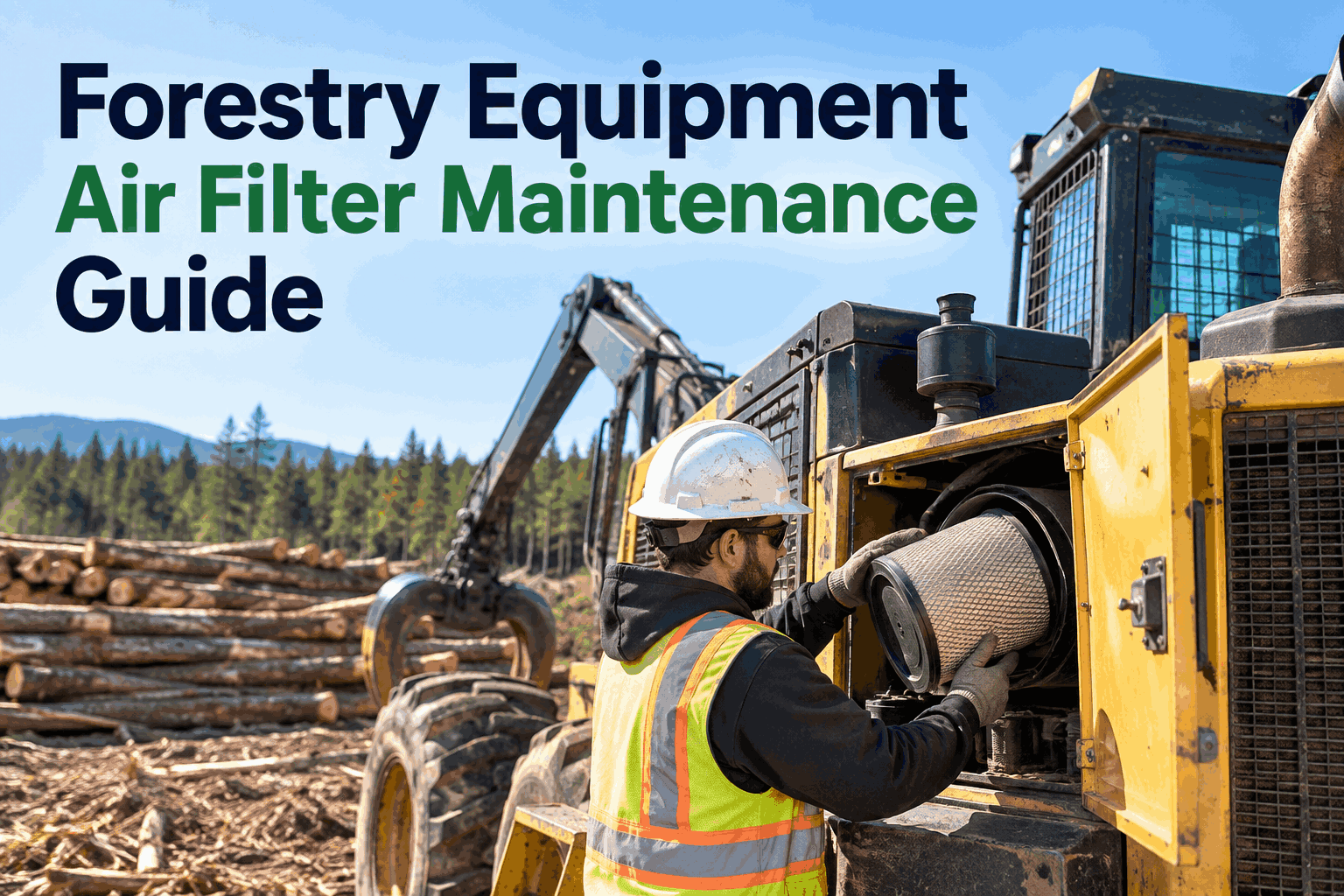
The air filter is one of the cheapest parts on a logging machine, and it's the only thing standing between a cloud of sawdust, bark and chaff and a diesel engine that costs more than a house to rebuild. In the bush, that cloud never lets up — it mats the pre-cleaner, loads the element in a fraction of the hours a highway truck sees, and the moment unfiltered air gets past, fine abrasive dust starts scoring cylinders. Good forestry equipment air filter maintenance is low-effort and high-stakes, and most of it comes down to knowing when to actually change the filter. This guide covers how — book a walkthrough to see it scheduled in HVI.
A $200 filter guards a $40,000 engine.
In heavy chaff, air filtration is the difference between an engine that lasts and one that gets dusted. HVI schedules filter service, logs every restriction reading, and keeps the proof per machine — so the cheap part does its job before the expensive one pays for it.
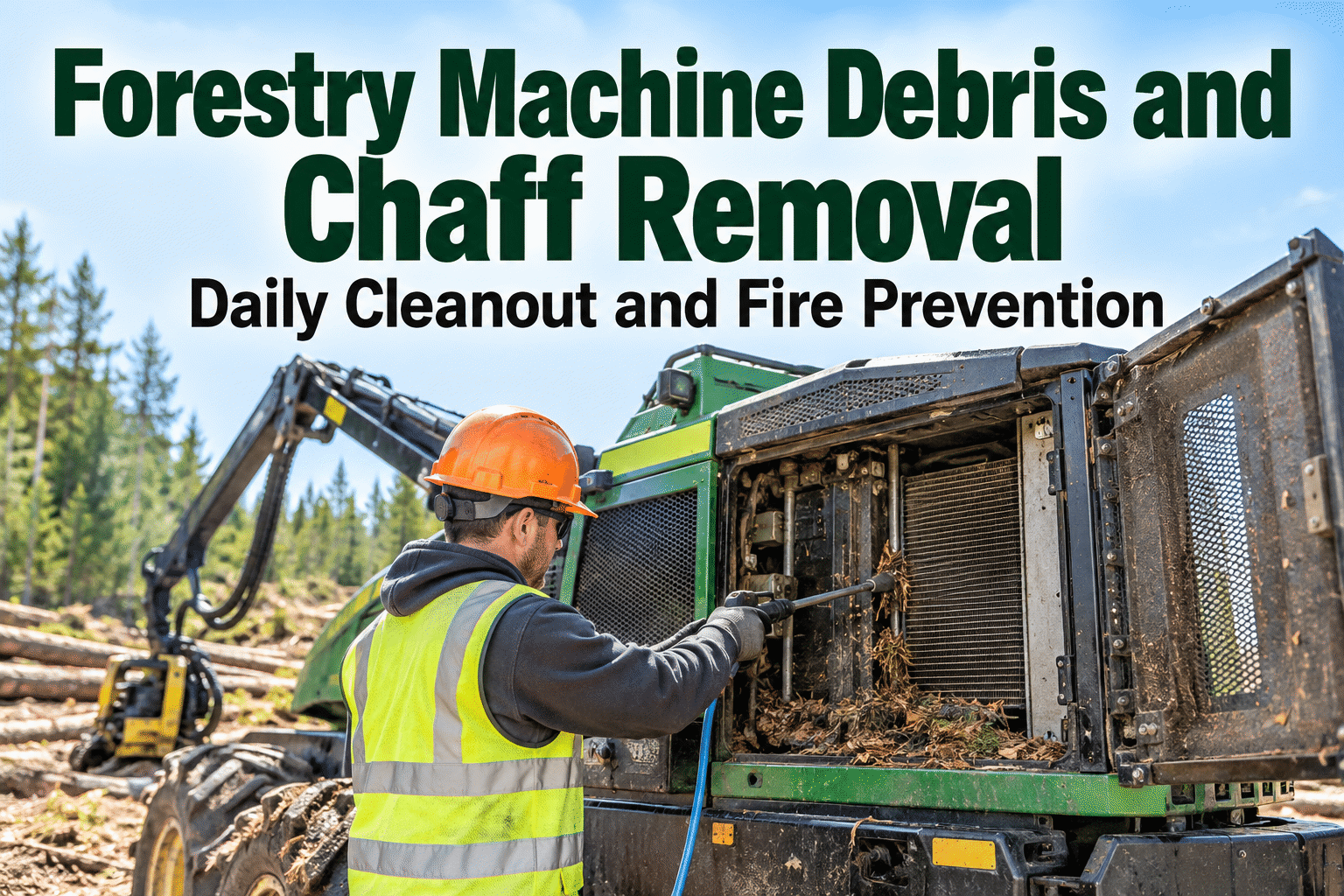
Forestry dust isn't like road dust. It's a relentless mix of fine sawdust, bark, leaf chaff and seasonal pollen, thrown up by the machine's own work and hanging in still air under the canopy. A feller buncher, skidder, forwarder or harvester pulls that straight toward its intake all shift. The filtration has to cope, and the maintenance has to be right — because the most expensive air-filter mistakes aren't neglect, they're the well-meaning habits that let dust in while looking like diligence. Understanding the system is the first step.
How forestry air filtration actually worksthe staged system that keeps logging equipment engines clean
A heavy-equipment intake isn't one filter — it's a staged system, each stage catching what the last one let through. Knowing the stages is what tells you which part to service, and when.
Pre-cleaner
A cyclonic or centrifugal pre-cleaner spins out the heavy bulk — bark, big chaff, chips — and ejects it before it ever reaches the filter. A vacuator valve or dust cup dumps the collected debris. In forestry it does the heaviest lifting, and a clogged one quietly overloads everything downstream.
Primary filter
The main pleated element traps the fine dust that gets past the pre-cleaner. This is the one you service most often — and the one that gets mistreated most often. It's changed on restriction, not on looks.
Safety (secondary) filter
The last line of defense sits behind the primary. It catches dust during a primary change or if the primary fails, and it's replaced far less often — never cleaned. Leave it in place when you swap the primary so the engine is never open to raw air.
Each stage has its own job, so an engine air filter inspection means checking all three, not just eyeballing the primary. This forestry duty cycle is harsher than most — closer to a mining plant's than a highway fleet's — which is why it belongs on a real preventive maintenance schedule. The same discipline applies on dusty construction sites, with chaff in place of mineral dust. Book a walkthrough to put each stage on schedule →
When to actually change the filterread the restriction indicator, not the calendar and not the dirt
This is the single most important idea in forestry equipment air filter maintenance, and the one most crews get wrong: a primary filter is changed when the restriction indicator says so — not when it looks dirty, and not on a fixed date. A filter that looks filthy can still be within range, and a light dust cake actually filters better. Change it too early and you waste money and, worse, open the engine to contamination for no reason.
Leave it in. A dirty-looking element that's still within restriction is doing its job — pulling it wastes a filter and risks letting dust past the seal.
Change it — regardless of how it looks. Restriction at the service point means airflow is choked and the engine is starting to work for its air.
The catch is that the gauge reading means nothing if nobody records it. A restriction check logged every service — with the hour reading — turns "it looked okay" into a real trend you can act on. Start free and log restriction readings per machine →
Two mistakes that dust an enginethe well-meaning habits that cause the failures they're trying to prevent
Most dusted engines in forestry aren't neglected — they're over-serviced. These two habits feel like diligence and do the opposite.
Blowing out the primary filter
Compressed air drives dust through the media and punches pinholes in the pleats. The filter looks clean but now leaks — so every reuse sends a little more grit into the engine. Modern guidance is clear: replace the primary, don't clean it. The cost of a new filter is nothing against a scored cylinder.
Opening the housing too often
Every time the housing comes off, dust can bypass the seal — and a downstream crack, loose clamp or bad gasket after the filter lets raw air straight in, defeating the whole system. Open it only when the gauge calls for it, check the clean side for leaks, and seat the seal properly.
The fix for both is the same: service on data, not on habit, and record what you find so the whole crew works the same way. That's exactly what a digital equipment inspection enforces — the right task, at the right trigger, logged. Book a walkthrough to standardize air-filter service across the fleet →
Air-filter service, tracked in HVIrestriction readings, filter changes and proof per machine
Here's the payoff: every intake check with its restriction reading and hour meter, filter changes triggered on the limit, and a clean service history — so logging equipment air filter maintenance becomes a trend you manage instead of a guess you make at the machine.
Every reading and change stays on the machine's record, so you can see which units run dirtiest and prove the engine was protected if a warranty claim ever hangs on it. That history feeds the reporting and analytics across your whole forestry equipment fleet. Start free and keep the proof per machine →
Forestry air-intake inspection checklistthe few-minute check that saves a top-end rebuild
Here's a baseline air filter inspection routine an operator or tech can run quickly, grouped the way HVI loads it — each item logged against the machine with its hour reading.
- Pre-cleaner clear of bark & chaff
- Vacuator valve / dust cup emptied
- Housing & clamps sealed, no cracks
- Intake free of nesting debris
- Restriction indicator read & recorded
- Primary changed only if at limit
- Safety filter in place, replaced per OEM
- Indicator reset after a change
- Ducting & clamps after filter leak-free
- Seals seated, no dust streaks downstream
- Findings raised as work orders
- Hours logged, next check scheduled
On paper, the restriction reading never gets written down and the primary gets blown out "to save a filter"; in HVI the reading is captured every time, the change triggers on the limit, and the clean-side leak check is a required step. It runs alongside the rest of your equipment maintenance management. Book a walkthrough to load your intake checklist →
From a forestry heavy-equipment technician
I inherited a harvester with 9,000 hours and a top end that was already toast — scored liners, the works. The air filters in the shop looked spotless, which was the tell: somebody had been blowing them out every week and reusing them. That machine was eating its own filter media.
Now the rule is simple — read the gauge, write it down, and the primary only comes out when it hits the limit. Nobody touches it with an air hose. The filters cost us a bit more a year, and we've stopped rebuilding engines early. Easiest trade I've ever made.
Forestry equipment air filter maintenance — FAQs
When should I change a heavy equipment air filter?
Change the primary filter when the restriction indicator reaches its service limit — not on a fixed schedule and not because it looks dirty. The gauge measures intake vacuum, which rises as the filter loads. A filthy-looking filter within range is still working; changing it early wastes money and opens the engine to contamination.
Should I clean or replace a forestry air filter?
Replace it. Blowing out a primary filter with compressed air drives dust through the media and creates pinholes, so the "cleaned" filter leaks grit into the engine. Modern OEM guidance is to replace the primary rather than clean it — the filter cost is trivial next to the engine wear a damaged element causes.
What is a pre-cleaner and why does it matter in logging?
A pre-cleaner is a cyclonic stage that spins out heavy debris — bark, chips, chaff — and ejects it before the main filter. In forestry it handles the bulk of the load, so a clogged pre-cleaner or a stuck vacuator valve quietly overloads the primary filter and shortens its life dramatically.
What happens if dust gets past the air filter?
Fine abrasive dust scores cylinder liners, rings and the turbo — called "dusting" an engine — causing accelerated wear and premature failure. In dusty forestry work this is one of the leading causes of early engine rebuilds, and it's almost always traced to a damaged filter, a bad seal, or a downstream intake leak.
How does HVI help with air filter maintenance?
HVI schedules intake checks by engine hours, captures the restriction reading on every inspection, triggers a filter change when it hits the limit, and keeps the service history per machine. For a logging fleet that means filters get changed on data instead of habit, the clean-side leak check never gets skipped, and every engine has a documented protection record.
Let the cheap part do its job
HVI puts forestry equipment air filter maintenance on one system — intake checks by engine hours, restriction readings logged every time, filter changes triggered on the limit, and a protection record per machine — so dust never gets the chance to cost you an engine. Live on your fleet in under two weeks.
See it on your own machines · Works offline in the bush · Service records from day one