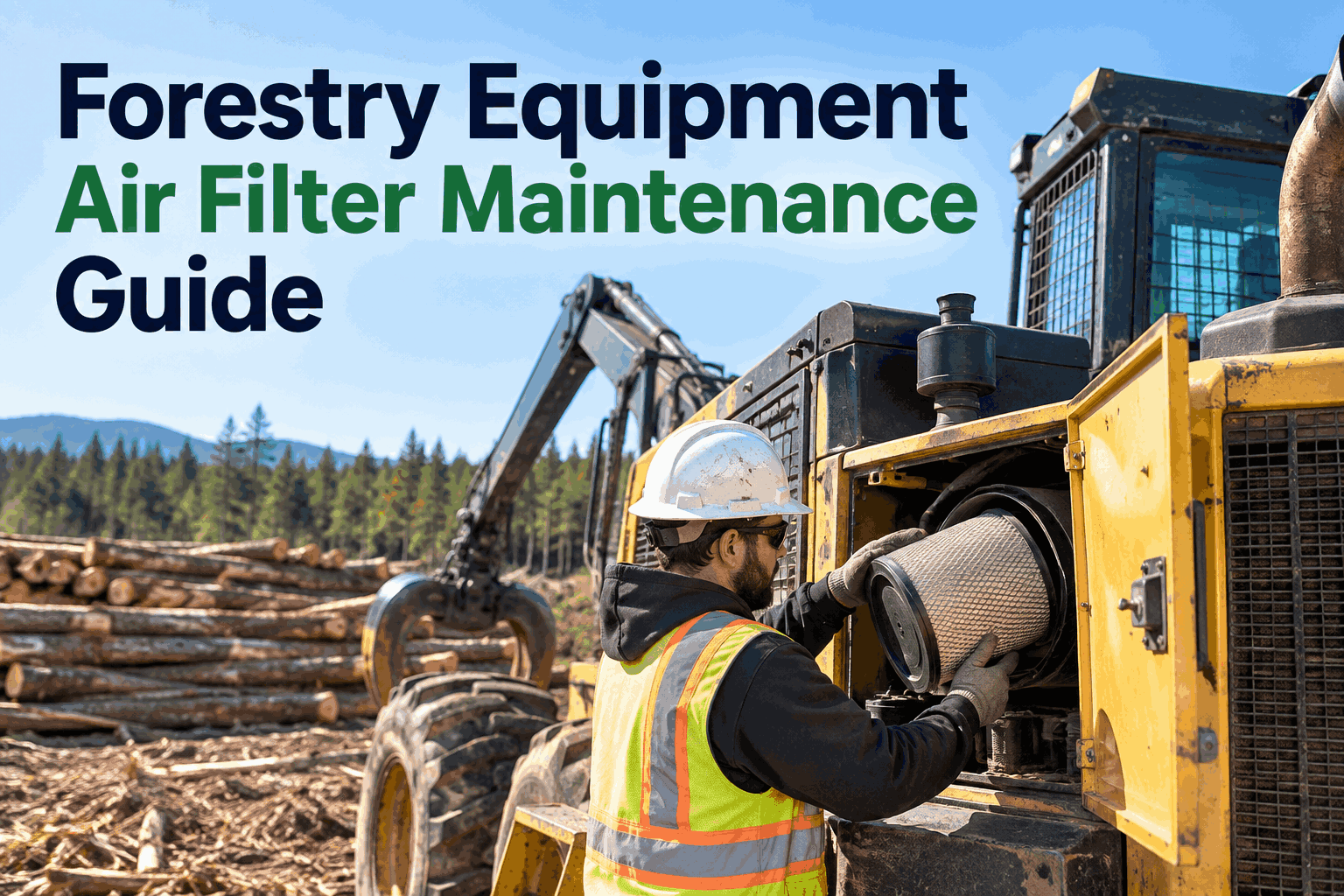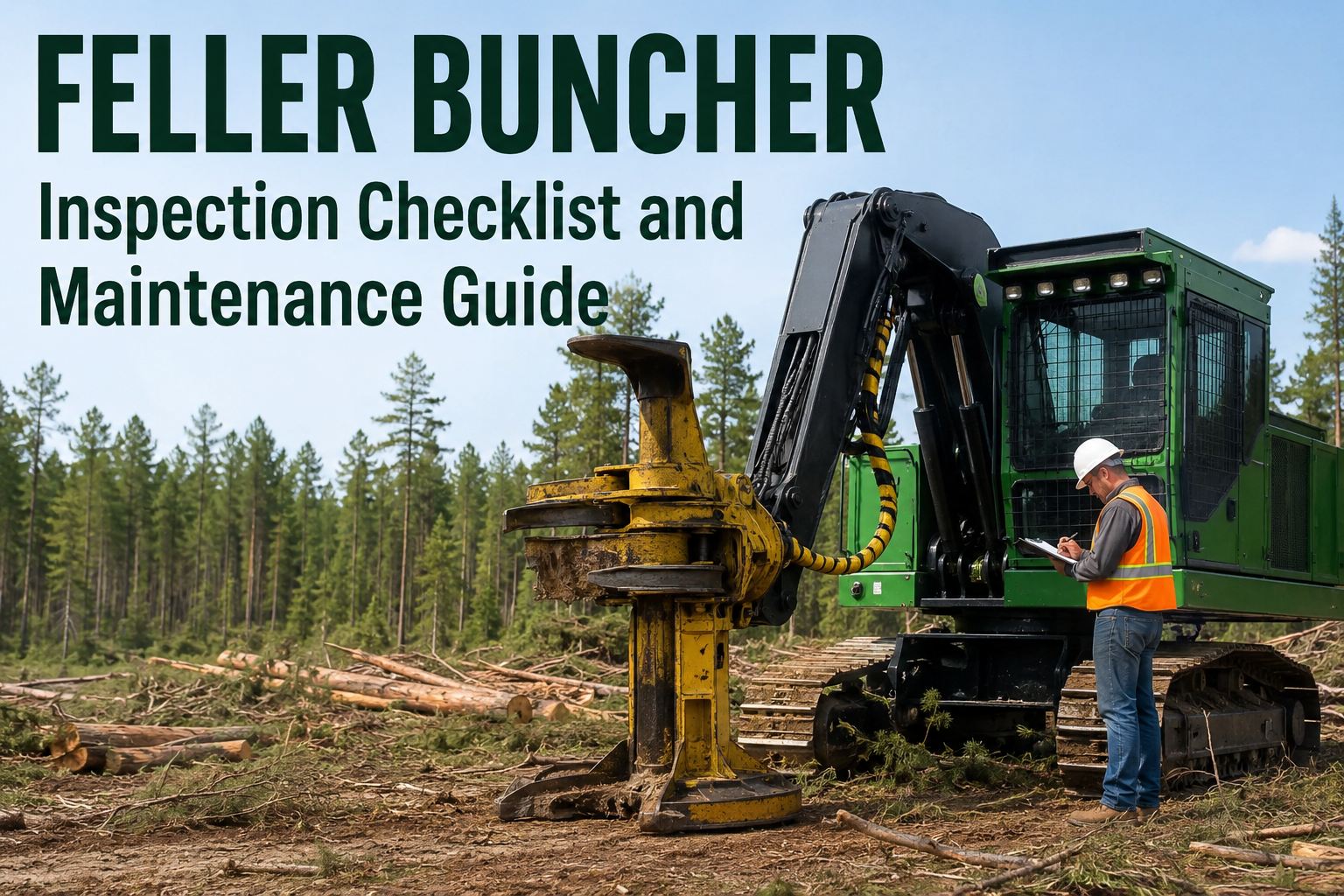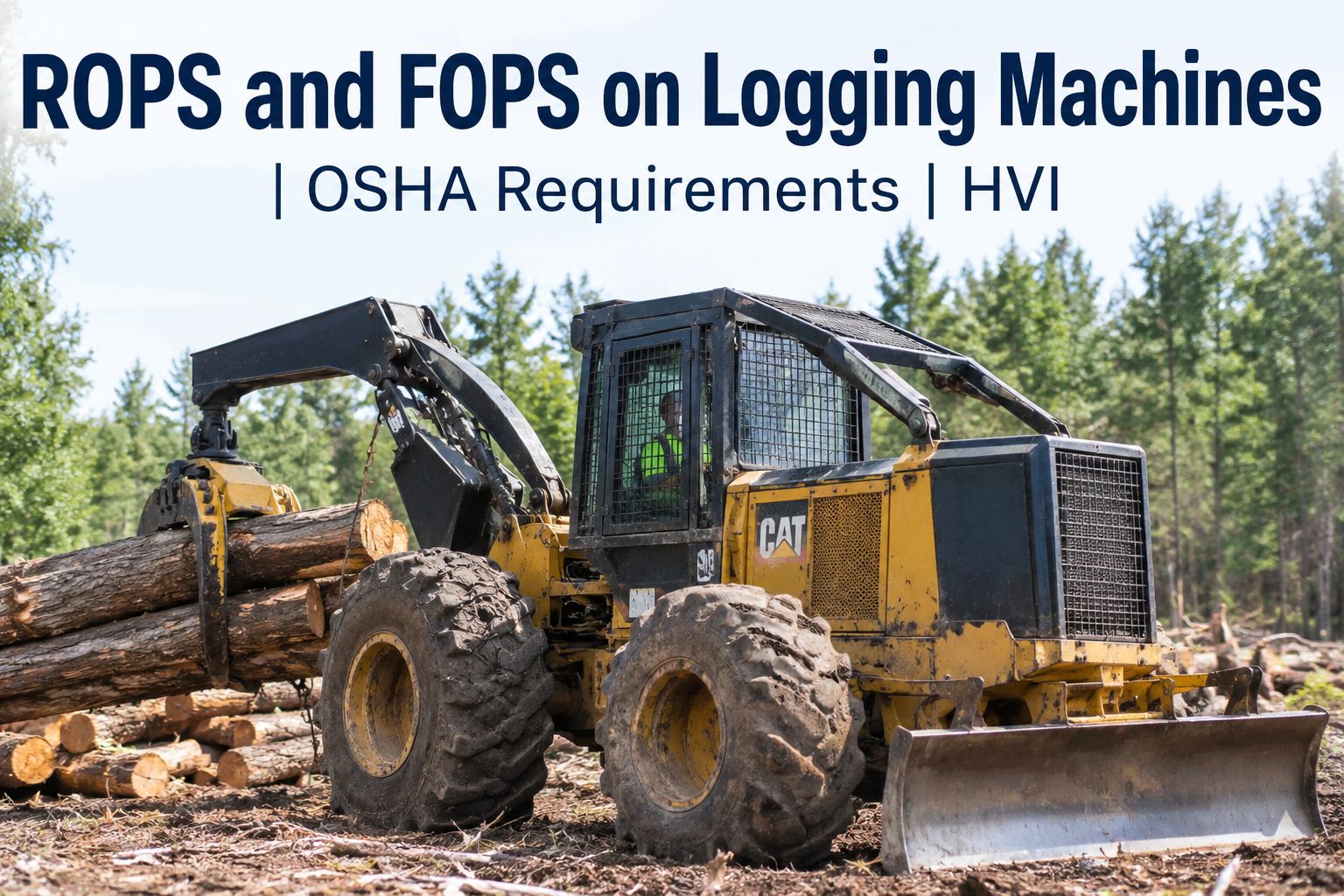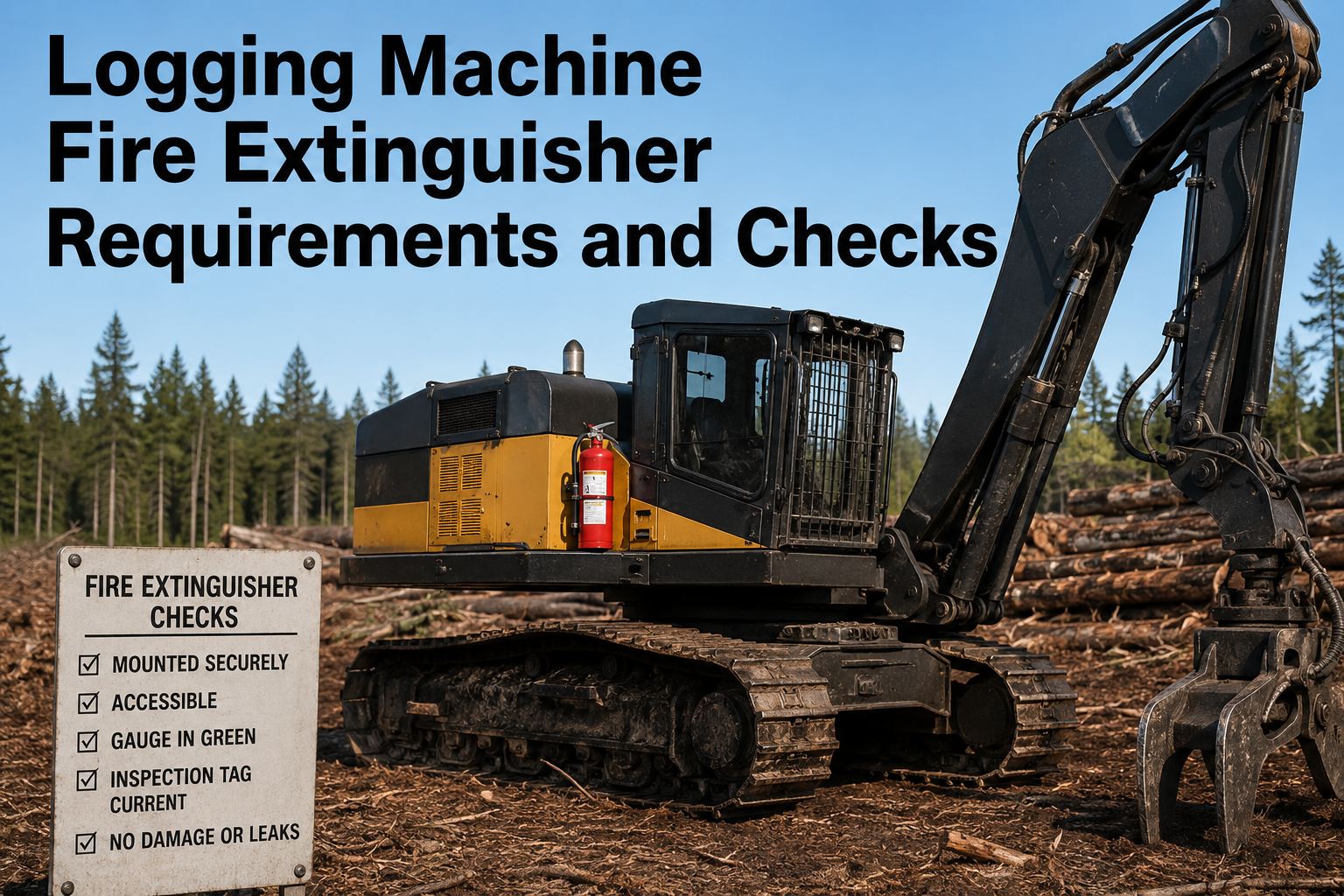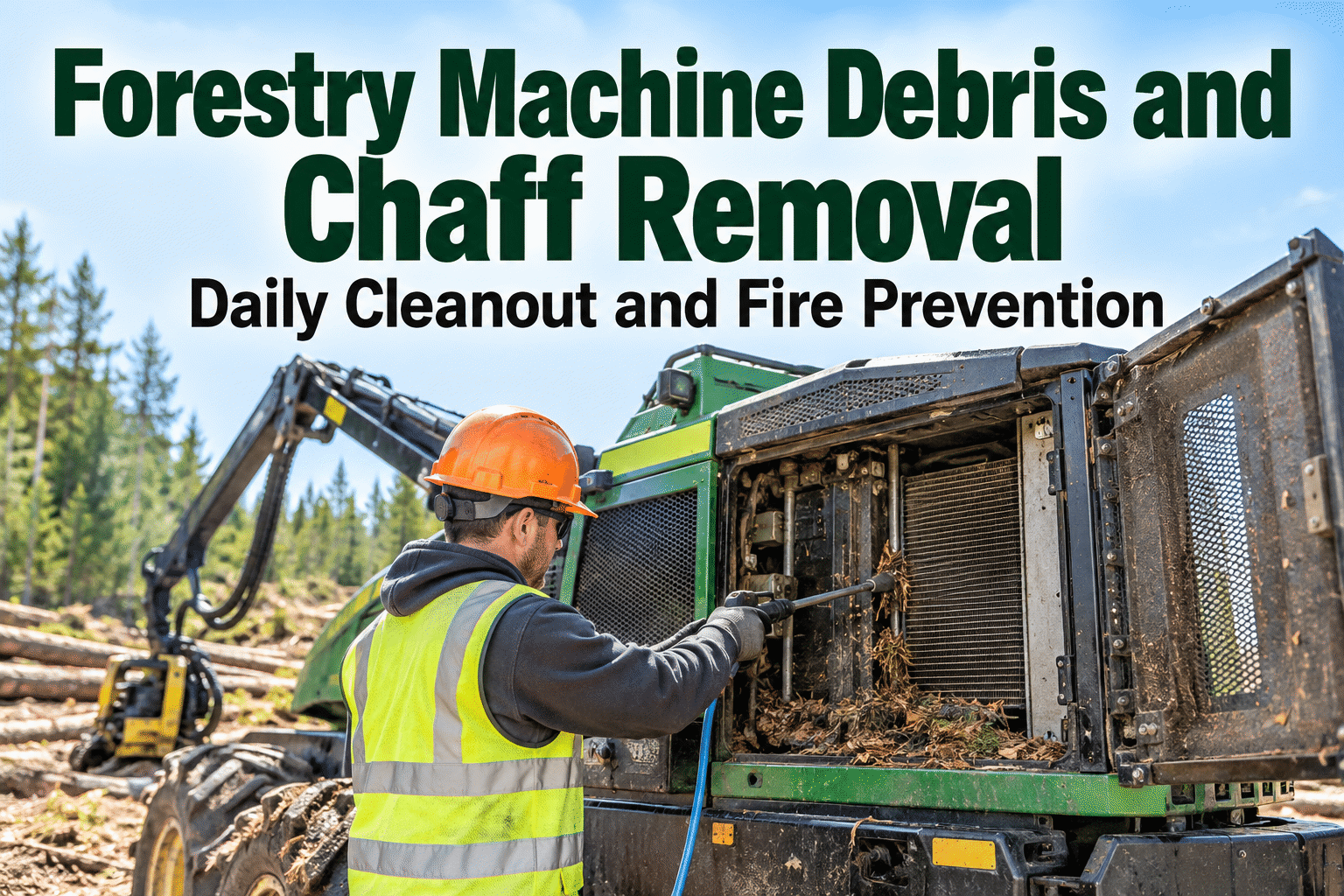
Forestry machine debris removal is a daily fire-prevention task, not just a housekeeping job. Bark, dry needles, leaves and chaff can collect around hot surfaces, cooling packages and protected compartments during logging work. A practical cleanout routine helps operators spot buildup early, record defects and hand unresolved concerns to maintenance before the next shift.
Keep combustible debris out of the danger zones
Build a repeatable inspection and cleanout routine for harvesters, forwarders, skidders and feller bunchers—then keep a clear record of what was checked, cleaned and escalated.
Illustrative inspection zones. Actual access points and cleaning methods depend on the machine and OEM instructions.
Where debris collects—and why each location matters
Use a consistent walkaround sequence. Inspect only where it is safe to access; guards, hot surfaces and moving parts require the machine-specific isolation procedure.
Engine and exhaust vicinity
Look for bark, dry needles and chaff near heat shields, exhaust components and engine-bay ledges. Report leaks or damaged shielding; do not touch hot components.
Heat exposureRadiator and cooling package
Check accessible screens and airflow paths for packed debris. Use only OEM-approved cleaning methods and pressure limits to avoid damaging fins or forcing debris deeper.
Restricted airflowBelly pans and underbody
Inspect designated cleanout points for trapped material, oil-soaked buildup and accumulated fines. Remove guards only when authorized and safely isolated.
Hidden buildupHydraulics and articulation
Check accessible hose runs, joints and protective covers for debris and fluid leaks. Never use hands to search for hydraulic leaks or work near unsupported implements.
Leak + debris riskNeed a consistent record of recurring buildup? Start free with HVI digital equipment inspections and document machine-specific findings.
A daily cleanout sequence operators can actually follow
Adapt this sequence to the equipment manual, site fire plan and the day's conditions. Increase check frequency when dry material builds up rapidly.
Before operating
Review prior defects, inspect accessible accumulation points, check extinguishers and confirm the machine is fit for work.
During the shift
Recheck high-accumulation areas at planned breaks and whenever heat, odor, smoke or cooling concerns appear. Stop work for suspected fire conditions.
Park and isolate
Use the designated safe parking area, lower implements, shut down and follow OEM cooldown and lockout instructions before cleaning.
Clean and inspect
Remove material using approved tools and methods. Look for leaks, damaged shields, blocked airflow and debris in inaccessible areas.
Record and hand off
Log the cleanout, add photos where useful, and raise a defect or maintenance request when the issue cannot be safely resolved.
Different forestry machines need different cleanout attention
Harvester
Pay attention to processing debris around guarded compartments, cooling intakes and boom-side accumulation points.
Forwarder
Check debris around the engine area, bunk-adjacent surfaces and accessible chassis pockets after loading cycles.
Skidder
Inspect underbody protection, articulation areas and debris traps created by ground contact and dragging operations.
Feller buncher
Review cutting-head surroundings, accessible hydraulic areas and cooling screens for persistent chaff and fine material.
Turn daily equipment checks into a reliable maintenance trail
Capture inspection findings, attach supporting photos and track unresolved defects against the correct forestry machine.
What a useful debris-removal log should capture
Simple, repeatable records are more useful than a checklist nobody completes. The sample below shows how an operator can document a condition without declaring the machine safe prematurely.
To make daily reporting easier, book a demo of HVI's inspection and maintenance-record workflow.
Clean it, repair it or take it out of service?
Routine accessible buildup
No other defects found; approved cleaning completed and machine condition verified under site procedure.
Repeat buildup or blocked access
Persistent accumulation, damaged shielding or an area that needs maintenance-only access requires a documented follow-up.
Smoke, suspected fire or serious defect
Stop work, follow the emergency plan and notify the appropriate personnel. Do not return equipment to service without authorization.
For defects needing follow-up, sign up for HVI to organize inspections and maintenance history.
Build a sustainable forestry equipment cleanout program
Map risk points
Identify OEM cleanout locations by machine model and record site-specific fire exposure.
Standardize checks
Set start-of-shift, break and end-of-shift inspection expectations for each crew.
Close the loop
Route unresolved defects to maintenance and verify repairs before release.
Review patterns
Look for repeat debris hotspots, missed inspections and recurring cooling or leak problems.
Useful measures include completed inspections, unresolved debris-related defects, repeat cleanout findings and time to close maintenance actions. These are management indicators—not proof that fire risk has been eliminated. Book an HVI demo to discuss forestry inspection follow-up.
Forestry machine debris removal FAQs
How often should forestry machines be cleaned of debris?
Inspect at least according to the OEM manual and site fire-prevention plan, including before operation and at shift end where required. Dry conditions and heavy chaff exposure may justify more frequent checks.
Which machine areas need the most attention?
Typical areas include accessible engine and exhaust surroundings, cooling screens, belly pans and hydraulic compartments. The exact locations depend on the machine model and the manufacturer's guidance.
Can operators use compressed air to remove chaff?
Only when the manufacturer and site procedure allow it, with suitable controls for dust, ignition, PPE and nearby personnel. Never assume compressed air is safe around hot surfaces or electrical components.
What should operators record after a cleanout?
Record the machine ID, date, areas checked, debris found, cleaning completed, photos if useful, defects and any follow-up or out-of-service decision.
How can HVI support forestry equipment cleanout records?
HVI can support digital equipment inspections, defect follow-up and maintenance records. Machine-specific checklists and workflow suitability should be confirmed for your operation; HVI does not replace OEM instructions or site fire procedures.
Make forestry cleanouts easier to track across every shift
Bring operator inspections, reported defects and maintenance history into a consistent equipment workflow. Start with the machines that collect debris most often.