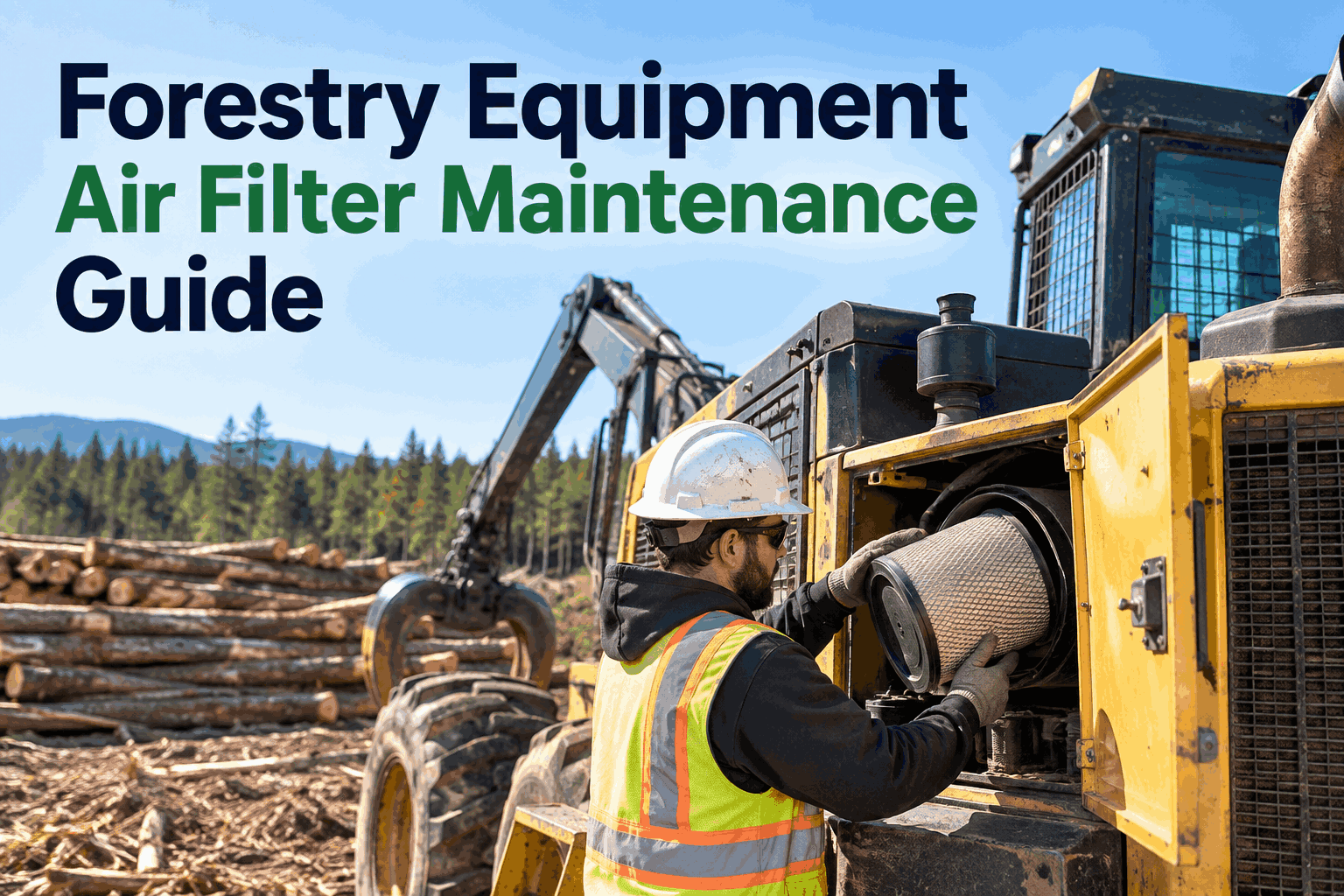
There's a reason overheating is the number-one thing that stops a forestry machine: the cooling pack is a magnet for the fine chaff the machine throws all day, and once it packs, the temperature climbs no matter how healthy the engine is. Forestry equipment radiator cleaning is the highest-value few minutes in a shift — and a reversible fan buys time between cleans, not a pass to skip them. Here's how the pack packs, how the fan fights it, and how to clean it right — book a walkthrough to schedule it in HVI.
The engine's fine. The cooling pack is choking.
Fine chaff packs the cooling pack solid and the machine overheats under a perfectly good engine. HVI schedules the daily clean-out and the reversible-fan check, logs coolant and oil temps, and keeps the record — so the pack never gets the machine shut down.
A forestry machine is its own worst enemy when it comes to cooling. Mulching, cutting and skidding throw a constant cloud of fine, sticky chaff that gets pulled straight into the cooling pack, and unlike a highway machine there's no clean air and no cruising to blow it clear. The pack loads up in hours, not weeks — and the first sign most crews get is a temperature gauge climbing on a hot afternoon with a full load on. Understanding what's actually packing, and what the reversible fan can and can't do about it, is what keeps the machine out of a thermal shutdown.
Inside the cooling pack — and why it hides the problema clean-looking face can sit in front of a packed core
The "radiator" on a modern machine isn't one core — it's a stack of heat exchangers sandwiched together. That's the trap: chaff works its way between the layers, so the outer face can look spotless while the core is packed solid and airflow is strangled.
Because the packing hides between the layers, "it looked clean" is how an overheat sneaks up — the only reliable check is airflow and temperatures, not a glance at the grille. This is the deep-dive on the cooling pack itself; for how it fits the machine's other systems, see the tracked carrier maintenance guide. Keeping the clean-out on a real preventive maintenance schedule is what stops the surprise. Book a walkthrough to schedule cooling-pack service →
The reversible fan — what it does and doesn't fixa reversible fan system buys time between cleans, it doesn't replace them
A reversible (self-cleaning) fan periodically flips its airflow and blows debris back out through the pack — on a timer, on demand, or automatically on temperature. On a forestry machine it's close to essential, because it clears the loose chaff before it compacts. But it has limits worth knowing.
Fan pulls air through the pack to cool it. Chaff rides the airflow onto the face and starts to build.
Fan reverses and blows air back out, purging loose chaff off the face before it compacts into the core.
The thing to be clear-eyed about: a reversible fan clears loose surface debris, but it won't shift chaff that's already matted or oil-soaked deep in the core — that still needs a hands-on clean. And a fan that's stuck not reversing gives false confidence, so verifying the cycle actually runs is part of the check. Start free and track the reversible-fan check per machine →
How to clean a forestry radiator the right wayheavy equipment radiator cleaning without wrecking the fins
Done wrong, a clean-out drives chaff deeper and folds the fins flat — which strangles airflow worse than the debris did. Done right, it takes a few minutes and restores full cooling. Here's the sequence.
The sequence matters as much as the effort — a logged clean-out that records "screens cleared, blown fan-side-out, temps normal" is a real check, not a tick in a box. HVI prompts the steps and holds the daily clean-out on every machine so it can't quietly lapse. Book a walkthrough to standardize the cleaning routine →
Cooling service, tracked in HVIclean-outs, fan checks and temps — per machine
Here's the payoff: every clean-out signed, the reversible-fan check logged, and coolant and oil temps captured — so forestry cooling system maintenance becomes a trend you watch instead of a gauge you react to.
Rising temps show up as a trend before they become a shutdown, and you can see which machines pack fastest and need a mid-shift clean. That history feeds the reporting and analytics across your forestry equipment fleet. Start free and trend cooling temps per machine →
Radiator & cooling-pack inspection checklistthe few-minute check that prevents a thermal shutdown
Here's a baseline radiator inspection routine, grouped the way HVI loads it — each item logged against the machine with its temperature readings.
- Intake screens cleared of chaff
- Core blown out fan-side-out, no packing
- Fins straight, not folded flat
- No debris matted between layers
- Reversible fan cycles / reverses
- Fan blades & shroud undamaged
- Coolant level & condition good
- No leaks at hoses or core
- Coolant & oil temps read & logged
- Rising trend flagged for deep clean
- Fan/temp faults raised as work orders
- Hours logged, next clean scheduled
On paper the clean-out gets signed from the cab and the packed core never shows; in HVI the clean-out is a real step with temps logged, a rising trend triggers a deep clean, and a dead reversible fan becomes a work order. It runs with the rest of your equipment maintenance management. Book a walkthrough to load your cooling checklist →
From a forestry maintenance manager
We thought the reversible fans meant we didn't have to clean the packs anymore. Then a mulcher started derating every afternoon — the fan was keeping the face looking clean while the core behind it was bricked solid with oily chaff. The fan was buying us a false sense of security.
Now the daily clean-out is logged with the oil temp, and the fan reverse is a check we actually confirm, not assume. When a machine's temp starts creeping over a few days, it gets a deep clean before it ever derates. We haven't lost an afternoon to overheating since.
Forestry equipment radiator cleaning — FAQs
How often should a forestry radiator be cleaned?
In heavy chaff, the cooling pack should be cleaned out every shift, and sometimes mid-shift on the dirtiest jobs. Forestry equipment loads its radiator far faster than other machines, so a fixed daily clean-out — logged, not assumed — plus a deep clean when temps trend up is the baseline for overheating prevention.
What direction do you blow out a radiator?
From the fan side out — the reverse of normal airflow — so debris exits the face the way it entered rather than being driven deeper into the core. Use low pressure with the nozzle held square to the fins; angled or high-pressure air folds the fins flat and chokes airflow worse than the chaff did.
Does a reversible fan mean I don't have to clean the radiator?
No. A reversible fan clears loose surface chaff and buys time between cleans, but it can't shift debris that's already matted or oil-soaked deep in the core. That still needs a hands-on clean. Relying on the fan alone is a common way to end up with a clean-looking face in front of a packed core.
Why does my forestry machine overheat with a clean-looking radiator?
Because the cooling pack is several coolers stacked together, and chaff packs between the layers. The outer face can look spotless while the core is strangled. The only reliable indicators are airflow and rising coolant or hydraulic oil temperatures — not a visual glance at the grille.
How does HVI help prevent overheating?
HVI schedules the daily cooling-pack clean-out, prompts the reversible-fan verification, captures coolant and oil temperatures on every check so you see a trend before a shutdown, and turns a fan fault or rising temp into a work order. For a forestry fleet that means overheating is caught at the grille, with a full service record per machine.
Keep the cooling pack from calling the shots
HVI puts forestry equipment radiator cleaning on one system — daily clean-outs and reversible-fan checks on schedule, coolant and oil temps trended per machine, work orders the moment temps climb, and a full service record. So a packed radiator never gets to shut a machine down. Live on your fleet in under two weeks.
See it on your own machines · Works offline in the bush · Service records from day one