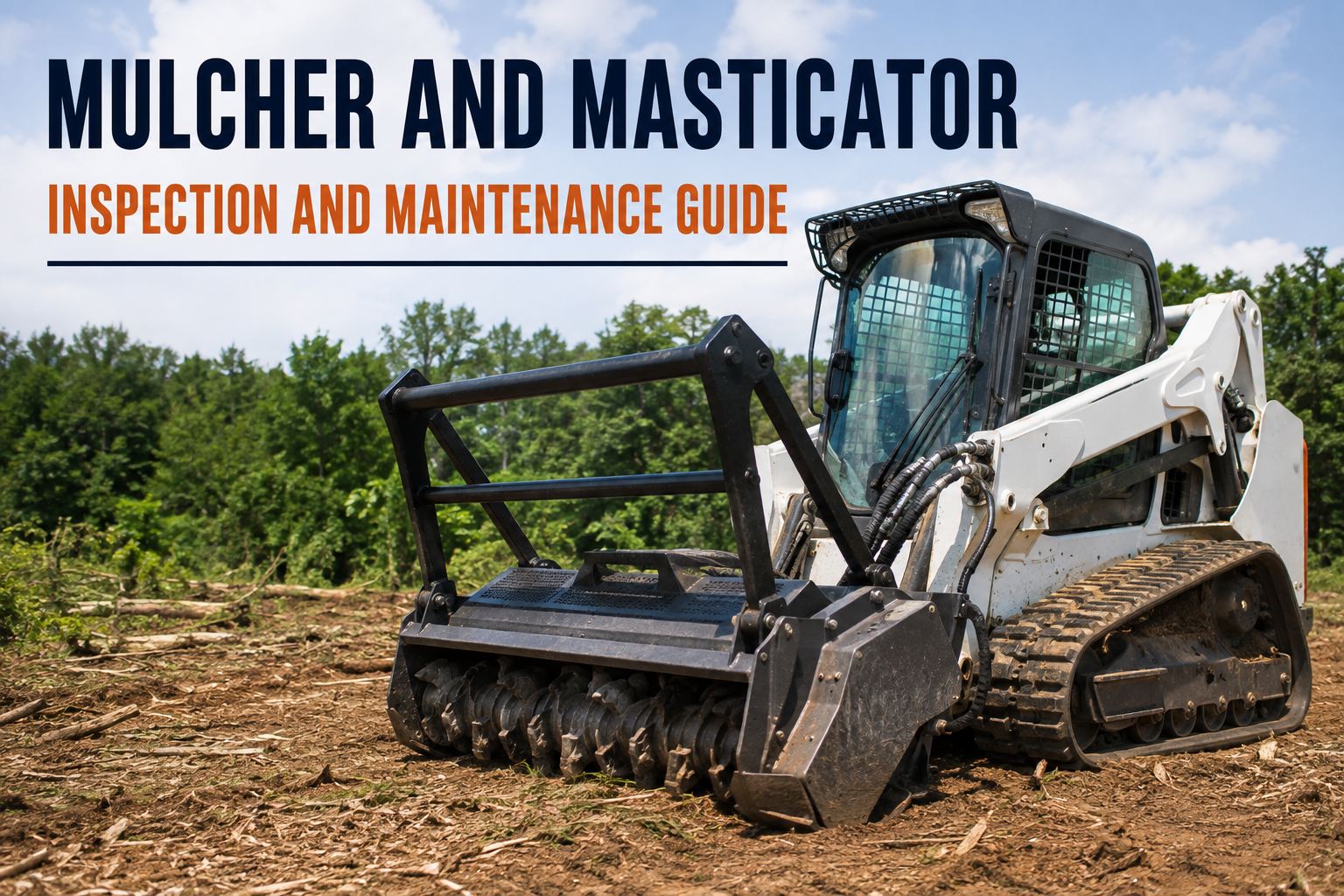
Your mulcher head is the hardest-working attachment in the fleet, and the most expensive to neglect. A forestry mulcher or masticator running a full clearing shift grinds its teeth against wood, rock and soil for hours on end, spins a drum at thousands of RPM on bearings that live in a bath of dust and heat, and pushes hydraulic oil to temperatures that would sideline most other machines. When mulcher head maintenance slips from a scheduled task to a reactive scramble, the costs stack up fast: fuel burn climbs as dull teeth force the carrier to work harder, drum bearings seize without warning, and a thrown piece of debris through an unguarded panel can end a job — or worse. This guide walks through the inspection and maintenance points that matter most on mulching and mastication equipment, from tooth rotation to fire suppression readiness, and shows how to build a PM discipline that keeps your heads cutting instead of sitting in the shop. If you want to see how digital inspection templates handle this on real machines, you can book a 30-minute walkthrough with the HVI team and see it on your own units.
Mulcher & Masticator Maintenance Guide
Is your mulching head eating teeth, bearings and hydraulic pumps faster than it should?
Mulching and mastication apply the most brutal duty cycle in forestry and land clearing. Teeth wear continuously, drum bearings run under extreme load, and hydraulic systems generate heat that punishes every seal and hose. The operations that stay profitable are the ones that inspect systematically and replace wear parts on schedule — not after a failure.
What Neglect Actually Costs
The real price of reactive mulcher maintenance
Every hour a mulching head runs with worn teeth, low grease or a clogged cooler, you are paying for it — in fuel, in parts, in downtime and in risk. Here is what the numbers look like on a typical operation.
Daily & Weekly Inspection Points
Mulcher head inspection checklist: what to check and when
A mulching head does not fail all at once. It wears down in predictable places, and a structured inspection catches each one before it becomes a breakdown. Here are the critical checkpoints, grouped by system.
Teeth & Cutting Tools
- Check every tooth for wear, chipping and carbide tip condition before each shift
- Rotate teeth on the drum per manufacturer pattern to even out wear
- Replace teeth that have lost their cutting profile — dull teeth multiply fuel burn and reduce productivity
- Inspect tooth holders and bolts for cracks, elongation and torque
- Count missing teeth; even one missing tooth unbalances the drum and accelerates bearing wear
Drum Bearings & Lubrication
- Grease drum bearings at the interval specified by the head manufacturer — often every 4 to 8 operating hours
- Use the correct grease type and quantity; over-greasing blows seals, under-greasing kills bearings
- Listen for rumbling, grinding or heat at the bearing housings during operation
- Check bearing temperature with an infrared thermometer after a work cycle
- Inspect seals for grease leakage, dust ingress and physical damage
Hydraulics & Cooling
- Check hydraulic fluid level and condition daily — mulching generates sustained heat that degrades oil fast
- Inspect hoses and fittings for chafing, weeping and heat damage near the head
- Clean the hydraulic oil cooler and radiator daily; dust and wood chips clog fins within hours
- Monitor hydraulic temperature during operation; sustained temps above manufacturer limits accelerate seal and pump wear
- Sample hydraulic fluid on a regular schedule to catch contamination before it destroys a pump
Guarding, Deflectors & Carrier Protection
- Inspect all guarding and deflector panels for cracks, missing bolts and impact damage
- Check the debris curtain or chain guard for worn or missing links
- Verify polycarbonate or reinforced glass on the cab is intact and free of deep scratches or cracks
- Inspect belly pans and underbody guards for impact damage and accumulated debris
- Confirm all access panels and covers are latched and secure before operation
Fire Risk & Suppression
- Clear wood chips, bark and debris from around the engine, exhaust and turbo daily — mulching packs debris into every crevice
- Inspect the fire suppression system charge, nozzles and activation mechanism weekly
- Carry a charged handheld extinguisher in the cab and verify it is within service date
- Check for hydraulic leaks near hot surfaces; a pinhole leak spraying oil onto a hot exhaust is a fire waiting to happen
- Establish a post-shift cooldown and debris-clearing routine, especially in dry or high-fire-danger conditions
Cooling System in Dust
- Blow out the radiator, charge air cooler and AC condenser daily with compressed air — from the clean side out
- Check coolant level and condition; overheating in a dust-saturated environment is a leading cause of engine damage
- Inspect fan blades, fan shroud and belts for damage and wear
- Verify reversible fan or auto-purge function is working if equipped
- Monitor engine temperature gauge throughout the shift and log any overheating events
Tooth Management
Mulching teeth replacement: the rotation and replacement discipline that saves you thousands
Teeth are the single largest consumable cost on a mulching head, and most operations manage them reactively — run them until they are blunt, then swap the whole set. A structured rotation and replacement programme stretches tooth life, keeps the drum balanced and cuts fuel consumption.
Inspect every tooth before every shift
Walk the drum and visually check each tooth for carbide tip condition, holder cracks and bolt torque. A tooth that has lost its carbide edge is not cutting — it is hammering, and it forces the carrier to burn more fuel for less production. Flag any tooth that is worn past its effective profile, chipped or loose. This takes five minutes and prevents the most common cause of unplanned mulcher downtime.
Rotate teeth on a set schedule
Most mulcher drums allow teeth to be rotated to a fresh cutting edge. Follow the manufacturer's rotation pattern — typically every 20 to 40 operating hours depending on material. Rotating on schedule evens out wear across the full set, keeps the drum balanced and can double the useful life of each tooth. Skipping rotations means some teeth wear out in days while others barely get used.
Replace in matched sets, not one at a time
When teeth reach end of life, replace them in matched sets across the drum. Mixing new and worn teeth creates an unbalanced drum that vibrates, accelerates bearing wear and produces an uneven mulch. Track tooth hours in your maintenance log so you know exactly when each set was installed and can plan replacements before they become emergencies.
Stock spares based on consumption rate
If your operation burns through a set of teeth every two weeks, you need at least two sets on the shelf at all times. Running out of teeth mid-job means a machine sitting idle while you wait for freight. Track consumption per head, per month, and set reorder points in your parts inventory so you never run dry. This is where a demo of HVI's parts and inventory module pays for itself in the first conversation.
PM Schedule
Mulcher PM schedule: service intervals by component
A mulching head does not follow the same service schedule as a standard excavator or skid steer. The duty cycle is harder, the contamination load is higher and the consequences of a missed interval are more expensive. Use this table as a starting framework and adjust to your manufacturer specs and operating conditions.
| Component | Inspection / Service | Interval | Why It Matters |
|---|---|---|---|
| Teeth & holders | Visual inspection, rotation, replacement | Daily / every 20–40 hrs | Dull teeth increase fuel burn 15–25% and reduce productivity; missing teeth unbalance the drum |
| Drum bearings | Grease, temperature check, seal inspection | Every 4–8 operating hours | Bearing failure means 8–16 hours of downtime and potential drum shaft damage |
| Hydraulic fluid | Level check, condition check, sample analysis | Daily check / sample every 250 hrs | Mulching generates sustained heat that degrades oil 2–3× faster than standard duty |
| Hydraulic cooler & radiator | Blow out with compressed air | Daily, sometimes twice daily in heavy dust | Clogged coolers cause overheating, accelerated seal wear and engine damage |
| Guarding & deflectors | Visual inspection for cracks, missing bolts, impact damage | Daily | Thrown objects from a mulcher drum can travel at lethal velocity; guarding is the last line of defence |
| Fire suppression system | Charge check, nozzle inspection, activation test | Weekly / per manufacturer | Mulching packs flammable debris around hot components; fire risk is elevated on every shift |
| Carrier cab glass & guards | Inspect polycarbonate, screens, belly pans | Daily | A thrown rock or wood fragment through standard glass can seriously injure the operator |
| Debris clearing (engine bay, exhaust) | Remove accumulated chips, bark and dust | Daily, end of shift | Debris packed around a hot exhaust or turbo is the most common ignition source on mulching equipment |
Adjust intervals to your manufacturer specifications, operating conditions and local fire-danger ratings. In extreme dust or high-fire-risk conditions, shorten every interval on this table.
How HVI Helps
Built for the attachments that eat wear parts alive
HVI gives you attachment-specific inspection templates, wear-part tracking and parts inventory in one platform — so your mulching heads get the same disciplined PM as the rest of your fleet, not an afterthought scribbled on a whiteboard.
Attachment-Specific Templates
Build a digital inspection checklist for each mulching head — teeth, bearings, hydraulics, guarding, fire suppression — with photo capture and defect flagging. Your operator completes it on any phone in the field, and defects flow straight into a work order. No paper, no text-message photos, no lost clipboards.
Wear Component Tracking
Log tooth sets, bearing replacements and hydraulic fluid changes against each head with timestamps and hour-meter readings. HVI tracks consumption rates so you know exactly when the next set of teeth is due — and can plan the purchase instead of scrambling.
Fire Suppression Checkpoints
Add fire suppression charge checks, debris-clearing confirmations and extinguisher service dates to your daily inspection template. Every check is timestamped and photo-backed, giving you an audit-ready record for client, safety and insurance reviews.
Parts & Inventory
Track mulcher teeth, bearings, seals, hoses and filters across multiple shops or job sites. Set reorder points based on actual consumption, and get alerts before you run dry. No more emergency freight charges because a $12 tooth holder was not on the shelf.
Worked Example
What one seized drum bearing actually costs
Numbers make the case better than adjectives. Here is a realistic breakdown of a single drum bearing failure on a mid-size forestry mulcher running a land-clearing contract.
A bearing that gets greased on schedule and inspected daily lasts its full service life. A bearing that gets missed fails without warning, and the bill above is what you pay. Multiply that by the number of heads in your fleet and the case for disciplined PM writes itself. If you want to see how HVI tracks bearing hours and sends due alerts, book a demo and we will walk you through it.
Key Takeaways
Mulcher and masticator maintenance: what to remember
Teeth drive everything
Worn teeth increase fuel consumption, reduce productivity and unbalance the drum. Inspect daily, rotate on schedule, replace in matched sets and stock spares based on your actual consumption rate.
Bearings need grease, not luck
Drum bearings under mulching loads need grease every 4 to 8 operating hours. Miss one interval and you are gambling with a $2,650–$6,100 failure. Track hours and set alerts.
Heat is the silent killer
Mulching generates sustained hydraulic heat and packs dust into every cooler fin. Blow out coolers daily, sample fluid regularly and monitor temperatures. Overheating degrades oil, seals and pumps faster than any other factor.
Fire risk is real on every shift
Debris packed around a hot exhaust is the most common ignition source. Clear debris daily, inspect suppression systems weekly and carry a charged extinguisher. In dry conditions, treat every shift as high fire risk.
Guarding saves lives
A mulcher drum throws objects at lethal velocity. Inspect guarding, deflectors, cab glass and belly pans daily. A cracked deflector panel or missing chain link is not a cosmetic issue — it is a safety gap.
Digital beats paper
Paper checklists get lost, grease-stained and ignored. A digital inspection on a phone captures photos, timestamps and defects in real time, and feeds straight into work orders and parts ordering. Start logging inspections free and see the difference in the first week.
We used to run teeth until they were smooth and then wonder why fuel bills were through the roof. Now I track tooth hours on every head, and we rotate at 30 hours whether the operator thinks they need it or not. Our fuel burn dropped noticeably in the first month, and I have not had a bearing failure in over a year. The grease gun is the cheapest insurance policy on the job site.
Dale Kowalski — Maintenance Manager, vegetation management and land-clearing contractor
Common Questions
Mulcher and masticator maintenance FAQs
How often should I replace mulcher teeth?
How often do drum bearings need grease on a forestry mulcher?
Why does my mulcher keep overheating?
What fire safety equipment should a mulching machine carry?
Can I use the same inspection checklist for my mulcher and my excavator?
Stop managing mulcher maintenance from memory
See HVI running on your own mulching heads — attachment-specific checklists, wear-part tracking, fire suppression checkpoints and parts inventory in one platform. Book a 30-minute demo and we will set it up on your equipment.
Free to start — Works on any phone — No card needed