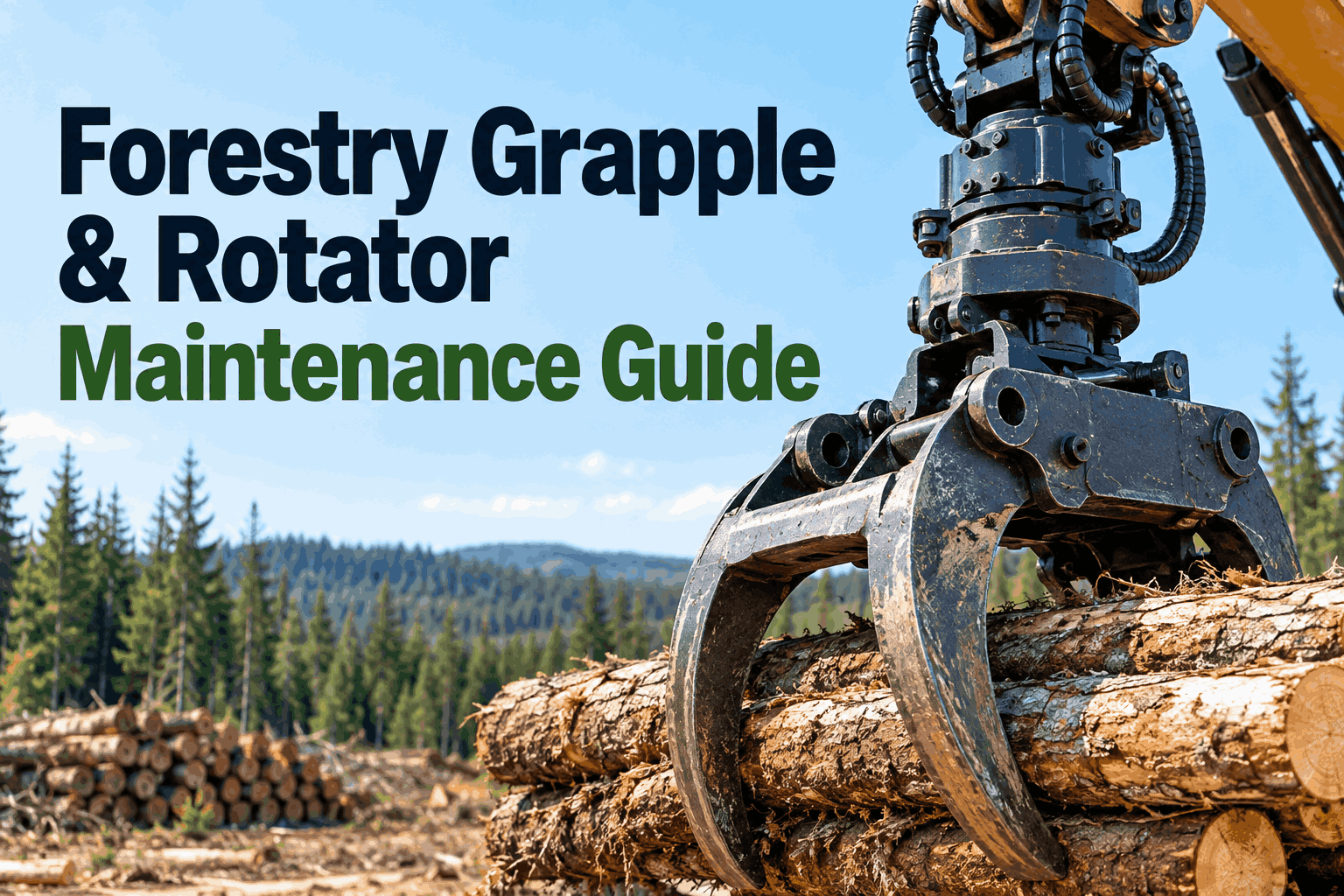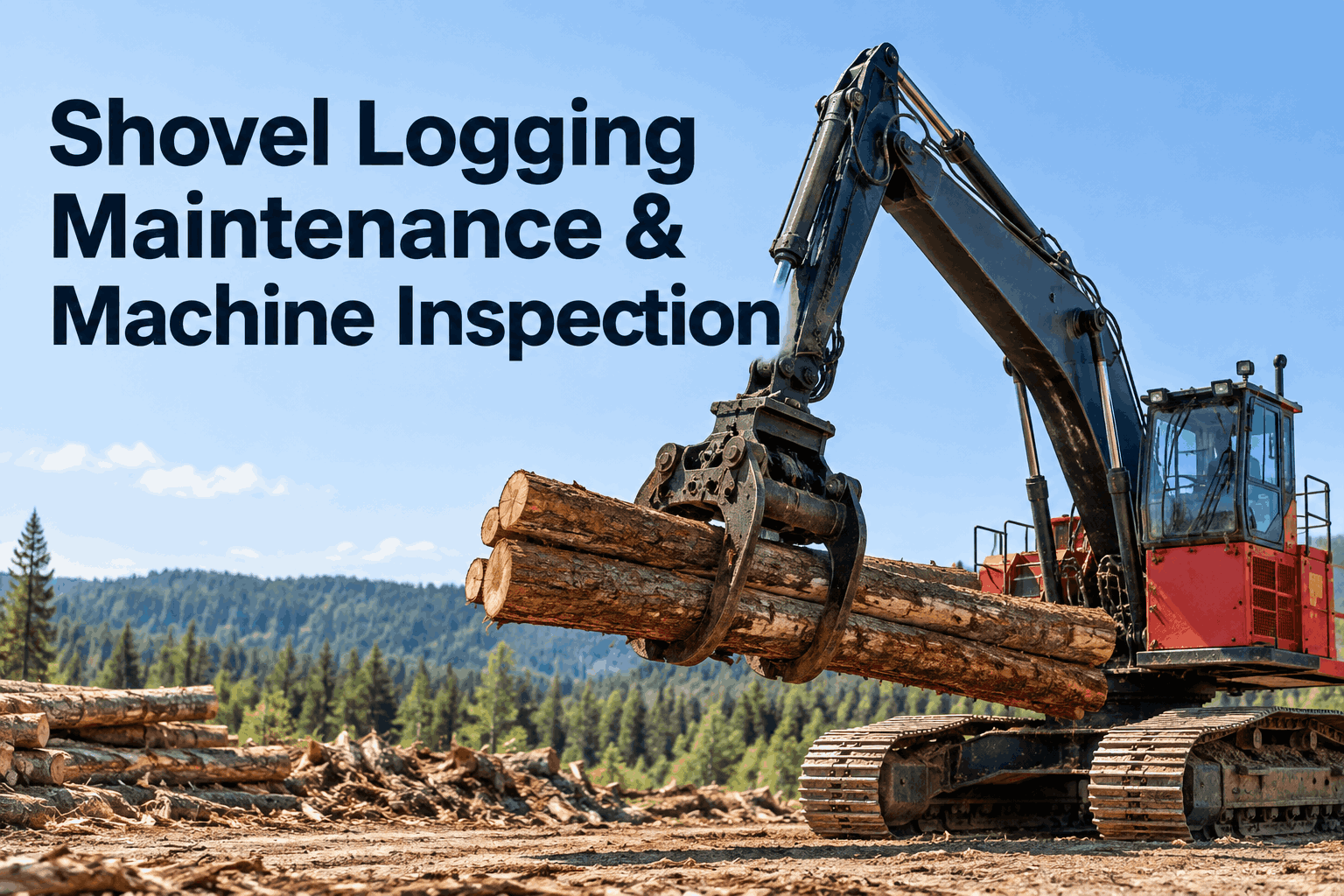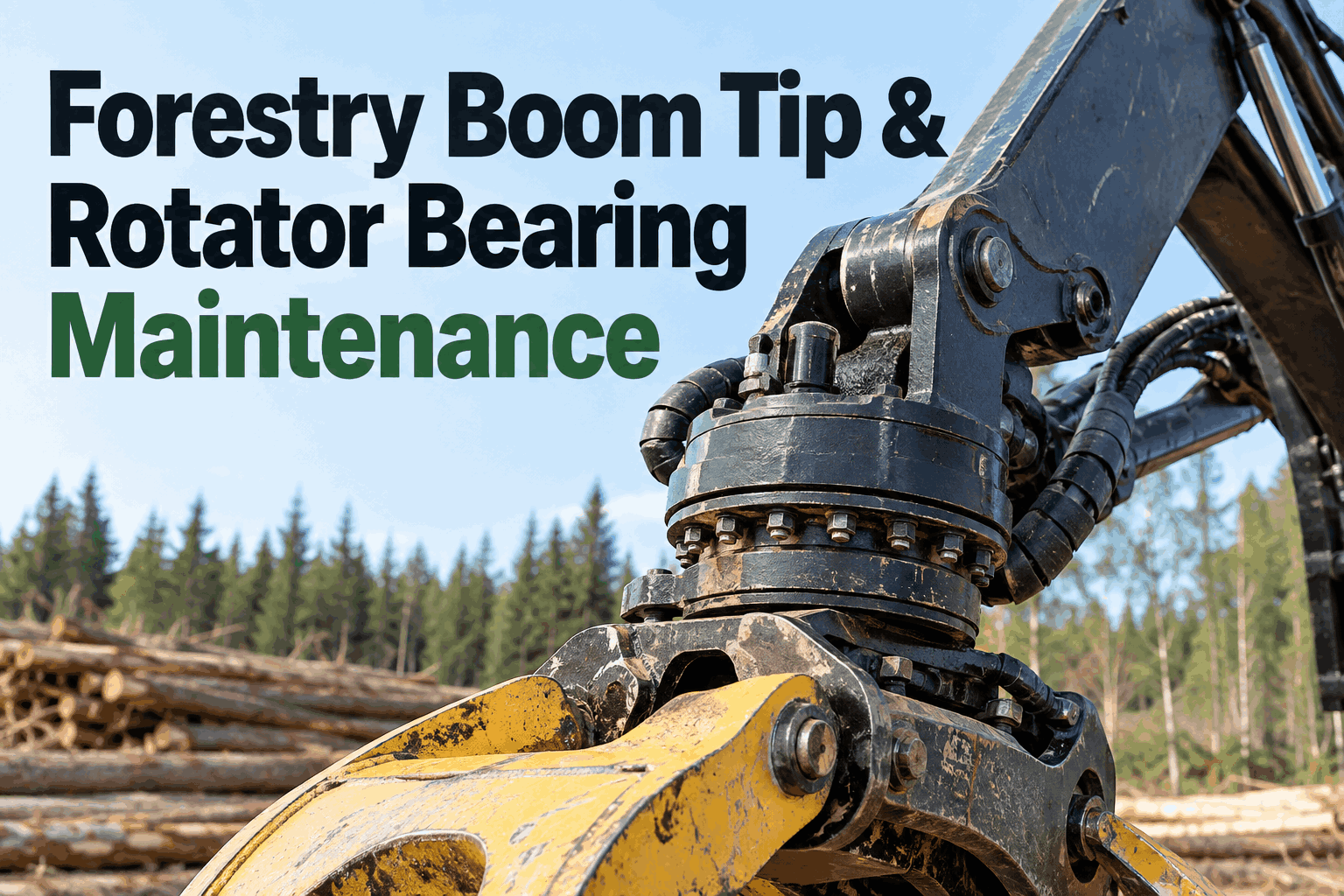
Grab the grapple and give it a shake — that little knock you feel at the boom tip is the first thing operators notice and the last thing anyone writes down. By the time the play is obvious, the pin, the bushing or the rotator bearing is already worn, and what started as a few minutes of greasing has become a boom section on a workbench. Boom tip bearing service isn't complicated, but it lives or dies on intervals: grease it on time, check the play on time, and measure before you're guessing. This guide lays out the wear points and the schedule that keeps them tight — book a walkthrough to run it in HVI.
Catch the play while it's still just greasing.
Every boom joint and the rotator wear on a clock set by how well they're greased and how early the play is caught. HVI puts grease intervals, play checks and wear measurements on schedule — with a service record per joint, per machine.
A forestry boom is a stack of pinned joints working at the end of a long lever, lifting and swinging heavy loads thousands of times a shift, in mud, grit and wash-down water. Every joint is a pin turning in a bushing, and the rotator at the tip adds a continuously spinning bearing on top of that. Wear is inevitable — the only question is whether you catch it as a greasing job or as a rebuild. That comes down to knowing which joints wear fastest and holding each one to its own service interval.
Where a forestry boom actually wearsthe pins, bushings and rotator bearing that carry the load
Not every joint wears at the same rate. The further out the boom, the higher the leverage and the faster the clearance opens up — which is why boom tip bearing maintenance and the rotator get the tightest intervals.
Base & foot pins
The pivot where the boom meets the machine. Heavy load but fewer, slower movements. Wears slowest — but a seized base pin is the hardest to press out, so it still earns its grease.
Mid-boom & stick pins
The knuckle and stick joints cycle constantly through the work envelope. Clearance here shows up as boom "nod" and sloppy positioning long before it's dangerous.
Boom tip bearing
The highest-leverage joint, carrying the head or grapple at full reach. It sees the most load per movement, wears fastest, and is the knock operators feel first. Tightest grease and play-check interval of the lot.
Rotator bearing
The swivel that spins the grapple or head under load, turning constantly in both directions. Its bearing and seals wear from motion and contamination — play here chews hoses and ruins log control.
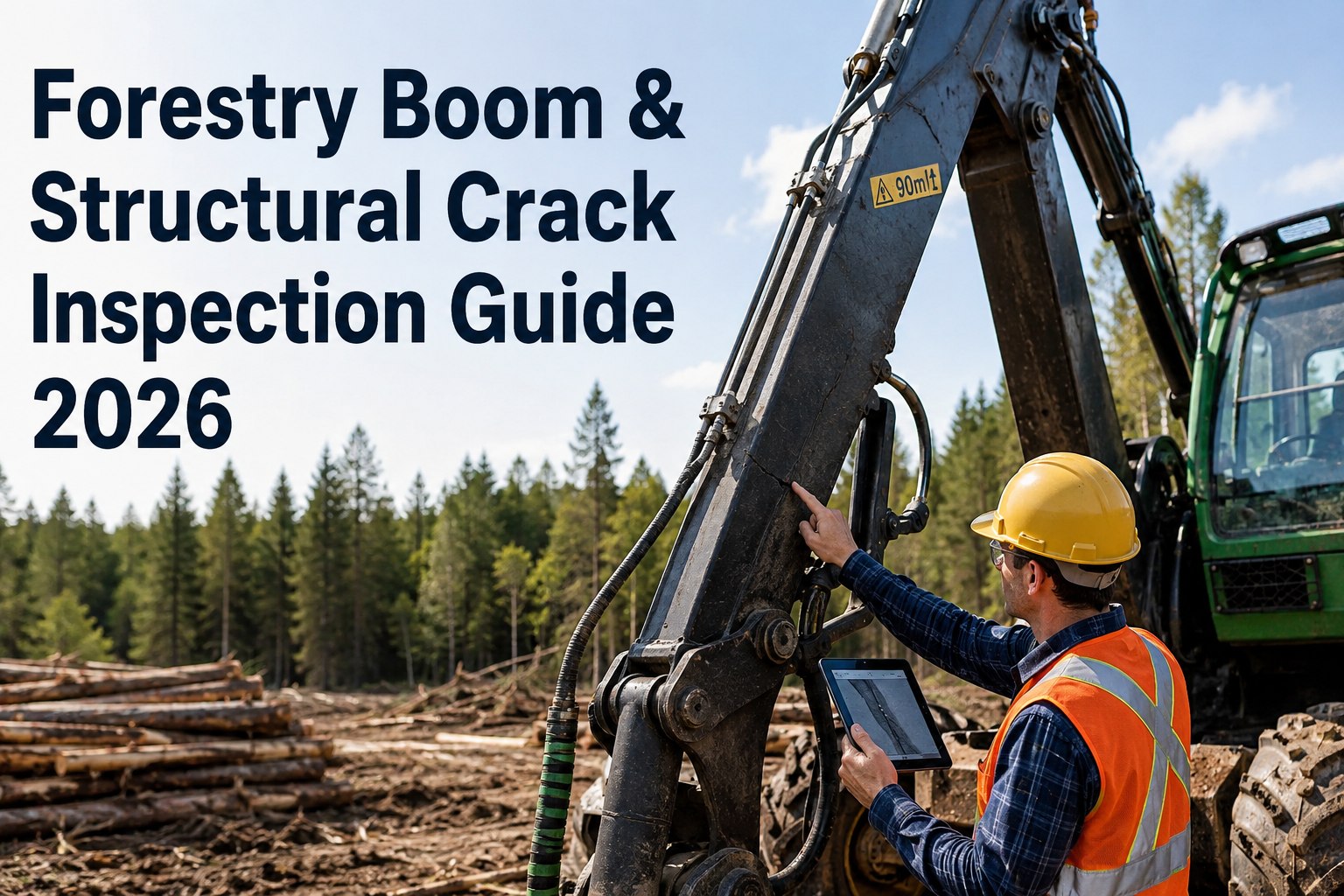
This is the wear side of the boom — distinct from the structure itself, covered in HVI's forestry boom and structural crack inspection guide, and from the full knuckle-boom inspection routine. Keeping every joint on a preventive maintenance schedule is what keeps wear in the greasing column. Book a walkthrough to set intervals per joint →
Play doesn't stay smallhow a little clearance becomes a boom rebuild
Wear isn't linear. A small clearance lets the pin shock-load the bushing, which opens the clearance faster, which increases the shock — so the gap you ignore this month is the gap that doubles the next. Catching it at the first stage is the whole point of a play check.
The cost difference between stage two and stage four is enormous, and the only thing that separates them is whether someone measured the play early and acted. A logged clearance reading each inspection is what turns "it felt a bit loose" into a planned bushing change. Start free and track play readings per joint →
Boom and rotator bearing service intervalswhat to grease, check and measure — and how often
Here's a baseline interval plan for the three service groups, to adapt to your OEM and rotator manufacturer. The theme is simple: grease frequently, check play regularly, measure before replacing.
Lubrication is the single biggest lever here — most premature pin, bushing and rotator wear traces straight back to a missed grease cycle, so a reliable heavy-equipment greasing schedule does more for bearing life than anything else. HVI triggers each grease route and play check by the hour meter so none of it slips. Book a walkthrough to load these intervals per machine →
Boom & rotator service, tracked in HVIgrease done, play measured, rotator due — per machine
This is the payoff: every joint with its last grease, its latest play reading and its next service — so forestry equipment bearing maintenance becomes a record you manage instead of a knock you hope someone mentions.
Every grease route, play reading and bushing change stays on the machine's history, so you can see which joints wear fastest and prove the boom was serviced if it ever matters for warranty or resale. It feeds the reporting and analytics across your whole forestry equipment fleet. Start free and build a service record per joint →
Boom tip & rotator inspection checklistthe few-minute play check that saves a boom rebuild
Here's a baseline boom pin and bushing inspection routine, grouped the way HVI loads it — each item logged against the machine with its hour reading.
- All grease points hit, fresh grease showing
- No seized or blocked grease fittings
- Pin retainers & keepers in place
- No grease purging black (contaminated)
- Boom tip checked for knock under load
- Clearance measured where play is felt
- Bushings checked for oval wear
- Reading logged against the trend
- Rotator axial/radial play within spec
- Rotator hoses & swivel not chafed/weeping
- Over-limit joints raised as work orders
- Hours logged, next service scheduled
On paper the play check is a vague "looks okay" and the clearance trend never forms; in HVI the reading is captured with the hour meter, an over-limit joint becomes a work order, and the next grease and service are scheduled automatically. It runs with the rest of your equipment maintenance management. Book a walkthrough to load your boom checklist →
From a forestry maintenance manager
We used to find boom play the expensive way — when an operator said the grapple was "wandering" and we pulled it apart to find an egg-shaped bushing and a scored pin. Every time, the grease records showed that joint had been getting missed for weeks.
Now the tip and the rotator get greased every shift off the hour meter, the play check is a real measurement that goes on the record, and a joint that's trending loose becomes a scheduled bushing job, not a surprise. We haven't pressed out a seized boom pin in over a year.
Boom tip bearing service — FAQs
How often should boom pins and bearings be greased?
Most forestry OEMs call for greasing boom pins and the tip bearing every shift or every 8–10 operating hours, with the rotator greased on its own manufacturer's schedule — often just as frequently. In muddy or wash-down conditions, more often. Missed grease cycles are the leading cause of premature pin and bushing wear.
How do I know when a boom tip bearing or bushing needs replacing?
Check for play: with the joint loaded, look and feel for knock or movement on direction change, then measure the clearance where play is present. Oval or elongated wear in the bushing, a scored pin, or clearance beyond the OEM limit means it's time to re-bush or replace — ideally planned from a trend, not discovered at failure.
Why does the rotator bearing wear faster than other joints?
The rotator spins the grapple or head continuously under load in both directions, so its bearing and seals see constant motion plus exposure to dirt and water. Play in the rotator shows up as poor log control and chafed hoses, and left unchecked it damages the swivel — so it gets a tight grease and inspection interval.
What's the difference between boom wear and boom cracks?
They're separate failure modes. Bearing and bushing wear is clearance at the pinned joints and the rotator, managed by greasing and play checks. Structural cracking is fatigue in the boom weldments and lugs, found by crack inspection. A complete program covers both — this guide handles the wear side; cracks have their own inspection routine.
How does HVI help manage boom and rotator service?
HVI schedules grease routes and play checks by engine hours, lets technicians log clearance readings so wear trends per joint, turns an over-limit joint into a work order, and keeps the full service history per machine. For a logging fleet that means boom tip bearing service happens on time, wear is caught early, and every boom has a documented maintenance record.
Keep the knock from becoming a rebuild
HVI puts boom tip bearing service on one system — grease intervals and play checks triggered by engine hours, clearance readings trended per joint, work orders the moment a joint crosses its limit, and a full service record per machine. Live on your forestry fleet in under two weeks.
See it on your own machines · Works offline in the bush · Service records from day one