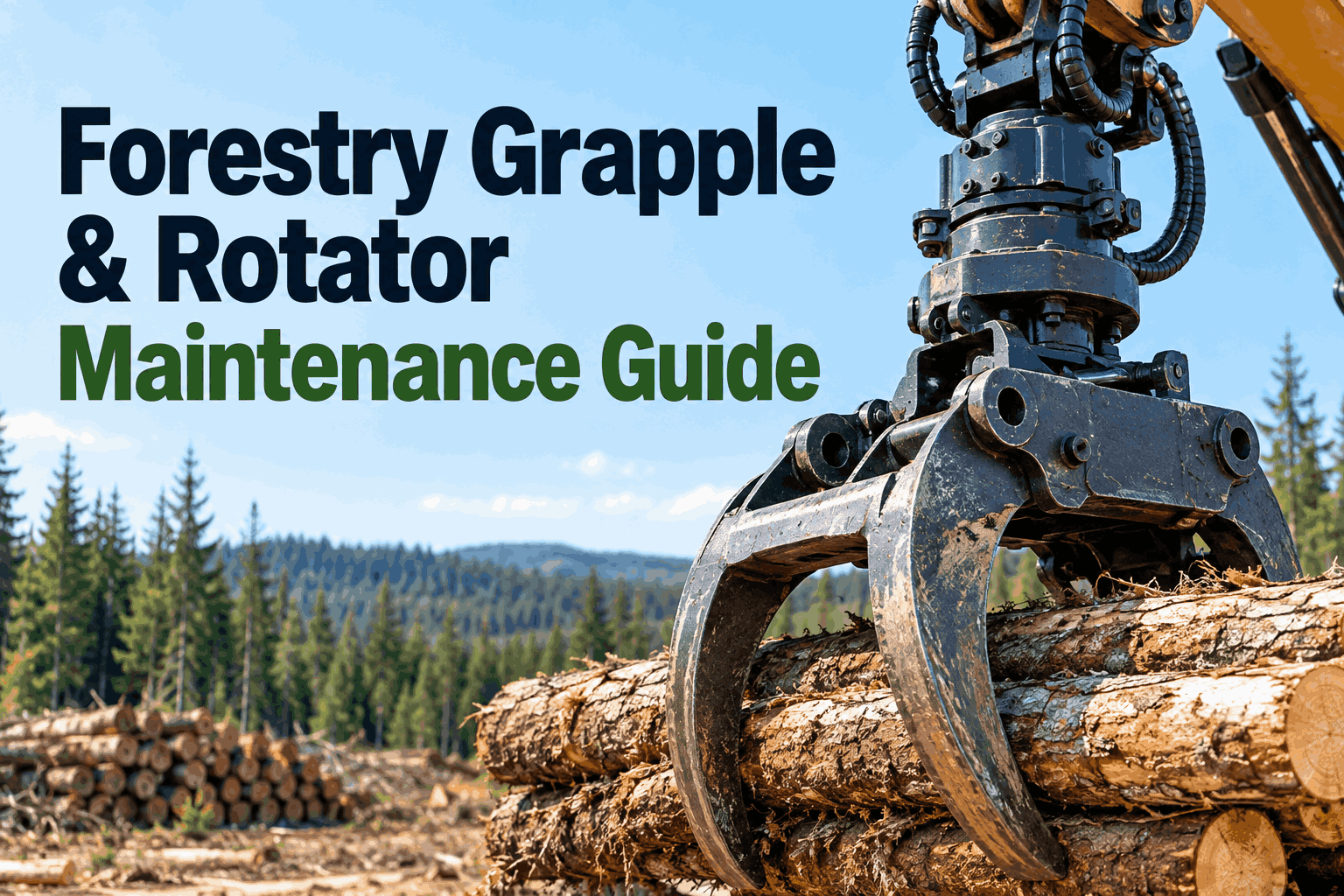
The grapple is the business end of a forestry machine — it grabs, lifts, twists and drops a load every few seconds all shift, and it's the attachment babied least and abused most. When the tines stop closing square, the rotator develops play or a link pin wears oval, you feel it as dropped logs and sloppy control before anything actually breaks. Grapple rotator maintenance keeps the whole hang tight, and most of it is lubrication and a two-minute play check — book a walkthrough to run it in HVI.
Keep the whole hang tight — link to tine.
Link, rotator and grapple wear together, and loose play anywhere shows up as dropped logs. HVI puts grease routes and play checks on schedule across the attachment, with a service record per machine.
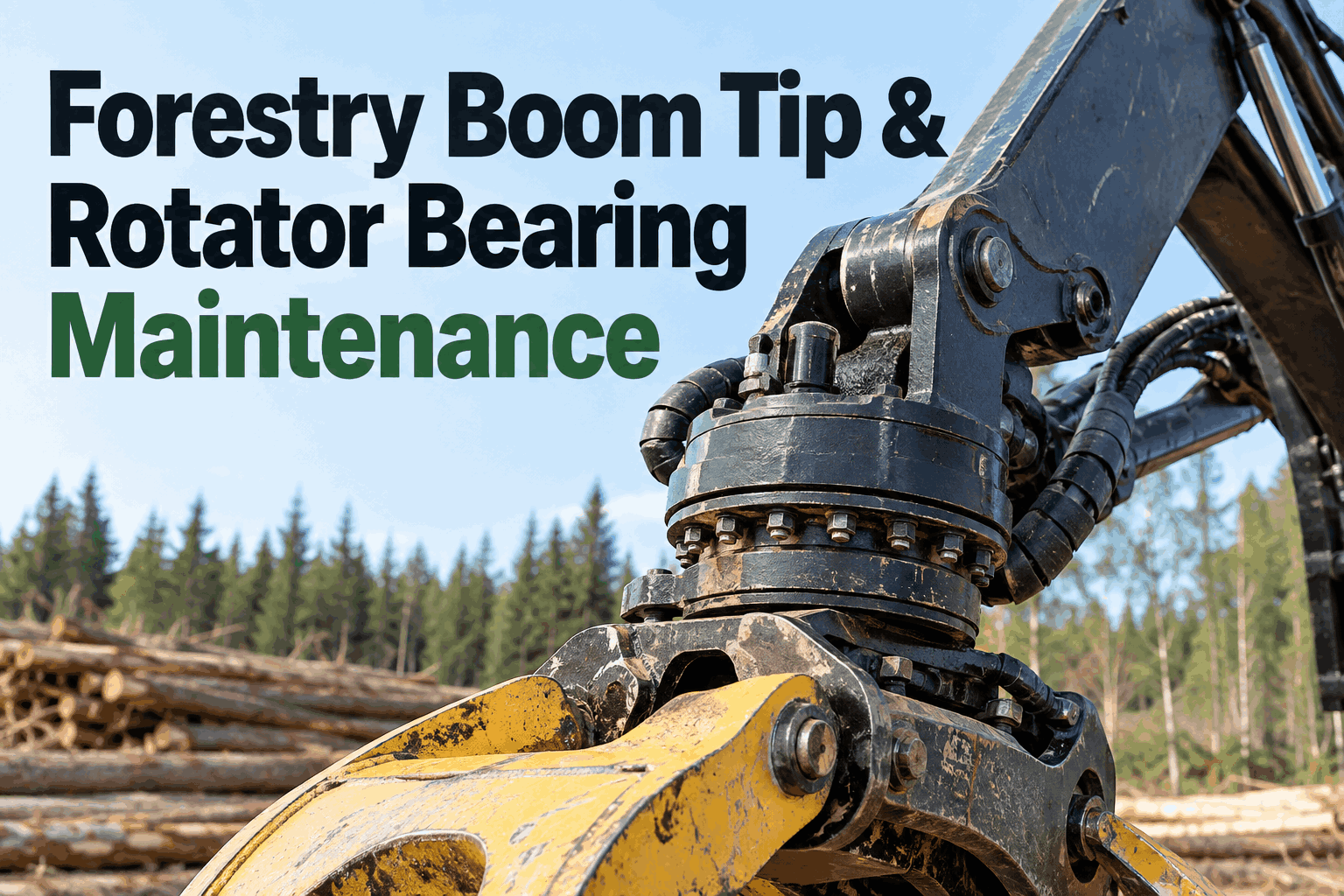
A grapple hang is a short chain of highly loaded joints working at the very end of the boom, where every shock from grabbing and swinging a log gets amplified. Unlike the boom's pins, the hang also twists — the rotator spins the whole grapple under load, so its bearing wears from a direction the boom joints never see. Treat the link, the rotator and the grapple as one system, because play in any one of them loads the others harder and they decline together. Here's each part, what wears, and the routine that keeps the attachment grabbing clean.
The grapple hang, top to bottomlink, rotator and grapple — where each one wears
Working down from the boom tip, the hang is four wear zones in series. A good forestry grapple maintenance routine checks all four, because they share the load and fail in sequence.
The rotator is the bridge between this attachment and the boom — for the boom's own pins and the rotator from the boom side, see HVI's boom tip and rotator bearing guide, and for the whole machine, the grapple skidder inspection checklist. Keeping the hang on a preventive maintenance schedule is what holds it tight. Book a walkthrough to set up the hang schedule →
Why the grapple eats greaselubrication is the single biggest driver of grapple life
If one habit decides how long a hang lasts, it's greasing. The attachment carries more grease points than anything else on the machine, sees the dirtiest conditions, and sits at the far end where it's easiest to rush — a bad combination that quietly kills rotators and pivots.
grease points in one hang
Link pins, rotator, grapple pivots and cylinder ends each need grease — miss a few every shift and the wear clock speeds up fast.
spot on the machine
Dragged through mud, bark and grit, the hang pushes contamination into any joint that isn't kept packed with fresh grease.
cause of premature wear
Most rotator and pivot failures trace straight to a missed grease cycle — not a defect, just lubrication that slipped.
Because it's the easiest routine to shortcut, grapple lubrication is exactly where a scheduled, logged grease route pays off — the point is that nobody can quietly skip the hang. HVI triggers the grease route by engine hours so the attachment gets the same discipline as the rest of the machine's inspections. Start free and put the grapple grease route on schedule →
What play at the grapple actually costs youwhy a loose hang is a production problem, not just a wear item
Play in the hang doesn't announce itself with a breakdown — it shows up as lost productivity and creeping damage. That's why grapple rotator inspection pays for itself long before anything fails outright.
Dropped & mishandled logs
Worn pivots let the tines close crooked, so the grapple can't hold a stem cleanly — re-grabs, dropped loads and slower cycles all shift.
Rotator wander & drift
A worn rotator bearing won't hold position under load, so the grapple drifts and the operator fights it — tiring, slow and hard on everything upstream.
Chewed hoses & oil leaks
Slop lets the rotator and grapple move where they shouldn't, chafing hydraulic hoses and starting leaks at the swivel — downtime and fire risk.
Shock loads & safety
A sloppy hang slams instead of settling, shock-loading pins and links toward sudden failure — with a suspended log, that's a safety issue, not just a repair.
Caught early on a play check, every one of these is a greasing job or a bushing change; left to run, they become dropped production and a rotator rebuild. A logged clearance reading each inspection is what catches them while they're cheap. Book a walkthrough to see play tracked across the hang →
Grapple & rotator service, tracked in HVIgrease done, play logged, rotator watched — per machine
Here's the payoff: every hang with its last grease route, its latest play reading and its open work orders — so forestry attachment maintenance becomes a record you manage instead of a clunk someone mentions in passing.
Every grease route, play reading and rotator repair stays on the machine's history, so you can see which grapples wear fastest and prove the attachment was serviced for warranty or resale. It feeds the reporting and analytics across your forestry equipment fleet. Start free and build a service record per hang →
Grapple, rotator & link inspection checklistthe few-minute hang check that keeps logs in the jaws
Here's a baseline grapple and rotator inspection routine, grouped the way HVI loads it — each item logged against the machine with its hour reading.
- Link & hang pins greased, no clunk
- Rotator axial/radial play within spec
- Rotator seal dry, no weeping
- Rotation smooth, holds position
- Pivot pins greased, play measured
- Tines close square & meet evenly
- Tine tips not rounded past limit
- Cylinders & rod ends leak-free
- Rotator & grapple hoses not chafed
- Over-limit joints raised as work orders
- Readings logged against the trend
- Hours logged, next grease scheduled
On paper the hang check is a quick "looks fine" and the slop never gets measured; in HVI the grease route and play reading are logged with the hour meter, an over-limit joint becomes a work order, and the next service is scheduled. It runs with the rest of your equipment maintenance management. Book a walkthrough to load your grapple checklist →
From a forestry equipment manager
Our operators kept saying a skidder was "grabby" — re-grabbing stems, dropping the odd log. We blamed technique for weeks. Turned out the grapple pivots were worn enough that the tines weren't meeting square, and the rotator had developed a wander on top of it. The grease records were full of gaps.
Now the hang gets its own grease route off the hour meter, the play check is a real measurement, and a loose pivot or a weeping rotator is a work order the same day. The grabbing problem went away, and we stopped replacing rotators ahead of their time.
Grapple rotator maintenance — FAQs
How often should a forestry grapple and rotator be greased?
Most forestry OEMs call for greasing the grapple pivots, link pins and rotator every shift or every 8–10 hours — more in wet, gritty conditions. The hang carries the most grease points on the machine and sees the dirtiest work, so missed grease cycles are the leading cause of premature pivot and rotator wear.
How do I know if a grapple rotator needs service?
Check for play and leaks: with the grapple loaded, feel for axial and radial movement in the rotator and watch whether it holds position or drifts under load. A weeping seal, wander that the operator has to fight, or measurable play beyond the maker's limit means the rotator needs service before it fails on a suspended load.
Why are my grapple tines dropping logs?
Usually worn grapple pivot pins and bushings. When the pivots develop play, the tines no longer close square and can't hold a stem cleanly, causing re-grabs and dropped loads. It feels like an operator or hydraulic problem but it's mechanical wear — caught on a play check and fixed with a bushing change.
What's the difference between grapple and boom rotator maintenance?
They meet at the rotator. The boom side covers the boom's own pins and the rotator bearing as the boom-tip swivel; the grapple side — this guide — covers the hang: the link, the rotator, the grapple pivots and the tines as the working attachment. A complete program treats the rotator as the shared bridge and services both ends.
How does HVI help with grapple and rotator maintenance?
HVI schedules grease routes and play checks by engine hours, lets technicians log clearance readings so wear trends per joint, turns an over-limit pivot or a leaking rotator into a work order, and keeps the full service history per machine. For a logging fleet that means the hang gets greased on time, play is caught early, and every grapple has a documented record.
Keep the hang tight and the logs in the jaws
HVI puts grapple rotator maintenance on one system — grease routes and play checks triggered by engine hours, clearance trended across link, rotator and pivots, work orders the moment a joint goes loose, and a full service record per machine. So the attachment keeps grabbing clean instead of dropping production. Live on your fleet in under two weeks.
See it on your own machines · Works offline in the bush · Service records from day one