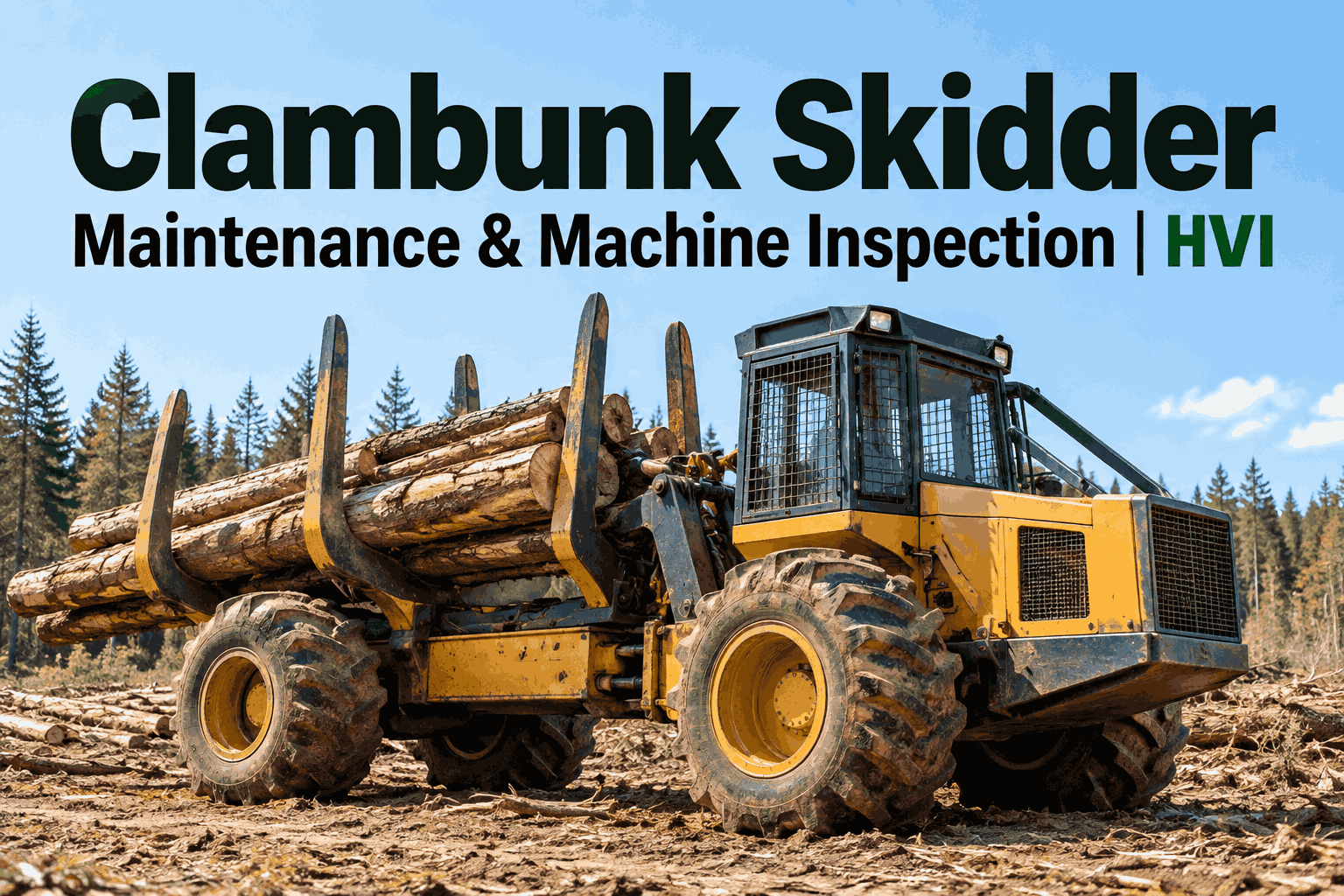
A clambunk skidder doesn't drag its load — it lifts a full turn of trees into a big hydraulic bunk above the rear axle and carries it out, fully supported. That changes everything about what wears: the bunk jaws, the loading crane, the articulation joint and the frame all carry heavy, cycling load instead of pulling it. Clambunk skidder maintenance is built around that carried weight. Book a demo to see component wear tracked by machine-hours.
It carries the load — so different things wear out
A clambunk's weight rides in the bunk, not behind it. Watch the bunk, the crane, the articulation and the frame, and the machine keeps carrying full turns all shift.
The clambunk's whole advantage is also its whole maintenance story: by lifting the load into a bunk over the rear axle, it carries more with better traction and less ground drag. But that load has to be held, hauled and steered the entire way out — so the hydraulic bunk jaws, the loading crane, the articulation joint and the frame take constant, heavy, cycling stress. Service it like a drag skidder and you watch the wrong things; service it as a carrier and you watch where the weight actually goes.
Why a clambunk needs its own inspection
It looks like a skidder, so it's tempting to run the same program as a grapple or drag machine. But the load path is completely different, and that moves the wear. This is separate from the drag-and-traction story in our grapple skidder inspection guide.
- Pulls the load on the ground
- Wear concentrates in traction & undercarriage
- Grapple holds, doesn't carry weight
- Frame loaded in tension, pulling
- Carries the load in the bunk
- Wear concentrates in bunk, crane & articulation
- Bunk jaws hold full weight constantly
- Frame loaded in bending, carrying
Same family, different machine. The inspection has to follow the load — which on a clambunk means up into the bunk and crane, not just down into the tracks. Book a demo to see a clambunk-specific inspection.
What the carried load wears, and what to watch
Four systems carry a clambunk's workload, each with its own failure signs — and all of them see the weight the drag machines never do.
Bunk & jaws
The hydraulic jaws clamp and hold a full turn for the whole haul. Weak cylinders, worn pins or cracked bunk steel let the load shift or drop.
Loading crane
The crane lifts every log into the bunk, cycle after cycle. Worn slew, boom pins and hoses make loading slow and sloppy, and drop the odd stem.
Articulation joint
The centre joint steers the whole loaded machine. Under a carried turn it works hard — worn bearings or loose pins there affect everything.
Frame & drivetrain
The frame carries the weight in bending and the drivetrain hauls it out. Axles, brakes and tyres all run under full, not empty, load.
All four are spottable on a walkaround and recordable, so wear is a trend you watch rather than a bunk that suddenly lets go. Book a demo to see wear logged by component.
Clambunk skidder inspection checklist
Here's the walkaround itself — grouped by system, the checks a clambunk needs through a working shift. Run it daily, log it so each check compares against the last.
On paper this gets filled once and filed where nobody looks again. In HVI it's the operator's daily inspection — each box dated, each flagged item a work order, each shift compared to the last. Book a demo to see this checklist live on a device.
A service rhythm that rides on working hours
A clambunk earns in hard, loaded hours, so service rides on machine-hours, not calendar days. Confirm exact intervals against your OEM manual.
Bunk jaws, crane pins, articulation and leaks; grease the load-bearing joints first.
Pin play on bunk, crane and joint, plus a crack check on frame and bunk, logged.
Hydraulic and axle oil, filters and articulation service at set machine-hours.
Bunk, crane or joint rebuild scheduled into weather downtime, not a failure.
Tie it to loaded hours and the big structural work turns from a mid-haul failure into a planned, cheaper job. Start free and put the clambunk on an hours-based plan.
An equipment manager on watching the bunk
We ran our clambunks on the same checklist as the grapple skidders for too long, and it missed the things that actually break on a clambunk — a jaw cylinder going soft, a cracked bunk mount, play creeping into the loading crane. Once the walkaround followed the load up into the bunk and crane and we logged pin play on machine-hours, the surprises stopped. On a machine that carries the weight, you have to inspect where the weight sits.
Run the clambunk program on HVI
Field inspection checklists
Digital inspections put the clambunk walkaround — bunk, crane, joint — in the operator's hand, signed and dated.
PM scheduled by machine-hours
Preventive maintenance ties bunk, crane and articulation service to loaded run-time.
Pin & structural wear logged
Maintenance records track pin play, weld checks and joint condition over time.
Downtime & cost reporting
Reporting shows cost per hour and which machine is trending toward trouble.
One record per machine, built on the walkaround the operator already does — so the carried load never finds a weak point first. Book a demo to see it on your fleet.
Clambunk skidder maintenance questions
Q1How is a clambunk skidder different to maintain?
It carries the load in a hydraulic bunk rather than dragging it, so the wear moves. Instead of focusing on traction and undercarriage, the program centres on the bunk jaws, the loading crane, the articulation joint and the frame — everything that holds and hauls the carried weight.
Q2What wears out on a clambunk skidder?
The high-load joints and structure: bunk jaw cylinders and pins, the loading crane's slew and boom pins, the articulation joint, and frame or bunk welds. All of them cycle under a full carried turn, so pin play and cracks are the things to watch most closely.
Q3How often should a clambunk be inspected?
A daily walkaround and grease of the load-bearing joints, weekly pin-play and crack checks on the bunk, crane and frame, and hydraulic, axle and articulation service at set machine-hours. Tie it to loaded hours rather than the calendar. Confirm intervals against your OEM manual.
Q4Why does the articulation joint matter so much?
Because it steers the whole machine while it's carrying a full load, so it works far harder than on an empty or dragging machine. Play or worn bearings there affect steering, load the frame unevenly and accelerate wear elsewhere — which is why it belongs on a regular, logged check.
Q5How does HVI help with clambunk maintenance?
HVI runs the walkaround as a digital inspection, schedules bunk, crane and articulation service by machine-hours, and logs pin and structural wear over time — so the carried-load components are caught early and service is planned, not forced. It's an inspection and maintenance layer, not an OEM service manual.
Put your clambunk skidders on a maintenance program
Run the walkaround as a digital inspection, schedule bunk, crane and articulation service by machine-hours, and catch the high-load wear before it parks the machine. Live in weeks, not quarters.
No credit card · Wear tracked by machine-hours · Built for forestry fleets