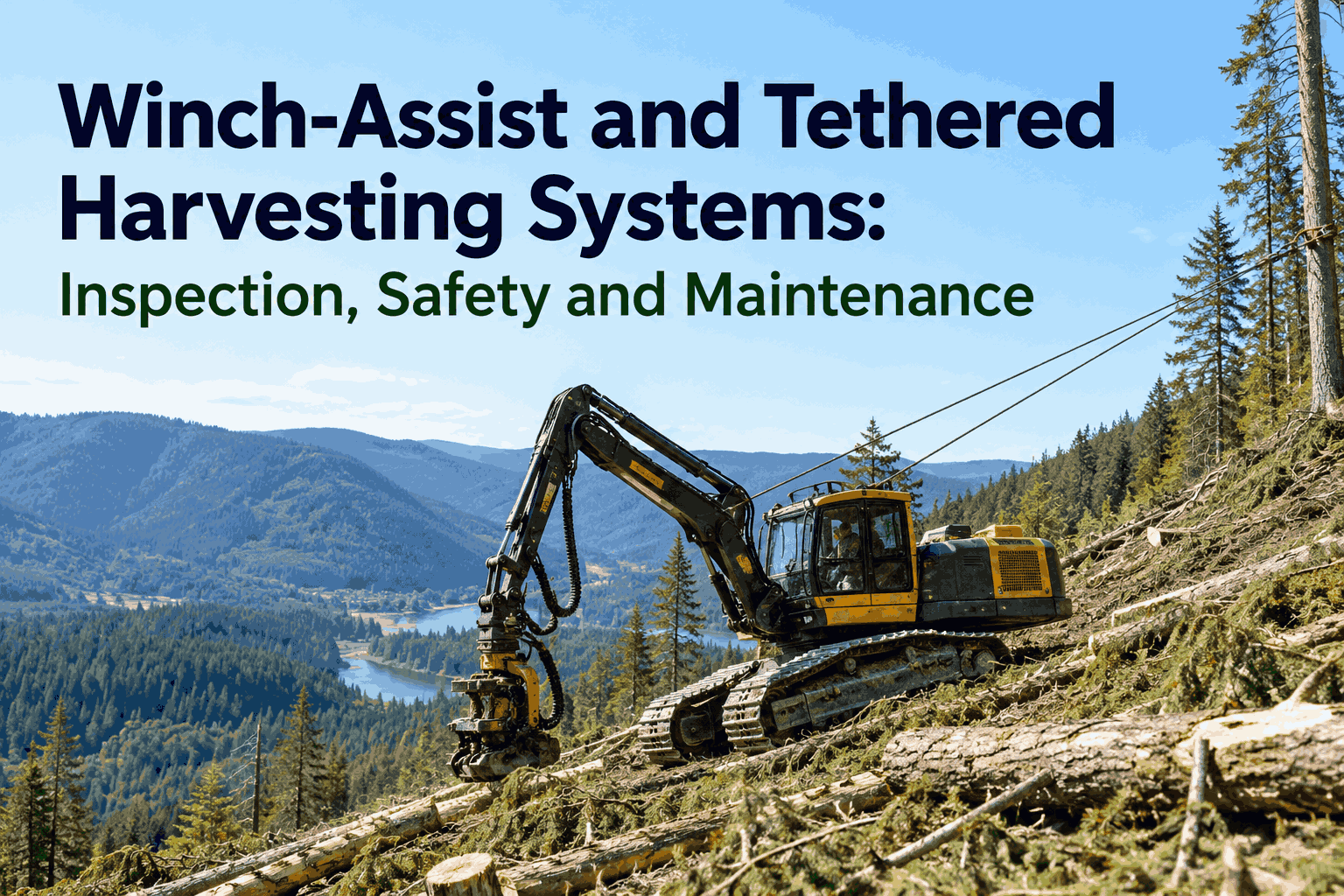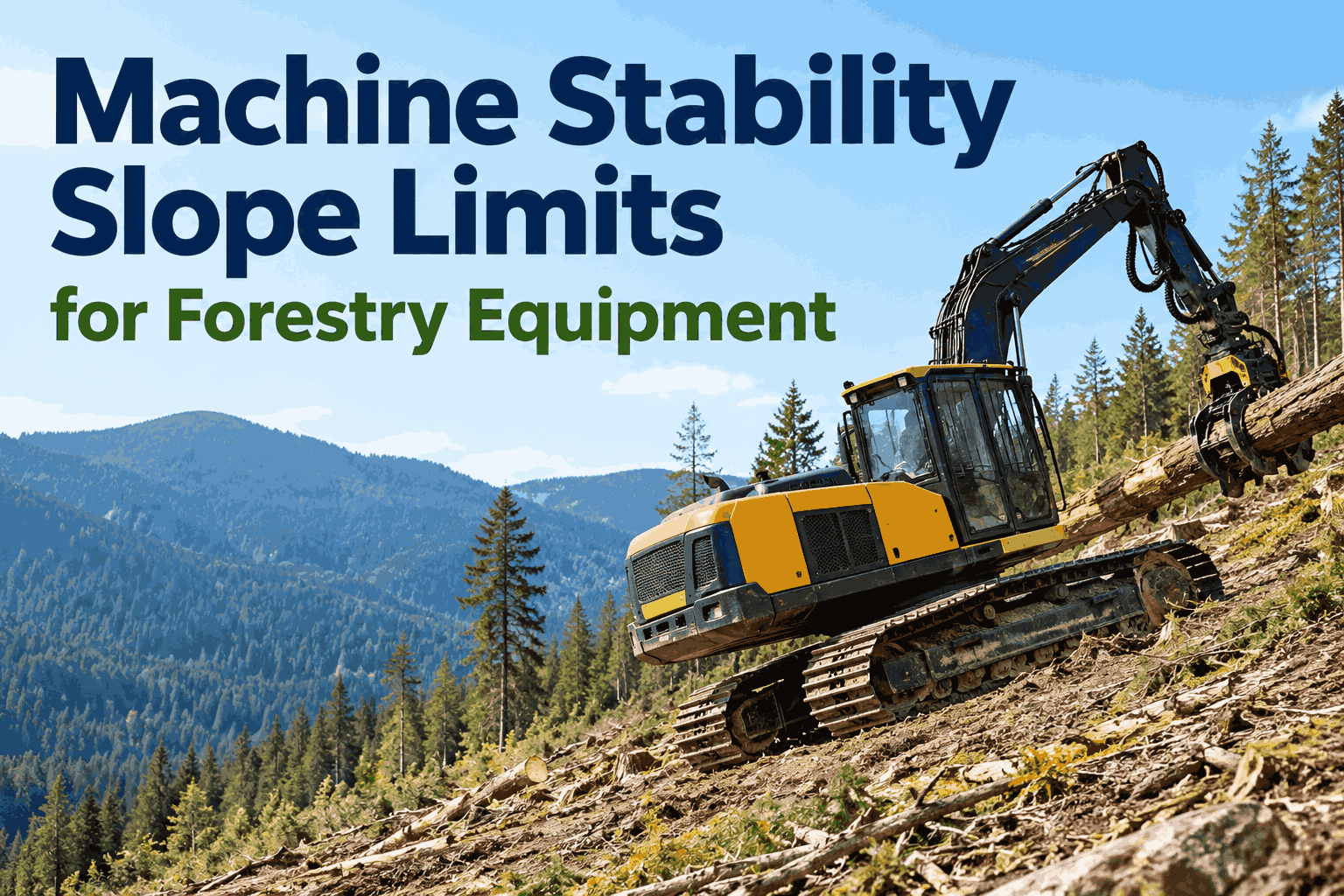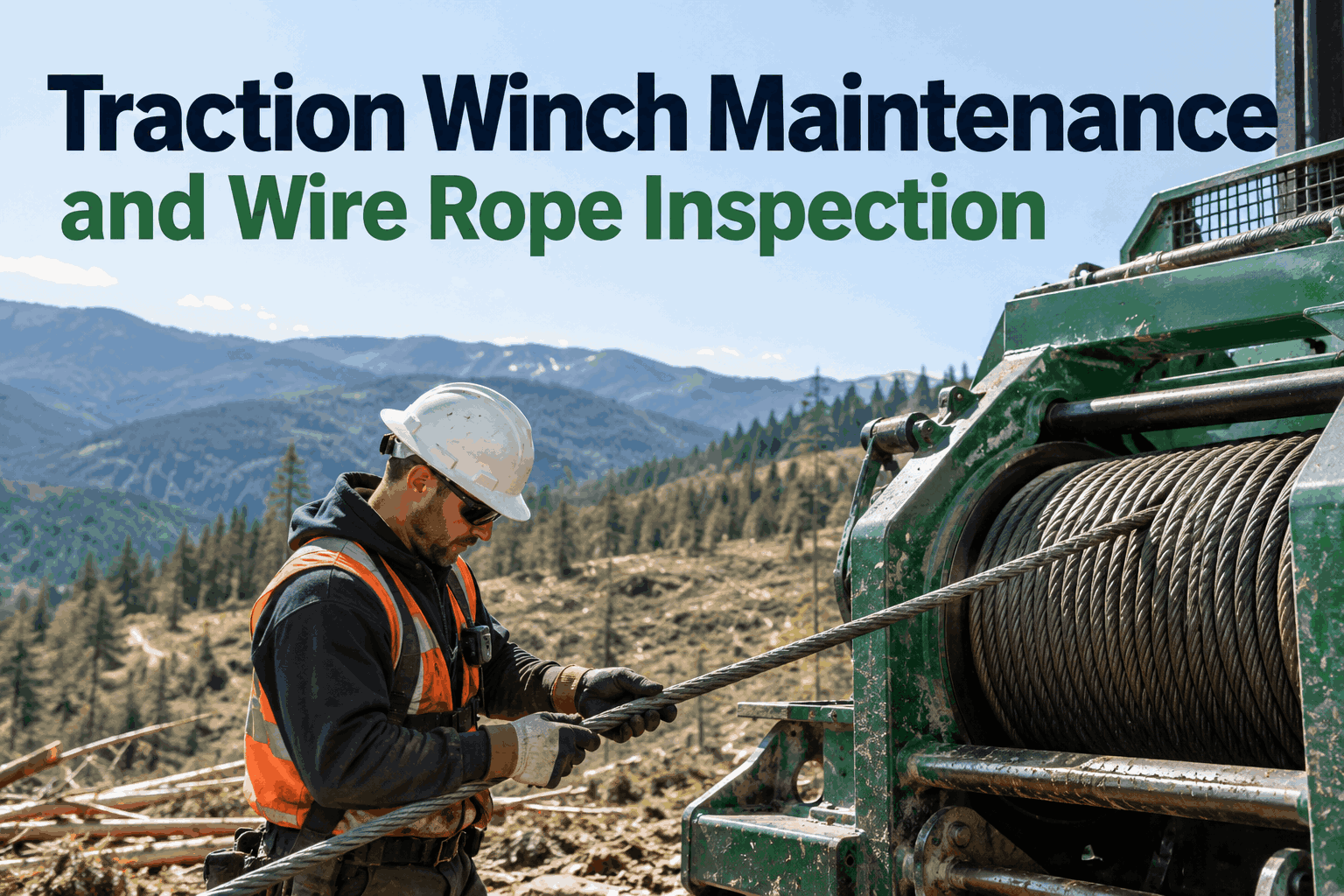
On steep ground, a traction winch is the only thing holding a harvester, or forwarder on the hill. The rope runs from an anchor up top to the machine, and if it fails, the machine doesn't slide — it goes. That is what makes traction winch maintenance different: the wire rope isn't a wear part you replace when convenient, it's a life-safety control you inspect before every shift. Catch a defect early and it's a planned swap; miss it and it's a runaway. Book a demo to see rope checks tracked.
Every Rope Is Running Toward a Retirement Line
A traction winch rope doesn't fail all at once — it degrades along its length until it crosses the line it should have come off at. Maintenance is knowing where on that line each rope sits.
Winch-assist and tethered harvesting opened ground once too steep to work safely, but it moved the risk onto one component. The traction winch, its anchoring and its rope now stand between a controlled operation and a loss-of-control event. The maintenance question is never just "is the rope okay?" — it's "how far along the line to retirement is it, and is today still inside the margin?"
Wire Rope Retirement Criteria, Marked on the Line
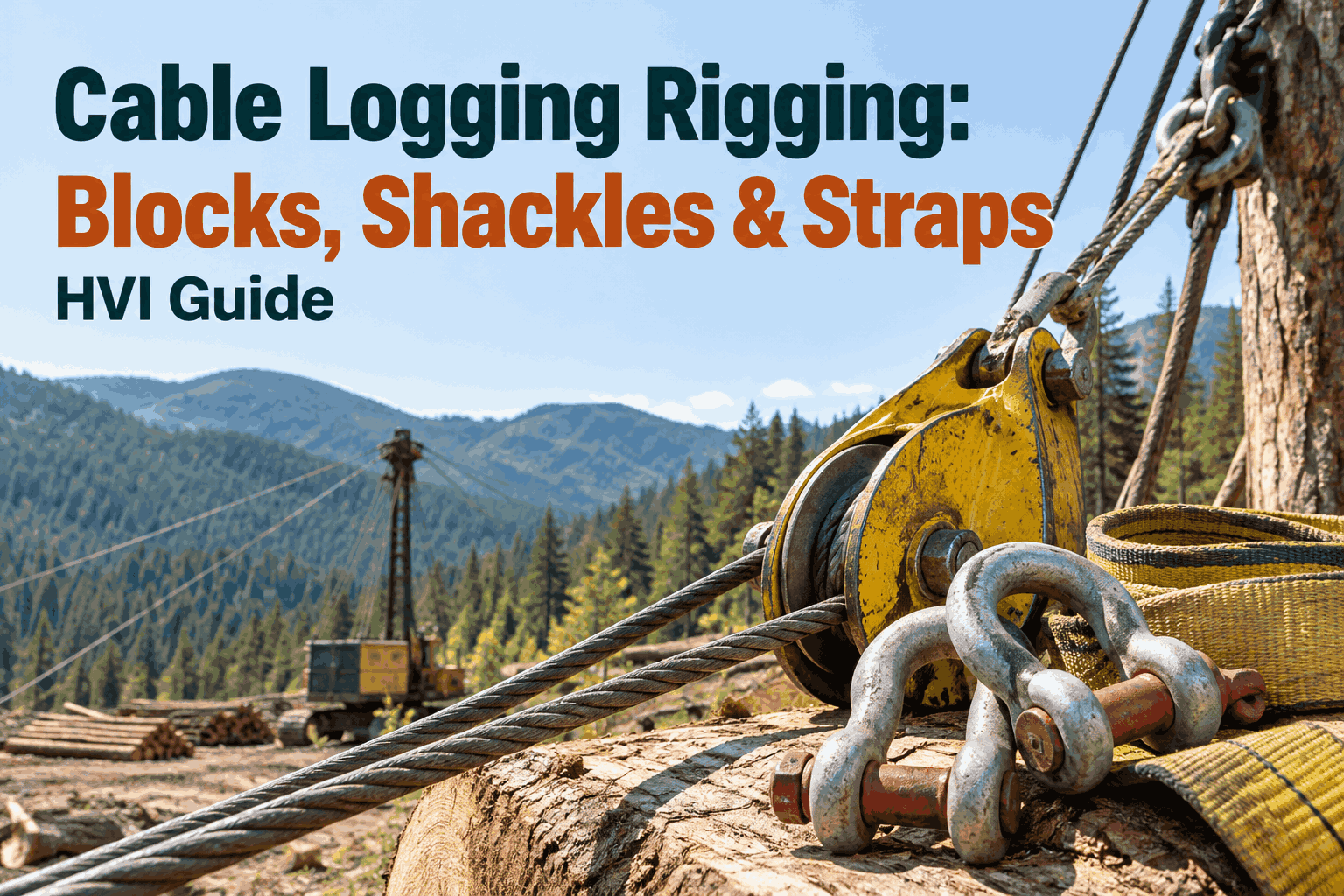
A rope earns retirement by accumulating specific, visible damage. Here's the rope itself with the defects that move it toward the line — any one past its threshold takes it out of service.
According to the BC Forest Safe winch-assist best practice, the full rope is inspected on the maker's or regulator's schedule — commonly around every two weeks or 100 operating hours — with daily visual checks of attachments. Logging each result against the preventive maintenance schedule keeps the retirement call defensible. Sign up free and record rope condition every shift.
The Load Path You're Maintaining
The rope is the headline, but the load runs through a chain — and the weakest link retires the system. A perfect rope on a failing anchor is still a failure.
Stump or anchor machine up-slope — secure, rated, checked daily.
The load-bearing line plus terminations, shackles and D-rings.
Even spooling under tension; fairlead and sheaves free of wear grooves.
Brakes and hydraulics that keep tension and hold the load in place.
Each link gets its own checks on its own interval, but they're judged as one system on one machine. Running them as a single digital inspection stops the rope, anchor, drum and brakes from falling through the cracks between them. Book a demo to see the whole chain checked.
How Often the Rope Gets Read
A rope's position on the line is read on two cadences — a fast daily look before work, and a full-length inspection on schedule. The daily catches the obvious; the scheduled catches the slow slide.
Visual pass on the rope, attachments seated, anchor secure, drum spooling even, brake and tension function test.
Full-length rope inspection, broken-wire count and diameter measurement, drum and sheave wear, hydraulic and brake service.
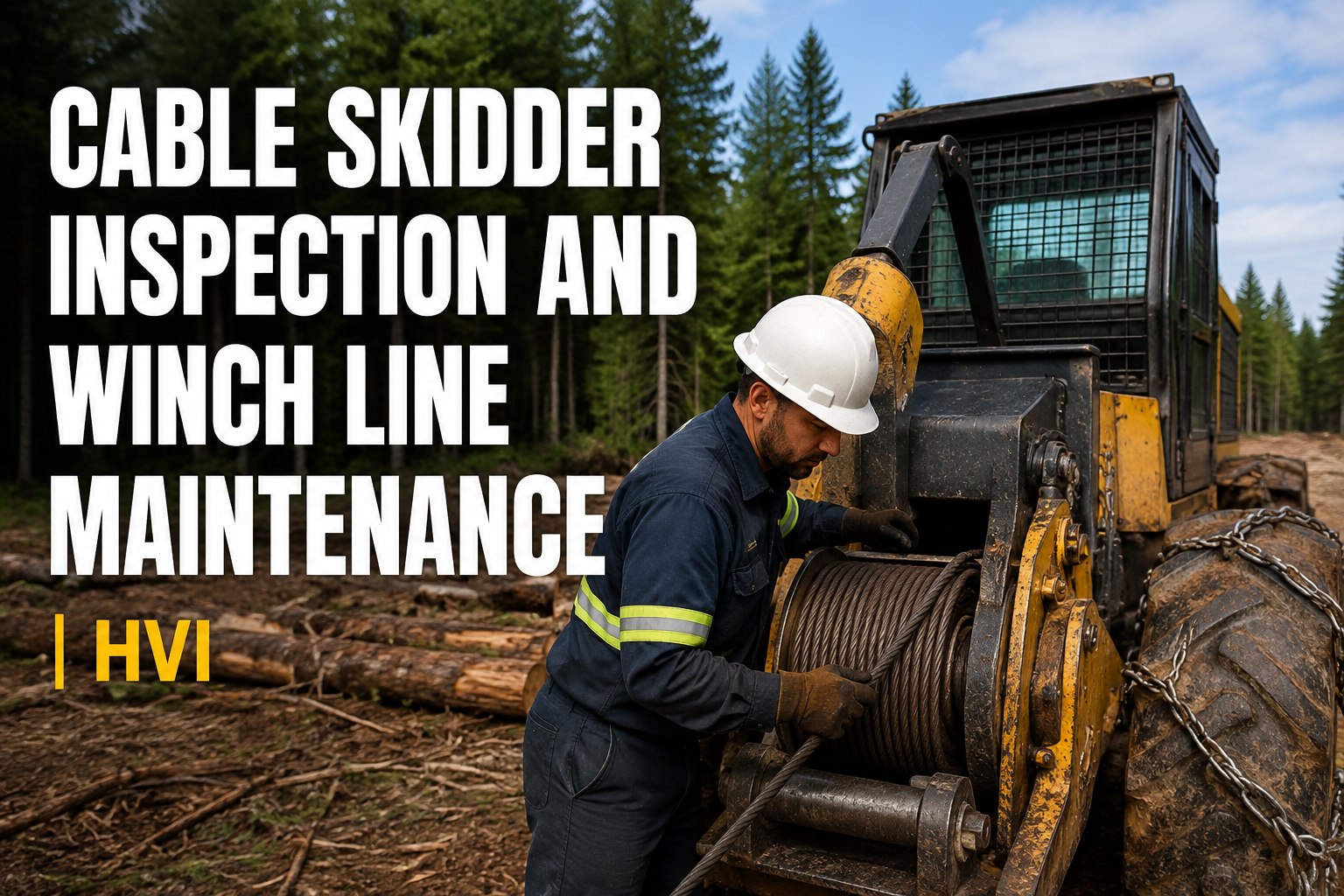
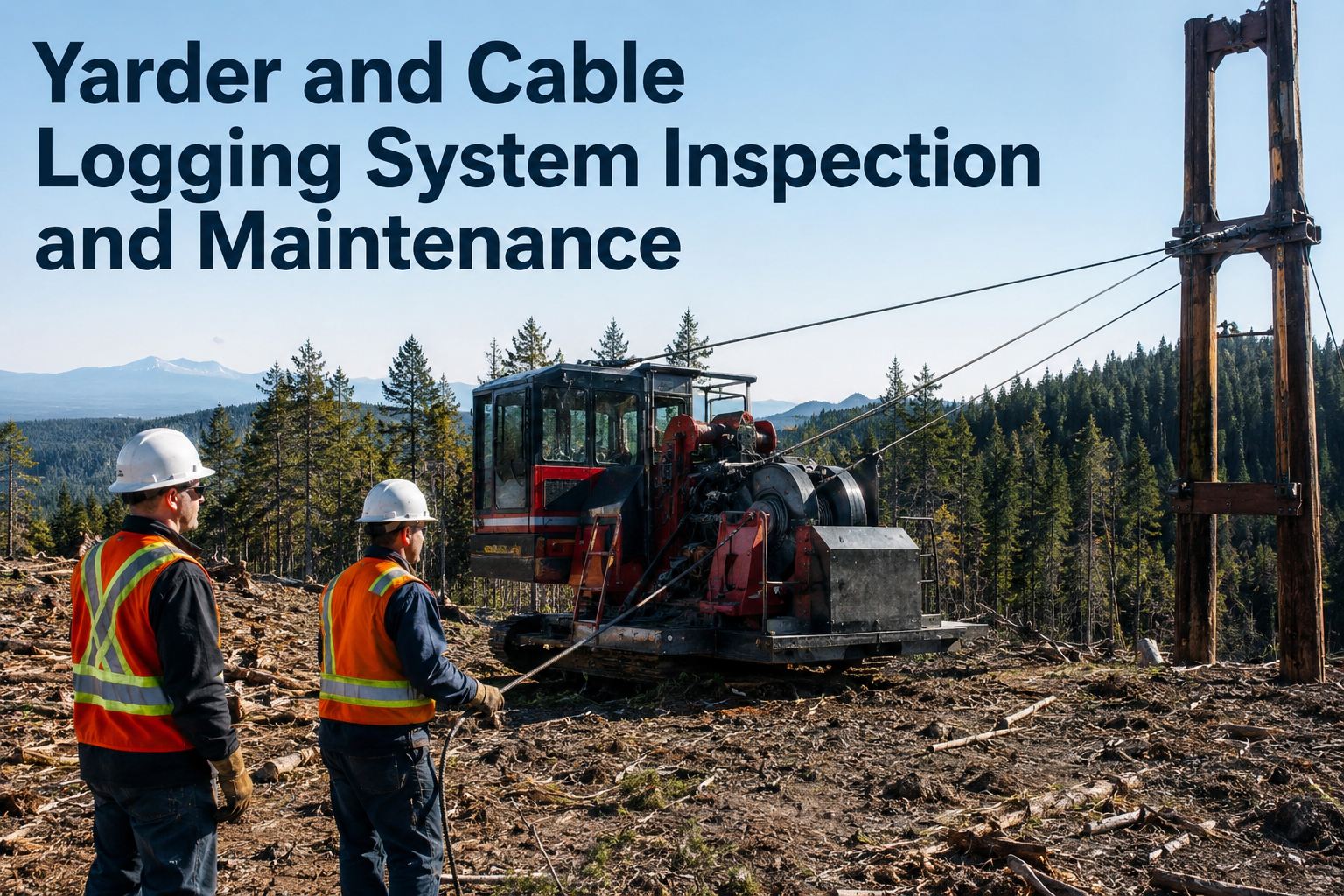
This traction-winch system is distinct from a conventional cable skidder winch line and from a tower yarder cable system — each rigs and loads differently, so each has its own checks. Book a demo to see both cadences scheduled.
A Traction Winch Maintenance Checklist
Run this before every shift on a tethered machine. Grouped by part of the load path so a flag points straight to what needs work — and every line is a go/no-go, not a note.
A flagged line is a stop, not a note — on a machine working a slope there's no "run it and watch it." Capturing it digitally ties the defect to the machine and a dated inspection record a safety officer can trust. Book a demo to run this as a digital check.
A Forestry Maintenance Manager's Take
With winch-assist, the whole crew's safety hangs off one rope — literally. Early on we treated rope checks like a tyre kick, a quick glance and go. Then a scheduled inspection found broken wires clustered in one lay we'd been walking past for a week. That rope was closer to the edge than anyone realised.
Now the pre-shift rope check is a hard go/no-go in the app, and the full inspection is on a fixed schedule with the broken-wire count logged each time. We can watch a rope move toward retirement instead of finding out the hard way. On steep ground that's not paperwork — that's the margin.
Forestry Maintenance ManagerSteep-slope / winch-assist operation
Traction Winch Maintenance FAQs
What does traction winch maintenance involve?
It covers four parts of the winch-assist load path: the wire rope or line, the drum and spooling, the anchor and attachments, and the hydraulics and brakes. Because the rope holds the machine on the slope, maintenance centers on daily rope and attachment checks plus a scheduled full-rope inspection, with the drum, anchor and brakes serviced on their own intervals.
How often should a traction winch rope be inspected?
Do a visual check of the rope and attachments before every shift, and a full-length inspection on the maker's or regulator's schedule — commonly around every two weeks or 100 operating hours, per winch-assist best practice. The daily look catches obvious damage; the scheduled inspection catches the slow decline, like clustered broken wires, that a quick glance misses.
When should a winch wire rope be retired?
Retire it when broken wires exceed the maker's allowable count, when measured diameter drops below threshold, when there's crushing, kinking or birdcaging, or when corrosion or a shock load past the elastic limit occurs. Any single one of these takes the rope out of service — judged against the manufacturer's and regulator's criteria, not a visual guess.
Why is rope inspection so critical on steep-slope machines?
On a tethered machine the winch rope is the single component holding it on the slope — there's no redundancy in the line. A rope failure isn't a breakdown, it's a loss-of-control event. That's why the rope is treated as a life-safety control inspected before every shift, rather than a wear part replaced when convenient.
How does HVI help with traction winch maintenance?
HVI runs the pre-shift and scheduled rope checks as digital inspections tied to each machine, turns a flagged defect into a work order, and keeps the dated condition history so you can watch a rope move toward retirement. It supports inspection, scheduling and records; it doesn't set rope retirement thresholds or replace the manufacturer's and regulator's criteria.
Know Where Every Rope Sits on the Line
Run the pre-shift rope check as a hard go/no-go, schedule the full-rope inspection, log the broken-wire count each time, and keep every record tied to the machine — so a rope is retired on evidence, before it ever becomes the reason a machine let go.
No credit card · See rope inspection tracking in a short demo