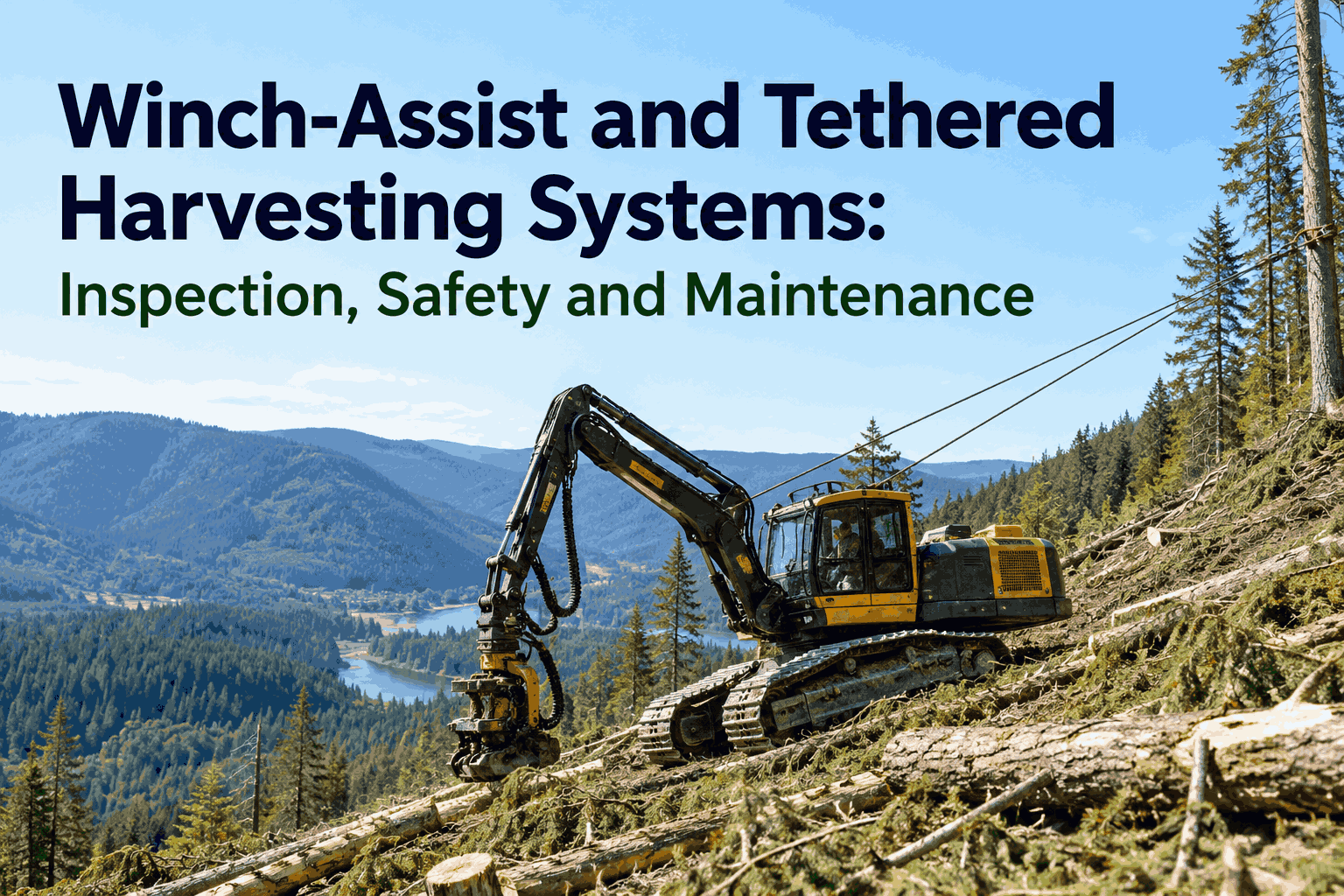
On ground too steep for a machine to hold itself, a single rope is the difference between a working harvester and a runaway one at the bottom of the hill. That is the reality of winch assist harvesting: the tether isn't a convenience, it's the brake, and the rope, anchor and winch holding the machine form a chain where one weak link ends in a fatality. If that's your ground, book a demo to see every rope and anchor check logged.
In Winch Assist Harvesting, the Rope Is the Only Brake on the Hill
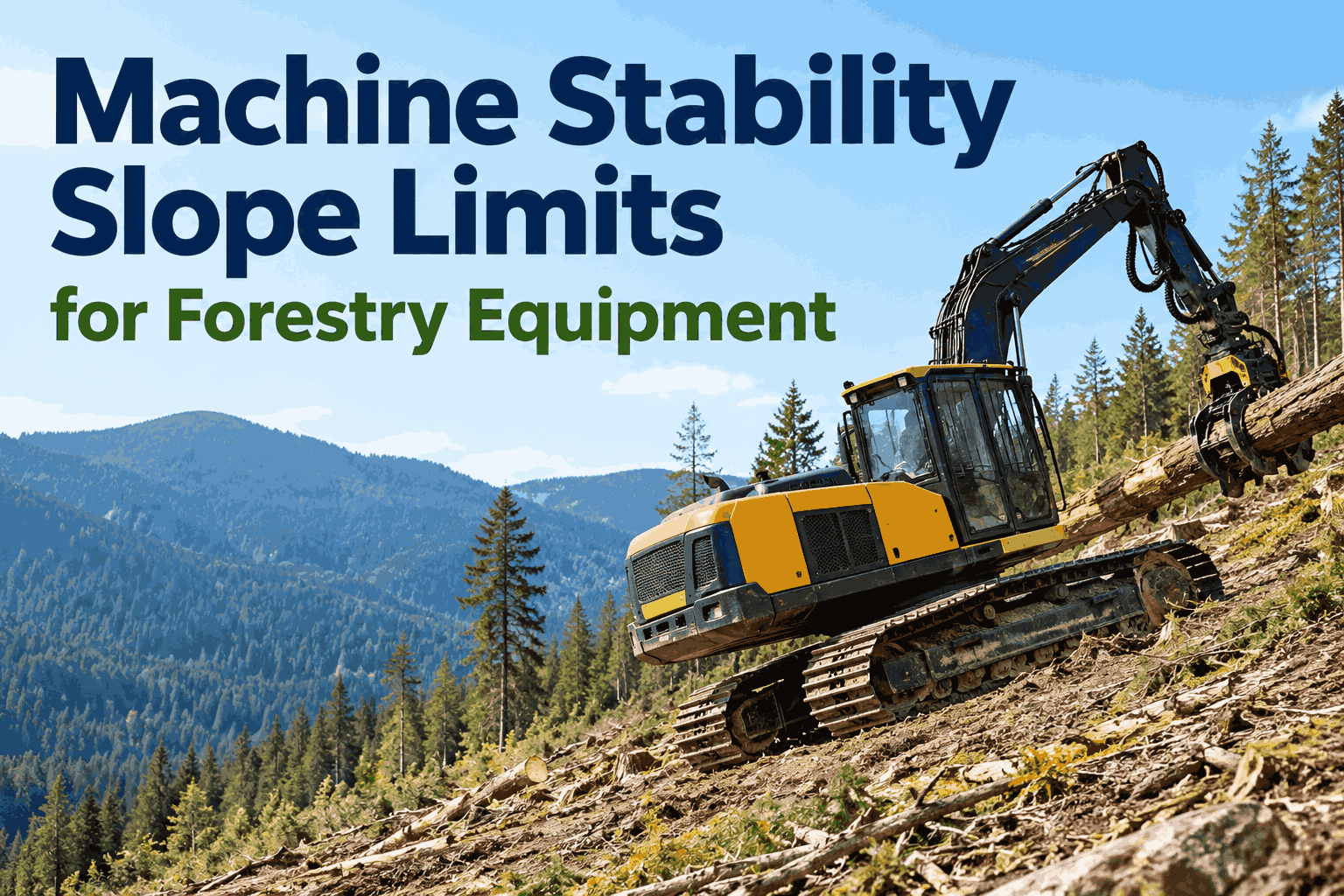
On a slope past about 40%, a tracked machine can't hold itself. The traction winch and rope do — so the whole system is one holding chain, anchor to machine, and every link has to be sound before the first pull.
The rope is the one you cannot fully see
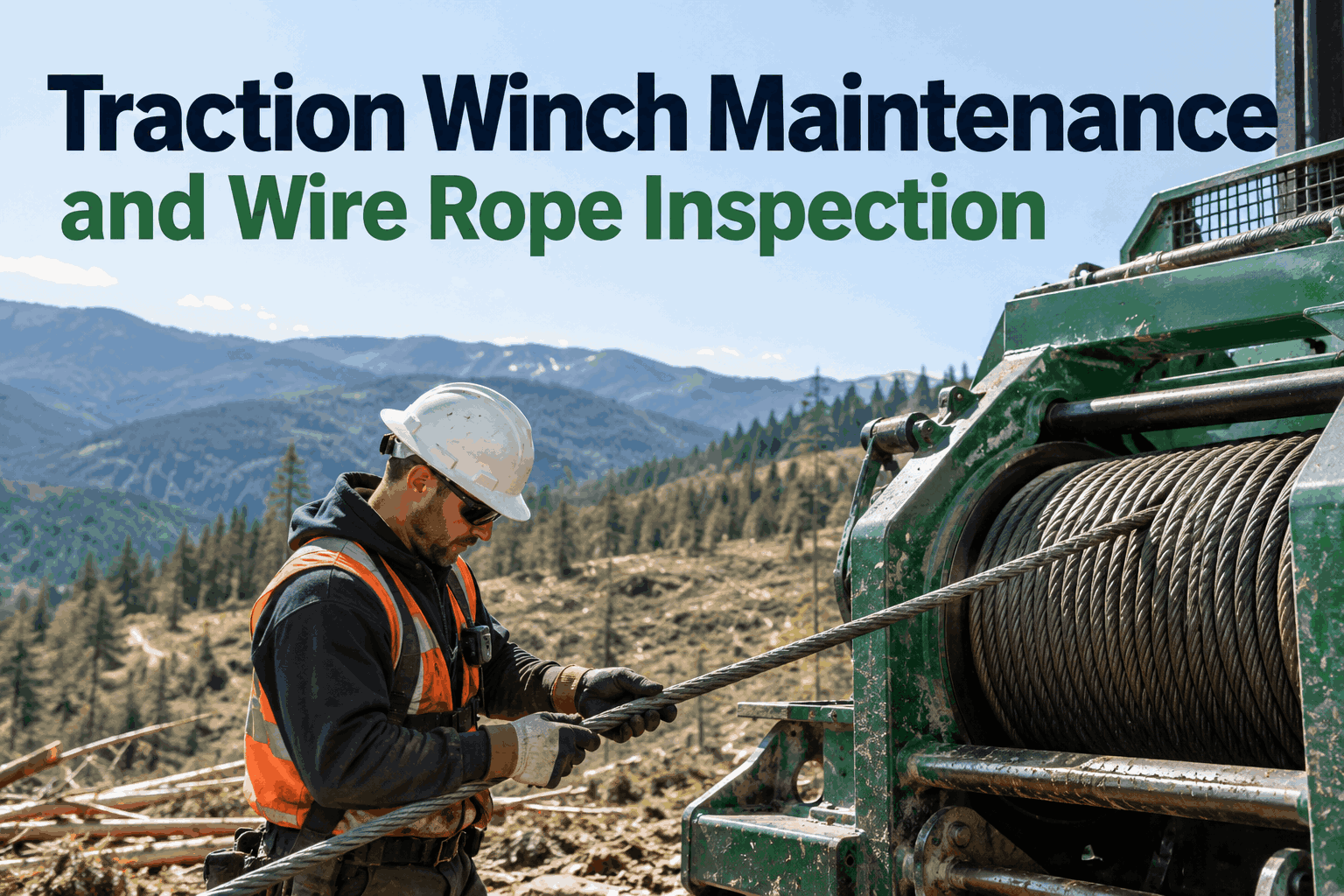
Wire rope inspection and retirement criteria for winch-assist loggingEvery link in the chain matters, but the rope is the one that fails quietly. A visual check only sees the outer wires — roughly a fifth of the rope's strength — so a disciplined set of retirement rules, not a glance, is what keeps a tethered machine on the hill. You can book a demo to see rope retirement limits enforced on every check.
Document rope hours, damage, shock-load events and splice locations against the rope itself — a condemned rope that gets logged and tagged out never makes it back onto a drum by mistake.
What to check before the first pull
A tethered machine inspection the operator runs every shiftSteep-slope work starts with a pre-start walk of the whole chain, not just the machine. Here's what that looks like when it's logged instead of remembered.
The stability test is the one nobody should skip: release the tension and confirm the machine sits without slipping, so a tether failure doesn't become the first time you find out. You can book a demo to see a failed check tag the rope out automatically.
Make the rope check the one thing that never gets skipped
HVI puts a tethered pre-start inspection on every machine, enforces rope retirement limits, and turns a flagged rope into a tagged-out, work-ordered record before the first pull of the day.
The non-negotiables on the hill
Steep slope logging rules the inspection can't replaceA logged inspection keeps the equipment sound, but the way the crew works around a loaded rope is what keeps people alive. These are the lines you don't cross.
Nobody under or beside a loaded rope. Keep the exclusion zone clear and operate as if the rope could part at any second — because it can.
Straight up and down, never across. Working across the fall line loads the machine and the rope in ways the system isn't meant to hold.
Minimum tension, watch for shock loads. Keep tension no higher than needed and stop if a spike pushes the rope past its elastic limit.
Protect the rope from the ground. No dragging it through soil, over rock or across sharp edges, and check any redirect after weather moves.
Saturated, frozen or pouring — stop. Ground and weather change the holding math; when conditions turn, the safe call is to shut down.
How often the rope gets checked
Three triggers drive winch-assist maintenance, not the calendar aloneRope and tether inspection runs on three triggers, and the one in the middle is the easiest to let slide.
A visual run of the full rope length, terminations, connections and the stability test — every shift, before the first pull.
A thorough inspection to the manufacturer's and regulator's limits, including the internal condition the eye can't see.
A sudden tension spike or a snag means the rope is checked before work continues, not at the next scheduled interval.
Tie those triggers to run-hours and events rather than dates and the full forestry fleet stays current — the same way the delimber and processor maintenance schedule works off meter readings. You can sign up free and put your first machine on a tethered inspection today.
The thing people outside steep-slope work don't get is that the rope is the whole job. On flat ground a bad hose costs you a morning; on a 55% face a bad rope costs you a machine and maybe a person. We had a rope that looked fine on the outside and an electromagnetic test caught internal breakage we'd never have seen. That was the day it stopped being a maintenance task for me. Now the pre-start is logged, the retirement limits are built in, and a condemned rope gets tagged out the moment it's flagged — it cannot quietly go back on the drum. The crew trusts the system because the system doesn't forget.
Bringing it together
Treat the tether as the life-support line it isWinch-assist harvesting opens ground that was once off-limits, but it moves the whole risk onto one chain — anchor, winch, rope and connections — with the rope as the link you can't fully see. Inspect it before every pull, hold it to real retirement limits, work the crew around a loaded line as if it could part, and log every check so a condemned rope can't come back. Do that and book a demo is simply the step that makes it routine, or read how HVI handles the wider fleet's equipment inspections.
The operations that work steep ground for years aren't the ones that got lucky with rope — they're the ones that never let a tether check become a thing someone did from memory.
Give winch assist harvesting the inspection discipline the slope demands
Tethered pre-start inspections, enforced rope retirement limits, defect tracking and maintenance records — so the chain holding the machine is sound and documented before every shift.
Questions steep-slope crews ask
Winch assist harvesting inspection and safety, answeredWhat is winch-assist or tethered harvesting?
It's a way to harvest on slopes too steep for a machine to hold itself. A traction winch — mounted on an anchor machine or integrated on the harvester — keeps a rope under tension to a secure anchor, adding the traction and holding force the ground can't provide. It lets harvesters, forwarders and skidders work steep terrain more safely and with less ground disturbance.
How often should the winch-assist rope be inspected?
Visually before every use — the full length, terminations and connections, plus a stability test. A thorough inspection follows the manufacturer's and regulator's schedule, commonly every two weeks or 100 operating hours, and includes the internal condition a visual check can't see. Any shock load or snag means the rope is checked before work continues, not at the next interval.
When must a winch-assist wire rope be retired?
Remove it for broken wires (such as six random breaks in one lay length, three in a single strand, or two at a termination), a diameter reduction beyond about 7.5% of nominal, heavy or confirmed internal corrosion, or any kinking, birdcaging or crushing. Because visual checks see only the outer wires, a marlin spike or electromagnetic test is used to judge the internal condition.
How steep a slope needs winch-assist?
As a general guide, tracked machines working ground steeper than about 40% need winch-assist or a formal steep-slope assessment, though the real limit depends on the machine, soil, moisture and conditions. The system should be used straight up and down the slope, never across it, and operations should stop when ground is saturated, frozen or conditions turn. Always follow your local regulator's rules.
How does HVI help with winch-assist inspection and maintenance?
HVI gives each tethered machine a mobile pre-start inspection covering rope, anchor, winch, connections and the stability test, enforces rope retirement limits, and turns a flagged rope into a tagged-out, work-ordered record with full history. It supports inspection, defect tracking and maintenance records — it doesn't replace your safety program, a competent person, or your regulator's steep-slope requirements.