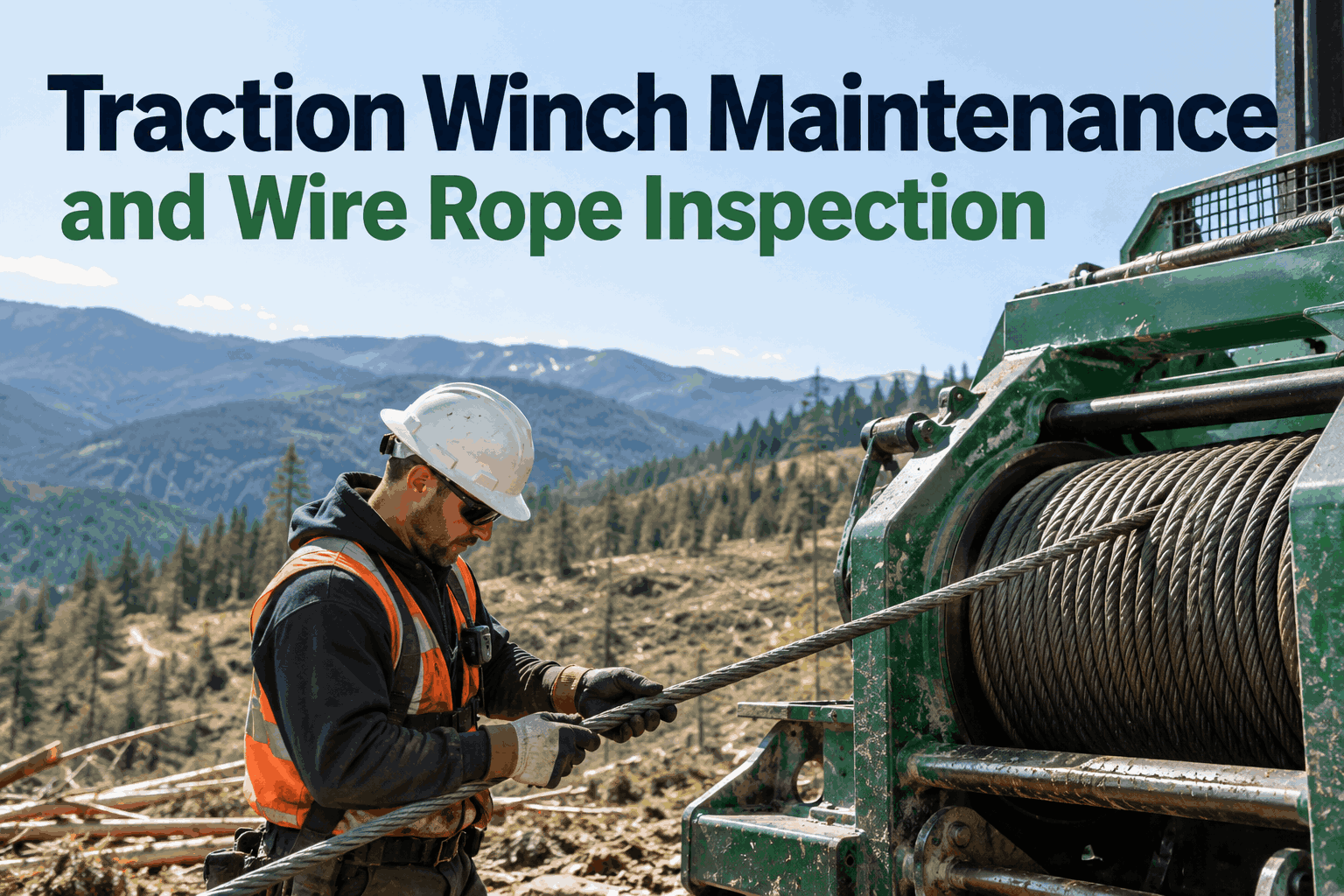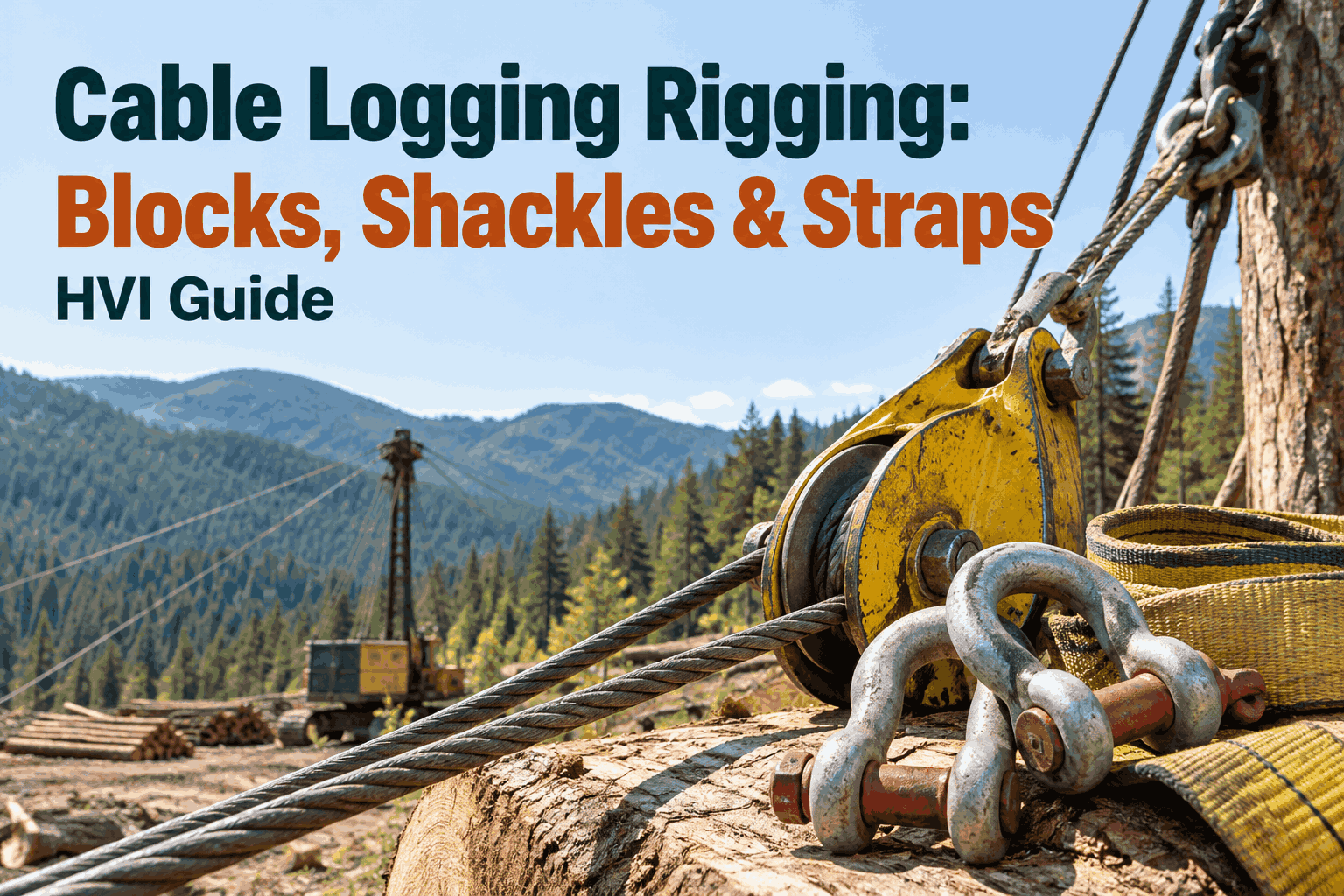
Cable logging rigging can look sound at the start of a shift while a worn sheave, bent shackle or damaged strap is already putting the crew at risk. For a yarder supervisor, the challenge is not simply checking hardware—it is knowing which component was checked, whether its rating suits the setup and what happened to a rejected item. This practical guide covers blocks, shackles and straps, with a field-ready inspection method and a way to keep the findings on record.
The Small Rigging Parts Carry the Biggest Questions.
Is the block fit for the rope? Is that shackle correctly pinned? Can the anchor strap stay in service? Make each answer part of a repeatable cable logging rigging inspection—not a rushed verbal check.
A Rigging Failure Often Starts with a Small MissWhy cable logging hardware deserves its own inspection process
A yarder may pass its maintenance checks while a separate piece of rigging hardware has been moved between crews, stored in mud or exposed to repeated loading. Blocks, shackles and straps do different jobs, so one generic “rigging OK” box cannot capture all the failure modes.
Think about a block that binds during operation. The rope may experience additional wear, the hardware may no longer align as intended and the crew might not know that the same block was flagged at the previous landing. The physical decision belongs to a qualified person; the inspection record should make that decision visible to the next crew.
HVI helps with the documentation side: digital inspection checklists, equipment records, safety management and maintenance follow-up. It does not calculate rigging forces, certify a component or replace manufacturer instructions.
For related equipment, see the yarder cable logging system inspection guide. For your own process, see how HVI organizes field inspection findings.
Three Components. Three Different Inspection Questions.A practical cable logging rigging checklist for field supervisors
Inspect the complete load path, but ask the right questions for each piece. The examples below are screening points; exact rejection thresholds must come from the applicable rules, approved procedures and manufacturer.
Logging Rigging Blocks
Check the sheave, shell, bearings, pins and line guards—not just the outside surface.
- Cracks, deformation or excessive wear
- Free rotation and correct lubrication
- Sheave groove and rope compatibility
- Secure pins, guards and attachment
Shackles and Pins
Check the whole connection, including the exact pin and intended loading direction.
- Body wear, cracks and distortion
- Correct pin, threads and retention
- Legible identification and rating
- Compatibility with connected hardware
Wire-Rope and Synthetic Straps
Inspect according to strap material, termination type and attachment arrangement.
- Broken wires, cuts or damaged fibers
- Crushing, abrasion and heat damage
- Eyes, splices and end fittings
- Identification and rated capacity
An effective forestry rigging checklist also records the component ID, inspection date, inspector, result and follow-up. Start free to organize inspection records in HVI.
The Load Rating Trap: “Rated” Does Not Mean “Suitable”What supervisors must verify before a block or shackle is put under tension
Rope tension, redirect angle and dynamic loading affect the force carried by the block and its attachment. This is an illustration, not a force calculation or an approved rigging design.
A Defect Found at the Landing Needs a Clear Next StepFrom a failed inspection to a controlled hardware decision
A strap with damaged fibers or a shackle with a questionable pin should not go back into the general rigging box. Use a stop-use process that makes the status unmistakable to the next person who handles the item.
Record and Release
Document the result and release the item only when all required checks and approvals are satisfied.
Stop, Tag and Isolate
Prevent reuse, record the finding and route the item for qualified review, replacement or retirement.
- Replacing a shackle pin with an unverified substitute
- Continuing to use a block with a damaged or binding sheave
- Reusing a strap because it held the previous load
- Repairing load-bearing hardware without appropriate authorization
- Closing an inspection finding without documenting the final disposition
For the larger rigging setup, see HVI's tailhold and stump anchor assessment guide. Book a demo to discuss defect documentation.
What a Useful Digital Rigging Register Looks LikeMake each component traceable—not just the yarder it came from
Picture two crews sharing a spare block. One crew notices side-plate wear, removes the block and sends it back to the yard. A week later, another crew sees the same block in storage. Without an identifiable record, its status can become a guessing game.
A useful cable logging equipment inspection record connects the hardware ID, location, date, inspector, finding, service status and corrective action. Photographs and relevant manufacturer documents can support the record where configured.
HVI's digital inspection checklists, tool and equipment management, safety management and maintenance documentation can support a more consistent recordkeeping process. Confirm the exact component-level workflow your team needs in a demo.
Explore HVI digital inspection software or see how equipment inspection history can be organized.
Consistent Checks
Use defined inspection questions instead of relying on memory alone.
Visible Findings
Keep component condition and defects associated with an identifiable record.
Maintenance Follow-Up
Document the action taken when a block, shackle or strap fails inspection.
Better Handover
Help supervisors retrieve the inspection history when equipment changes crews.
When Should Cable Logging Rigging Be Inspected?Build the schedule around use, changes and risk—not a calendar alone
Inspect before loading
Check hardware condition and suitability before it is placed into service. Washington's logging rules require rigging inspection before use by an authorized, qualified person.
Recheck after abnormal loading
Suspected overload, impact, unusual movement or visible damage calls for immediate assessment before further use.
Examine the full history
Follow manufacturer guidance, applicable law and site risk assessment for detailed checks and disposition of wear.
Jurisdiction matters. Washington WAC 296-54-54710 addresses rigging inspections, while 296-54-54750 addresses blocks and related requirements. These are jurisdiction-specific examples, not universal global rules. Always check the requirements that apply to your site.
Cable Logging Rigging — Frequently Asked QuestionsQuick answers for yarder operators, contractors and safety managers
What should a cable logging rigging inspection cover?
It should examine the condition, identification and suitability of the relevant hardware: blocks and sheaves, shackles and pins, wire-rope or synthetic straps, their connections and the complete rigging arrangement. Use material-specific and manufacturer-specific criteria rather than a single generic pass/fail rule.
What defects mean a logging block should be taken out of service?
Cracks, unacceptable wear, damaged sheaves, binding bearings, distortion, missing retaining hardware and other conditions prohibited by the manufacturer or applicable rules require the block to be isolated and evaluated. The final disposition must be made by authorized, qualified personnel.
Can I use a different shackle pin if the original is missing?
Do not substitute an unverified pin. The pin must be compatible with the specific shackle and meet the manufacturer's requirements, including dimensions, material, retention and rating. Hold the shackle out of service until its suitability is established.
How often do rigging blocks, shackles and straps need inspection?
Inspection timing depends on local regulations, equipment type, manufacturer instructions and exposure. Pre-use inspection is required under some logging regulations, and additional checks are appropriate after suspected overload or damage. A site-specific inspection program should document the applicable triggers.
How can HVI help manage forestry rigging inspection records?
HVI offers digital inspections, equipment records, safety management and maintenance documentation that can help teams organize checks and findings. HVI does not calculate working load limits or approve rigging designs; those decisions remain with qualified people. Ask for a demo to confirm the best component-level workflow for your operation.
“We Checked It” Is Not an Inspection History.
Keep the judgment with your qualified crew and give the inspection a repeatable checklist, identifiable hardware record and documented follow-up. Show your supervisors what was inspected, what failed and what happened next.
Digital checklists · Equipment history · Maintenance documentation