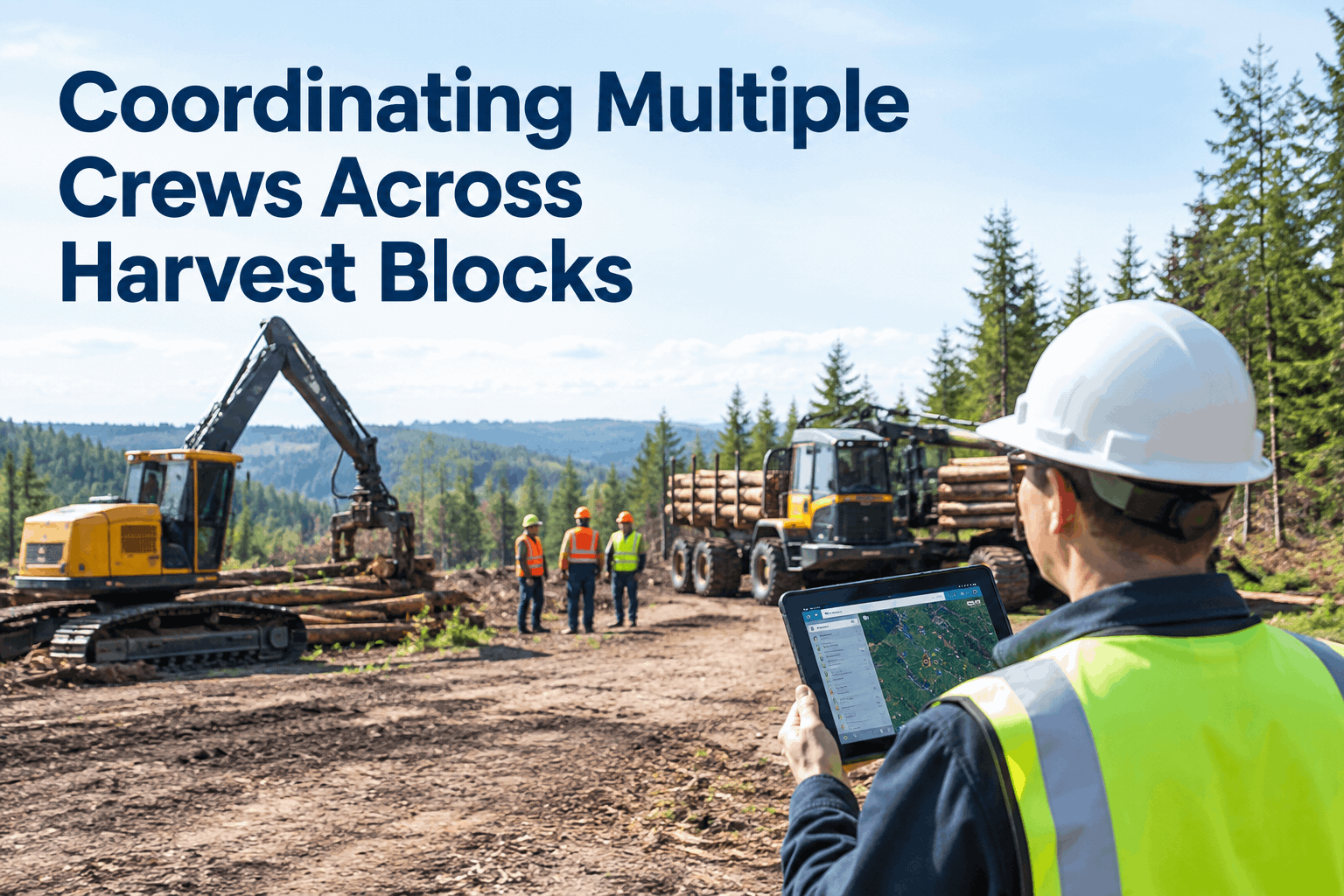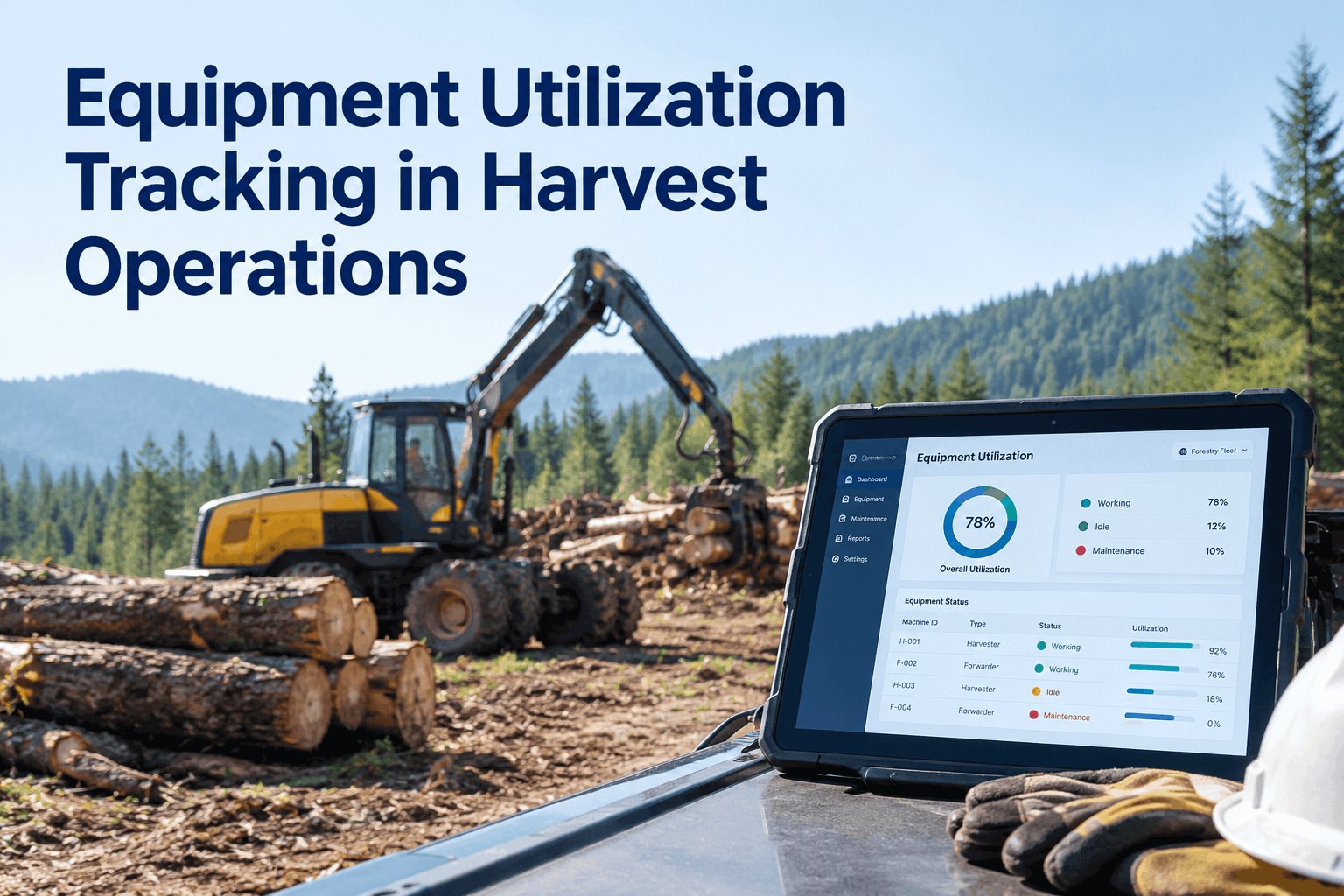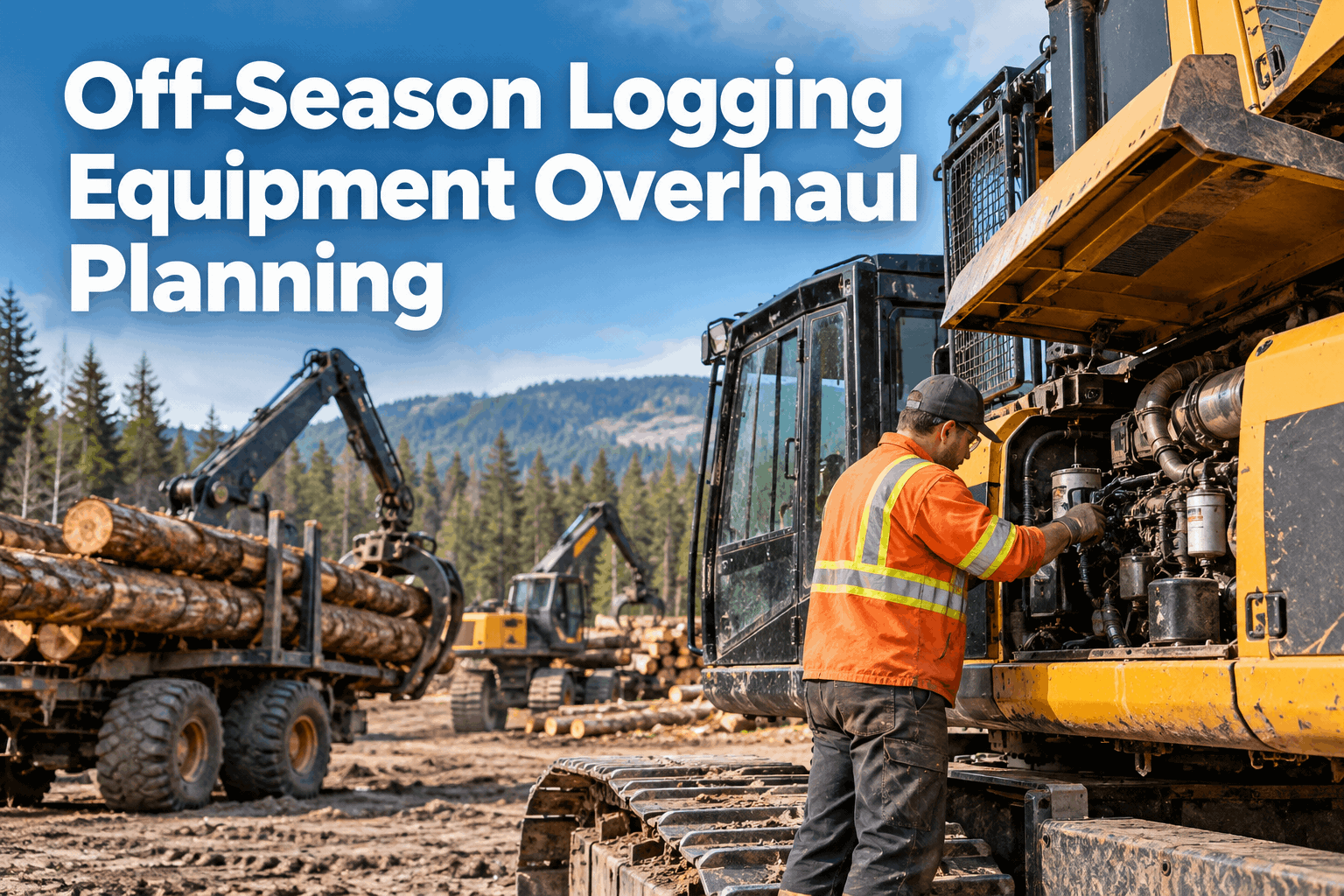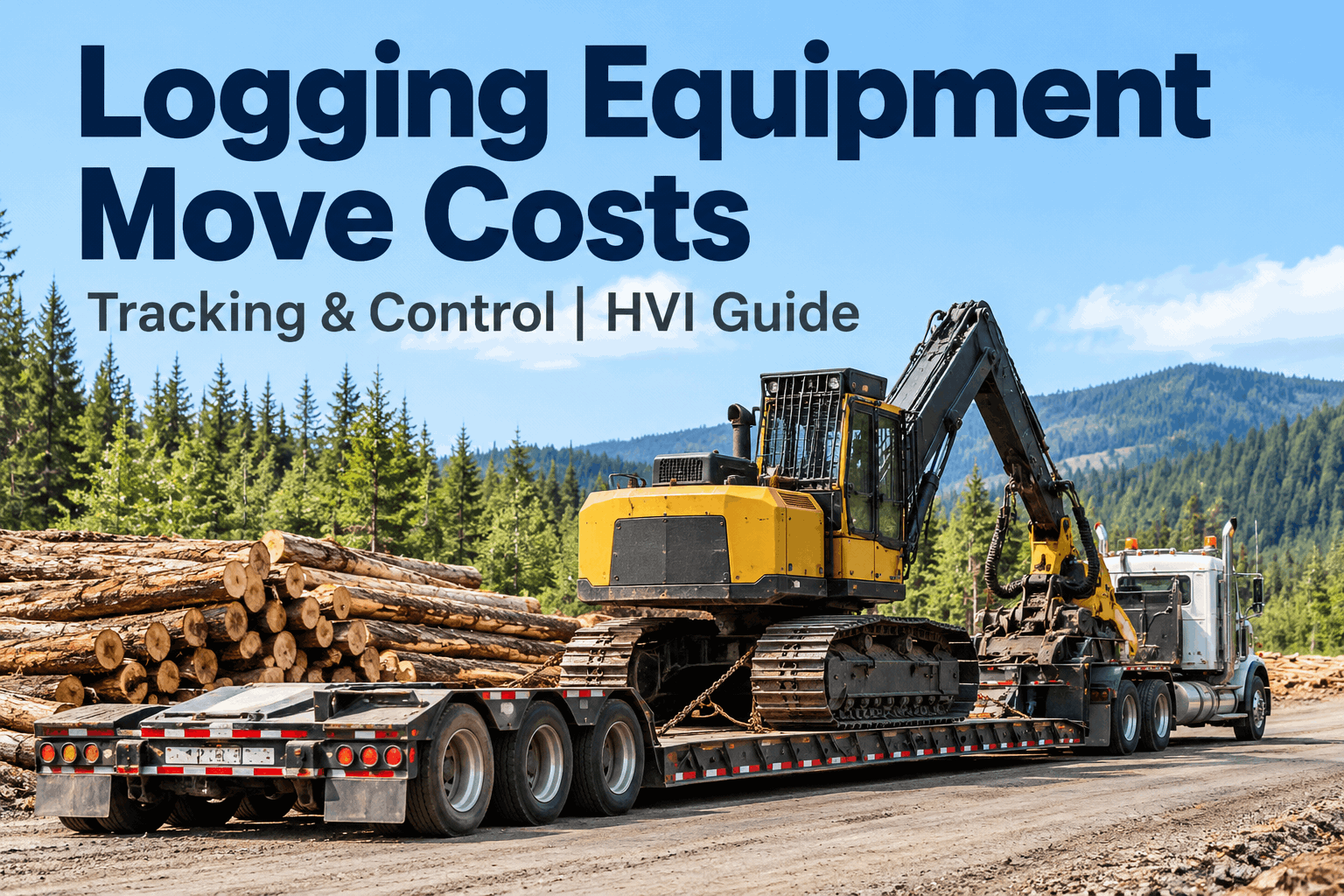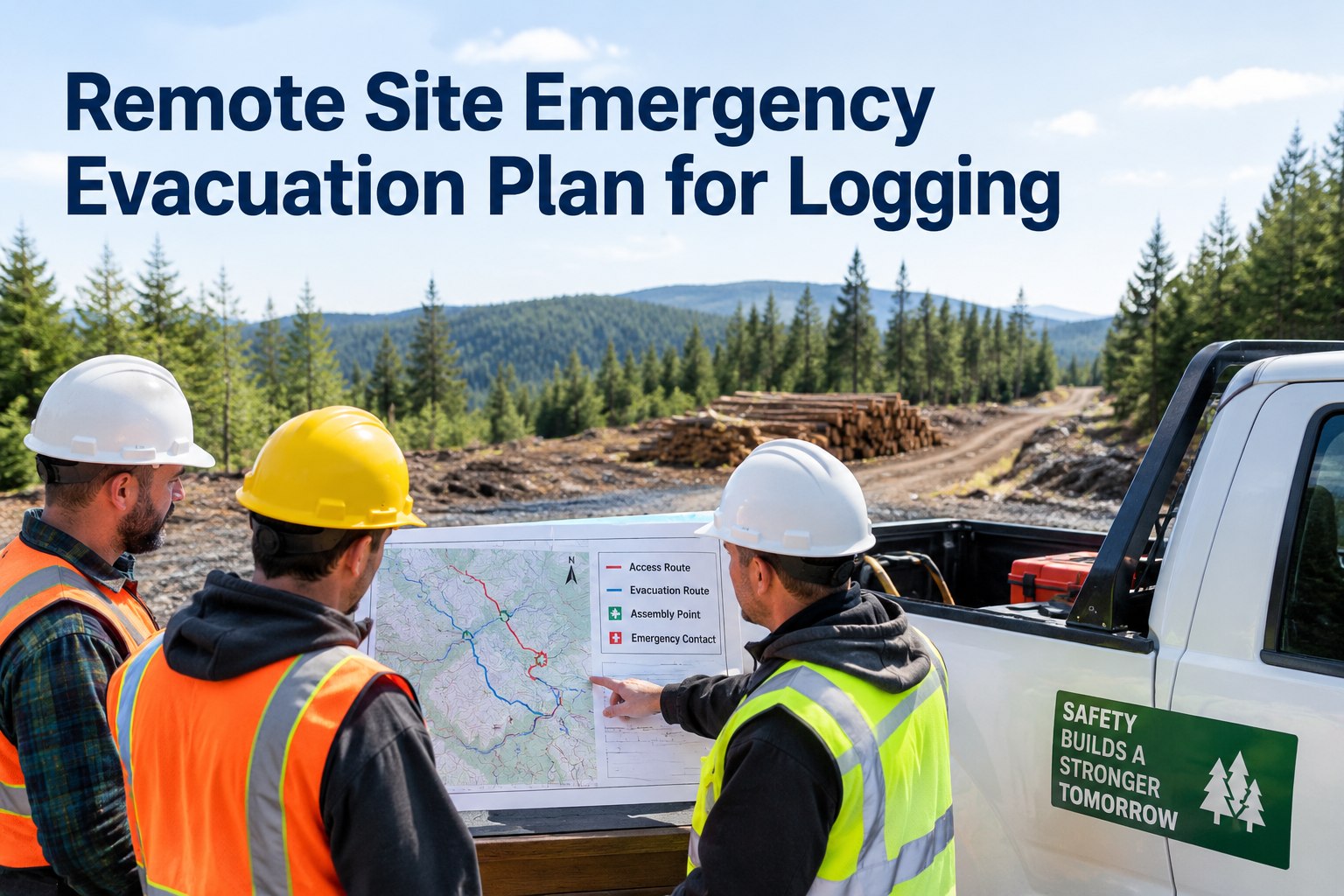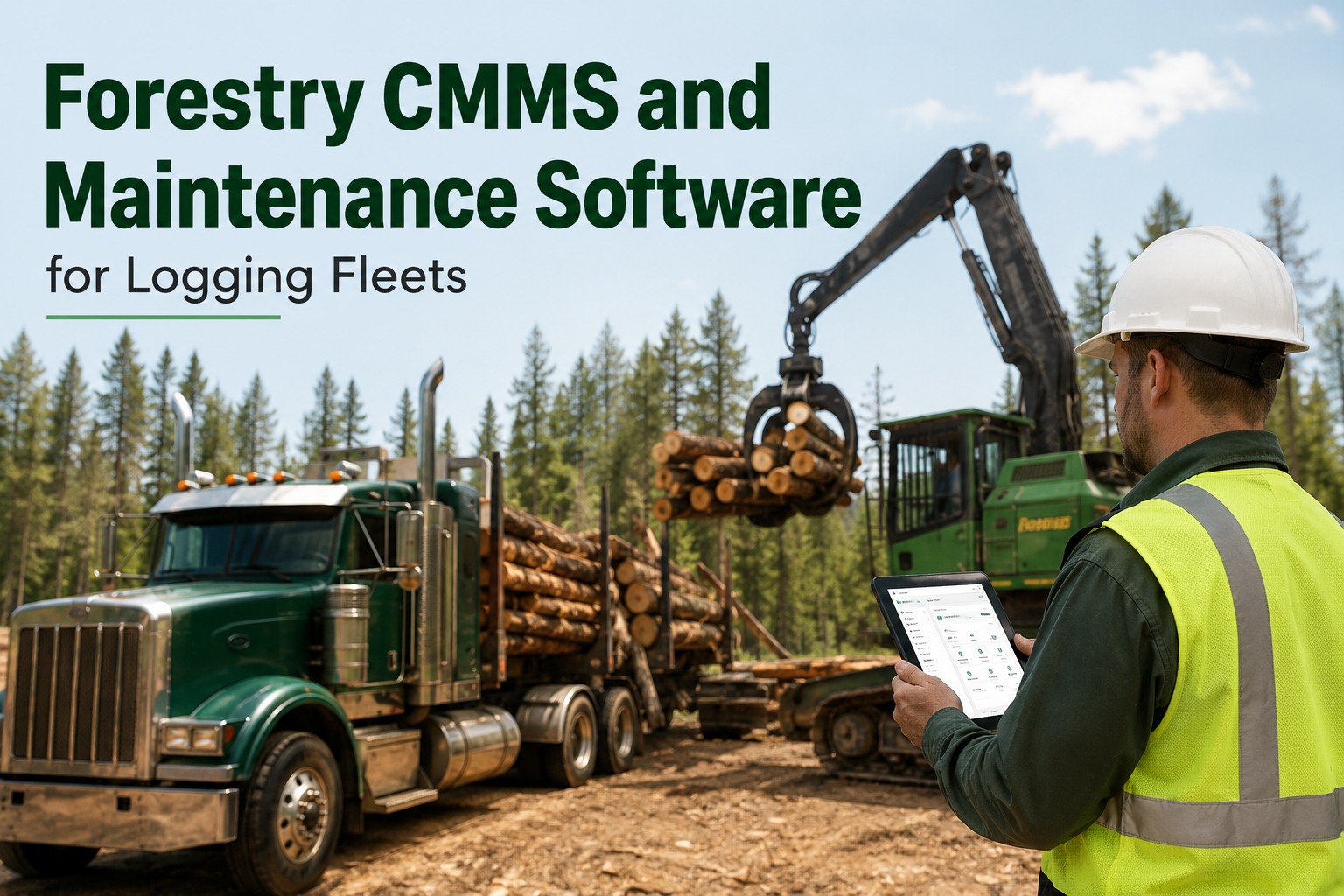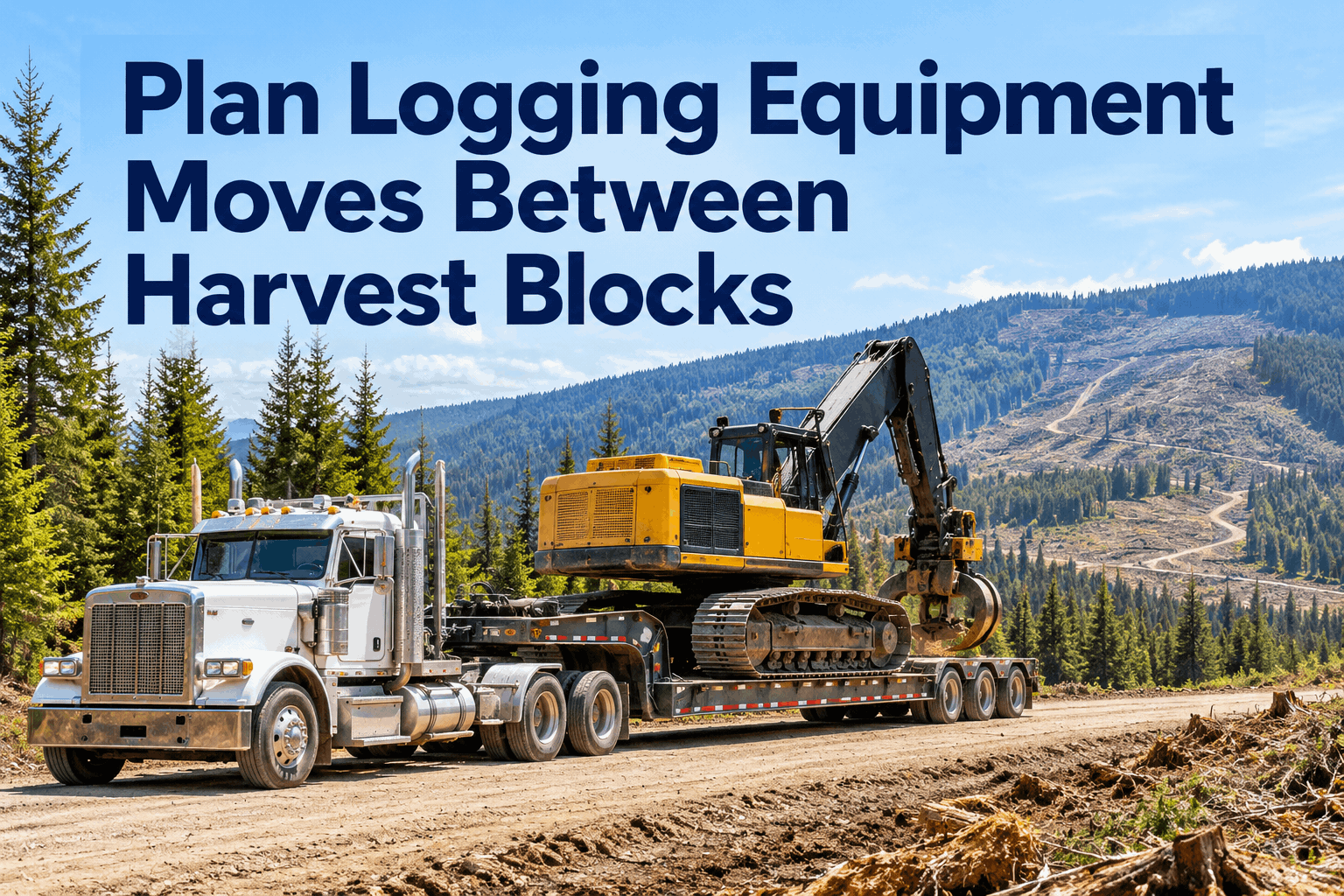
Logging equipment move planning determines whether the next harvest block starts on schedule or loses days waiting for a lowboy, a repaired processor, or a road that was never checked. Moving a harvester, forwarder, skidder, loader and support equipment is a coordinated handoff—not simply a trucking booking. This guide gives forestry managers a practical release-to-restart plan, including inspection gates, sequencing, and a field checklist. Book a demo to organize forestry equipment readiness with HVI.
Move the fleet once. Start the next block ready.
A field-ready framework for coordinating machines, lowboy slots, maintenance, access roads, and crews without losing the first productive shift.
What a Successful Harvest Block Move Actually RequiresFive linked decisions, not five separate phone calls
The equipment move is complete only when the next block can produce safely. A transport company may deliver the machine on time while the operation still waits for a fuel truck, landing preparation, a qualified operator, or a repair that should have been completed before loading. Build one plan with named owners for each handoff.
Agree when the current block can surrender each machine without disrupting its final production tasks.
Clear inspections, outstanding defects, preventive maintenance, and attachment condition before dispatch.
Confirm dimensions, route restrictions, permits, carrier availability, loading equipment, and tie-down requirements.
Verify the new landing, road conditions, unloading space, communications, and fuel/service access.
Complete arrival checks, reconnect attachments, resolve transit damage, and release machines to production.
Use an equipment-specific readiness record rather than a blanket “fleet ready” status. A forwarder may be available today while the harvester still needs a hydraulic hose and the lowboy cannot access the new landing until grading finishes. Book a demo to review equipment inspection and maintenance records before your next transfer.
Build the Move Backward From the First Production ShiftA practical release-to-restart sequence
Choose the target production start at Block B first, then work backward through unloading, transport, loading, and release. This exposes conflicts earlier than a simple calendar entry labeled “move day.” The schedule below is illustrative; actual lead times depend on distance, weather, permits, equipment size, and road conditions.
Confirm haul-road geometry, bridge and culvert limits, gradients, overhead clearance, landing size, and emergency access. Identify the receiving supervisor and alternate access plan.
Reserve lowboy capacity, verify permits and escort needs, plan loading/unloading, and schedule the last PM window. Flag defects that could prevent safe transport.
Inspect tires or tracks, leaks, brakes, lights, guards, attachments, securement points, and transport configuration. Record the release decision for each asset.
Use an agreed dispatch sequence. Record departure and arrival, verify the receiving area is controlled, inspect for damage, and capture any exceptions immediately.
Perform post-move checks, confirm attachments and services, brief operators on new routes and hazards, and document the first-shift availability outcome.
Protect the restart date with explicit hold points: if a critical safety defect remains open, or site access is not verified, the responsible supervisor must reassess the move. Do not use a reporting dashboard as a substitute for on-site safety authority.
Use a Machine Release Board, Not a Verbal “Ready”A single view of maintenance blockers before loading
Every asset needs a documented status that means something operationally. The illustrative board below separates mechanical readiness from transport and receiving-site prerequisites. HVI can support the inspection, maintenance, and asset-record side of this process; carrier bookings and site-access approvals still require your own operational coordination.
Status values are examples, not actual HVI screenshots or automatic HVI readiness scores. Define local rules for who may approve a machine's release and what constitutes a critical defect.
Choose the Right Loading and Hauling OrderSequence by dependency, not simply by machine availability
A good transport sequence considers which equipment the receiving block needs first and which machine must remain at the old block until closeout. If the loader is needed to prepare or support unloading, it may need to arrive early. If the harvester is the production bottleneck, protect its arrival and commissioning window. The correct order depends on the harvest method and local operating plan.
Confirm access work, communications, fuel, service truck, and unloading support are available before the first major machine arrives.
Move the machine that controls the first productive task, subject to safe loading and site readiness.
Bring forwarders, skidders, processors, and other machines in the order that prevents idle waiting at the new block.
Release equipment needed to finish the old block only after its work and restoration obligations are complete.
Build a fallback if one machine is delayed. For example, can road preparation continue while a harvester is repaired, or will the site be idle regardless? Separate tasks that can proceed independently from those that require the complete production system.
Pre-Move Checklist for Forestry EquipmentA field-ready inspection and coordination gate
Use this checklist at the release meeting and again before dispatch. It combines machine condition with operational prerequisites; it does not replace OEM transport instructions, carrier securement procedures, or site-specific safety assessments.
Machine condition
- Review open defects and confirm critical repairs are closed
- Complete scheduled preventive maintenance due before transfer
- Inspect fluid leaks, hoses, guards, tires or tracks
- Check battery, starting system, lights, and warning devices
Transport configuration
- Verify dimensions, weight, attachment removal, and load plan
- Confirm OEM-approved transport positions and restraints
- Inspect loading ramps, ground bearing, and securement points
- Check required permits, escorts, and carrier documentation
Receiving block
- Confirm access road, bridge, and culvert suitability
- Verify landing and unloading space is prepared
- Arrange fuel, service, spill response, and communications
- Brief the receiving crew on site hazards and arrival timing
Restart authorization
- Inspect for transit damage and leaks after unloading
- Reconnect and inspect attachments and guarding
- Complete post-move function checks under site procedures
- Record approval, defects, and first-shift availability
Give each item an owner, a due time, and an evidence field. A checkbox without accountability can conceal unresolved work. For digital equipment inspections and repair history, sign up free to organize forestry machine maintenance records in HVI.
Prevent Maintenance Delays From Becoming Move DelaysMake the transfer a planned service opportunity
Machine moves create a natural inspection window, but they also concentrate risk: deferred work from the previous block may surface just as the carrier arrives. Review service intervals and known defects early enough to order parts and reserve workshop time. Avoid adding nonessential work to the critical loading window unless the machine genuinely needs it before transport or operation.
Before release
Use equipment hours, recent inspections, work orders, and maintenance history to decide which jobs must be finished. Confirm availability of technicians, parts, and a safe work area.
Examples include a leaking hydraulic line, worn track components, damaged lights, loose guards, or a scheduled service that would otherwise interrupt the first week at the new block.
After arrival
Record transport damage, reconnect attachments as directed by the OEM, and verify machine condition before release. A post-move check should not assume that the pre-load inspection remains valid.
Keep a clear distinction between maintenance completion, safe-to-transport authorization, and ready-for-production authorization.
HVI's preventive maintenance scheduling and maintenance records can help managers see what is due and what remains unresolved. Book a demo of HVI preventive maintenance planning for forestry equipment to review the workflow.
Track Three Timelines to Find the Real DelayTransport time is only one part of relocation downtime
Teams often measure a move from truck departure to arrival, even though the productive machine may have stopped earlier and restarted much later. Separate the clocks so your next move plan targets the right bottleneck.
Time between planned release and actual loading, including maintenance, crew, and access delays.
Loading, permitted travel, queueing, unloading, and any route interruptions.
Time between unloading and productive operation, including setup, checks, and site preparation.
Illustrative example: A harvester is released Monday at 08:00, departs Tuesday at 10:00, arrives Tuesday at 16:00, and restarts Wednesday at 12:00. Its nonproductive transfer window is 52 hours, while travel accounts for only six hours. This is why a transport-only KPI misses the larger operational issue.
Useful measures include planned versus actual restart time, move-related downtime by asset, maintenance defects discovered at release, and repeat delay causes. Compare similar moves rather than treating every block, route, and season as identical.
Who Owns Each Handoff?A simple responsibility map prevents last-minute surprises
Sets final production release, coordinates crews, and confirms the receiving block is operationally ready.
Maintains the asset list, transport configurations, machine sequence, and equipment availability plan.
Owns inspections, defect closeout, service readiness, and documented machine condition.
Confirms carrier, route, permits, load arrangements, and arrival communication.
Use a short pre-move coordination meeting with one shared issue log. Escalate only decisions that affect the release date, safety, transport feasibility, or restart time. Keep the operational plan outside HVI where needed, while using HVI to maintain the equipment-side evidence.
Logging Equipment Move Planning: FAQsAnswers for forestry fleet and harvest operations managers
How far ahead should logging equipment moves be planned?
Start as soon as the next harvest block and approximate release window are known. Route restrictions, lowboy availability, permits, machine dimensions, and maintenance needs can require more lead time than the physical haul. Confirm the exact timeline with the carrier and local authorities.
What should a logging equipment move checklist include?
Cover machine condition and open defects, preventive maintenance, loading configuration, dimensions and weight, carrier and route approvals, landing access, receiving crew readiness, and post-unloading checks. Assign an owner to every item rather than relying on an unverified group sign-off.
Which logging machine should move first?
There is no universal order. Move the support assets and production equipment according to what the receiving block needs first, while keeping enough capability at the old block to complete closeout. Road access, loading support, and the production bottleneck determine the sequence.
How can forestry contractors reduce relocation downtime?
Work backward from the target restart, complete maintenance before the carrier arrives, verify receiving-site access, and track release wait, transport time, and restart wait separately. Review the largest recurring delay after each transfer and update the next plan.
How does HVI support forestry equipment move planning?
HVI helps maintain equipment asset information, inspections, preventive maintenance schedules, and maintenance records. These support machine readiness decisions, but transport dispatch, route permitting, and harvest-site authorization remain operational responsibilities outside the maintenance software.