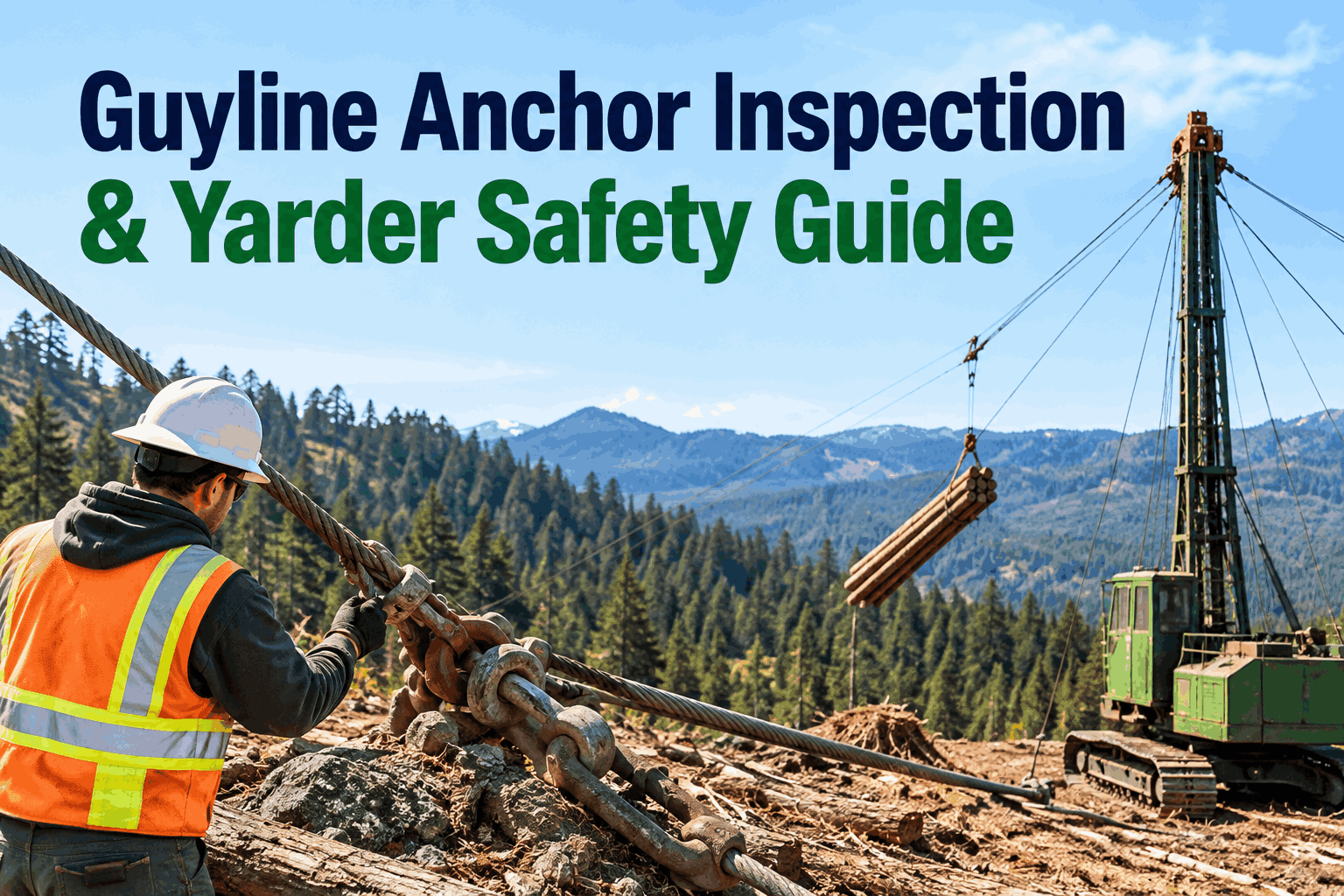
A guyline anchor inspection is what keeps a yarder tower standing. Those tensioned wire ropes are the only thing staying the spar against the pull of a loaded skyline — and if a guyline parts or an anchor shifts, the tower can come down on the crew. Inspecting the rope, connections and anchors before and during every setup isn't paperwork, it's survival. Here's what a guyline anchor inspection covers, and how to run it on a checklist you can prove — or book a demo of digital guyline inspections.
Every guyline holds the tower up.
A yarder tower is only as safe as the weakest guyline staying it. Inspecting each wire rope, its connections and its anchor — at setup and through the shift — is what stands between a working spar and a tower on the ground. Run it on a consistent checklist and nothing gets missed.
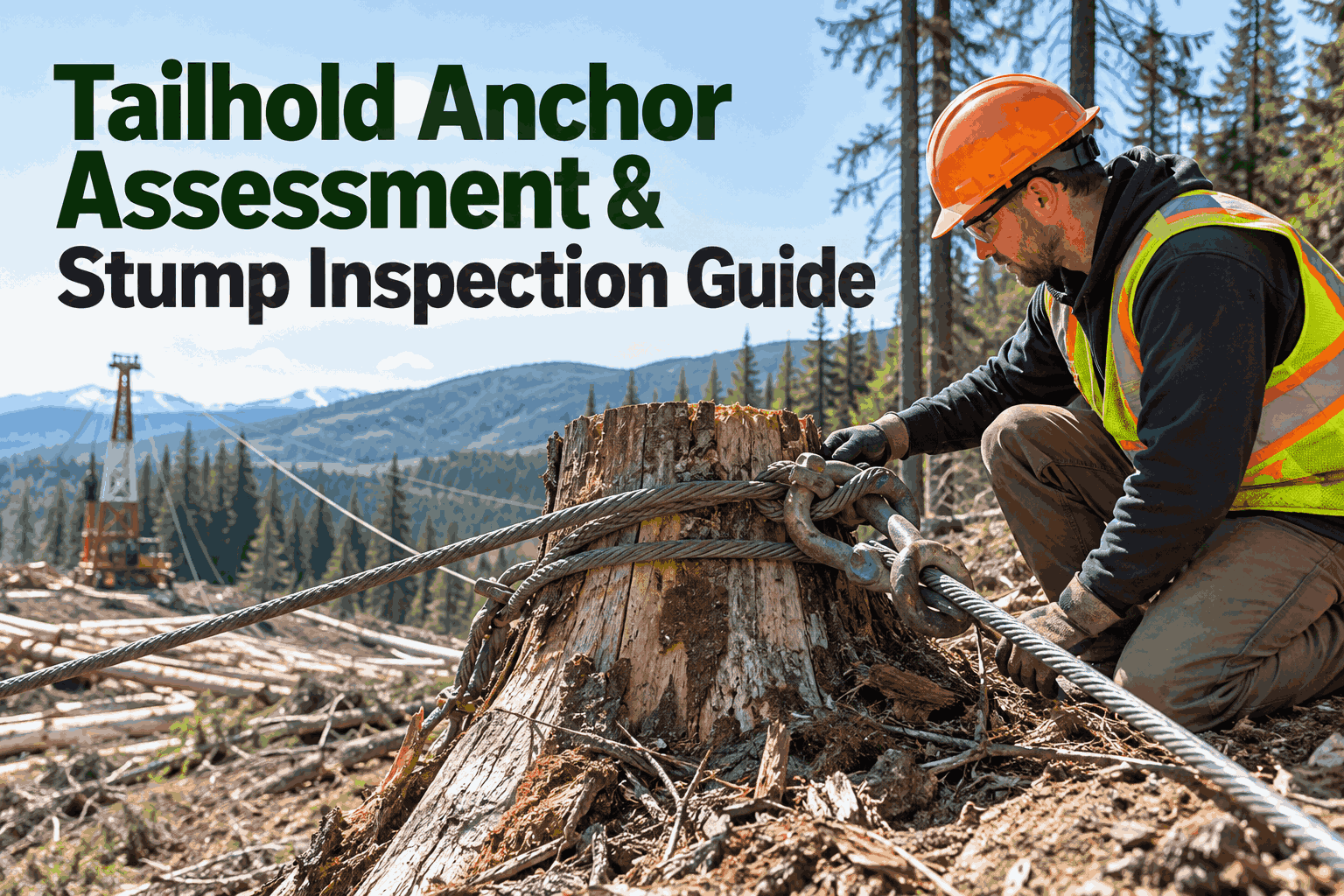
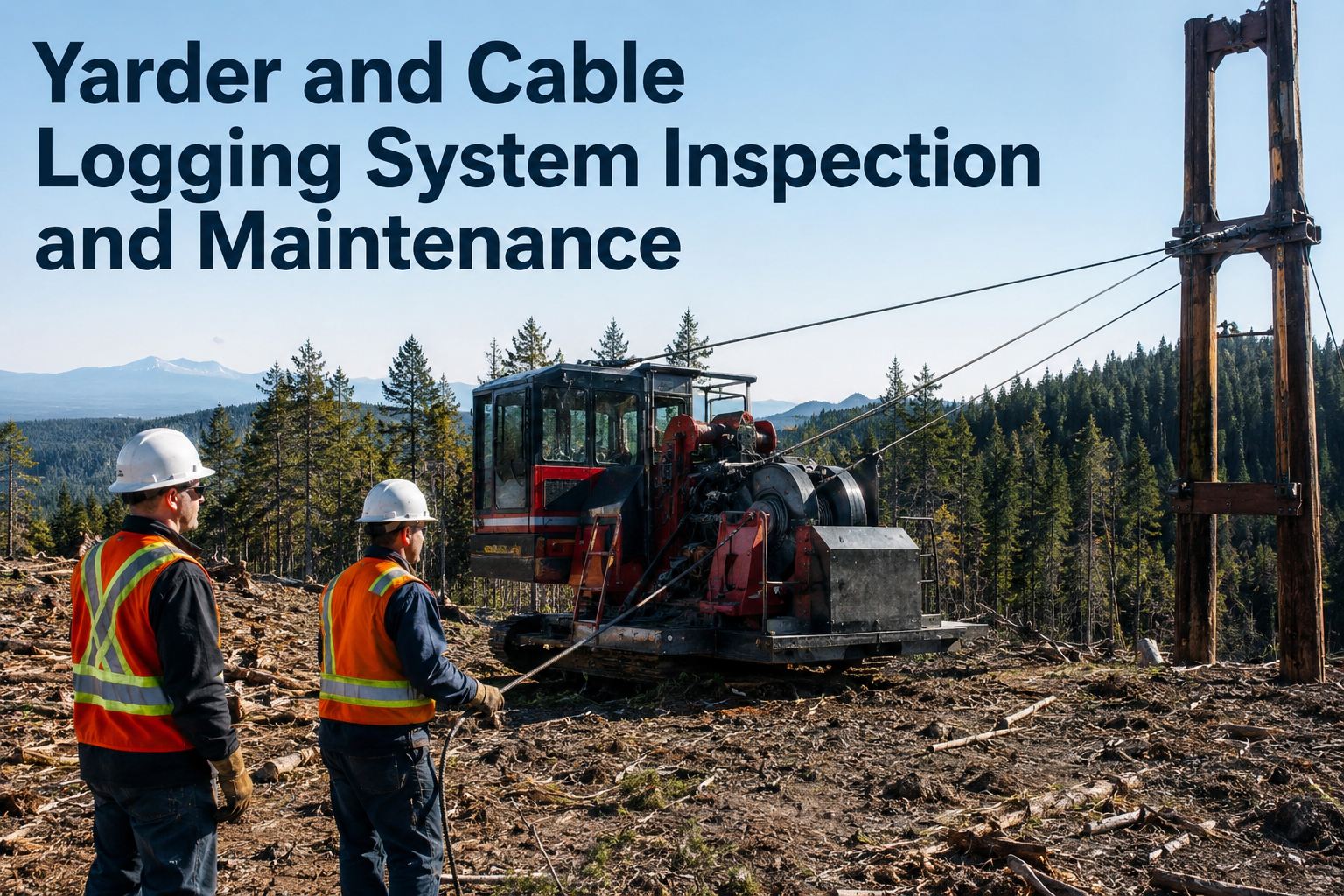
The honest line first: HVI isn't an engineering or rigging-design tool. It doesn't calculate guyline tension, size anchors, or decide whether a wire rope is fit to run — those are skilled judgments made by qualified people against the standard. What HVI does is make sure the inspection behind those judgments happens the same way every setup, gets captured with photos, and is kept as a signed record instead of a verbal "checked it." It pairs with HVI's yarder cable logging system inspection and tailhold anchor assessment guides. Book a demo of the inspection checklist to see how it runs.
The three zones of a guyline anchor inspectionwhat a complete guyline inspection actually covers
A guyline is a system, not a rope — and an inspection that only looks at one part misses the ways it fails. Every check splits into three zones, each with its own failure modes.
The wire rope
- Broken wires per lay length
- Diameter reduction & wear
- Corrosion, kinks, birdcaging
- Crushing & heat damage
Connections & rigging
- Shackles, clips & thimbles
- Guyline hooks & stubs
- End terminations & splices
- Correct tension & even load
The anchor
- Stump or deadman condition
- Multi-stump tie configuration
- Ground & soil around it
- Signs of shift or movement
Miss any one zone and the inspection is incomplete — which is exactly why a structured checklist matters more than a walk-around. Book a demo of equipment inspection records to see all three captured.
What condemns a guyline wire ropethe defects that take a rope out of service
The wire rope is the part that most often fails an inspection, and the warning signs are well established. When any of these pass the threshold in your standard, the rope comes off — no judgment calls under production pressure.
Exact thresholds follow your jurisdiction's standard and the rope maker's spec — the inspection's job is to catch them consistently and record the call. Start a free trial and log your guyline checks.
How HVI runs guyline inspectionsthe features behind a documented guyline anchor inspection
HVI doesn't judge the rope — it makes the inspection consistent and the record permanent. Five features turn a setup walk-around into a controlled safety process.
Audit Checklist Manager
Build the guyline checklist your operation uses and require it on every setup and move.
Digital inspection checklists
Riggers complete the three-zone check on a phone, with photos of ropes, connections and anchors.
Safety management
Run guyline inspection as a controlled procedure with defined steps and sign-offs.
Equipment inspection records
Each guyline and rigging component tracked with its own inspection history and retirement.
Maintenance documentation
Every inspection is a signed, time-stamped record for audits and incident reviews.
It's the same safety management and inspection backbone HVI runs across forestry operations. Book a demo of the safety management module.
When to inspect a guyline
Guylines don't get a single annual check — they're inspected on a rhythm tied to how the tower is working. A digital checklist can fire at each trigger so none is skipped.
Full three-zone inspection before the tower is tensioned and worked.
A walk-around check of ropes, connections and anchor condition.
An immediate check if a line is shock-loaded, hangs up, or an anchor moves.
Tie the checklist to the trigger and the inspection becomes automatic, not something that depends on a busy crew remembering. Start a free trial to record every setup.
What changes on the yarder
Nothing skipped
All three zones checked every setup, under any time pressure.
Ropes retired on time
Defects caught consistently mean a worn guyline comes off before it parts.
Proof on record
A signed, time-stamped inspection for every setup, ready for an audit.
Clear accountability
Who inspected what, when, and what they found — no ambiguity afterward.
Manage it alongside the rest of your forestry safety program. Book a demo of guyline inspection records.
From a yarder rigging supervisor
Guylines got checked, but how thoroughly depended on who was rigging and how rushed the move was — and there was no record either way. After a guyline showed birdcaging we should have caught sooner, we put the inspection on a phone checklist: rope, connections and anchor, every setup, photos and a sign-off. It didn't slow the crew down, and now if anyone asks how a tower was stayed, the answer is in the system, not someone's memory.
Guyline anchor inspection — FAQs
What does a guyline anchor inspection cover?
A complete inspection covers three zones: the wire rope itself (broken wires, diameter reduction, corrosion, kinks, crushing and heat damage), the connections and rigging (shackles, clips, thimbles, terminations and correct tension), and the anchor (stump or deadman condition, tie configuration, ground, and any sign of movement). An inspection that checks only the rope and not the connections or the anchor is incomplete, which is why a structured three-zone checklist matters.
Does HVI decide whether a guyline is safe to use?
No — that judgment stays with your qualified people. HVI doesn't calculate tension, size anchors, or condemn a wire rope; the inspector makes those calls against the applicable standard and the rope maker's spec. What HVI provides is the consistent checklist, the photo capture, and the signed, time-stamped record — so the inspection is done the same way every time and the decision is documented rather than remembered.
How often should guylines be inspected?
On a rhythm, not a calendar. A full inspection belongs at every setup before the tower is tensioned, a walk-around check each shift, and an immediate inspection any time a line is shock-loaded, hangs up, or an anchor shows movement. Exact requirements follow your jurisdiction's cable-logging regulations; tying a digital checklist to each of those triggers is how crews make sure none is skipped.
What takes a guyline wire rope out of service?
The common condemnation criteria are too many broken wires within a lay length, diameter reduction below the allowable limit, significant corrosion (including internal), kinks or birdcaging, crushing or flattening, and heat damage. The exact thresholds come from your standard and the manufacturer. The inspection's role is to check for them consistently and record the finding, so a marginal rope is retired on evidence, not a guess.
Can it track the rigging components too?
Yes. Guylines, shackles, clips, thimbles and other rigging are tracked as assets with their own inspection history, so worn or damaged components are caught and retired on schedule. That matters because a guyline system can fail at a connection even when the rope looks sound — the rigging is as much a part of the inspection as the wire rope and the anchor.
Put every guyline anchor inspection on record
Keep the rope and anchor calls with the people qualified to make them — and give the inspection a consistent three-zone checklist, photos, and a signed record for every setup. On the lines holding the tower up, "we checked it" becomes "here's exactly what we found."
Three-zone checklist · Photos every setup · Signed, time-stamped records