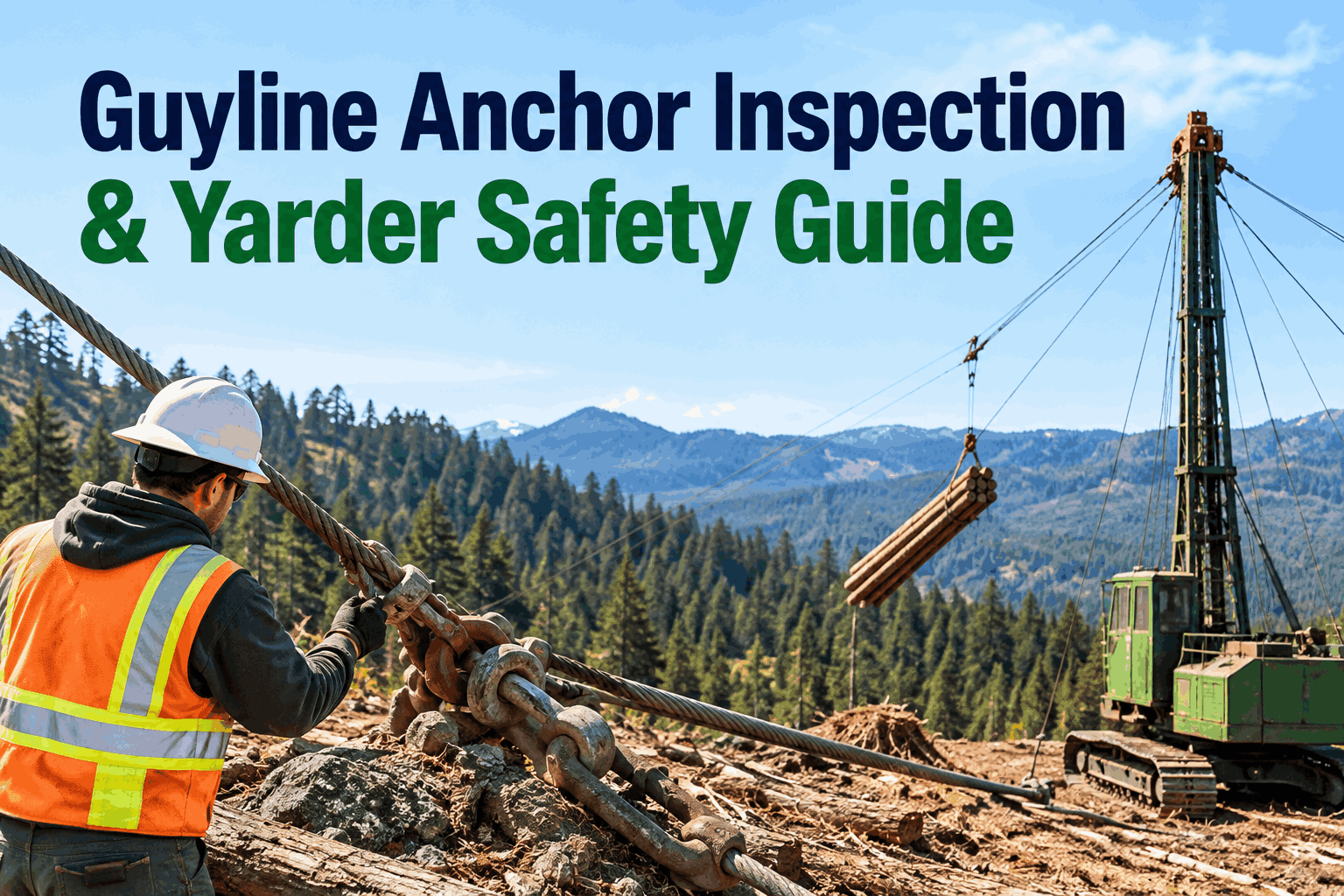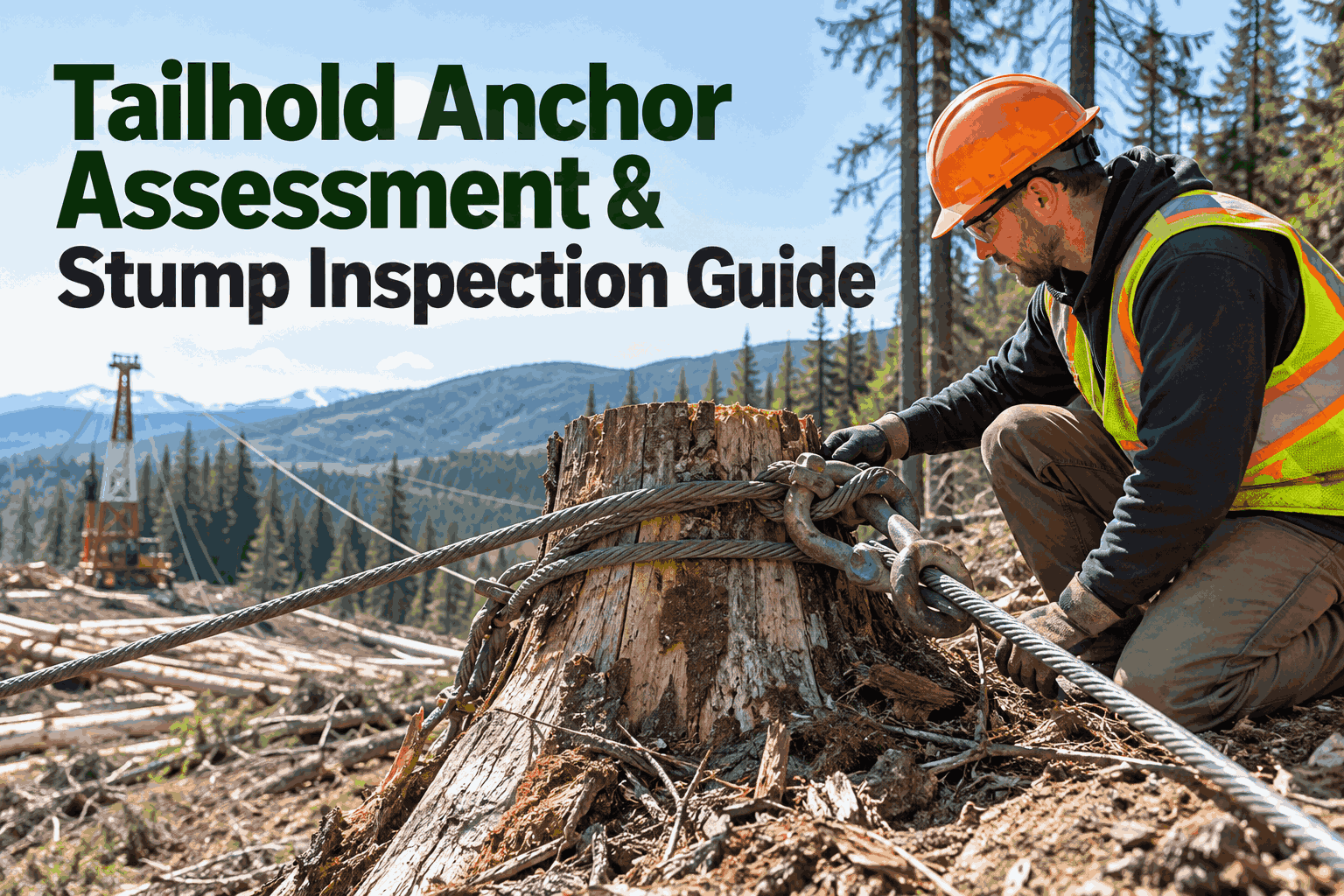
A tailhold anchor assessment is the judgment that stands between a cable logging setup and a catastrophe. A skyline can carry tens of thousands of pounds, and all of it runs back to a stump — so whether that stump is sound, the right species and big enough isn't a formality, it's the whole safety case. Get it wrong and the line lets go with lethal force. Here's how tailhold and stump anchor assessment works, and how to document every one — or start a free trial to record it.
The whole load rests on one stump.
Every skyline setup is only as safe as its tailhold. Assessing the stump — species, size, soundness, roots and ground — is the call that keeps the line up and the crew alive. Here's what to check, how it fails, and how to put every assessment on a record you can stand behind.
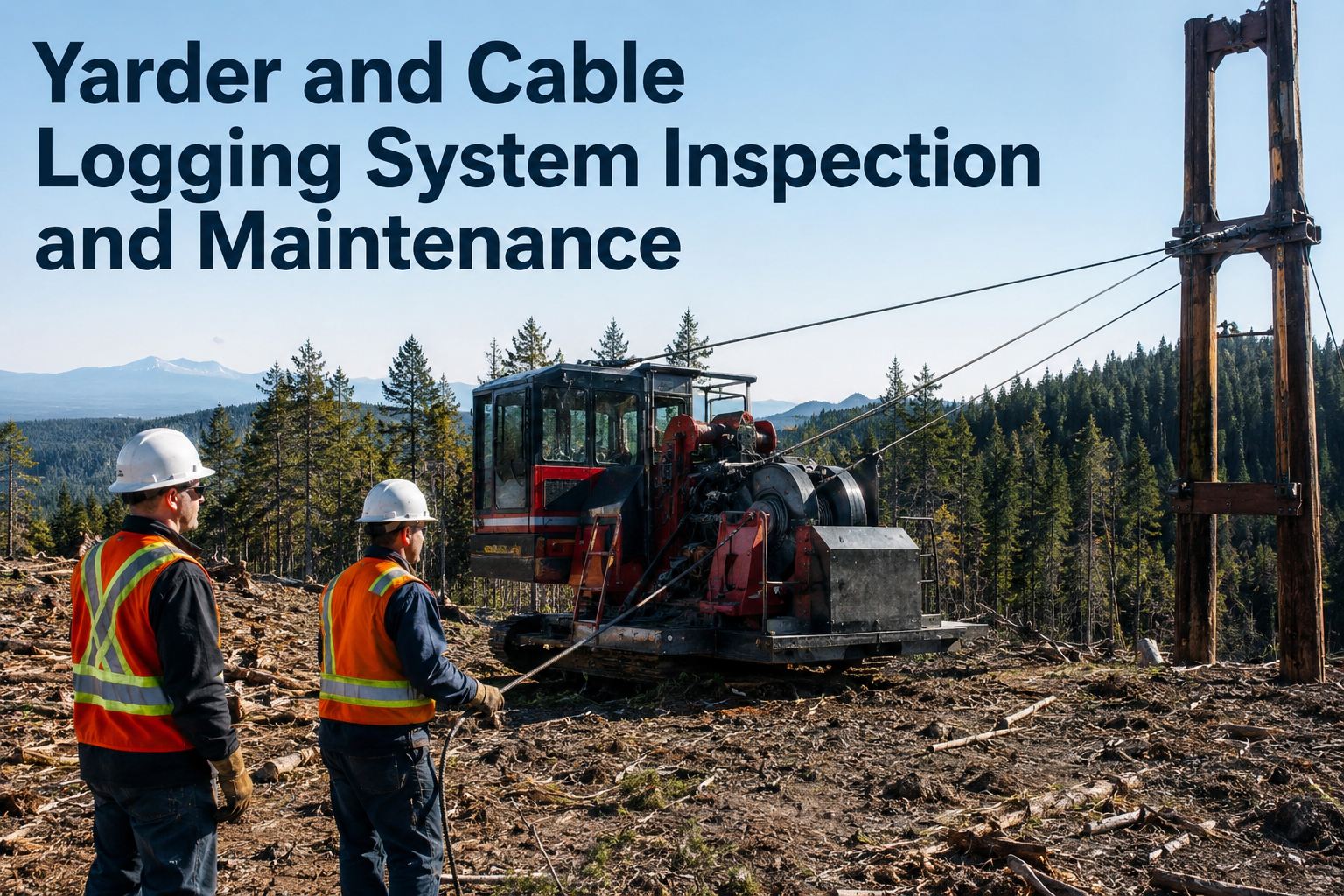
The honest part first: HVI is not an engineering tool. It doesn't calculate a stump's holding capacity, certify a tailhold, or replace the qualified rigging supervisor whose judgment makes the call. Anchor assessment is a skilled, in-person decision, and it stays that way. What HVI does is make sure that decision is made against a consistent checklist every time, captured with photos, and kept as a signed safety record — so the assessment isn't a verbal "looks good" that vanishes the moment the line goes up. HVI already covers the machine side in its yarder cable logging system inspection guide; this is about the anchor. Start a free trial to put anchor assessments on record.
What makes a tailhold soundthe factors behind every stump anchor assessment
A sound tailhold isn't one thing — it's a handful of judgments that have to line up together. Any one of them failing can undo the rest.
Species
Holding power varies hugely by tree species — some stumps grip, others let go.
Diameter & size
The stump must be big enough for the load it's being asked to hold.
Soundness & rot
Internal rot, splits or conks can hollow out a stump that looks solid outside.
Root system
The real holding power is underground — root spread and condition matter most.
Ground conditions
Wet, loose or frozen soil changes how a stump holds — or doesn't.
Tie-back
When one stump isn't enough, a tie-back to a second shares the load.
These are judgments, not calculations — which is exactly why a consistent checklist matters, so nothing gets skipped under time pressure. Start a free trial and digitize your anchor checklist.
How a tailhold failsthe anchor failures behind cable logging incidents
When a tailhold lets go, the stored energy in the line releases all at once — this is among the most dangerous failures in cable logging. The causes are consistent, and every one is something an assessment is meant to catch.
The whole stump and root ball tear out of the ground under load — often undersized or poorly rooted.
A rotten or split stump shears off at ground line — the damage hidden inside until the load finds it.
Wet or loose ground gives way even when the stump itself is sound.
Worn straps, bad wraps or a sharp angle fail the connection even when the stump holds.
Every one of these has warning signs an assessor can see — if the check is done properly and the findings are acted on. Book a demo of digital safety inspections to see how the check is captured.
The assessment, on a digital checklisthow HVI supports tailhold anchor assessment and records
HVI doesn't make the anchor call — it makes sure the call is made consistently and never lost. Five features turn a skilled judgment into a documented safety process.
Safety management
Run anchor assessment as a controlled safety procedure with defined steps and sign-offs.
Digital inspection checklists
A consistent tailhold checklist the assessor runs on a phone, built around your own standard.
Equipment inspection records
Straps, blocks and rigging inspected and logged alongside the anchor, with photos.
Asset management
Rigging gear tracked as assets, so straps and blocks are inspected and retired on time.
Safety documentation
Every assessment becomes a signed, time-stamped record for audits and incident reviews.
It's the same safety management and inspection backbone HVI runs across forestry fleets. Book a demo of the safety management module.
What a digital anchor assessment captures
A record is only useful if it's complete. Each digital tailhold assessment locks in:
Stump species, size & condition
Root & ground assessment
Tie-back used & configuration
Strap & rigging condition
Photos of the anchor & wrap
Assessor, date & sign-off
Pull any setup's anchor record in seconds for a safety audit or an incident review. Start a free trial to build your assessment record.
What changes on the cutblock
Nothing skipped
A consistent checklist means every anchor is assessed the same way, under any pressure.
A consistent standard
Every assessor works to the same standard, not their own memory of it.
Proof on record
A signed, time-stamped assessment for every setup, ready for an audit or review.
Clear accountability
Who assessed the anchor, when, and what they found — no ambiguity after the fact.
Manage it alongside the rest of your forestry safety program. Start a free trial and document every tailhold.
From a cable logging rigging supervisor
Anchor calls used to live in people's heads — a good hooktender knows a bad stump, but there was no record of what he checked, and after a near-miss the honest answer to "how was it assessed?" was just "we looked at it." Putting the assessment on a checklist the riggers run from a phone fixed that: same checks every time, photos of the stump and the wrap, signed off by whoever made the call. It doesn't replace judgment — but now that judgment is written down, consistent, and there if anyone ever asks.
Tailhold anchor assessment — FAQs
Does HVI calculate anchor holding capacity or certify tailholds?
No — and that's an important boundary. HVI does not calculate a stump's holding capacity, perform engineering analysis, or certify that a tailhold is safe. Anchor assessment is a skilled, in-person judgment made by a qualified rigging supervisor, and it stays that way. What HVI does is give that assessment a consistent checklist, capture it with photos, and keep it as a signed record — so the decision is documented and repeatable, not a verbal call that disappears.
What should a tailhold anchor assessment cover?
At minimum: the stump's species and size, its soundness (checking for rot, splits and conks), the root system and how well it's anchored, the ground conditions around it, and whether a tie-back to a second stump is needed. The rigging that connects to it — straps, wraps and the angle of pull — is part of the same check. Exact requirements follow your jurisdiction's cable-logging regulations and your own safe-work procedures.
Why is a written record of the assessment so important?
Because a tailhold failure can be fatal, and "we looked at it" is no defense in an incident review or an audit. A written, time-stamped record with photos shows exactly what was checked, by whom, and what they found. It also raises the standard day to day — a checklist makes sure nothing is skipped under production pressure, and it gives newer riggers a consistent framework instead of relying on memory.
Can it track the rigging gear too, not just the stump?
Yes. Straps, blocks, shackles and other rigging are tracked as assets, with their own inspection records, so worn or damaged gear is caught and retired on schedule. That matters because a tailhold can fail at the connection even when the stump is sound — the strap and the wrap are as much a part of the assessment as the anchor itself.
Does a checklist slow the crew down?
Not meaningfully — a digital checklist on a phone takes a couple of minutes and replaces a paper form that usually never made it back anyway. The small time cost buys a consistent assessment and a permanent record, which is a trade any crew will take on the one component that holds the entire line. It structures the judgment the rigger is already making, rather than adding work on top of it.
Put every tailhold anchor assessment on record
Keep the anchor call with the people qualified to make it — and give it a consistent checklist, photos, and a signed record for every setup. On the one component holding the whole line, "we looked at it" becomes "here's exactly what we checked."
Consistent checklist · Photos of every anchor · Signed, time-stamped records