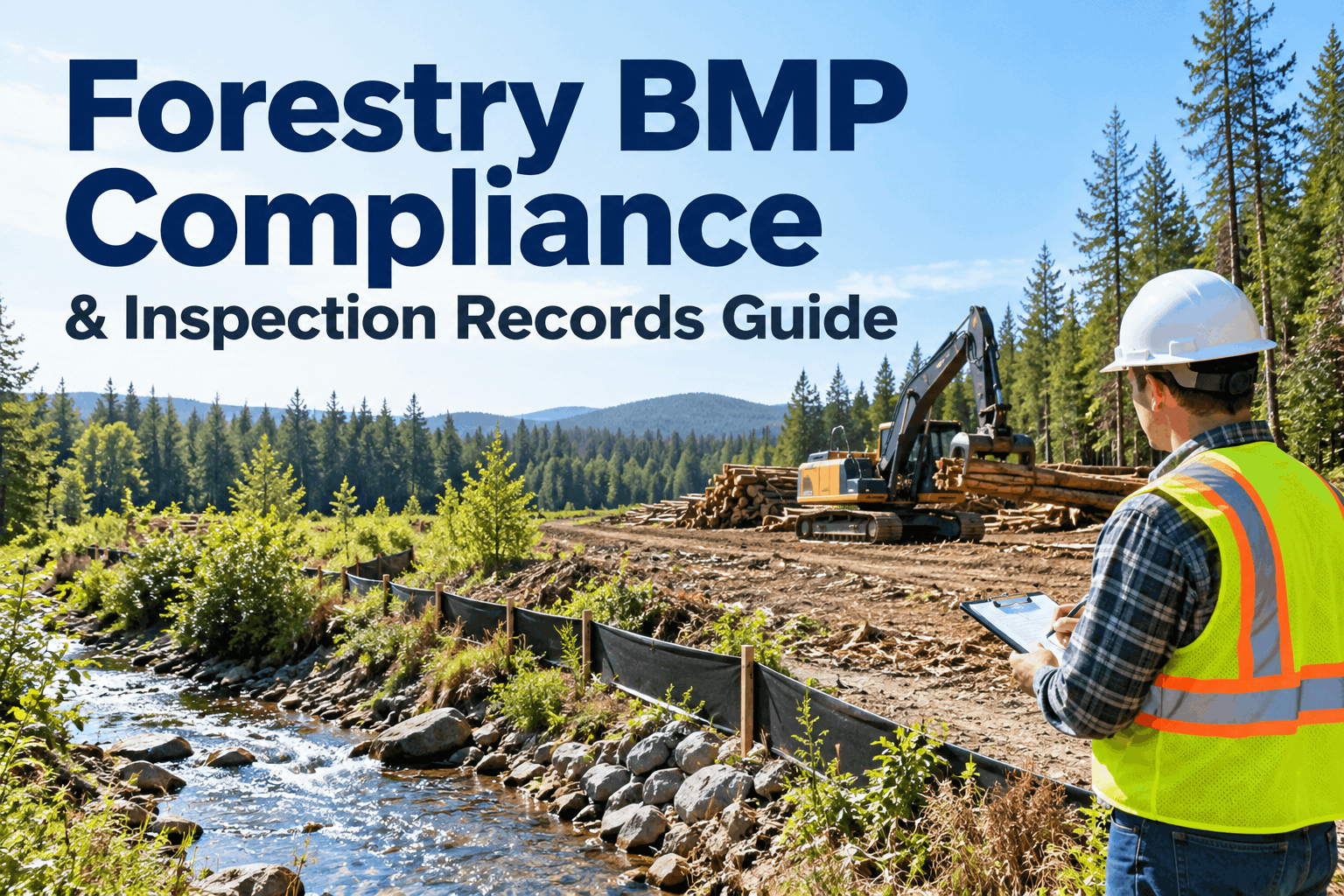
Forestry BMP compliance is easier to demonstrate when field checks, photographs, and corrective actions stay connected to the same harvest site. For logging contractors and environmental managers, the challenge is not simply knowing best management practices—it is proving that road drainage, stream protection, erosion controls, and equipment practices were inspected and maintained as conditions changed.
Forestry BMP Compliance: Turn Field Checks Into Audit-Ready Records
Build a repeatable inspection routine for harvest sites, logging roads, stream crossings, and equipment areas—then keep the evidence needed to close issues confidently.
Why forestry BMP records matter as much as the field controls
Forestry best management practices help limit sediment movement, protect water resources, and reduce operational impacts. The exact requirements vary by state, landowner, permit, harvest plan, and site conditions; a generic checklist cannot replace those obligations.
Field conditions also change quickly. A drainage outlet that worked before a storm may become blocked; a temporary crossing may need repairs after heavy traffic; and a spill kit may be depleted during equipment servicing. A dated inspection record establishes what was checked, where it was checked, and what happened next.
For practical recordkeeping, capture the site and location, inspection date, inspector, observed condition, photo evidence, required action, responsible person, due date, and closure proof. HVI's digital inspection and maintenance records can help teams keep operational evidence organized. Book a demo to explore forestry inspection documentation.
A photograph of a blocked culvert shows the issue. A follow-up photo and documented check show whether the corrective action was effective.
Six BMP areas to inspect across a logging operation
Use these categories as a planning starting point, then adapt the inspection criteria to the approved harvest plan and local forestry requirements.
| Inspection area | What to verify | Evidence to retain |
|---|---|---|
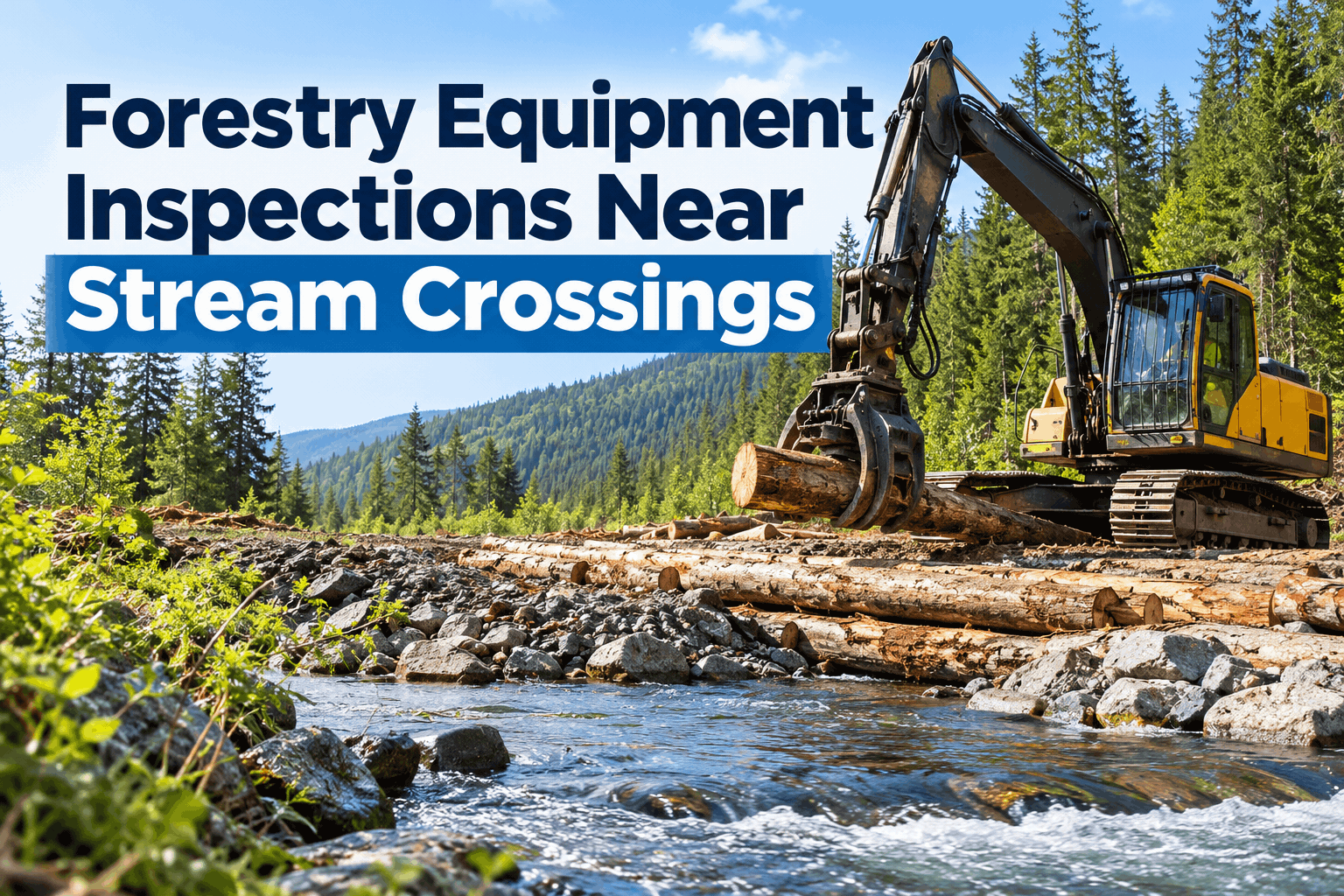
| Stream crossings | Crossing stability, approach runoff, sediment movement, and approved installation conditions | Upstream/downstream photos, location, condition notes |
| Streamside zones | Marked boundaries, equipment encroachment, vegetation protection, and disturbance | Boundary photos, observations, corrective actions |
| Road drainage | Culverts, water bars, ditches, outlets, and evidence of concentrated runoff | Drainage inspection, blocked outlet photos, repair follow-up |
| Exposed soil | Rutting, unstable slopes, disturbed areas, and temporary stabilization measures | Before/after condition images, erosion-control status |
| Fuel and servicing | Leaks, containers, spill supplies, equipment condition, and cleanup readiness | Equipment inspection, defect report, cleanup documentation |
| Post-harvest closeout | Temporary crossing removal where required, drainage restoration, and outstanding issues | Final site review, punch list, closure photos |
The table is an operational example, not a universal regulatory checklist. Inspection frequency and acceptance criteria must follow applicable requirements and site risk.
A five-step BMP inspection and corrective-action workflow
The objective is to make every finding traceable, not to generate more paperwork.
Define the inspection scope
Identify the harvest block, active roads, stream crossings, equipment service areas, and controls required by the site plan.
Capture field evidence
Use a consistent checklist, date-stamped notes, photographs, and specific location references.
Classify the finding
Distinguish routine maintenance from urgent risks that need work stopped or immediate specialist review.
Assign and track action
Document the owner, due date, work required, and linked equipment or site maintenance activity.
Reinspect and close
Confirm the control works under relevant conditions and retain the closure evidence with the original finding.
Use digital checklists and photographic inspection records to capture conditions; connect equipment-related defects to maintenance follow-up and preserve service history. Confirm the precise site-workflow configuration during a demo.
Make forestry inspection findings easier to act on
See how HVI helps organize equipment inspections, photos, maintenance issues, and completion records in one operational workflow.
Use event-based reviews—not just a fixed inspection calendar
A routine inspection cadence is useful, but forestry environmental risk is heavily influenced by weather, traffic, and ground disturbance.
Before activity starts
Confirm crossing locations, marked buffers, drainage controls, and equipment readiness before site disturbance.
After heavy rain
Review runoff paths, culvert capacity, road rutting, sediment movement, and slope stability when access is safe.
After site changes
Recheck controls when haul routes, landings, stockpiles, or equipment service locations change.
Before demobilization
Verify restoration tasks, unresolved findings, and required closeout records before leaving the site.
For example, if rainfall washes sediment toward a crossing, document the condition, follow the site's escalation procedure, and assign the repair. After corrective work, verify the outlet and surrounding drainage rather than simply marking the task complete. Book a demo to see inspection and maintenance follow-up in HVI.
12 items to include in a forestry BMP compliance record
Use the list as an inspection template foundation. Adapt it to the approved plan, jurisdiction, and responsible personnel.
Do not assume a completed digital checklist alone proves legal compliance. The underlying controls, site permits, competent review, and required records still matter.
Four metrics that reveal whether BMP controls stay effective
Use simple measures that prompt follow-up instead of creating a reporting burden.
Check whether required field reviews happen on time.
Review overdue and high-risk actions separately.
Identify controls that fail after apparent correction.
Verify location, photos, action ownership, and closure proof.
An illustrative review might find that three road-drainage findings recur after every storm. Rather than treating them as three unrelated checklist entries, investigate whether the outlet design, maintenance frequency, or traffic pattern needs to change. HVI's inspection history and work order records can support that review for managed assets and maintenance activities.
Keep inspection evidence and equipment follow-up connected
Replace scattered field notes with a more consistent digital process for forestry equipment checks and documented maintenance actions.
Forestry BMP compliance FAQs
What does forestry BMP compliance mean?
It means applying and documenting the forestry best management practices required or expected for the site, such as measures addressing erosion, sediment, roads, stream crossings, and water quality. Specific obligations vary by location, landowner, permits, and approved harvest plans.
How often should logging sites receive BMP inspections?
Follow the applicable plan, permit, and jurisdictional requirements. Many operations also benefit from risk-based checks before work, during active harvesting, after significant rainfall, after site changes, and before closeout. There is no universal inspection interval for every forestry site.
What evidence should a forestry BMP inspection include?
Record the site location, inspection date, inspector, applicable control, observations, labeled photos, any deficiency, assigned corrective action, deadline, and verification of closure. Retention periods should follow the applicable requirements.
Can HVI replace environmental permits or a forestry compliance specialist?
No. HVI can help manage digital inspections and equipment-related maintenance records, but permit interpretation, regulatory determinations, and environmental compliance decisions require appropriate qualified personnel and applicable official requirements.
How can digital inspection records improve BMP follow-up?
Consistent templates, photographic evidence, defect records, and maintenance histories can make it easier to locate past findings and verify whether equipment-related corrective work was completed. Site-specific environmental workflows should be confirmed against the product configuration.
Build a forestry BMP compliance process that holds up in the field
Effective forestry BMP compliance combines appropriate controls with clear inspection evidence, prompt corrective action, and verified closure. Start with the highest-risk crossings, drainage points, and service areas; then use a consistent recordkeeping process across sites and contractors. HVI can help forestry teams organize equipment inspections and maintenance follow-up—book a demo to see how it fits your workflow.