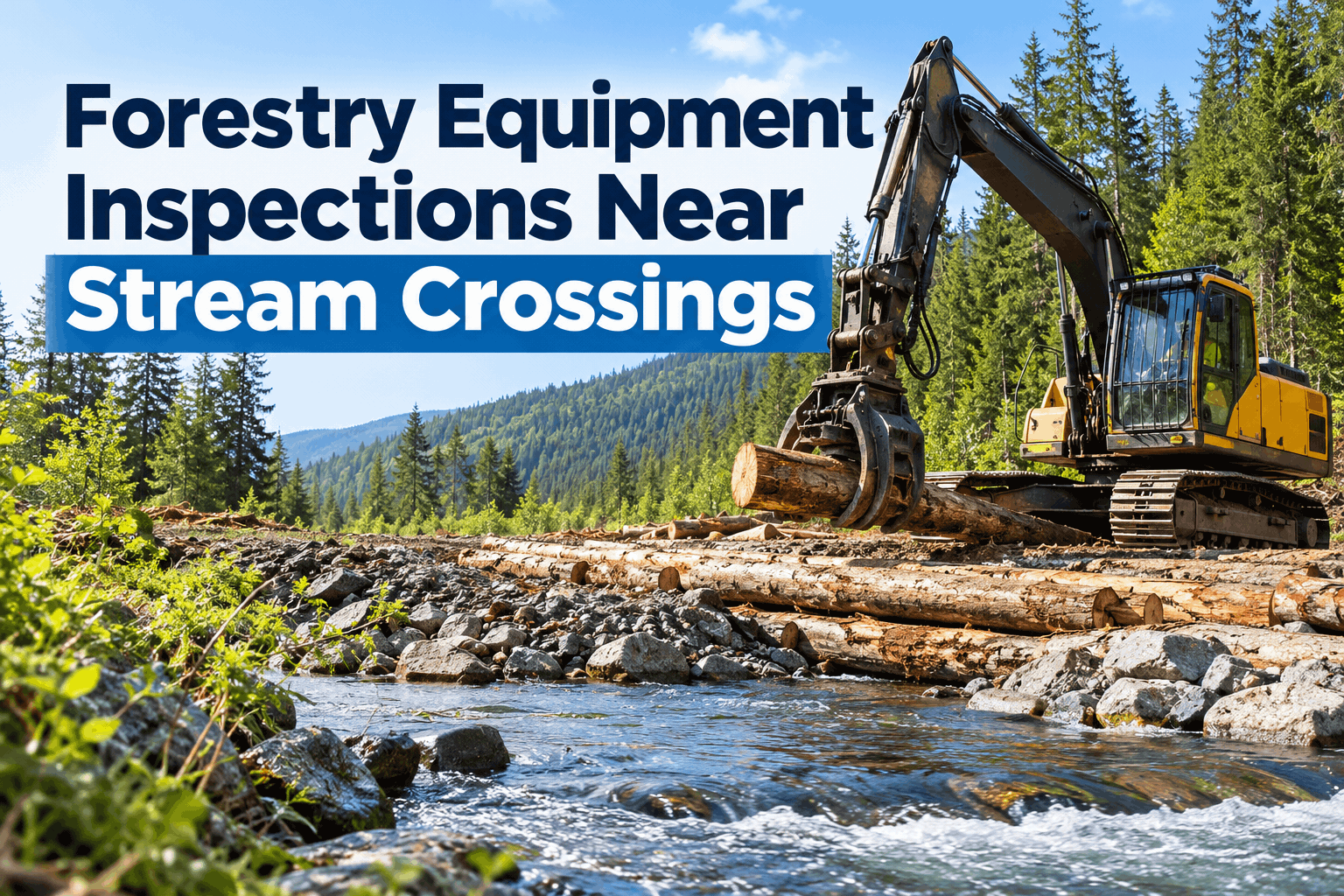
A feller buncher working a steep block doesn't get a second chance at a stream crossing. One chafed hydraulic hose at 3,000+ PSI, one weeping final-drive seal, one loose fuel fitting — and the fluid that would've been a shop cleanup on dry ground is now sheening across the only water on the site. A tight forestry equipment inspection before the machine reaches the crossing is what keeps a maintenance problem from becoming an environmental one. Book a demo of pre-crossing equipment checks to see how.
Catch the leak before it reaches the stream
Near a crossing, a hydraulic or fuel leak stops being a shop cost and becomes a contamination event. Inspect the machine's fluid systems first — and keep a dated record of every check, defect and repair.
Most of the forestry equipment inspection you already do is about uptime — keeping the skidder, forwarder or harvester cutting. Near a stream crossing, the same inspection carries a second job: making sure the machine isn't about to put fluid where a regulator, a landowner and a watershed will all notice. The systems that fail aren't exotic — they're the hoses, seals and fittings that wear on every machine. The difference is where the leak lands. This guide walks the fluid-risk points, the pre-crossing checklist, and how to turn a flagged defect into a tracked repair before the machine ever touches the water.
Why the crossing changes the stakesthe same leak, a very different outcome
A machine leaks the same amount whether it's parked at the landing or straddling a culvert. What changes is the receiving ground — and that turns a routine defect into a reportable one.
A leak is a maintenance item
- Fluid hits soil, gets absorbed and cleaned up
- Machine flagged, hose or seal replaced on schedule
- Cost is parts, labor and a little downtime
- No one outside the crew needs to know
The same leak is a contamination event
- Fluid sheens on moving water and travels downstream
- Possible BMP violation, reporting and cleanup order
- Cost balloons: fines, remediation, lost landowner trust
- The whole operation can be shut down mid-harvest
The logging equipment inspection that catches the weeping seal at the landing is the cheapest insurance on the whole job. Read the forestry hydraulic maintenance guide for the contamination-control side, or start free and flag your first defect.
Where the fluid comes fromthe four systems a forestry equipment inspection must cover near water
Nearly every spill near a crossing traces to one of four systems. Knowing where they fail makes the inspection fast and the catch reliable.
Hydraulic hoses & fittings
The biggest volume risk. A chafed hose or a loosened fitting under high pressure can empty a reservoir fast. Look for chafe marks, wet film, and hoses rubbing on the frame.
Fuel tank & lines
Diesel leaks from a cracked line, a weeping tank seam or a loose cap. Smaller volume than hydraulics but just as reportable in water. Check the cap, the sender and the feed lines.
Final-drive & swing seals
Slow, easy to miss — a weeping seal leaves gear oil on the undercarriage that drips exactly where the tracks sit in a crossing. Wipe clean, run, and re-check for fresh film.
Spill kit & readiness
Not a leak source — the backstop. Many BMP programs require a stocked kit on site: plugs and clamps for a hose break, a catch container, a shovel and absorbent. Confirm it's there and full.
Run these four in order before any machine works a crossing, and the surprise leaks mostly disappear. See digital inspection templates you can build around these systems, or book a demo of a fluid-system checklist.
The pre-crossing walk-arounda forestry equipment inspection checklist for work near water
Run this before a machine enters a buffer or works a crossing — a photo against each line turns the check into a record you can show at a BMP audit.
Hydraulics
- No wet film on hoses, cylinders or valve banks
- No chafe marks where hoses cross the frame
- Fittings tight, no seep at the crimps
- Reservoir at level, no sudden drop since last shift
Fuel & engine
- Fuel cap sealed, no weep at the tank seam
- Feed and return lines dry and secure
- No oil film under the engine or filters
- Coolant and DEF lines intact
Drivetrain seals
- Final drives wiped clean, no fresh drip
- Swing and pump drive seals dry
- No gear-oil trail on the undercarriage
- Track or tire area clear of pooling
Spill readiness
- Spill kit on the machine and fully stocked
- Plugs, clamps and catch container present
- Absorbent and a shovel accessible
- Operator knows the spill-response steps
Built once in HVI, this checklist rides on every machine and every crossing, and each completed run becomes a dated maintenance record. Start free and build your pre-crossing checklist for the whole fleet, or book a demo to see it run on a phone.
From flag to fixedwhat happens after the operator finds a leak
Finding the defect is half the job. The other half is making sure it's repaired and logged — not waved off because the crew is behind on production.
- 1FlagOperator marks the leak on the inspection
- 2PhotoA time-stamped image of the wet seal or hose
- 3Work orderRaised on the spot, assigned to a mechanic
- 4RepairHose replaced, seal reset, parts logged
- 5RecordClosed, dated, ready for any audit
That chain is the difference between "we meant to fix it" and a maintenance record that proves the machine was sound before it touched the water. The production pressure is real — a logged work order is what keeps a flagged defect from quietly staying in service. See work-order and repair tracking end to end, or book a demo of the flag-to-fixed flow.
When to run itbuilding the check into the harvest rhythm
A pre-crossing inspection only works if it's triggered reliably, not remembered occasionally. Tie it to events the crew already recognizes.
Full fluid-system walk-around at the start of every shift, before the machine leaves the landing.
A quick re-check of hoses, seals and spill kit any time a machine is about to work in or near a buffer.
Re-inspect the repaired system before the machine goes back near water, to confirm the leak is actually gone.
Set on a schedule and triggered at the crossing, the logging equipment maintenance check becomes muscle memory instead of a form someone forgot. See how this fits the full-site BMP record alongside your road and drainage checks.
From the maintenance shop
The one that scares me isn't the blown hose — you see those. It's the slow weep on a final drive that drips a little gear oil every hour. On dry ground nobody cares. Put that machine across a culvert for a day and you've got a sheen on the water and a very bad phone call. So now every machine gets its undercarriage wiped and re-checked before it works a crossing, and the operator logs it with a photo. Takes five minutes. Beats explaining a spill to the landowner.
Forestry equipment inspection FAQs
What should a forestry equipment inspection near a stream crossing cover?
Focus on the machine's fluid systems: hydraulic hoses and fittings, fuel tank and lines, and final-drive and swing seals — the four sources behind nearly every leak. Also confirm a stocked spill kit is on the machine. The goal is to catch any leak before the equipment works in or near the water.
Why is a hydraulic or fuel leak worse near water?
On dry ground a leak is absorbed and cleaned up as a maintenance item. Near a stream crossing the same fluid sheens on moving water and travels downstream, which can trigger a BMP violation, a reporting and cleanup order, fines, and even a mid-harvest shutdown. The leak is identical; the receiving ground changes everything.
What goes in a logging spill kit?
Many forestry BMP programs require a stocked spill kit on site. A typical kit includes plugs and clamps to control a hydraulic line break, a container to catch leaking fluid, a shovel, and absorbent material such as oil absorbent sheets or sawdust. Confirm the kit is present and full as part of the pre-crossing inspection.
How often should logging equipment be inspected for leaks?
Run a full fluid-system walk-around daily at the start of each shift, a quick re-check any time a machine is about to work in or near a buffer or crossing, and a re-inspection after any repair before the machine returns to the water. Tying the check to these triggers keeps it reliable instead of occasional.
How does HVI help with forestry equipment inspections?
HVI provides digital equipment inspection checklists, photo documentation of defects, one-tap work orders, defect tracking from flagged to repaired, and dated maintenance records. An operator can flag a leak on a phone and raise a work order on the spot, so a defect near water is documented and fixed rather than lost at the landing.
Keep a leak out of the water before it ever gets there
HVI gives logging crews digital equipment inspection checklists, photo-documented defect tracking, one-tap work orders, and dated maintenance records — so every machine is proven sound before it works a stream crossing, and every repair is on file at audit time. Start free and inspect your first machine today.
No credit card · Equipment inspection templates from day one