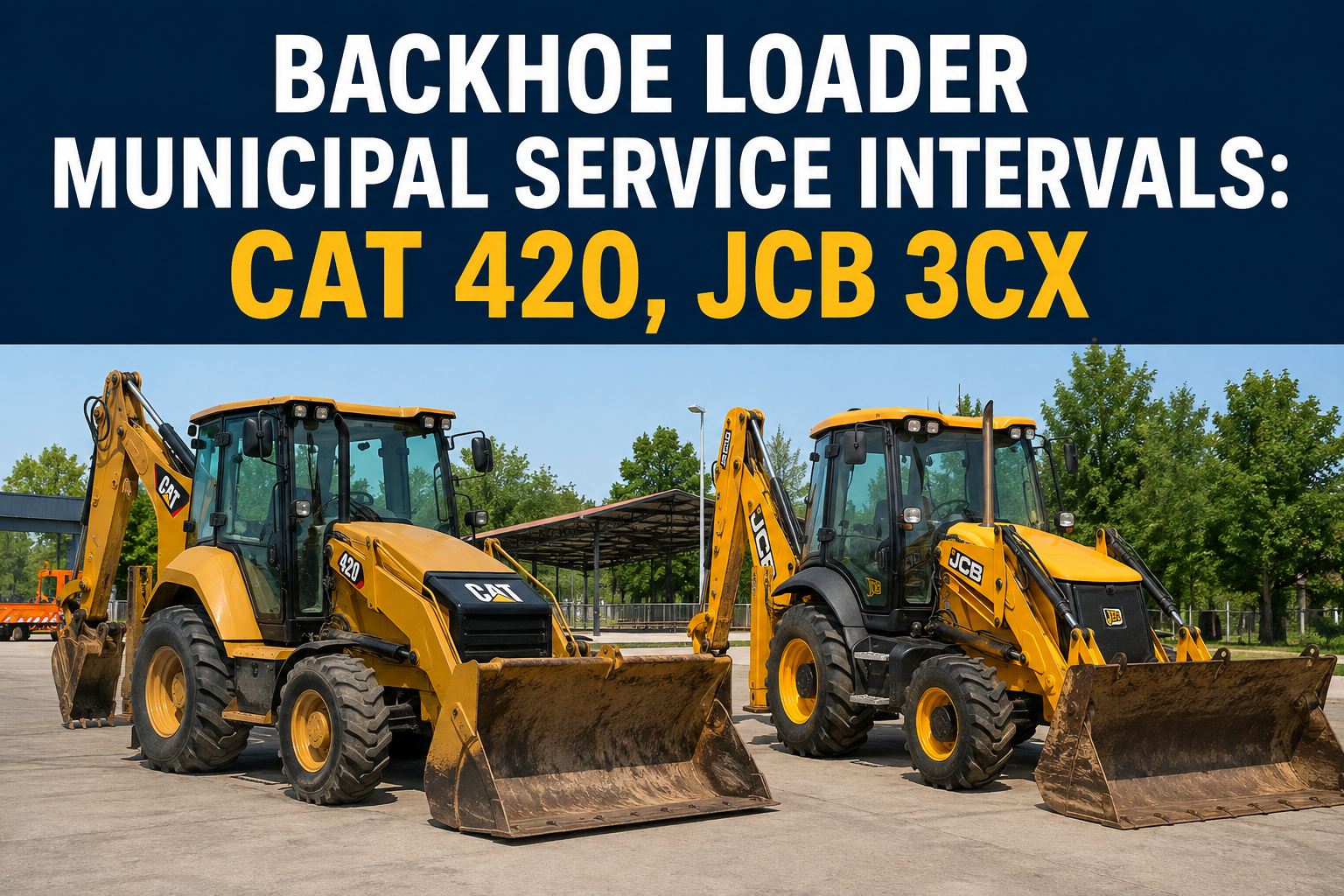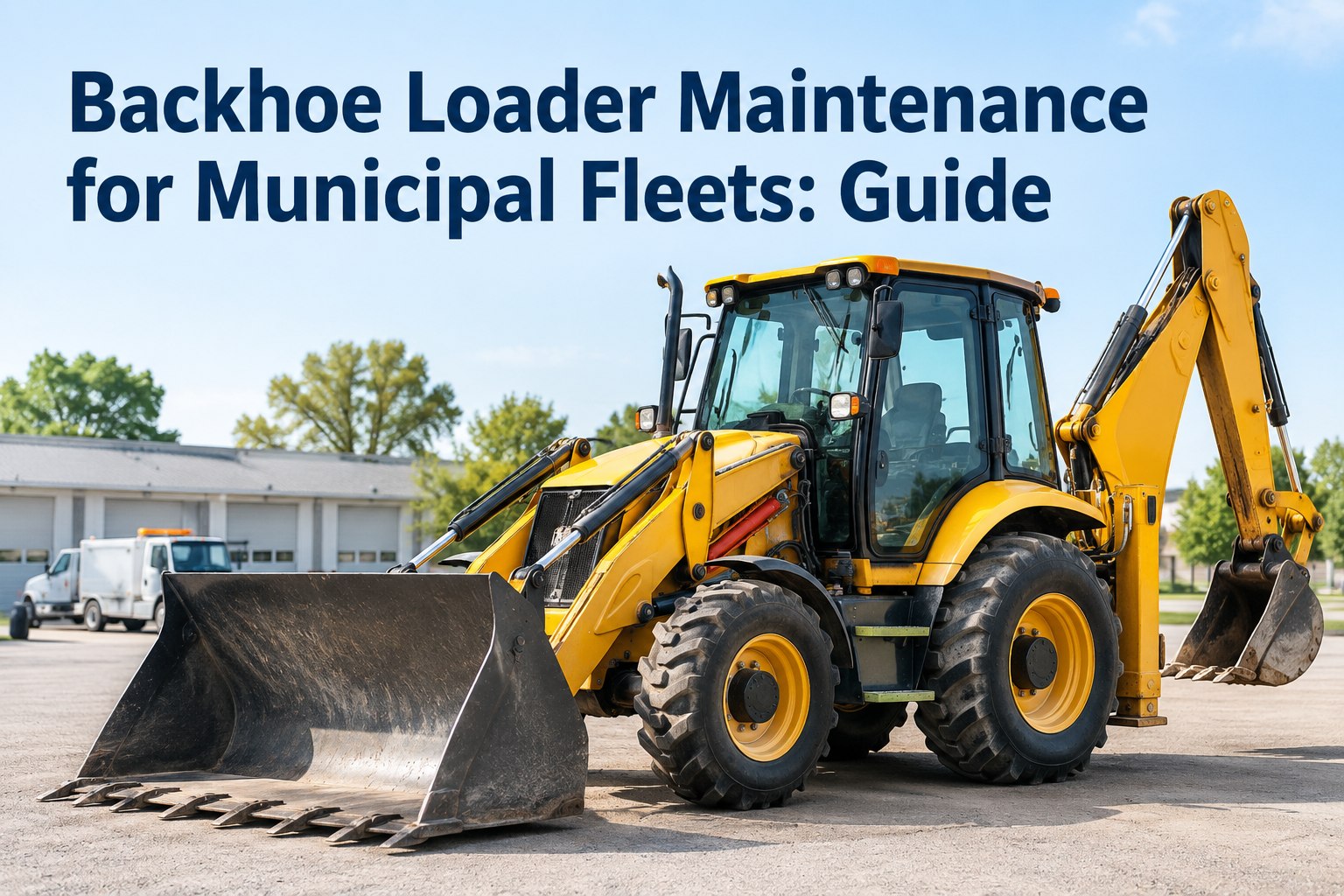
A backhoe loader is really two machines bolted to one chassis — a loader up front, a full excavator on the back — and a municipal crew swaps between them all day, trenching a water main in the morning and back-filling and grading by afternoon. That versatility is why it is the do-everything machine in almost every public works yard, and it's also why backhoe loader maintenance is different from anything else in the fleet. The engine schedule matters, but it isn't what kills a backhoe. What kills a backhoe is a missed grease point: this machine has more pins, bushings, and pivots than nearly anything its size, some needing grease every single day, and the moment one is skipped long enough the cheapest task on the machine becomes its most expensive repair. This guide is about the maintenance that actually keeps a backhoe alive. Book a demo to see backhoe PM and greasing tracked by hours per machine.
Miss one pin, and greasing can't fix it anymore
Switch from a backhoe greased on schedule to one with a joint that's been skipped. Watch the cheapest task on the machine become the most expensive.
Every pivot greased on its schedule — loader arms, bucket pins, king post, boom, dipper, stabilisers — so fresh grease keeps the pin and bushing lubricated and pushes damaging grit out of the joint. This is the cheapest, most frequent job on the machine, and it's the one that keeps every expensive joint alive. A grease gun and ten minutes.
One joint skipped long enough runs dry, and the failure escalates on its own: a dry squeak when the arm moves, then a bright metal ring worn around the pin, then visible play when you shake the bucket by hand. Once the pin and its bushing wear out of round, grease no longer fixes it — the bore is damaged, and the repair becomes line-boring and new bushings on the bench. The $50 task became a four-figure workshop job because a ten-minute grease got missed.
This is the one that catches fleets: greasing is so cheap and routine it gets skipped, and it's the exact thing whose neglect turns catastrophic. On a backhoe, the grease gun is the most important tool in the yard. Book a demo to see greasing tracked as a scheduled, logged task
Because a backhoe loader is two machines in one, it works its hydraulics and its joints twice as hard as a single-purpose machine, and it does it in the dirtiest possible environment — digging in soil, sand, and grit that works its way straight into every pivot. That combination makes the backhoe uniquely dependent on two things done relentlessly well: greasing the joints and staying ahead of the hydraulics. The engine service is the easy, well-understood part. The rest of this guide is about the parts that actually decide whether a municipal backhoe lasts fifteen years or fifteen thousand hours of expensive surprises.
Greasing: the daily discipline that outranks the schedule
If you do one thing right on a backhoe loader, it's greasing, and if you do it wrong, no engine schedule will save the machine. Manufacturers are blunt about this: if every system on a new backhoe were neglected, the first failures would show up in the pins and bushings that weren't greased, because they're highly loaded and some require daily service. Grease isn't just lubrication here — fresh grease physically pushes sand and grit out of the joint, which is why a backhoe working in dirt needs it so often.
The discipline that makes greasing reliable is doing it in a fixed order so nothing gets missed, front to back: the loader arm pivots and loader bucket pins up front, then the king post and swing pins where the backhoe mounts, the boom pivot, the dipper pins, the bucket pins and linkage, and finally the stabiliser legs. High-wear points — attachment pivots, stabilisers, wear pads — often need grease every 50 to 100 hours, while the primary loader and backhoe pins are frequently a daily or every-10-hour job. And the hour meter can lie about greasing need: a backhoe running a hydraulic breaker hammers the same joints all day, so it needs far more greasing than its engine hours suggest. The warning signs of a missed joint are specific — a dry squeak, a bright metal ring worn around the pin, visible play when you shake the bucket — and by the time you see them, the clock is running toward a workshop repair. Start a free trial and make greasing a scheduled, checked-off task instead of something that depends on memory.
Two machines, one hydraulic system, double the duty
The other thing that sets a backhoe apart is that its front loader and rear excavator run off one hydraulic system that never gets a rest — whichever end the operator is using, the pump, valves, and cylinders are working. That doubled duty cycle, plus the dirty environment, makes hydraulic care the second pillar of backhoe maintenance.
Fluid & filters
Clean fluid is everything on a hard-worked hydraulic system. Check level and condition daily, change the hydraulic filter on the 250-hour service, and the oil and suction screen at the major interval — contaminated fluid is what quietly wears pumps and scores cylinders.
Cylinders & hoses
Inspect rams for scored or pitted rods, weeping seals, and drift; check hoses and fittings for chafing and leaks. A weeping loader or backhoe cylinder is both a fluid-loss issue and a sign a seal or a scored rod needs attention before it fails mid-dig.
Stabilisers & front axle
The stabilisers plant the machine for digging and take heavy load; grease and inspect their pins and pads. The front axle and trunnion bearings bounce hard with the front wheels off the ground during digging, so they need grease to prevent bearing damage — an easily-forgotten point.
Buckets, teeth & GET
Ground-engaging tools wear fast in abrasive digging. Inspect the loader and backhoe bucket cutting edges, teeth, and pins daily; worn GET slows the machine, strains the hydraulics, and lets bucket pins wear if the slop isn't caught early.
Everything here is worsened by the two-machine duty: the hydraulics never idle, the buckets both wear, and the digging strain reaches all the way to the front axle. A backhoe run hard on both ends accumulates hydraulic and wear-component fatigue faster than its engine hours alone would suggest, which is why the inspection has to look at both ends of the machine, not just the one in use that day. Book a demo to see hydraulic and GET wear logged per machine
The hour-based schedule underneath it all
Greasing and hydraulics ride on top of a conventional hour-based PM schedule, and getting the base right is what the daily discipline protects. A backhoe runs on engine hours layered over a calendar equivalent — the manufacturer's "whichever comes first" rule — and the tiers are consistent across the major OEMs even though the exact hours vary by model.
Pre-use, operator
Fluid levels, tyres, leaks, water separator, GET and bucket condition, and greasing the loader and backhoe pivots. The ten-minute walk-round that prevents more breakdowns than any workshop visit.
Frequent service
Engine oil and filter, air filter, battery and belts, hydraulic connections and full grease of all points, ROPS/FOPS check. Tighten to more often in heavy or dusty municipal duty.
Intermediate service
Fuel filters, hydraulic oil filters, transmission oil check, cooling hoses, wheel-nut torque, drive belts. The first deeper look at the transmission and cooling systems.
Major service
Transmission oil and filter, hydraulic oil and suction screen, differential and final-drive oils, deeper engine and structural checks. The big interval that protects the expensive internals.
The reason hour-based scheduling matters so much on a municipal backhoe is the same reason it matters on any off-highway machine: it does very little road mileage, so a mileage-based PM never comes due while the engine racks up real hours. And even a lightly-used backhoe needs its time-based services, because seals and fluids degrade whether the machine runs or not. Triggering each service off the actual meter — and tightening intervals for the dusty, hard-digging municipal duty these machines live in — is what keeps a do-everything machine from being run to failure. Always confirm the exact intervals against your specific model's manual. Book a demo to see hour-based PM fire off each backhoe's meter
Why the do-everything machine deserves the most attention
In a municipal fleet, the backhoe is often the hardest-working and most-relied-on machine in the yard — the one that gets pulled for the water-main break, the storm cleanup, the grave dig, the road repair, and a dozen other jobs no other single machine can do. That versatility is exactly why its downtime hurts most: when the backhoe is down, several kinds of work stop at once, and there's rarely a spare.
That makes the backhoe the machine where a disciplined maintenance program pays back fastest, and where the reactive pattern costs most. A neglected pin that becomes a line-boring job, a scored hydraulic cylinder from dirty fluid, a transmission failure from a skipped service — each one is a five-figure repair and days or weeks of a critical machine sitting in the shop, precisely when the department needs it. The math is stark: a modest, scheduled grease-and-service program versus the emergency repairs, rentals, and stalled public works that neglect produces. For the machine your whole yard leans on, the case for keeping it on a real schedule — greasing logged, hydraulics watched, hours tracked, records kept — isn't a nice-to-have; it's the difference between the backhoe being ready for the next emergency or being the reason the emergency waits. Start a free trial and put your hardest-working machine on the program it earns.
From an equipment manager whose backhoe went to the bench
We learned the pin-and-bushing lesson the expensive way. Our main backhoe developed a squeak in the boom that everybody heard and nobody wrote down — it was "just the backhoe." Three weeks later there was visible play in the joint, and by then the pin had worn the bore oval. That wasn't a grease-and-go anymore; it was line-boring on the bench and the machine was down eleven days. Eleven days without our do-everything machine in the middle of paving season.
Now greasing is a logged daily task in a fixed order, not a "when someone remembers" thing, and the hour-based services fire on the meter so nothing sneaks up. The operators run the walk-round on a phone right at the job, offline, and any squeak or play becomes a work order the same day instead of a legend that grows for three weeks. The backhoe's the machine we can least afford to lose — now it's the one we watch the closest.
Backhoe loader maintenance FAQs
What is the most important maintenance task on a backhoe loader?
Greasing the pins, bushings, and pivot points is the single most important maintenance task on a backhoe loader, and it outranks even the engine schedule in day-to-day importance. Manufacturers are explicit that if every system on a new backhoe were neglected, the first failures would appear in the pins and bushings that were not greased, because they are highly loaded and some require daily lubrication. Grease does two jobs here: it lubricates the joint, and fresh grease physically pushes out the sand and grit that a backhoe constantly works into its pivots while digging, which is why a machine in dirty conditions needs it so frequently. The primary loader and backhoe pins often need grease daily or every 10 operating hours, while attachment pivots, stabilisers, and wear pads are commonly every 50 to 100 hours, more in harsh conditions. The reason this task is so critical is its failure economics: a missed grease point runs dry, wears the pin and its bushing out of round, and once the bore is damaged, greasing can no longer fix it — the repair becomes a workshop job of line-boring and new bushings. So the cheapest, most routine task on the machine is exactly the one whose neglect produces the most expensive repair, which is why disciplined, logged greasing in a fixed order is the foundation of backhoe maintenance.
How often should a backhoe loader be greased?
Greasing frequency on a backhoe loader depends on the joint and the working conditions, but the primary pivots need it very often. Most manufacturers recommend greasing the primary loader arm pivots, loader bucket pins, and backhoe pins daily or every 10 operating hours, because these are the most highly loaded joints on the machine. High-wear attachment areas, stabilisers, and wear pads are typically greased every 50 to 100 hours, and more frequently in harsh, dusty, or wet conditions. In severe conditions, greasing the moving components twice a day can be advisable, since fresh grease is what pushes damaging grit out of the joint. One important nuance is that a backhoe running a hydraulic breaker or doing heavy repetitive digging hammers the same joints all day and needs greasing more often than its engine-hour count alone would suggest, so the schedule should account for the type of work, not just the meter reading. The best practice is to grease in a consistent front-to-back order so no point is missed — loader arm pivots and bucket pins, then king post and swing pins, boom pivot, dipper pins, bucket linkage, and finally the stabiliser legs — and to treat it as a checked-off, logged task rather than something left to memory. Always confirm the specific grease points and intervals in your machine's operator manual.
What are the backhoe loader service intervals?
Backhoe loaders follow hour-based service intervals layered over a calendar equivalent, on the manufacturer's "whichever comes first" rule, and the tiers are broadly consistent across major OEMs even though the exact hour figures vary by model. A typical structure is: a daily or 10-hour operator walk-around (fluids, tyres, leaks, GET, and greasing); a frequent service around 250 hours (engine oil and filter, air filter, battery and belts, hydraulic connection checks, full greasing, ROPS/FOPS inspection); an intermediate service around 500 hours (fuel filters, hydraulic oil filters, transmission oil check, cooling hoses, wheel-nut torque); and a major service at 1,000 hours and beyond (transmission oil and filter, hydraulic oil and suction screen, differential and final-drive oils, deeper engine and structural checks), with further heavy intervals often at 1,500 and 2,000 hours. Because a backhoe accumulates engine hours while doing almost no road mileage, it must be scheduled by hours rather than distance, and even a lightly used machine still needs its time-based services because seals and fluids degrade over time regardless of use. Municipal backhoes working in dusty, hard-digging conditions often warrant tightened intervals — for example more frequent oil and air-filter changes. The exact intervals and tasks are specific to your make and model, so always follow the operator's manual as the authority.
Why do backhoe loaders wear out pins and bushings so fast?
Backhoe loaders wear pins and bushings quickly because of a combination of high load, high cycle count, and a dirty operating environment, made worse by the machine's dual-purpose design. The pins and bushings at the pivot points carry enormous forces during digging and loading, and they cycle constantly as the operator works the loader and the backhoe through their full range of motion all day. At the same time, the machine operates in soil, sand, and abrasive grit that works its way directly into the joints, acting like grinding paste on the pin and bushing surfaces if not flushed out. This is precisely why frequent greasing matters so much — the grease both lubricates and pushes contaminants out — and why a missed grease point deteriorates fast: without fresh grease, grit stays in the joint and grinds the pin and bushing out of round. The dual-machine nature compounds it, since a backhoe works both a front loader and a rear excavator, doubling the joint-cycling compared with a single-function machine. Certain points are especially vulnerable, including the front axle and trunnion bearings, which take hard, bouncing loads while the front wheels are off the ground during digging. Catching early wear — a dry squeak, a bright metal ring around a pin, or visible play — and correcting it before the bore wears out of round is the key to avoiding expensive line-boring repairs.
Should municipal backhoes be maintained by hours or mileage?
Municipal backhoe loaders should be maintained by engine hours, not mileage, because they are off-highway machines that accumulate very little road distance while running substantial engine hours doing their actual work. A backhoe might be driven only short distances between job sites but then spend hours digging, loading, and operating its hydraulics, so a mileage-based preventive-maintenance schedule would rarely if ever trigger a service even as the engine, hydraulics, and wear components accumulate real use. Hour-based scheduling, triggered off the machine's actual hour meter, is the clock that reflects how a backhoe is genuinely worked. Two additional points matter for municipal fleets specifically. First, even a lightly used backhoe still needs its time-based services on the calendar side, because seals, fluids, and the breakaway of grease degrade over time whether the machine runs or not, so the correct model is hours-plus-calendar with whichever comes first. Second, municipal backhoes typically work in demanding conditions — dust, dirt, repetitive hard digging, and varied emergency tasks — that warrant tightening the standard intervals rather than stretching them. The practical challenge is tracking hour-based intervals across a mixed fleet of different makes and models, each with its own schedule, which is exactly where recording meter readings per asset and auto-triggering the due services keeps every machine on time.
Give your do-everything machine the maintenance it earns
HVI runs each backhoe loader on its real engine hours, makes daily greasing a logged, fixed-order task, tracks pin-and-bushing and hydraulic wear before it reaches the bench, fires the 250/500/1000-hour services off the meter per make and model, and captures the pre-use walk-round offline at any site. Fewer workshop surprises, more uptime on the machine your whole yard depends on, and a full service history you can defend at budget time. See it on your own municipal fleet.
No credit card · Hour-based PM from day one · Works offline at any site