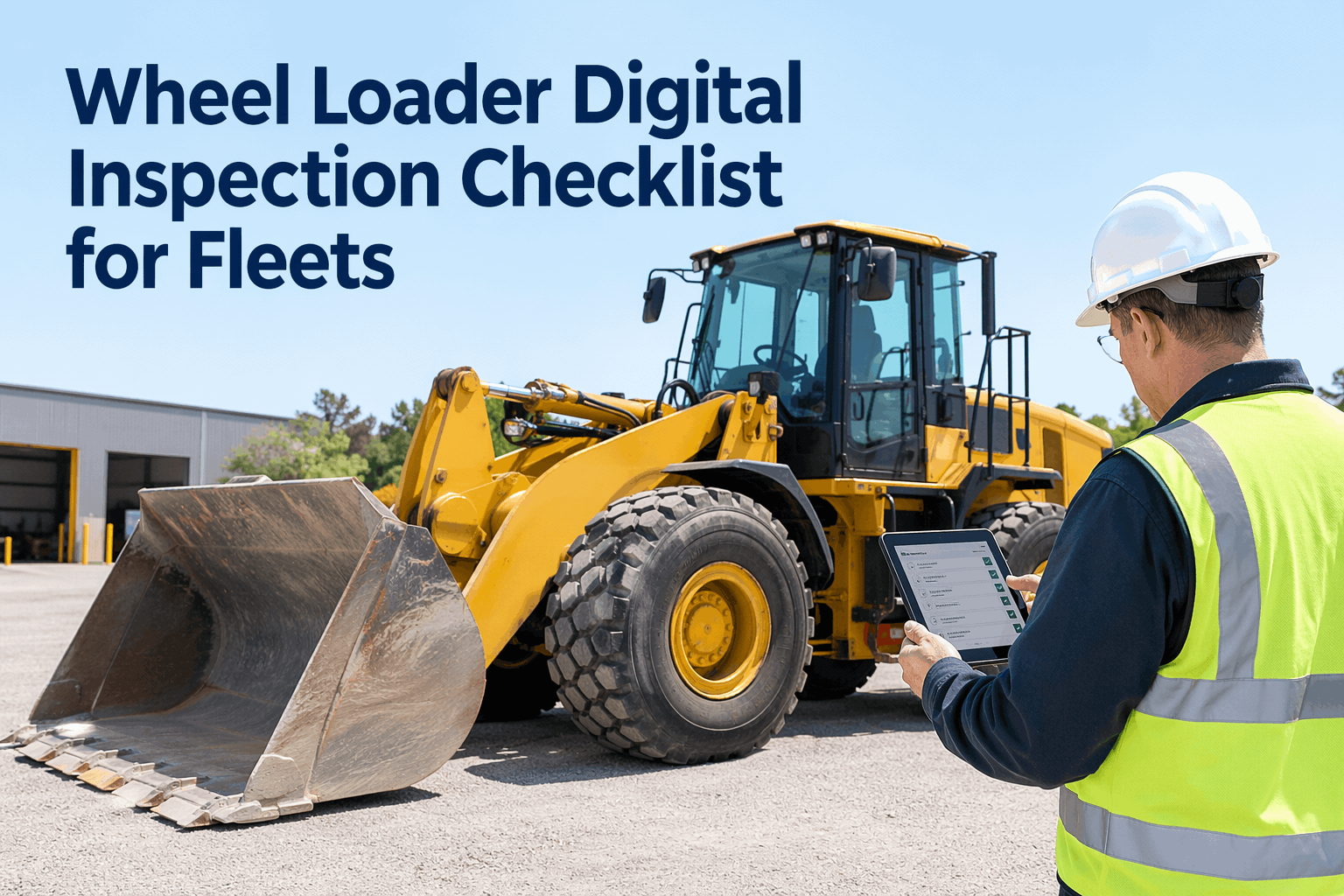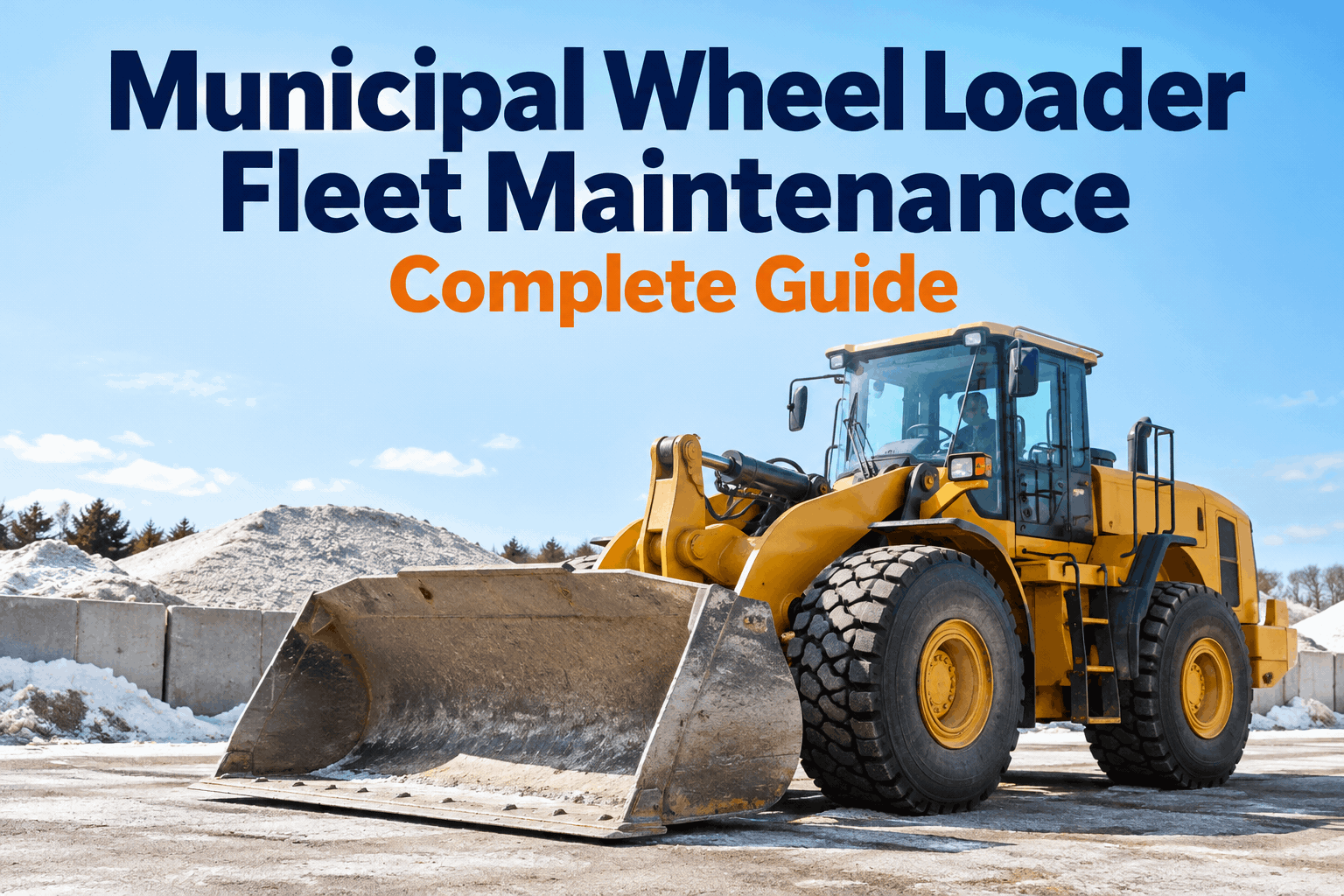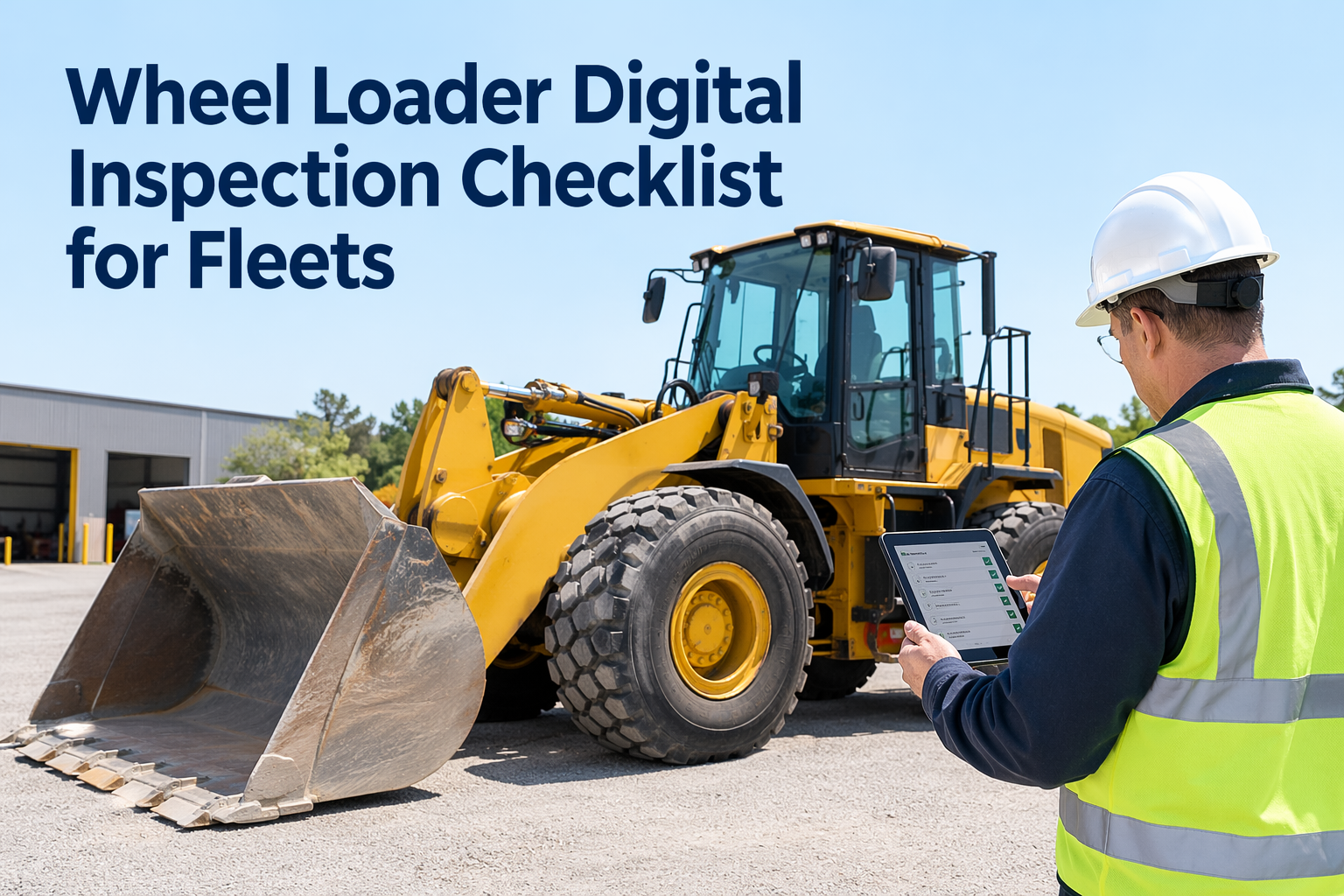
Parks used it for leaf season, streets just put the pusher on it for the first storm, and nobody can say if the coupler lock was ever actually checked between the two. A wheel loader digital inspection checklist fixes that by tying every check to the machine itself, not whichever department has it this week. Book a demo to see it on your shared equipment pool
One Loader, Three Departments, One Record That Doesn't Get Lost
A digital pre-operation inspection that follows the loader across parks, streets and water department use — attachment checks included — with defects routed straight to a work order.
Three attachments, three different things that can go wrongwhy wheel loader inspection software has to check the attachment, not just the machine
A municipal loader rarely runs one attachment all year. Each swap changes what's safety-critical — and a generic checklist that only covers the bucket misses the other two completely.
Bucket
Cutting edge wear, tooth condition, pivot pin play. The default attachment for debris, leaf collection and material handling.
Pallet forks
Fork tine condition, locking pin engagement, quick-coupler lock fully seated. The attachment where a missed lock check does the most damage.
Snow pusher
Edge wear, trip-edge spring condition, mounting bolts — checked in the cold, often at night, often by whoever's on winter call.
HVI lets you build a separate checklist for each attachment, so the right questions show up the moment the swap is logged. Book a demo to see attachment-specific checklists on the same loader
The six systems behind every attachmentwhat a wheel loader digital inspection checklist needs to cover on the machine itself
Articulation joint
Center-pin play and grease condition. A loose joint shows up as the loader wandering under steering input.
Hydraulics & lift linkage
Hose and cylinder leaks running the lift arms and attachment tilt — the system doing the most work on any attachment.
Tires
Tread wear, cuts, pressure matched side to side — especially relevant moving loaded pallets or scraping compacted snow.
Steering & brakes
Steering response, brake pedal feel, parking brake holding under a loaded bucket or forks.
Cab & ROPS
Seatbelt, mirrors, backup alarm, ROPS structure intact — checked whoever's operating the loader that shift.
Engine & cooling
Fluid levels, air filter condition, radiator and oil cooler screen clear under dust or winter road salt.
For a deeper articulation-joint and OSHA-focused breakdown, see our construction-focused wheel loader inspection guide. Book a demo to see your loader's full checklist built for every attachment
From flagged defect to closed work orderhow wheel loader inspection software works across multiple departments
-
1
Operator runs the pre-op check for the loader's unit number
Whichever department is using it that day selects the current attachment, and the checklist adjusts — bucket, forks, or pusher — tied to the machine.
-
2
A defect is logged with photo & severity
A coupler that won't fully seat, a hydraulic leak, a worn cutting edge gets flagged and timestamped on that unit's record.
-
3
It becomes a work order in one tap
The flag converts into a work order assigned to the shop before the next department signs the loader out.
-
4
Parts, labor & sign-off recorded
Pins, bushings and fork hardware pulled from stock deduct against inventory; the tech signs off once it's cleared.
-
5
It lands in that loader's permanent history
Every inspection and repair feeds cost-per-unit reporting — one audit-ready record, no matter how many departments touched it.
Maintenance doesn't pause between departmentspreventive maintenance for a pooled municipal wheel loader
A loader shared across parks, streets and water still wears on a single clock. Hour-based PM scheduling fires on the machine's actual usage, regardless of which department's work order it's under.
Quick-coupler lock, hydraulic quick-connects, and attachment-specific wear points inspected at every changeover.
Articulation and pivot grease points, hydraulic filter check, fluid sample — the interval that protects the costliest components.
Engine and hydraulic fluid service, wheel-end inspection, full brake and steering check.
Full condition and cost history pulled per unit, broken out by department usage if needed — ready before it's asked for.
The wheel loader pre-operation checklistwhat every wheel loader digital inspection should cover before the shift starts
This is the walkaround that keeps a shared loader safe no matter which department or attachment is running it. In HVI it's a guided digital template — tick, flag, photo — that adjusts to the attachment on record.
A loader that moves between three departments answers to three supervisors and, eventually, one budget committee — and "it was fine when we had it" doesn't hold up the way a timestamped digital record does. This checklist, run digitally every shift across every department, is the single highest-leverage thing you can put on a shared loader fleet. Book a demo and see it live on one screen
From an equipment manager who shares loaders across three departments
We've got four loaders that move between parks, streets and water depending on the week, and attachments swap constantly — bucket for leaf season, forks for moving pallets of pipe fittings, the pusher the second it snows. The worst incident we had wasn't even a breakdown, it was a coupler that wasn't fully locked and the forks dropped a half-loaded pallet. Nobody got hurt, but it easily could've gone differently.
Now the checklist knows which attachment is on the machine and asks the right questions for it, and the coupler lock is the very first thing on that list. Every department that touches a loader runs the same check, so I'm not relying on three different habits across three different crews anymore.
What an attachment-aware record is actually worththe case for wheel loader inspection software on a shared municipal fleet
Frequently asked questions
What is a wheel loader digital inspection checklist?
It's a mobile-first inspection built around a loader's articulation joint, hydraulics, tires and current attachment, that flags defects with photos and routes them straight to a work order. Book a demo to see it on your fleet.
How is a municipal loader checklist different from a construction one?
A municipal loader usually runs multiple attachments across multiple departments — bucket, forks, snow pusher — so the inspection and record have to follow the machine and its current attachment, not one crew.
What's the most important thing to check when swapping attachments?
The quick-coupler lock engagement — confirming the pin is fully seated before lifting anything is the single most important check at every attachment change.
Can one loader have separate checklists for different attachments?
Yes, HVI lets you build a checklist for each attachment type, switched the moment the current attachment is logged on the machine.
Does this help when a loader is shared across departments?
Yes. Every inspection, defect and repair ties to the unit's permanent record regardless of which department is using it, giving you one condition history instead of three incomplete ones. Start a free trial to set it up on your fleet.
Stop losing track of which loader, which attachment, which department
HVI gives every operator a wheel loader digital inspection checklist that adjusts to the attachment in use, routes flagged defects straight to a work order with photos attached, fires PM on real hours, and keeps one audit-ready record per machine across every department. Live on your fleet in under two weeks.
- Attachment-specific inspection templates
- Defect → work order in one tap
- Hour-based PM, shared-fleet aware
- One audit-ready record per loader