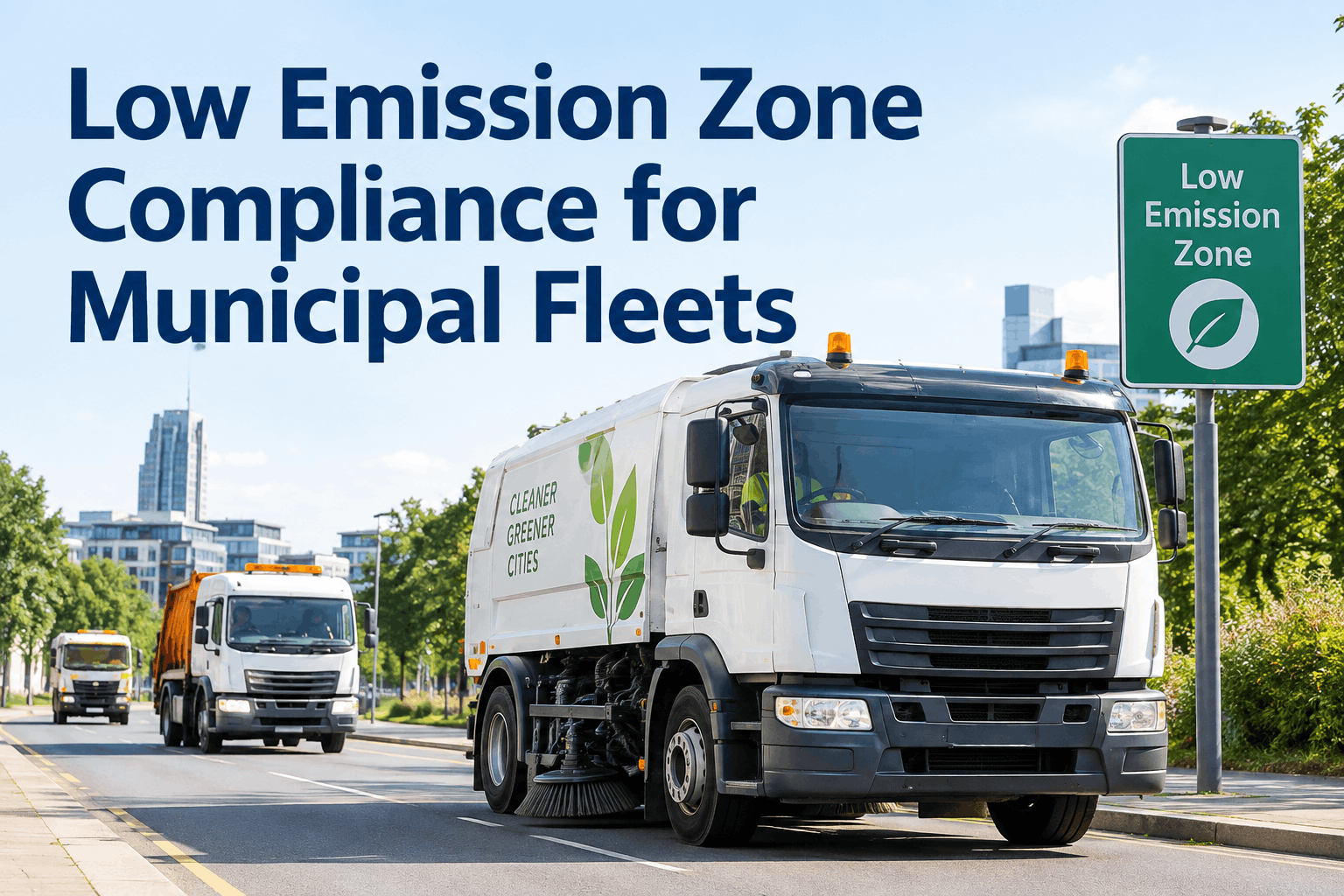
Your refuse trucks, sweepers, and social-care vans have to enter the city to do their job — and increasingly, the city charges them a daily fee or turns them away if they're not clean enough. Low Emission Zones, Clean Air Zones, and ULEZ judge every vehicle individually on its Euro standard, the zones keep expanding, and the charges add up fast across a municipal fleet. Managing compliance isn't a one-time check; it's an asset-level view of where each vehicle stands and which to fix first as access rules tighten. See each vehicle's compliance status in one place
A Zone Doesn't Judge Your Fleet — It Judges Each Vehicle, One at a Time
Compliance is per vehicle, based on its emission standard. Here's the status board every municipal fleet needs.
Meets the zone's Euro standard — enters free, no charge, no restriction. The target for every unit.
Euro VI diesel / EV / retrofitBelow standard but still allowed — for a daily fee that repeats every entry, every working day.
£50–£100/day for HGVs & busesCharged, penalised, or in strict zones barred outright — a vehicle that can't do its route as-is.
Penalty notices & access riskThe daily charges are only the visible cost. The real management challenge is that compliance is per vehicle, the rules differ by city and keep changing, and a vehicle can drop out of compliance if its emissions system fails. Below is how zones actually judge a vehicle, the options for each non-compliant unit, and how to keep the whole picture at the asset level.
How a zone decides if your vehicle pays
Every Low Emission Zone and Clean Air Zone works off one thing: the vehicle's Euro emission standard. Meet it and you enter free; fall below and you're charged or restricted. What varies between cities is which vehicle types are caught — that's what the CAZ class letters mean.
The standard that matters
Diesel Euro VI (HGVs, buses) or Euro 6 (cars, vans, taxis), and petrol Euro 4, enter free. Electric and hydrogen vehicles are exempt. Anything older pays.
The class sets who's caught
Classes A–D widen the net: A covers buses and taxis; B adds HGVs; C adds vans; D adds cars too. Your city's class tells you which of your units are in scope.
The gotcha: it's not your tax class
Zone compliance is judged on the vehicle's certified emission standard, not its road-tax class — so don't assume a newer-looking vehicle qualifies. Check the actual standard per unit.
Enforcement is automatic: ANPR cameras read every plate, and an unpaid non-compliant entry becomes a penalty notice. And because some zones don't offer auto-pay for fleets, a non-compliant vehicle entering a zone can mean manually reporting and paying for each trip — an admin burden that grows with every older unit you keep running. Book a demo to hold each vehicle's emission standard on record.
Four options for every non-compliant vehicle
Once you know which units are charged or barred, each one has a decision attached. There's no single fleet-wide answer — the right move depends on the vehicle's age, route, and remaining life. These are the four paths.
The point is that this is a per-vehicle calculation, and it changes as zones expand and grants open and close. Making it well means seeing each unit's emission standard, in-zone route exposure, retrofit status, and remaining life side by side — the same asset-level view behind sound public-fleet planning generally. Start free and flag each vehicle's compliance path.
Keeping a compliant vehicle compliant
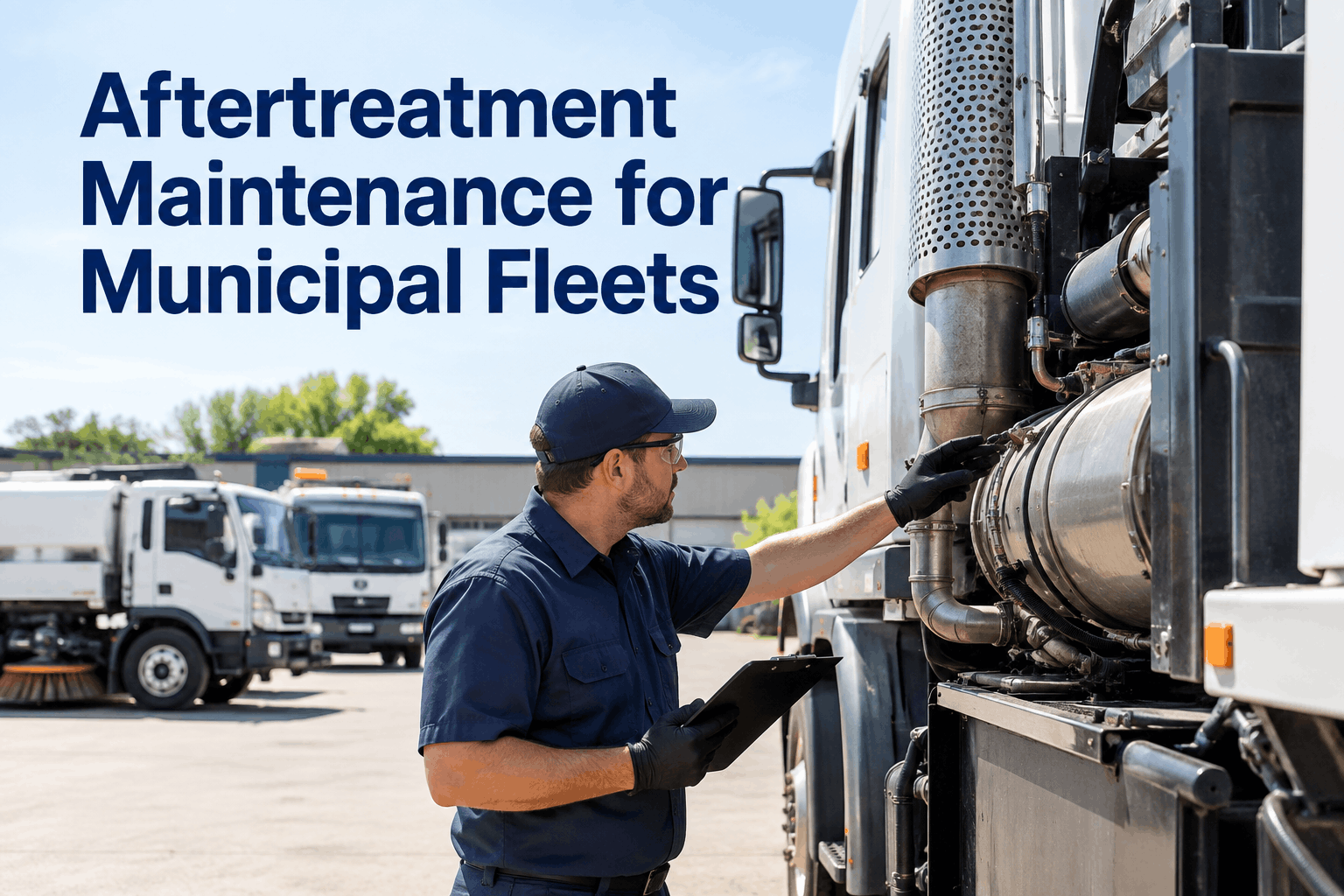
Here's a point most zone guides miss: a vehicle's emission standard depends on its emissions system actually working. A Euro VI truck relies on its DPF and SCR system to hit the standard it's certified for — and if that aftertreatment fails, the vehicle's real-world emissions climb even though its paperwork still says compliant. Poorly maintained emissions equipment is a compliance risk, not just a repair bill.
A Euro VI vehicle only stays Euro VI if its aftertreatment stays healthy. Keeping DPF, SCR, and DEF systems maintained — with service triggered on condition and fault history, not a blind calendar — is what protects the compliant status you're paying to have.
This is where compliance and maintenance connect. Preventive maintenance triggered on meter, condition, or fault codes keeps emissions systems in shape, and per-propulsion service templates make sure a retrofitted or electric unit is serviced correctly for what it now is. The vehicles you've invested in to meet the zone stay meeting it. Book a demo to keep emissions-system PM on the right trigger.
The asset-level compliance record
Everything above comes down to one capability: knowing the full compliance picture for every vehicle, and keeping it current as zones and grants change. That takes the fleet's records, service workflows, and technician qualifications connected in one place.
A record per vehicle
Emission standard, retrofit status, propulsion, and in-zone route exposure held against each asset — the single source for who's compliant, who pays, and who to fix.
Templates per propulsion
Diesel, retrofit, hybrid, and EV units each get the right service regime — so the mixed fleet you run through a transition is all managed in one system.
HVI: Templates per PropulsionQualified techs on retrofit work
Retrofit and emissions-system service need certified skills — qualification tracking makes sure the right technician does the work that keeps a vehicle in its class.
HVI: Qualification TrackingWith the picture assembled from records you already keep, a change to a zone stops being a fire drill. You filter for the vehicles now in scope, see their status, and act — retrofit, reroute, or replace — with the evidence to back the spend at budget time. Start free and build the compliance record per vehicle.
From a municipal fleet manager facing a new zone
When the city confirmed the zone class, I had no quick way to say how many of our vehicles would be charged — it was a scramble through spreadsheets and V5s. Once each unit's emission standard and routes were on record, I could filter to exactly the trucks in scope, retrofit the ones with life left, reroute a few, and put the worst offenders first in line for replacement. When finance asked what it would cost, I had the per-vehicle case ready instead of a guess.
Frequently asked questions
What makes a vehicle compliant with a low emission or clean air zone?
Compliance is based on the vehicle's certified Euro emission standard. In most UK zones, diesel vehicles need Euro VI for HGVs and buses, or Euro 6 for cars, vans, and taxis; petrol vehicles need Euro 4. Vehicles that meet the standard enter free, and electric and hydrogen vehicles are exempt. Anything below is either charged a daily fee or, in strict zones, restricted. Importantly, this is judged per vehicle on its emission standard — not its road-tax class or how new it looks — so each unit has to be checked individually.
How much does it cost a fleet if vehicles aren't compliant?
Charges vary by city and vehicle type, but a non-compliant HGV or bus typically pays around £50 to £100 per day, and vans considerably less. That daily figure is the trap: it repeats every working day and multiplies across every non-compliant vehicle, so a handful of older units entering a zone regularly can run into tens of thousands per year. Unpaid non-compliant entries become penalty charge notices, caught automatically by ANPR cameras. Because the cost recurs, keeping older vehicles running in-zone is often more expensive over time than retrofitting or replacing them.
Can a non-compliant municipal vehicle be made compliant?
Often, yes — through an accredited retrofit. Fitting emissions-reduction technology approved under a recognised retrofit accreditation scheme can qualify an otherwise non-compliant vehicle for exemption, and this is frequently supported by government grants for buses, HGVs, and vans. Retrofit is usually far cheaper than replacement for a vehicle with useful life remaining. The alternatives are keeping the vehicle on routes outside the zone, absorbing the daily charge for a unit that rarely enters, or prioritising it for replacement. The right choice depends on the vehicle's age, in-zone route exposure, and remaining life.
Can a vehicle lose its compliant status?
In practical terms, yes. A vehicle's Euro standard assumes its emissions system is functioning as designed. A Euro VI truck depends on its DPF and SCR aftertreatment to hit the emissions it's certified for, so if that system fails or is poorly maintained, real-world emissions rise even while the paperwork still shows it compliant — both an environmental and a reliability risk. Keeping emissions equipment maintained, with service triggered on condition and fault history rather than a blind calendar, is what protects the compliant status the fleet is paying to have.
How should a municipal fleet plan for expanding zones?
By keeping an asset-level compliance record that's easy to re-filter as rules change. When each vehicle's emission standard, retrofit status, propulsion type, and in-zone route exposure are held against the asset, a new or expanded zone becomes a filter rather than a fire drill: you identify the vehicles now in scope, see each one's status, and decide per unit whether to retrofit, reroute, or replace. Because the picture is built from records you already keep, you also have the per-vehicle evidence to justify retrofit and replacement spending when it goes to budget.
Turn zone compliance from a scramble into a filter
HVI holds each vehicle's emission standard, retrofit status, propulsion, and service history against the asset, keeps emissions-system PM on the right trigger, and puts qualified techs on retrofit work. So when a zone launches or expands, your municipal fleet knows exactly which vehicles are affected, what to do with each, and how to prove the plan — from records you already keep.
No credit card · Emission standard & retrofit status per vehicle · Compliance planning records