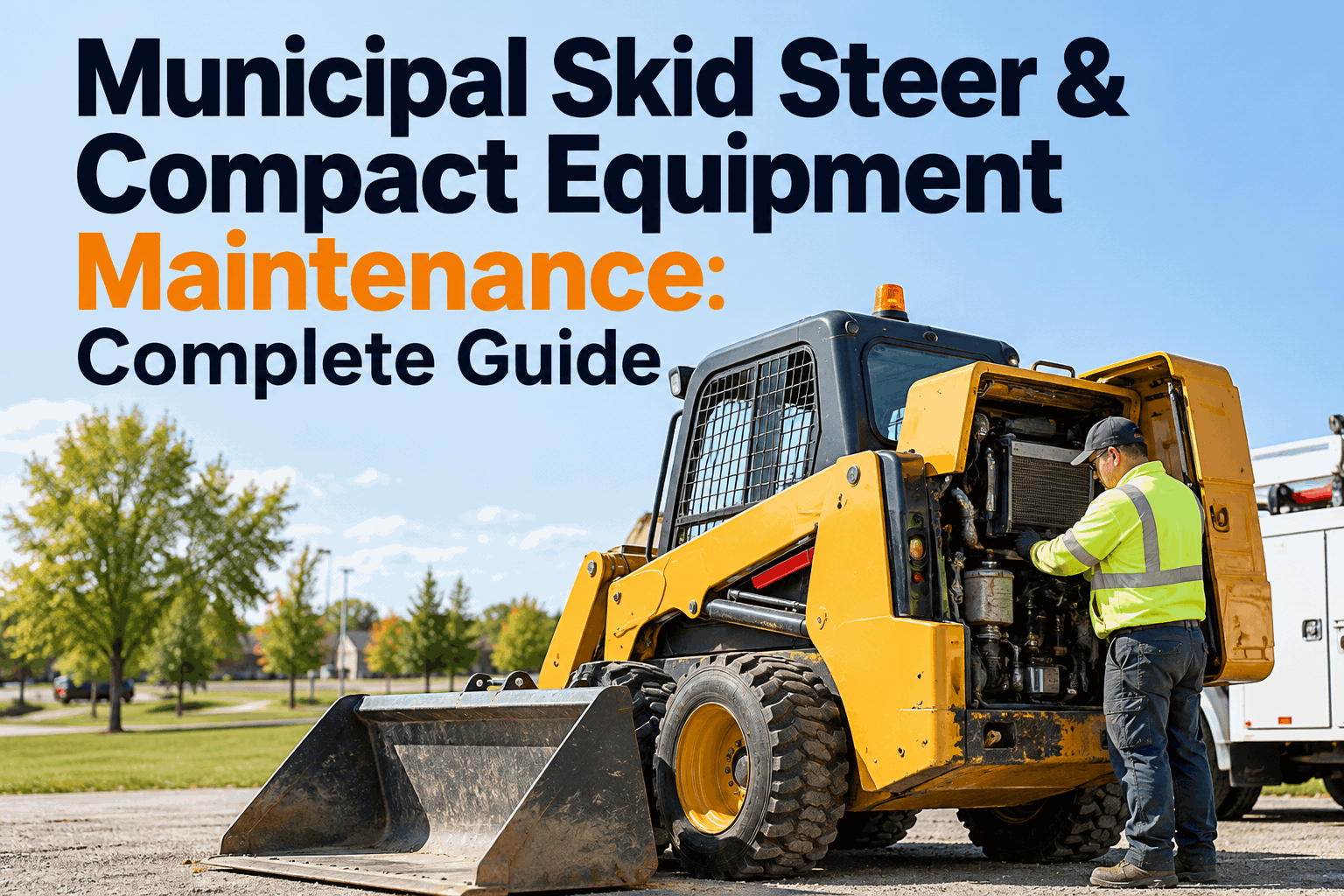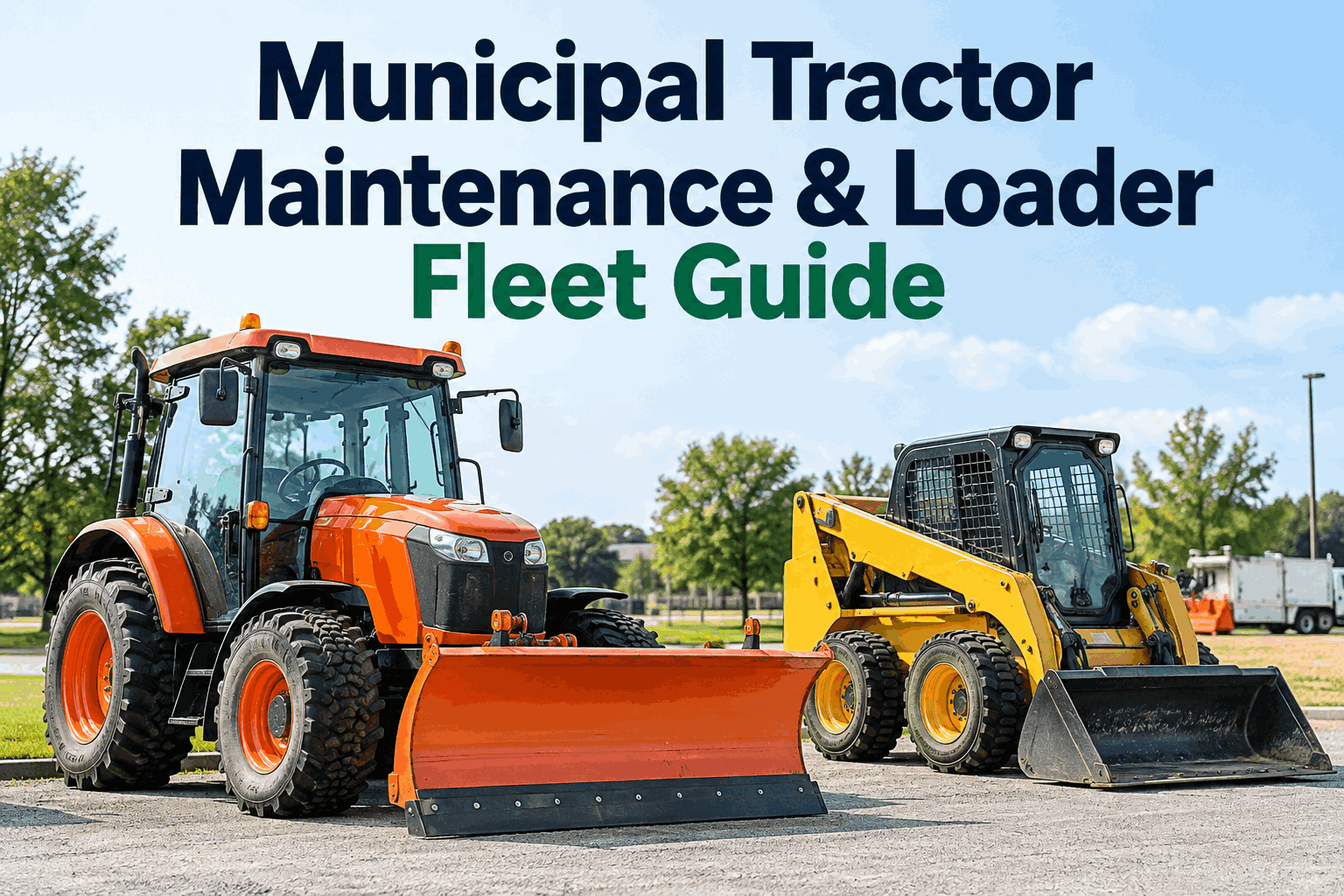
Municipal tractor maintenance never gets the attention it should — not because anyone's careless, but because the machine is never standing still long enough to service. Your compact tractors, loaders and skid steers mow in July, plow in January and load material in between, switching attachments so often that the hours pile up faster than anyone's tracking. Then a hydraulic pump or a PTO lets go mid-season and a crew loses a week. Here's how to get a municipal tractor and loader fleet onto a maintenance schedule that keeps up.
One machine. Every job. All year.
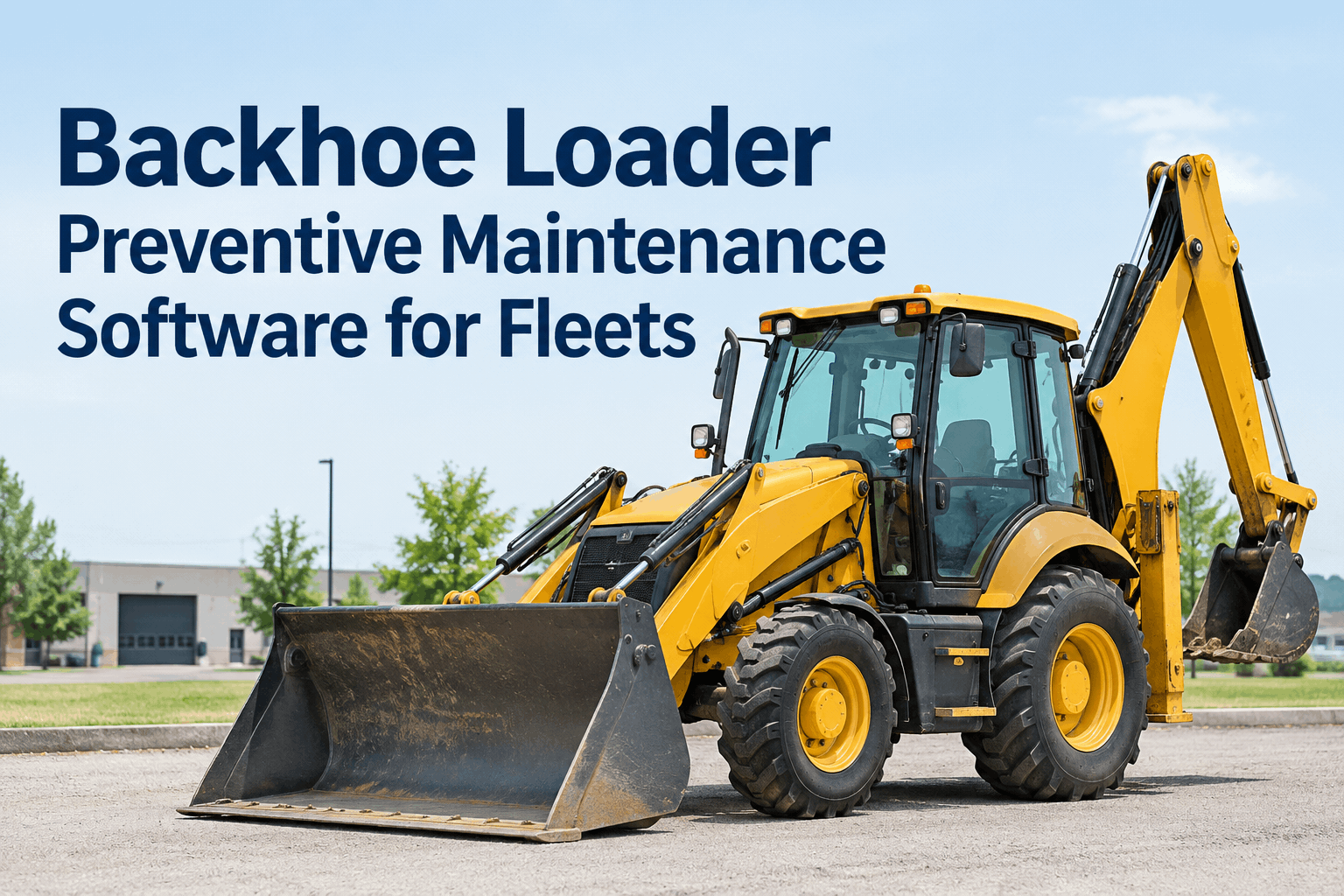
A municipal tractor or compact loader is the hardest-working, least-tracked asset in the yard — a different attachment every week and an hour meter that never rests. Put the whole fleet on hour-based service it can't outrun, and the mid-season breakdowns stop writing your schedule for you.
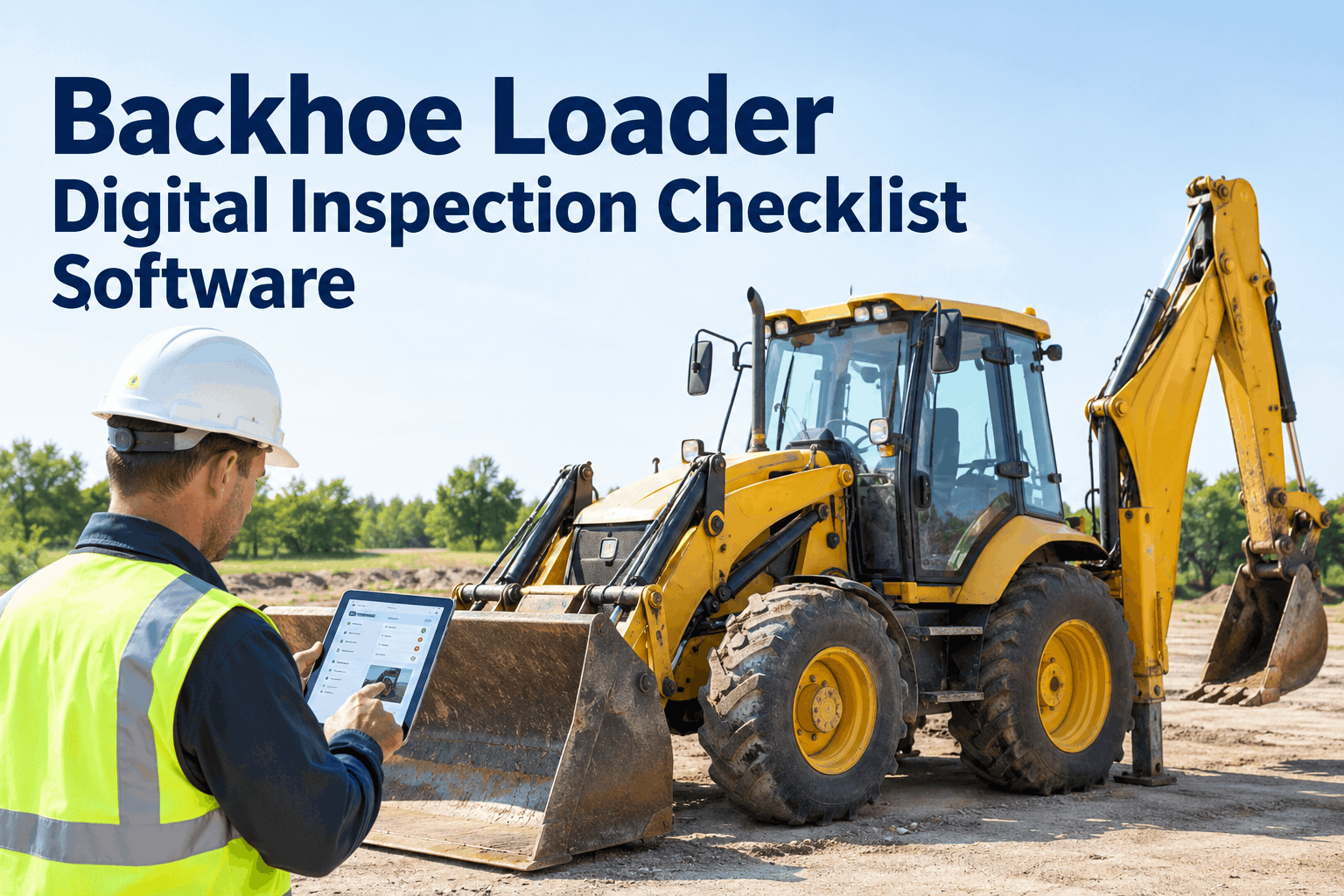
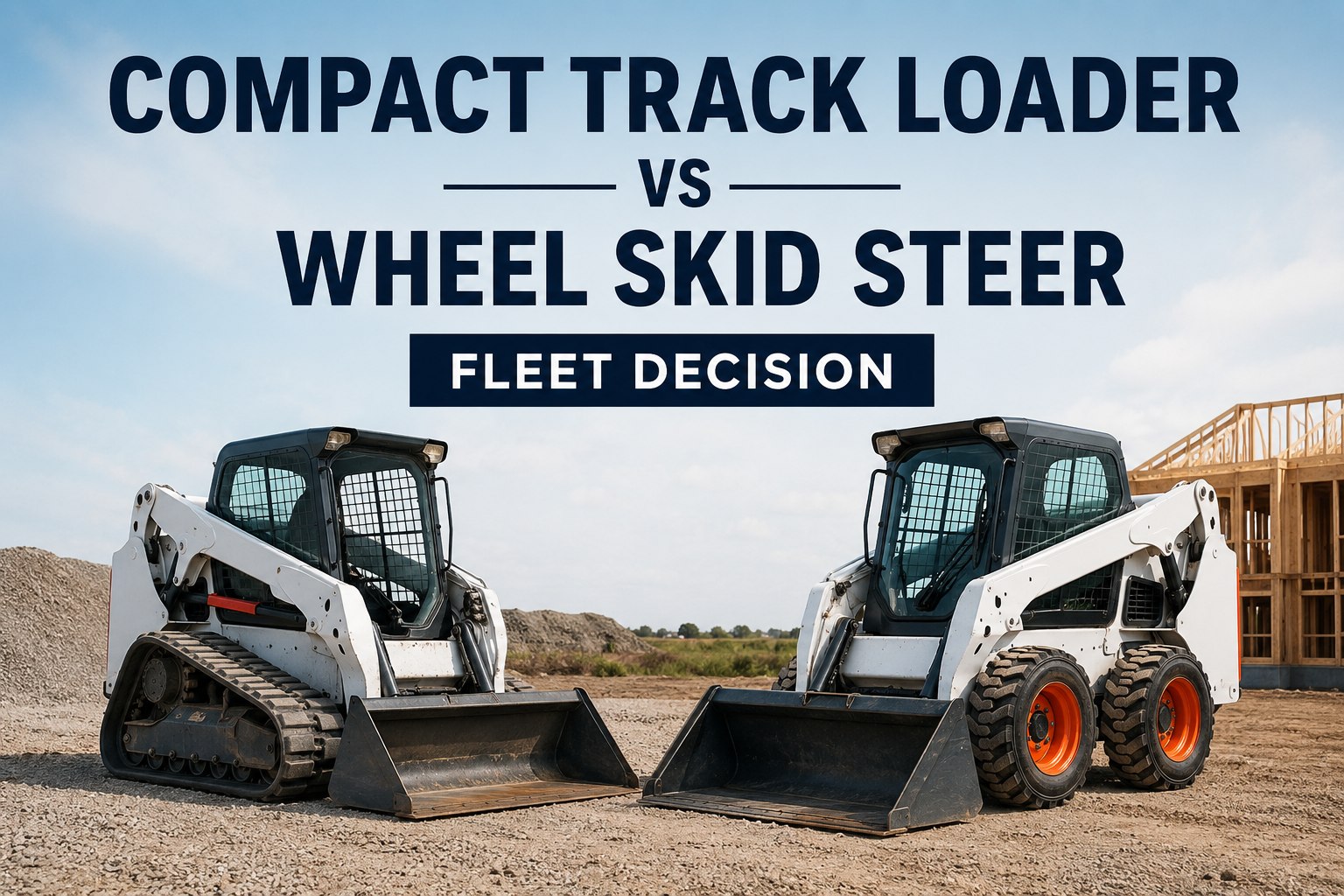
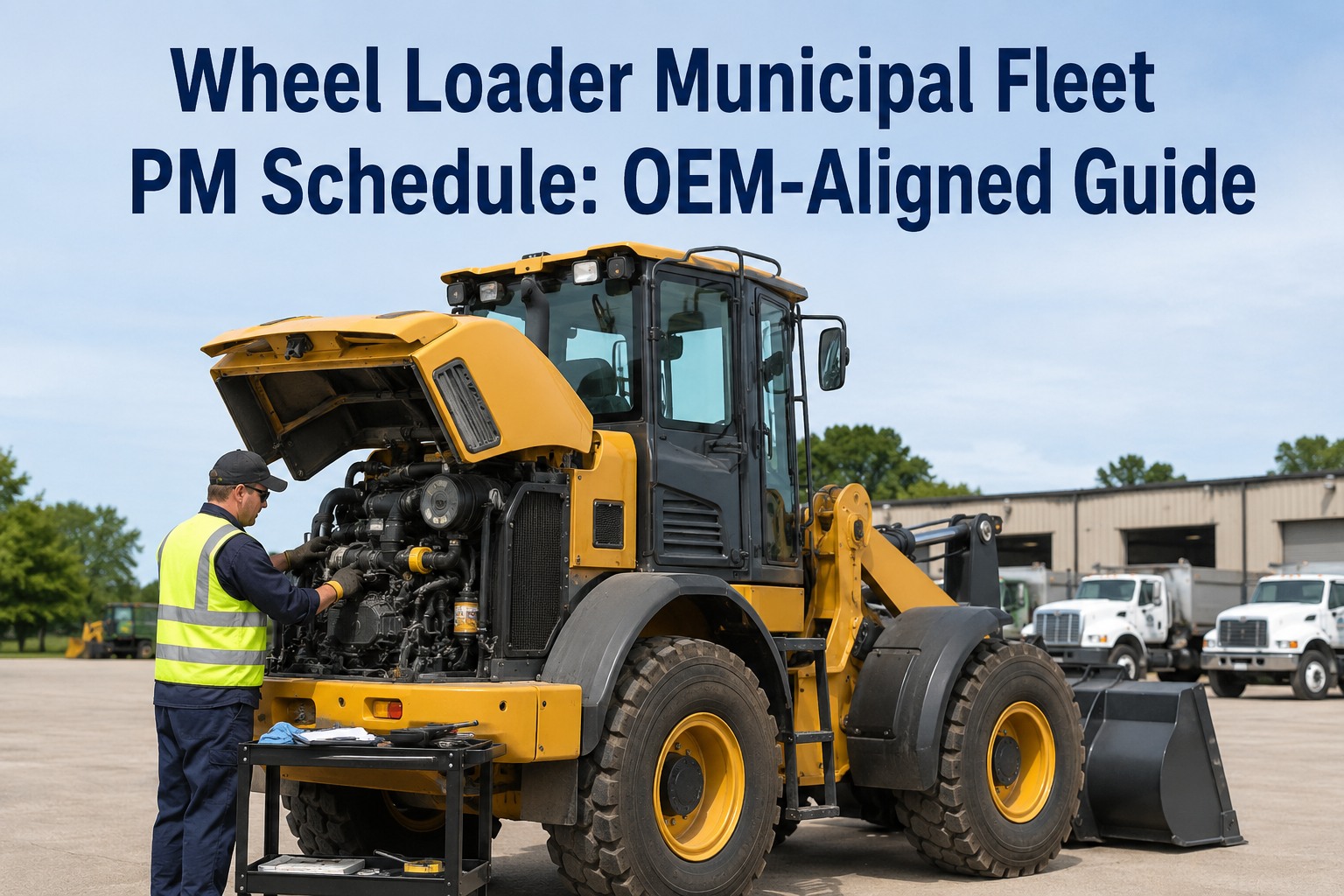
Ask a shop foreman which machine is overdue for service and they can usually tell you about the trucks. Ask about the compact tractor that's been on a mower all summer and just had a plow bolted on, and the answer gets fuzzy — nobody's sure how many hours it's logged. HVI already has deep guides for specific machines, like the skid steer inspection checklist and a government compact track loader vs. wheel skid steer comparison. This guide is the layer above them — how a city runs its whole tractor and loader fleet on one schedule. See the whole fleet on one schedule.
The workhorse problem: hours hide in plain sightwhy municipal tractor maintenance slips even on machines in constant use
These machines don't get neglected because they sit — they get neglected because they never stop. A tractor that's booked for a job every day is never "free" to go to the shop, so service keeps getting pushed. And the hours don't come in evenly; they spike with the season.
Illustrative engine hours · one machine · two seasonal peaks, and never a month off
Booked every day, so service gets pushed until something forces it.
Mowing and plowing stack hours fast, then the interval sneaks up.
Parks runs it one week, streets the next — so no one owns the upkeep.
A compact tractor doesn't command attention the way a plow truck does.
Every attachment changes the wearwhy loader and tractor inspections depend on what's bolted on
The base machine is only half the story. Each attachment stresses a different system, so the inspection that matters this week isn't the one that mattered last week. Knowing what's mounted tells you what to watch.
Watch: hydraulic hoses & cylinders, pins and bushings, quick-attach coupler.
Watch: blades and spindles, belts, PTO driveline, deck bearings.
Watch: shear pins, driveline, hydraulic angle rams, cutting edge.
Watch: drive motor, bristle wear, bearings, hydraulic flow.
Watch: drive coupler, flighting, frame stress, hydraulic pressure.
Watch: undercarriage and track tension on CTLs, tire condition on wheeled units.
A configurable equipment inspection can match the attachment in use, so the operator checks what's actually at risk — not a generic form that ignores the mower deck spinning under them.
Hour-based PM for machines that never stopmatching tractor preventive maintenance to real runtime
Tractors and loaders wear by engine hours, not by the calendar — so the schedule has to read the hour meter. Service triggers on accumulated hours, which means the hard-run machine comes due before it fails, and the one that sat out a slow month doesn't get needless work.
Walkaround, fluids, attachment and safety check before the shift.
First oil and filter service — critical on a machine's break-in interval.
Engine oil, filters, hydraulic fluid and greasing on the machine's hour cycle.
Hydraulics, driveline, cooling and wear items at the longer hour milestones.
This is what real hour-based preventive maintenance looks like — the interval follows the work instead of a sticky note on the shop wall. See hour-based service that tracks every machine, and start a free equipment list to set your own intervals.
One shop view, every machine, full history
Because these machines move between parks, streets and grounds crews, the only way to stop them slipping is a single list the whole shop works from. Asset management puts every tractor, loader and skid steer in one place with its hours, schedule and complete service record — no guessing which crew had it last.
One asset list
Every machine, its hours and its next service due, in one shop view.
Inspections from the field
Operators log pre-use checks on a phone, defects flagged on the spot.
Digital service records
Every service and repair logged per machine, ready for budgets or warranty.
Pull any machine's full history in seconds through maintenance management. See every machine's full service history in one place.
What changes for the shop
Mid-season breakdowns
Hour-based service catches hydraulics and drivelines before they strand a crew.
Hours that don't hide
Every machine's runtime is visible, so service comes due on time, every time.
Equipment life
On-schedule care stretches machines bought on tight public budgets.
Records & accountability
A full history per unit for budgets, warranty claims and the next purchase.
It all runs from a phone in the field, so the crew that's using the machine is the crew that logs its check. Add your tractors and loaders free and get the shop on one page.
From a public works equipment manager
Our compact tractors were the Wild West. One went from a mower straight to a snow blower and nobody had logged a service in between — turned out it was 80 hours past an oil change. We cooked a hydraulic pump on a loader the same winter because the fluid hadn't been touched in a season. Neither machine was abused; we just couldn't see the hours.
Putting every tractor, loader and skid steer on one list with hour-based service fixed the blind spot. I can see what's due, what's overdue and who had it last, and the operators do their pre-use check right on their phones. The mid-season surprises basically stopped. For equipment that never sits still, that's the difference.
Municipal tractor maintenance — FAQs
Why schedule tractor and loader service by hours instead of dates?
Because these machines wear by how much they run, not by how much time passes. A tractor that logged 90 hours mowing in July needs service well before one that barely moved. Hour-based scheduling reads each machine's hour meter and triggers service on accumulated runtime, so the hard-worked unit comes due first and an idle one doesn't get needless work — the interval tracks the real workload.
How do attachments affect maintenance?
A lot, because each attachment loads a different system. A loader bucket stresses hydraulics, pins and the coupler; a mower deck wears blades, spindles, belts and the PTO driveline; a plow leans on shear pins and angle rams. Configurable inspections let the operator check what's actually mounted and at risk, instead of running a generic form that ignores the attachment doing the work.
Can one system handle tractors, loaders and skid steers together?
Yes — that's the point of treating it as one fleet. Compact tractors, wheel loaders, skid steers and compact track loaders all sit on the same asset list, each with its own hour-based schedule, inspection and service history. You get a single shop view across every machine type, whichever crew is running it, so nothing slips because it moved between departments.
Is HVI specific to a tractor or loader brand?
No — HVI is brand-agnostic. Whether your fleet is John Deere, Kubota, Bobcat, Case, Caterpillar or a mix, each machine is an asset with its own intervals and inspection forms that you set to the manufacturer's guidance. The advantage for a municipality is one system across every make and every machine type, instead of juggling separate dealer apps and paper binders.
What does an operator actually have to do?
Very little, which is why it sticks. Before a shift the operator runs a quick pre-use inspection from a phone — fluids, the attachment, safety items — and flags anything wrong. A flagged defect can become a work order automatically, and the hour reading updates the machine's schedule. It takes a couple of minutes and replaces a paper form that usually never made it back to the shop.
Put municipal tractor maintenance on a schedule that keeps up
Every tractor, loader and skid steer on one list, service that triggers on real hours, and a full record per machine — so the fleet that never stops working doesn't stop you. See it on your own equipment in 30 minutes.
Every machine on one list · PM by the hour · Inspections from the field