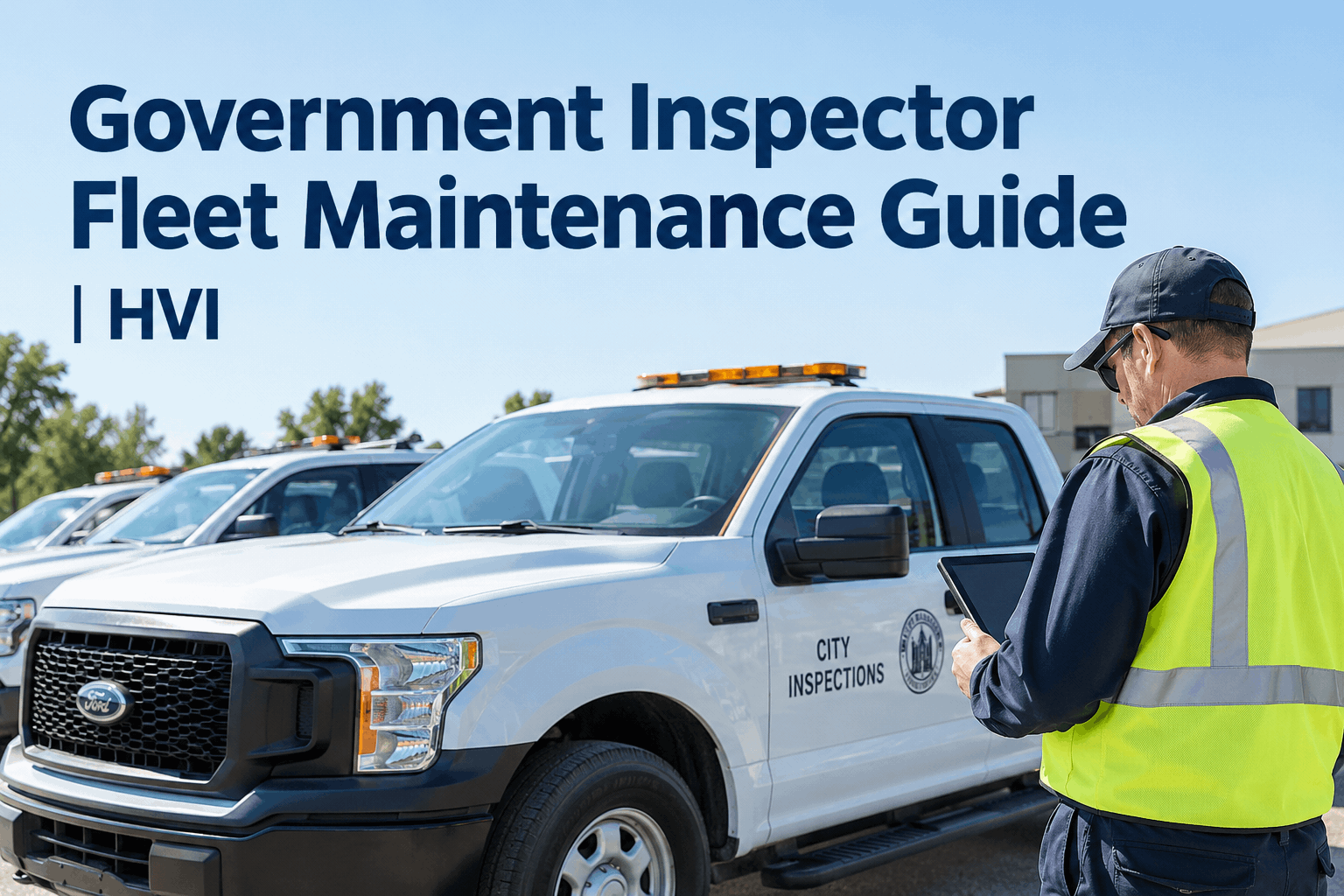
Every fleet office running government inspector vehicles knows this one: a sedan with 4,200 miles on it this year, parked outside the same three job sites all week with the engine running. The odometer says "barely driven." The engine doesn't agree. Book a demo to see your inspector fleet scheduled the right way.
Low miles, long idle, and a light bar, radio and laptop mount that never show up on an odometer-based work order. Schedule by calendar and engine hours, check the upfit every visit, and never lose an inspector's route to a vehicle nobody was watching.
Inspector vehicles are the fleet nobody budgets time for — one driver, one car, light on miles, heavy on sitting. A mileage-based PM plan treats low mileage as low risk. It isn't. Below is how to measure what these vehicles actually wear from, what to check beyond the engine bay, and how to keep a single vehicle going down from taking an inspector off the street.
A vehicle's real wear isn't on the odometerwhy engine hours tell the truth a mileage interval can't
A 5,000-mile oil interval on a 4,200-mile-a-year sedan won't trigger for over a year. But that vehicle isn't sitting idle in a lot — it's idling at the curb outside inspection sites, running the radio, the laptop dock, and the light bar the whole time. Add that up and the vehicle has done far more engine work than the odometer admits. Book a demo to see how HVI tracks engine hours alongside mileage.
This is the whole case for time-based scheduling: the mileage number isn't wrong, it's just the wrong trigger for this vehicle. HVI's preventive maintenance scheduling runs on calendar and engine-hour triggers side by side with mileage, so a low-mileage vehicle still gets serviced on time.
Two schedules, two outcomessame sedan, same year — run through each logic
Run the same inspector sedan through a mileage-only plan and a calendar-plus-hours plan, and the gap is immediate.
At 4,200 mi/yr against a 5,000-mile interval, the trigger doesn't fire for over a year. The upfit never gets a formal check because nothing prompts one.
A 6-month interval fires regardless of mileage. The upfit checklist rides along on the same visit, so the light bar and radio get checked too.
The difference isn't the vehicle — it's which trigger the fleet office set up. Book a demo to switch a vehicle class onto calendar-based scheduling.
When two vehicles need the bay the same weeka small fleet with one lift still needs to pick an order
A three-inspector office doesn't have the luxury of servicing everything at once. When two vehicles come due together, a simple weighted score settles it instead of whoever complains first.
A vehicle that's overdue, has no backup, and failed an upfit check jumps the queue over one that's merely due. The decision is logged, not argued about.
Four states every inspector vehicle moves throughknow which one you're looking at before it becomes a problem
Knowing which state a vehicle is in — before it reaches Grounded — is the whole point of tracking this fleet separately from the rest of the department's vehicles. Book a demo to see your fleet sorted into these states automatically.
The numbers behind this fleetwhy "low mileage" doesn't mean "low priority"
None of these numbers mean a government inspector fleet is doomed to be overlooked — they just mean it needs its own schedule. Start free and set up calendar-based PM for your first vehicle class.
The upfit checklist a generic PM plan skipsthe mounted equipment that only fails where nobody looks
An inspector's vehicle isn't stock — light bar, radio, laptop mount, storage box, department signage. Build it once as a template in HVI and every technician checks the same list, not whatever they remember.
Run this alongside every calendar PM visit and the upfit stops being an afterthought. Start free and build this as a reusable template.
A fleet supervisor on making the switchwhat changed when mileage stopped being the trigger
Our code enforcement cars never hit the mileage that triggered a service order, so they just didn't get serviced on any real schedule. Meanwhile they sat idling outside properties for twenty, thirty minutes at a stretch, every day. We moved them onto a six-month calendar instead, added the light bar and radio mount to the checklist, and our inspectors now do their own pre-trip from a phone wherever they're parked. We haven't had an inspector stuck without a vehicle since.
Government inspector fleet maintenance FAQswhat fleet and operations teams ask most
What is government inspector fleet maintenance?
It's the maintenance program built around vehicles assigned to field inspectors — code enforcement, building, health and utility inspectors — which typically log low mileage, high idle time and mounted equipment like radios and light bars. It needs calendar-based scheduling and equipment-specific checklists, not a mileage-only plan.
How often should low-mileage government inspector vehicles be serviced?
Service on a time or engine-hour interval — commonly every 3 to 6 months — rather than waiting for a mileage threshold a low-mileage vehicle may not reach for over a year. Daily pre-trip checks should still happen regardless of mileage or time elapsed.
What upfit equipment needs its own maintenance checklist?
Light bars, radios or mobile data terminals, auxiliary batteries powering laptop docks, equipment storage boxes, and department decals all fail in ways a generic checklist won't catch. Each deserves a line item tied to the specific vehicle it's installed on.
How does HVI help track records for compliance and public-records requests?
HVI logs every inspection, work order and PM service with a timestamp, so a fleet office can produce a complete maintenance history for a specific vehicle on request — useful for audits, budget justifications and FOIA-style inquiries, subject to the features available in your setup.
Can mobile inspections work for inspectors who don't visit a central depot?
Yes — mobile inspections are completed from wherever the vehicle is parked, using a phone or tablet, so a dispersed inspector doesn't need to drive to a yard to complete a daily check. Findings route back to the fleet office the same way regardless of location.
Keep every inspector's vehicle ready for tomorrow's route
Getting government inspector fleet maintenance right means matching the schedule to how these vehicles are actually used — time and engine hours, not just miles. Let HVI set calendar-based PM, run an upfit checklist on every vehicle class, and capture mobile field inspections from wherever your inspectors are.
- Calendar + engine-hour PM scheduling
- Configurable checklist per vehicle upfit
- Mobile inspections from the field
- Full audit-ready maintenance record