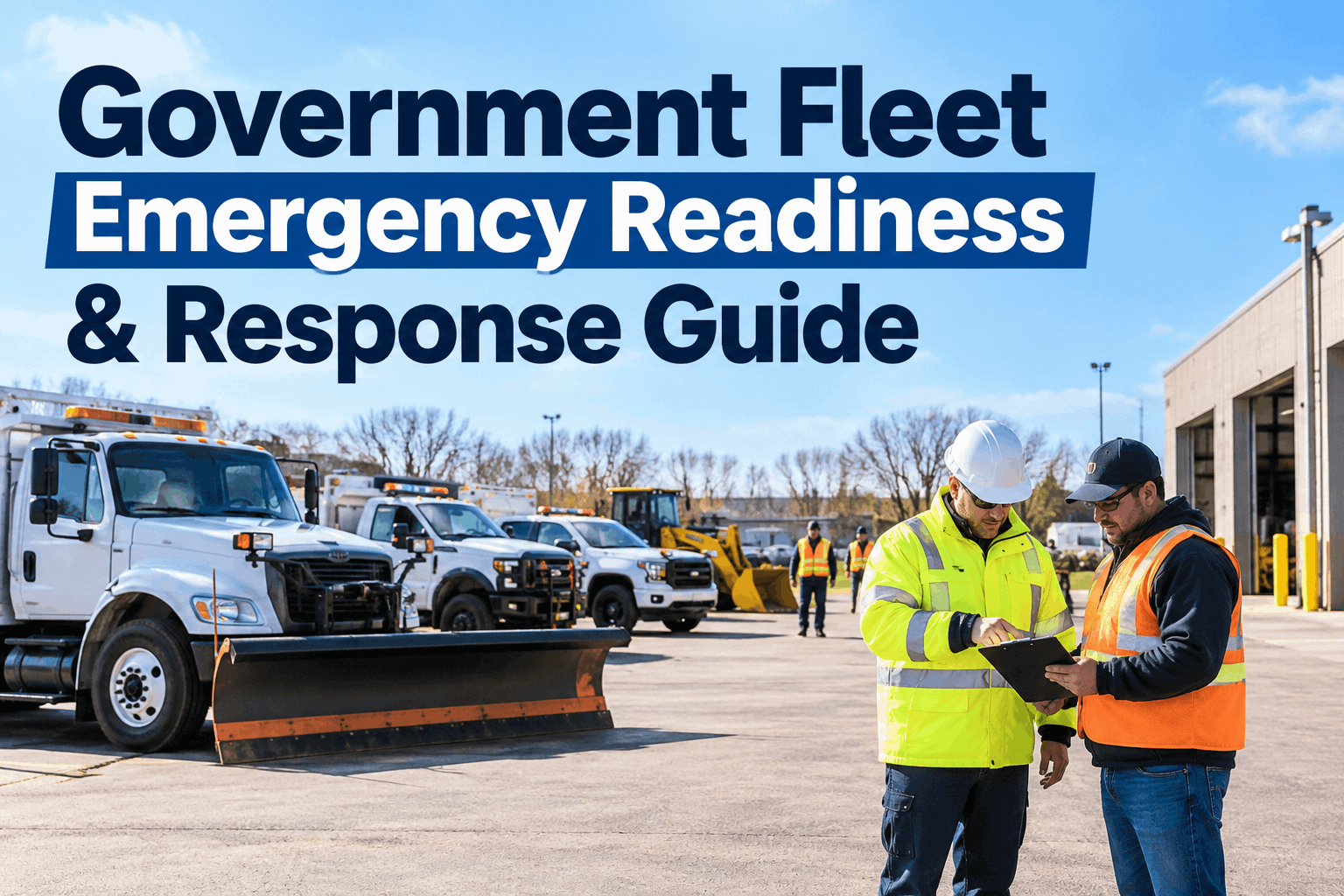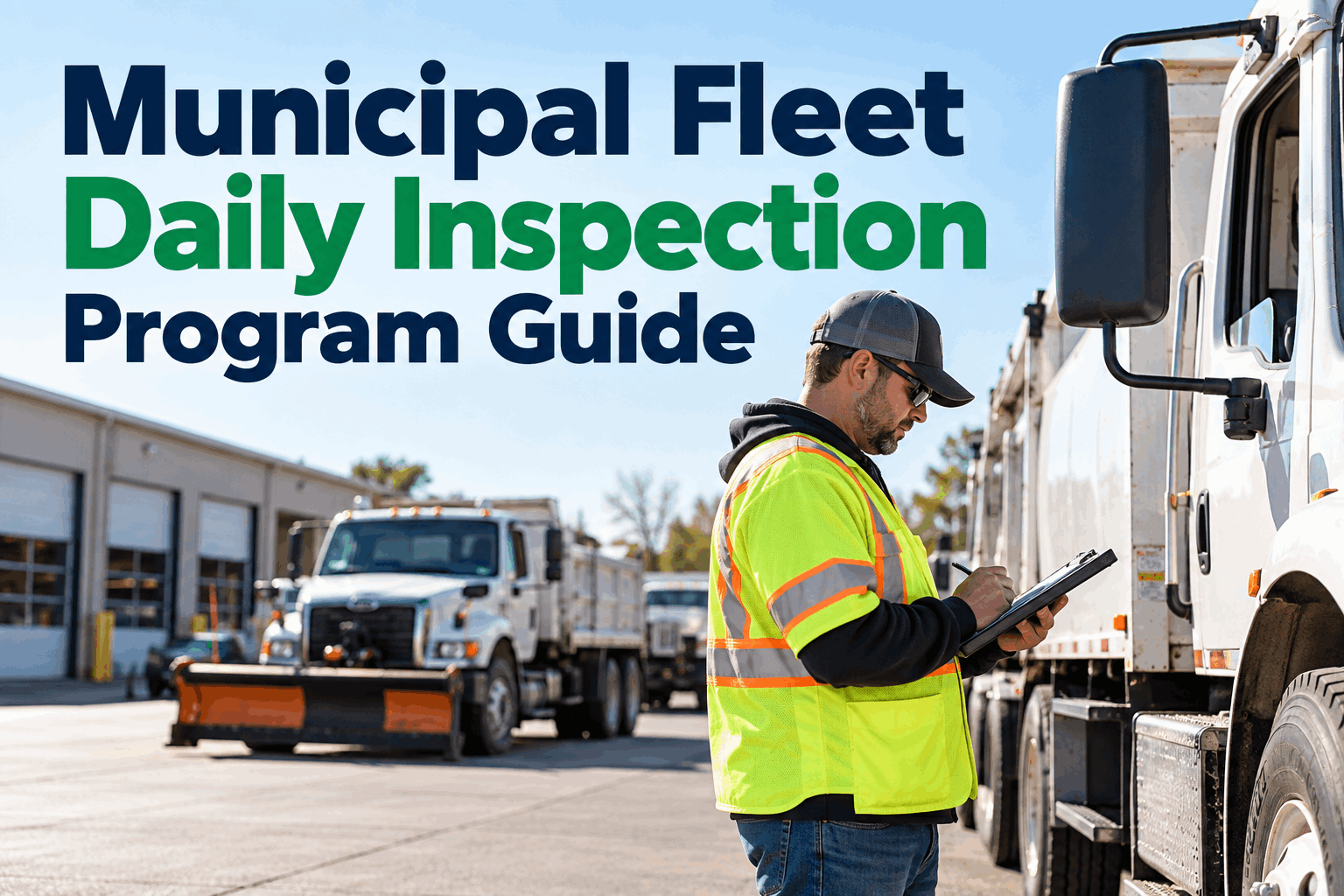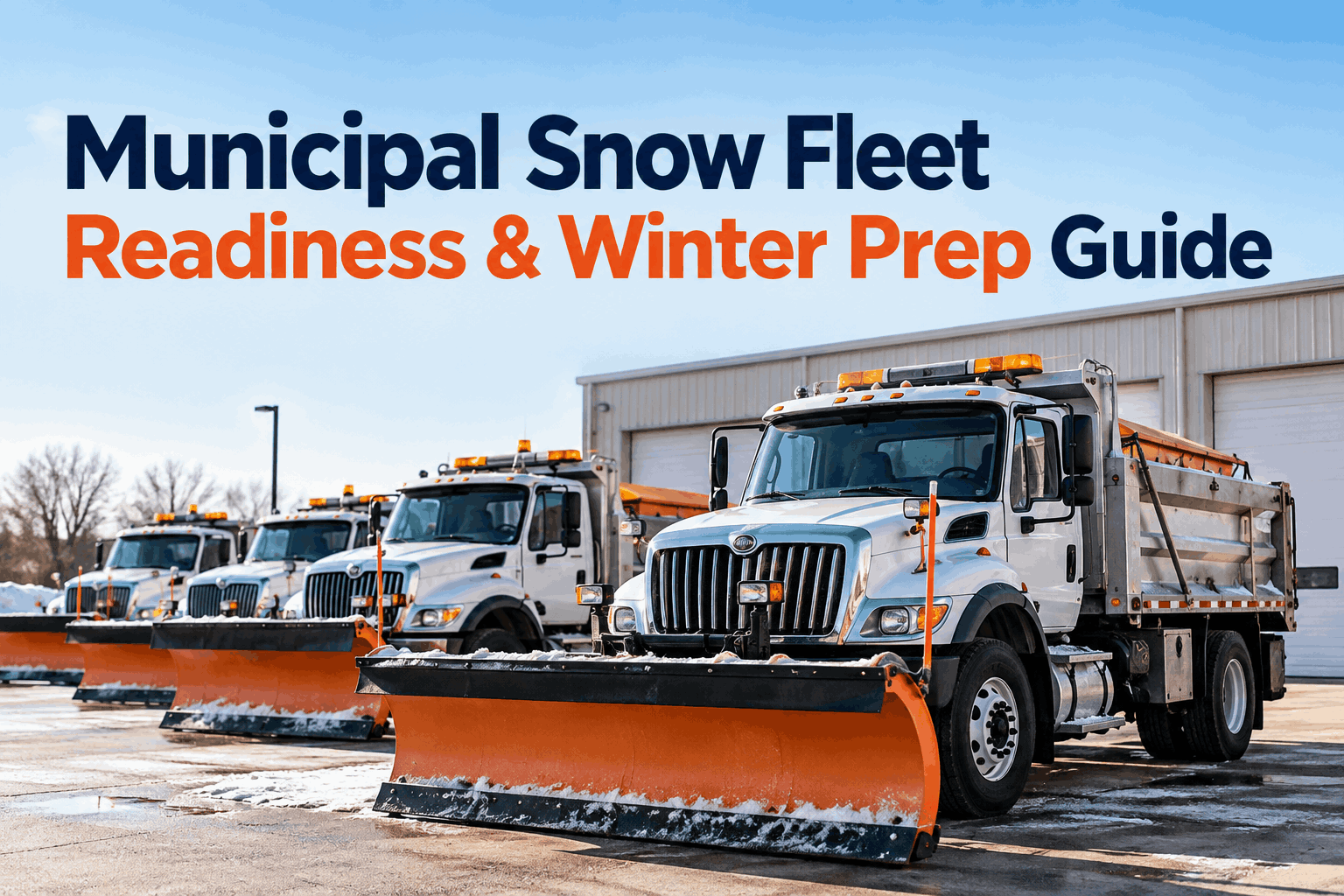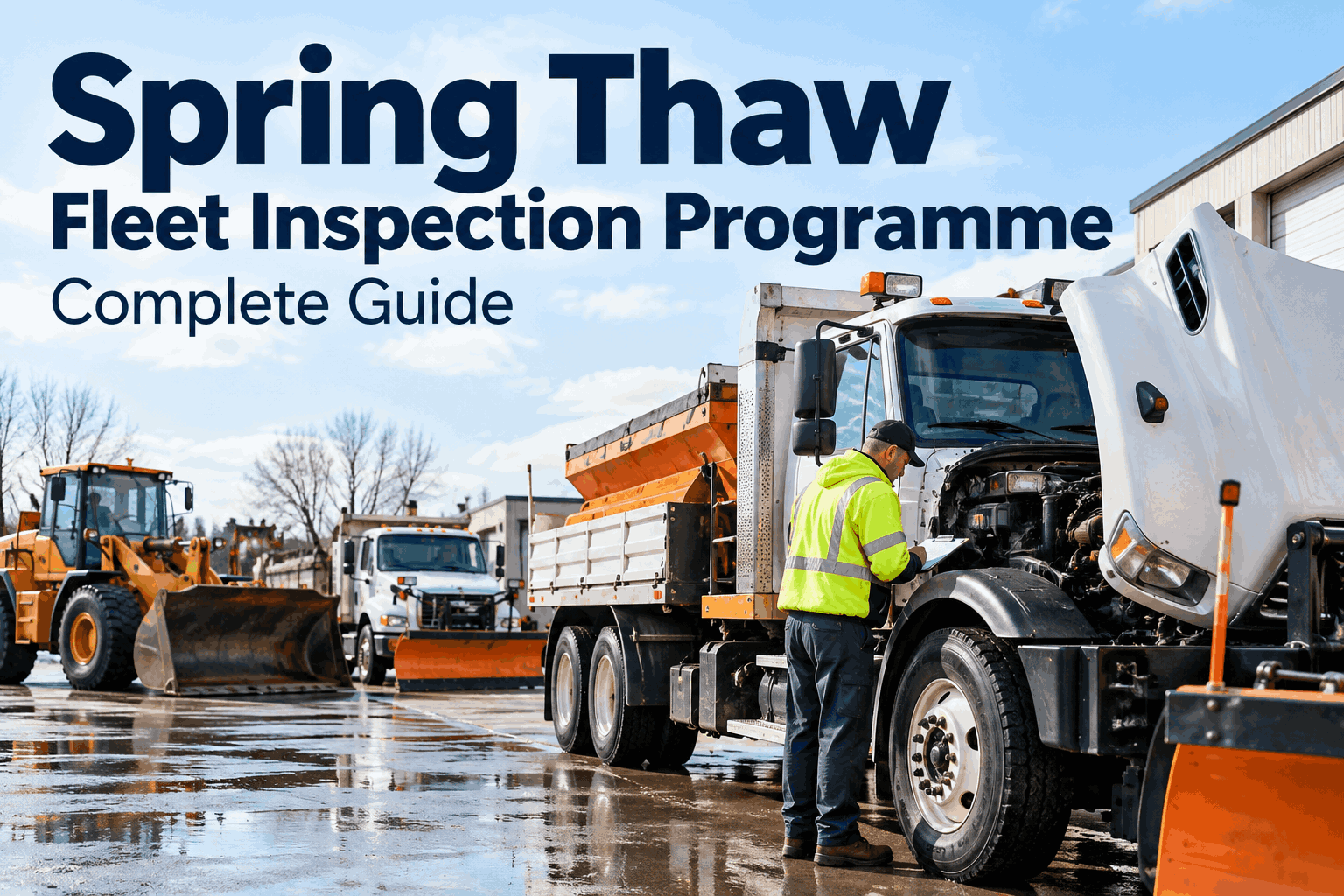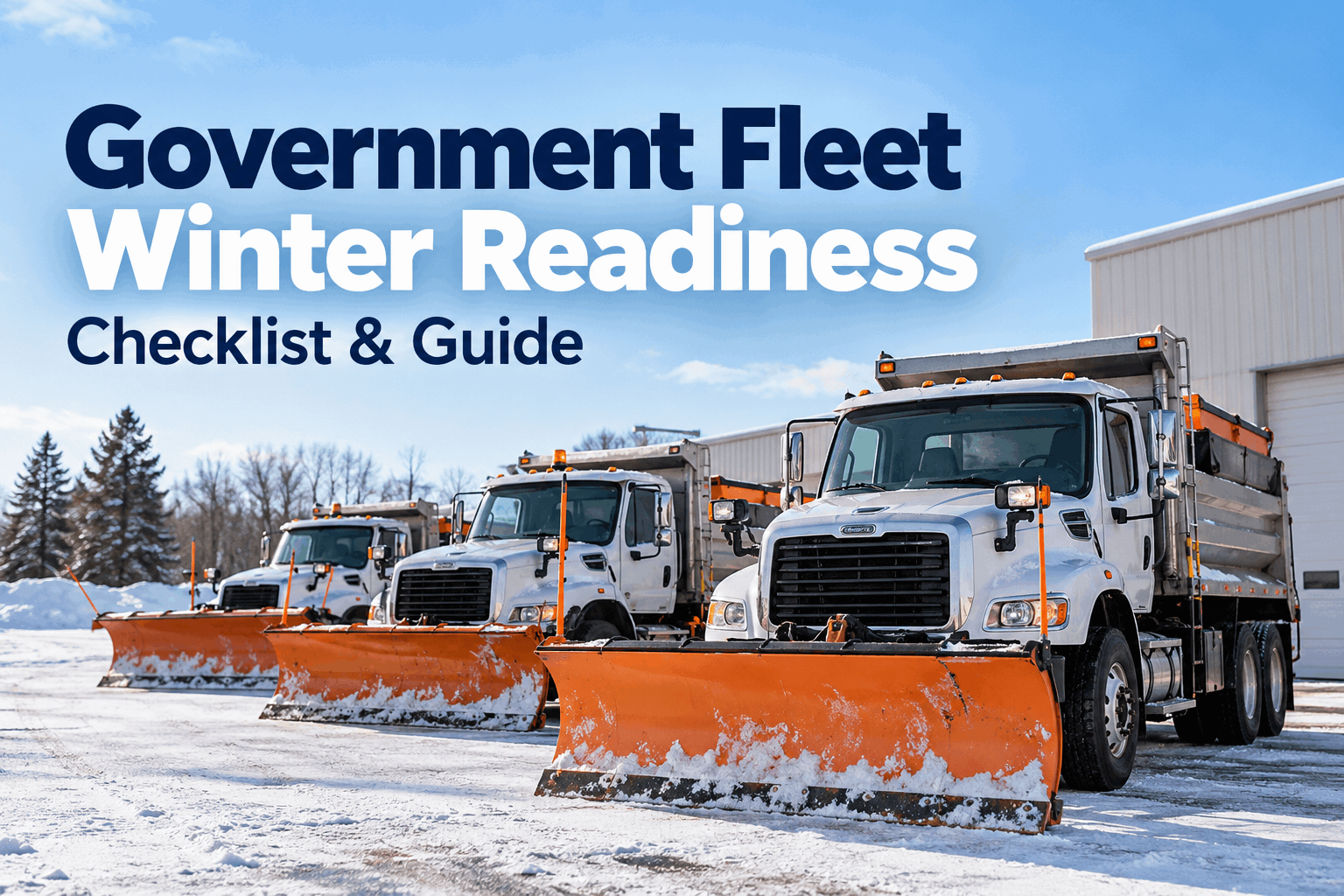
Government fleet winter readiness starts weeks before the first freeze, not when the first plow refuses to start. Public works departments must prepare snowplows, salt spreaders, service trucks and backup equipment for cold starts, corrosion, ice, reduced visibility and extended shifts. This guide gives municipal fleet supervisors a practical winterization checklist, a preparation calendar and a way to document which vehicles are ready, restricted or awaiting repairs. Book a demo to see how HVI supports winter fleet inspections and maintenance.
Government Fleet Winter Readiness: Inspect Before the Storm
Build a repeatable winterization program for snow equipment, municipal trucks and essential response vehicles—with a documented route from inspection to repair.
The winterization inspection: eight systems that matter
A vehicle-specific inspection map for municipal plows and support trucks.
Load-test as specified, inspect terminals, cables, charging system and block-heater connections.
Verify coolant freeze protection, approved oil viscosity, washer fluid and fuel winterization procedures.
Check tread, inflation, chains where applicable and spare tire condition.
Test defrost, heater, wipers, mirrors, windows and operator visibility.
Inspect warning beacons, work lights, connectors and corrosion-prone wiring.
Check mounting pins, cutting-edge wear, trip mechanisms and blade movement.
Inspect hopper, conveyor or auger, spinner, calibration and material-flow controls.
Inspect leaks, abrasion, fittings, cylinders and fluid specifications for low temperatures.
A 30-day winter fleet preparation countdown
A preparation sequence that keeps repairs ahead of the first major storm.
Inventory the response fleet
Confirm vehicle assignments, plow/spreader compatibility, backup units and upcoming PM due dates. Identify assets with repeated winter faults.
Inspect and order parts
Run winter-specific inspections and identify battery, hydraulic, lighting, tire and attachment defects. Reserve critical parts before demand spikes.
Repair and test
Close priority work orders, test attachments under controlled conditions and verify fluid suitability using OEM guidance.
Prove readiness
Complete final checks, confirm operators and dispatch procedures, and assign backup equipment for restricted vehicles.
Suggested planning intervals—not mandatory deadlines. Adjust for local climate, lead times and forecast risk.
Use three readiness statuses—not a vague “ready” checkbox
The shop needs a decision that operations can act on.
Deployable
Required winter inspections passed, critical defects resolved and attachment function verified.
Example: Plow 12 · checks completeLimited assignment
A documented issue permits only specified use after supervisory risk review, if allowed by policy.
Example: Truck 08 · spreader unavailableDo not deploy
A safety-critical defect or unresolved required inspection prevents release until corrected and verified.
Example: Plow 04 · steering defectThese are recommended operational classifications, not automatic HVI-generated clearance decisions. A supervisor must apply local policy and qualified judgment. Book a demo to organize vehicle inspection findings and maintenance records.
The cold-weather defect-to-repair route
A missed inspection item needs a documented next action, not another spreadsheet.
Operator or technician records a failed winter check.
Supervisor assesses severity, operational limits and safety.
Maintenance team records work, parts and completion.
Required post-repair inspection confirms return to service.
Pre-storm inspection finds a leak. The vehicle is held from spreading duties, a repair is assigned, the correct hose and fluid are sourced, and the system is retested before the supervisor returns it to service. Keep inspection evidence and repair history attached to the asset record.
Winter fleet readiness checklist for public works
Use this as a planning checklist; OEM instructions and local safety procedures take precedence.
Vehicle and powertrain
- Battery, charging and starting system tested
- Coolant freeze protection and fluid grades verified
- Fuel system winter procedures confirmed where applicable
- Brakes, steering, tires and traction checked
Attachments and operator safety
- Plow mounts, cutting edges and hydraulics inspected
- Spreader mechanism and controls tested
- Lights, beacons, defrost and wipers working
- Cab heat, emergency supplies and communications checked
Records and contingency
- Open critical defects resolved or equipment held
- Winter PM schedule assigned to each asset
- Critical parts and backup equipment identified
- Operator pre-shift checks and escalation process defined
For a repeatable inspection trail, sign up free to organize winter vehicle checks in HVI.
Track readiness with measures that lead to action
A small set of measures is more useful than a crowded dashboard.
Deployable assigned vehicles divided by vehicles required for the response plan.
Safety- or mission-critical defects still awaiting repair and verification.
Winter PM tasks completed within the defined due window.
All figures are hypothetical. Set your own definitions, exclusions and reporting period before comparing departments or seasons.
Readiness is not only a count of vehicles in the yard. A spare plow without a working spreader may be unsuitable for the assigned route, while a vehicle with a repaired defect may need a new release inspection. Fleet managers should review asset status alongside deployment requirements rather than treating a single percentage as a complete emergency plan.
How HVI supports a winter maintenance program
Use maintenance data to make the preparation process repeatable, while keeping operational command decisions with your team.
Vehicle inspections
Record cold-weather checks and defects against the correct vehicle or equipment asset.
Preventive maintenance
Plan recurring services and seasonal maintenance before vehicles are needed for winter duty.
Work orders and parts
Document repairs and parts requirements to support follow-through on failed checks.
Asset records and reporting
Review maintenance history, overdue work and fleet preparation activity.
HVI is a fleet maintenance and inspection platform, not a weather forecasting, route dispatch or emergency command system. Book a demo to explore HVI winter inspection and maintenance workflows.
Winter readiness FAQs
Five questions municipal fleet teams ask before cold-weather deployment.
What is government fleet winter readiness?
It is a documented program of cold-weather vehicle inspection, preventive maintenance, attachment testing, parts preparation and operational checks that helps public works and municipal fleets prepare for winter service.
When should a municipal fleet start winterization?
Start early enough to inspect, source parts, complete repairs and test equipment before expected freezing conditions. A 30-day countdown is a useful example, but climate and procurement lead times determine the actual schedule.
What should be included in a snowplow inspection?
Check vehicle safety systems, battery and starting, approved fluids, tires, lights, defrost, plow mounting and cutting edges, hydraulics, spreader controls and any OEM-specific inspection points.
How should a fleet handle a failed winter inspection?
Document the defect, assess its safety and operational impact, restrict or hold the vehicle as appropriate, assign corrective work, and verify the repair before release.
Can HVI help track winter preventive maintenance?
HVI supports vehicle inspections, preventive maintenance scheduling, work orders and equipment maintenance records. Those records can help fleet teams organize winter preparation; operational readiness approval remains a management responsibility.