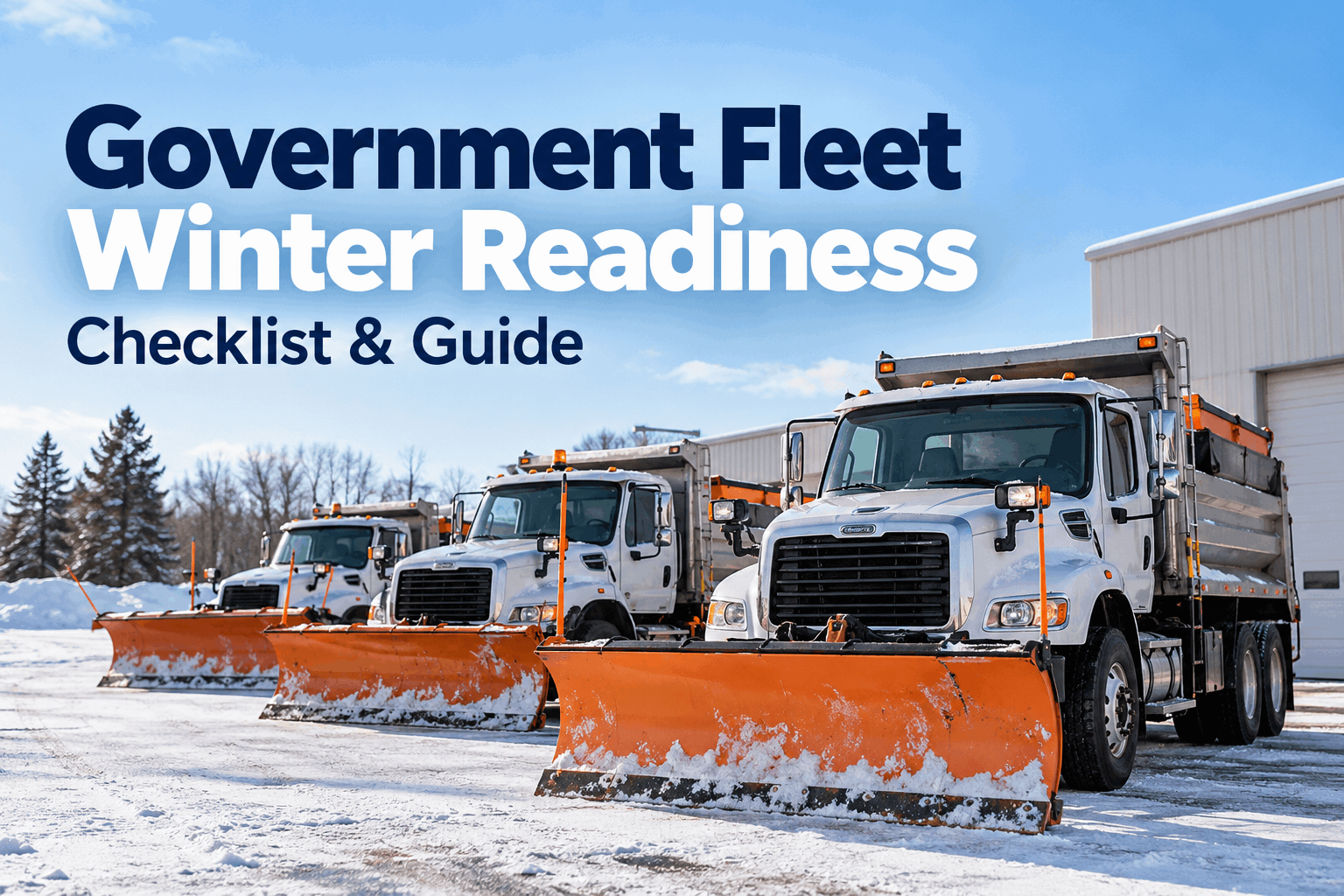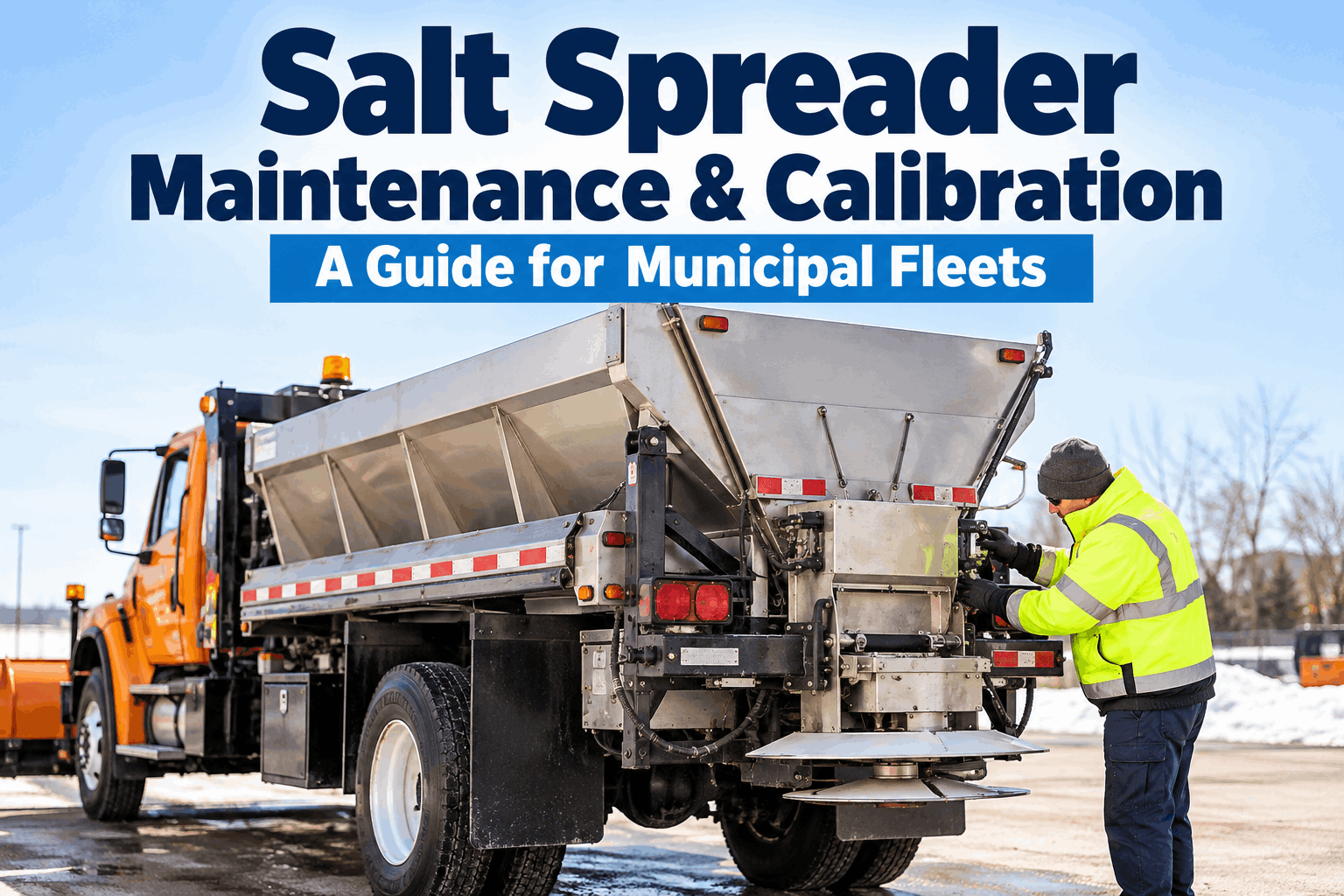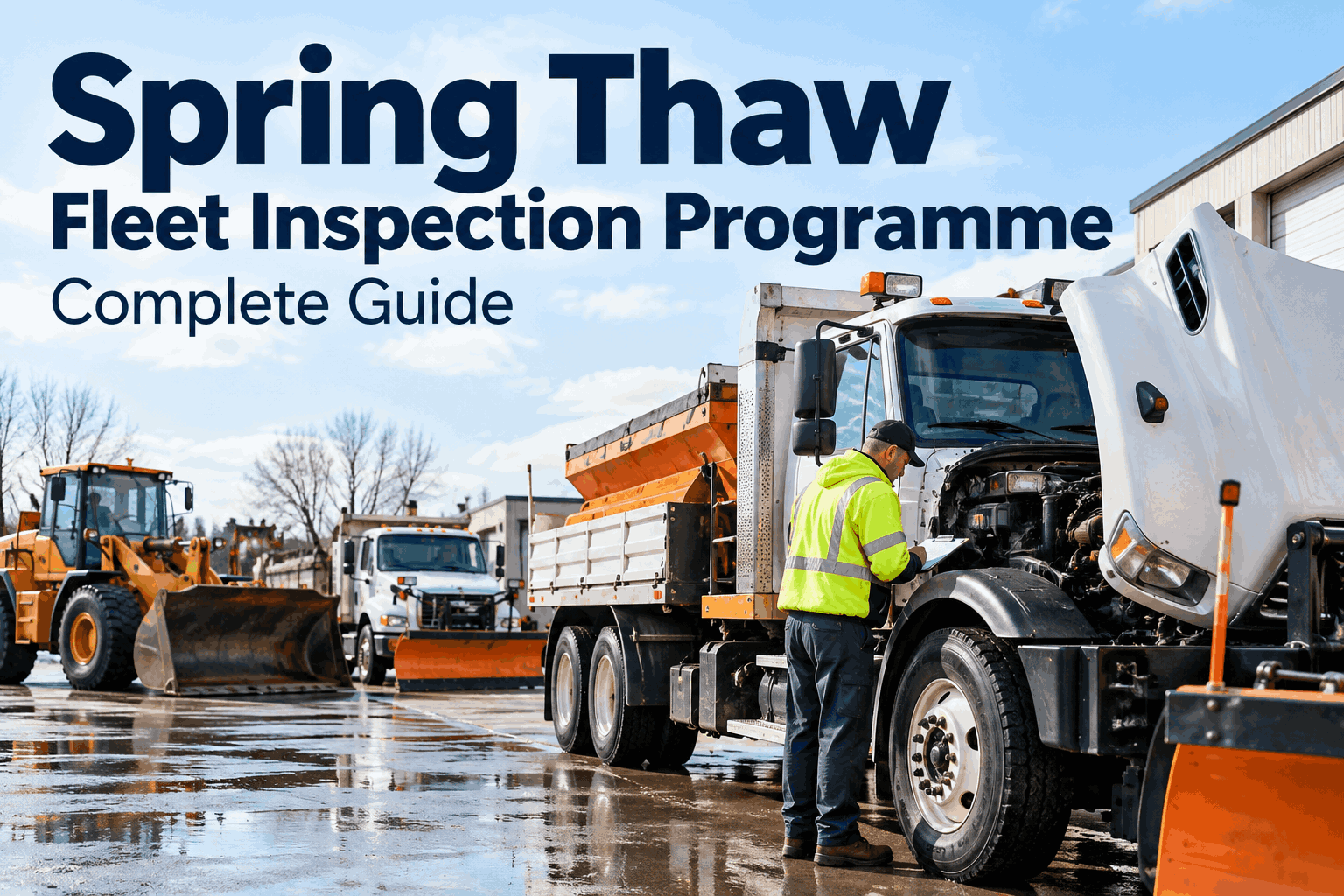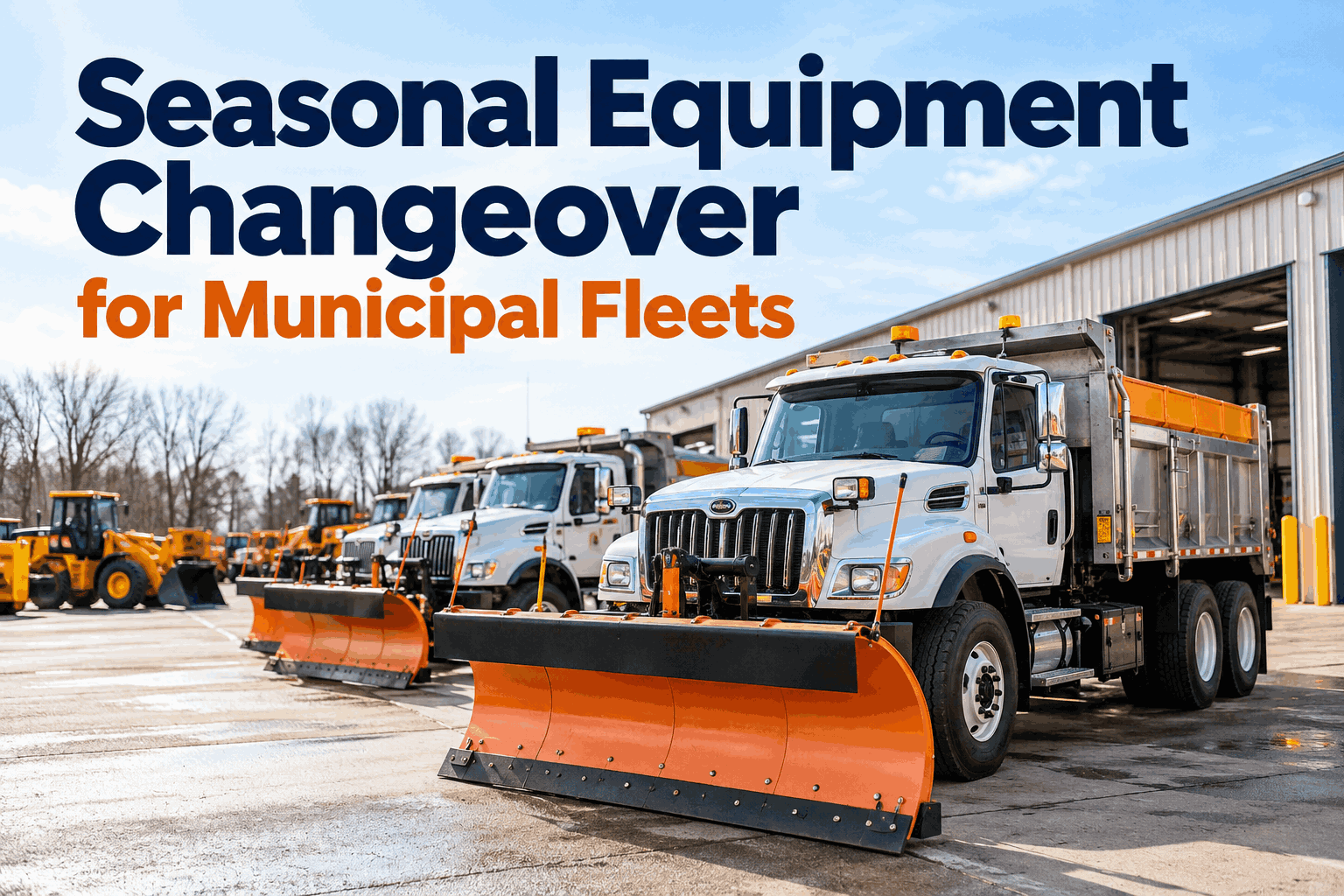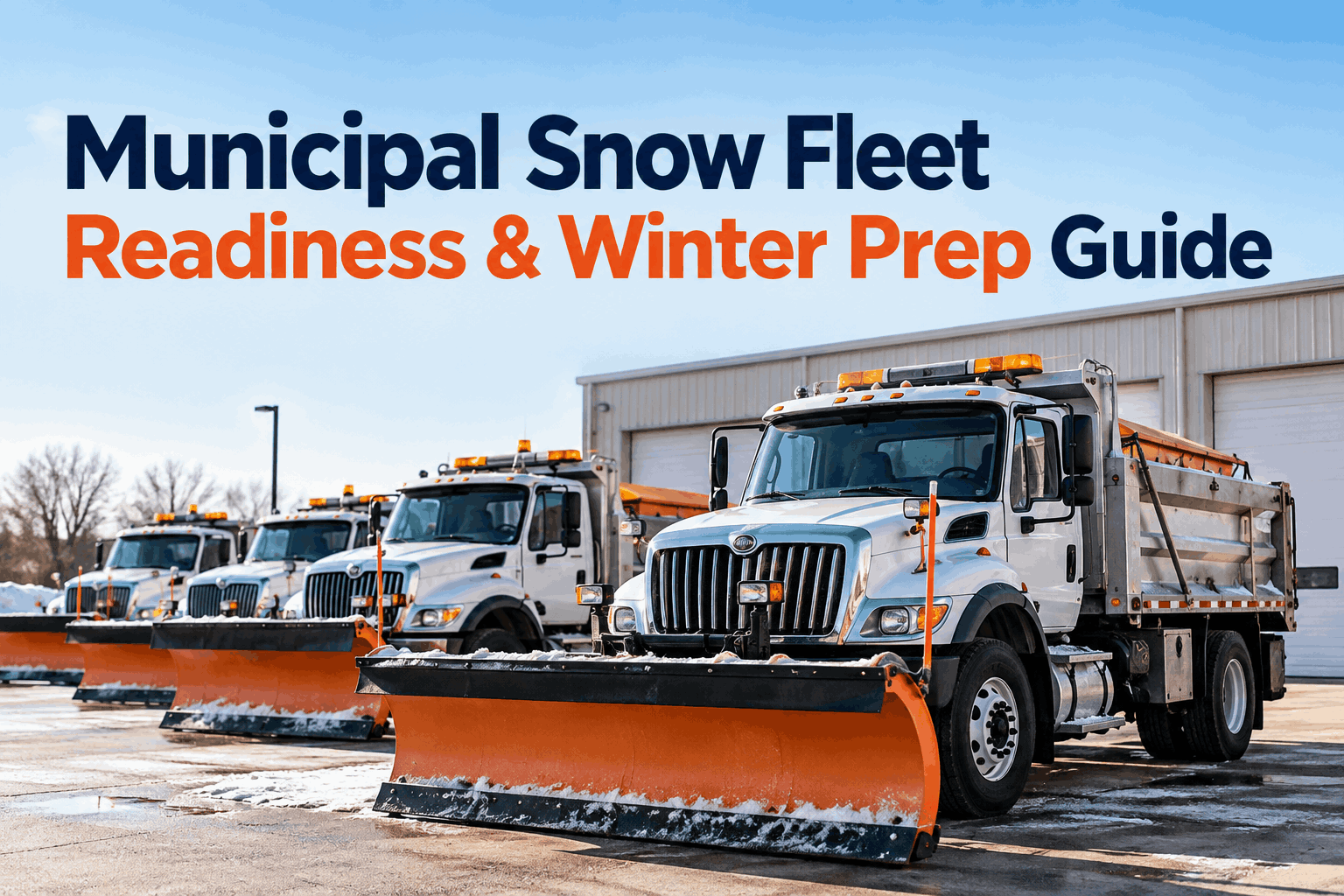
Snow equipment is the hardest-working gear a municipality owns for three months and forgotten for nine — which is why the first storm so often finds a worn cutting edge, an uncalibrated spreader or a hydraulic hose that failed over the summer. Snow fleet readiness is the fall work that keeps none of that a surprise in January. Build it by asset, before the first flake. Book a demo to track season readiness per unit.
Winter readiness is built in fall
The first storm won't wait for a cutting edge on back-order or a spreader that was never calibrated. Build the snow fleet up through the season — by asset, system by system — so day one runs like day forty.
The thing that makes snow fleet readiness different from everyday fleet maintenance is the deadline and the dormancy. Plows and spreaders sit idle through spring and summer, so the failures aren't from use — they're from sitting: seized pins, perished hoses, corroded connectors, cutting edges worn down and never replaced from last season. And the deadline is set by weather, not by you. Government fleet guidance is consistent on the point: you maintain snow removal equipment before it snows, because once it's snowing, a down plow is a route that doesn't get cleared. Readiness is a fall project with a hard, unmovable due date.
What snow readiness actually covers per unit
A snow unit is really three machines bolted together — the plow, the spreader and the truck under them. Each has to be ready on its own, and a weak one takes the whole unit out of service.
The plow
- Cutting edge wear — replace before, not during
- Moldboard, trip springs and markers
- Hydraulic hoses, cylinders and quick-couplers
- Lights, wing and angle function
The spreader
- Calibration — rate verified, not assumed
- Chains, augers and spinner condition
- Controller and in-cab readout tested
- Bed, hopper and inverted-V for corrosion
The truck
- Preventive maintenance fully caught up
- Brakes, tires and chains ready for ice
- Battery, charging and cold-start checked
- Heater, defrost and wipers for the cab
HVI tracks all three as one readiness status per unit — for the component how-to, see our snow plow and spreader maintenance guide. Book a demo to see per-unit readiness.
A pre-season readiness timeline that beats the snow
Readiness isn't a one-week blitz before the first storm — it's a fall program. Start early enough that back-ordered parts still arrive in time.
Inspect every unit coming out of storage, list what's worn, and order cutting edges and long-lead parts before the rush.
Catch up PM, replace edges and hoses, rebuild what needs it while the shop still has time and bays open.
Hang plows, fit spreaders, calibrate application rates and test every controller and hydraulic function under load.
Final readiness check per unit, spares staged, fuel and brine ready — the fleet is signed off before the first event.
Miss the late-summer start and you're buying cutting edges the same week as every other agency in the state. Start free and run the fall readiness calendar.
Parts planning is half of snow readiness
The fastest way to ground a snow unit mid-season isn't a breakdown — it's waiting on a part that wasn't stocked. Snow parts are seasonal, and everyone needs them at once.
- Cutting edge fails, none on the shelf
- Order lands behind every other agency's
- Unit parked for days mid-storm
- Routes reshuffled, overtime climbs
- Wear flagged at inspection, part ordered early
- Critical spares staged before the season
- Edges, hoses, chains, cutting bolts on hand
- A swap, not a shutdown — unit back out fast
When an inspection flags a worn edge in October, the part is on the shelf by December — not on back-order in January. Book a demo to tie inspections to parts.
Snow fleet readiness checklist
Run this per unit in the fall, not the first week of snow. Every box ticked is a unit you know will roll; every gap is a repair you still have time to make.
On paper this is a binder nobody opens again until spring. In HVI it's a live readiness status per unit you can pull all season. Book a demo to run the sign-off digitally.
A snow operations manager on fall prep
Everybody remembers the plows. It's the spreaders that got us — we'd hang the blades in October and assume the spreaders were fine because they ran last winter, then find out on the first event that half of them were throwing salt at the wrong rate. Now the readiness status won't show a unit as ready until the spreader's been calibrated and signed off, same as the plow. The other big change was parts: the system flags a worn edge at inspection, so we order in the fall instead of fighting the whole state for stock in January. First snow isn't a fire drill anymore.
Rosa M.Snow Operations Manager · Municipal public works · 40 plow routes
Run snow season readiness on HVI
Seasonal readiness inspections
Plow, spreader and truck inspections per unit, so readiness is verified system by system before the season.
Preventive maintenance alerts
PM alerts surface overdue service in the fall, while there's still time and a bay open.
Parts inventory
Wear flagged at inspection ties to parts and inventory, so cutting edges and spares are staged, not back-ordered.
Defect tracking
Open defects are held in maintenance management so a unit isn't marked ready with a fault still open.
One readiness status per unit, built across the fall on the plow and spreader maintenance your crews already do. Start free and get the fleet winter-ready.
Snow fleet readiness questions
Q1What is snow fleet readiness?
It's getting a municipal snow fleet verified and operational before the first winter event — plows inspected, spreaders calibrated, truck PM caught up, defects closed and critical parts staged, tracked by asset. The goal is that every unit is proven ready in the fall, so winter operations start on schedule instead of discovering problems during the first storm.
Q2When should snow fleet prep start?
In late summer to early fall — early enough to inspect every unit, order cutting edges and long-lead parts before the rush, and still have shop time to service and calibrate. Guidance is consistent that snow equipment is maintained before it snows; starting a week before the first storm leaves no room for back-ordered parts or unexpected repairs.
Q3Why do spreaders get overlooked?
Because crews focus on hanging plows and assume the spreader is fine since it ran last winter. But spreaders drift out of calibration, and chains, augers and controllers degrade in storage — so a unit can plow fine while applying salt at the wrong rate. Readiness should treat the spreader as its own signed-off system, not an afterthought.
Q4How does parts planning fit snow readiness?
It's half the job. Snow parts like cutting edges and hoses are seasonal and every agency needs them at once, so a part not stocked can park a unit for days mid-storm. Tying wear flagged at inspection to a parts inventory means you order in the fall and stage critical spares before the season, turning a would-be shutdown into a quick swap.
Q5How does HVI help with snow fleet readiness?
HVI runs seasonal readiness inspections for plows, spreaders and trucks, alerts on overdue PM, tracks open defects, and ties flagged wear to parts inventory — giving a readiness status per unit through the fall. It's an inspection, maintenance and readiness layer for public works fleets, not a replacement for your winter operations plan or jurisdiction's procedures.
Manage snow fleet readiness with HVI
Verify readiness by asset, inspect plows and spreaders, close defects, schedule preventive maintenance and stage critical parts — so the fleet is proven winter-ready before snow and ice operations begin. Live in weeks, not seasons.
Readiness by asset · Plow & spreader checks · Parts staged · PM alerts