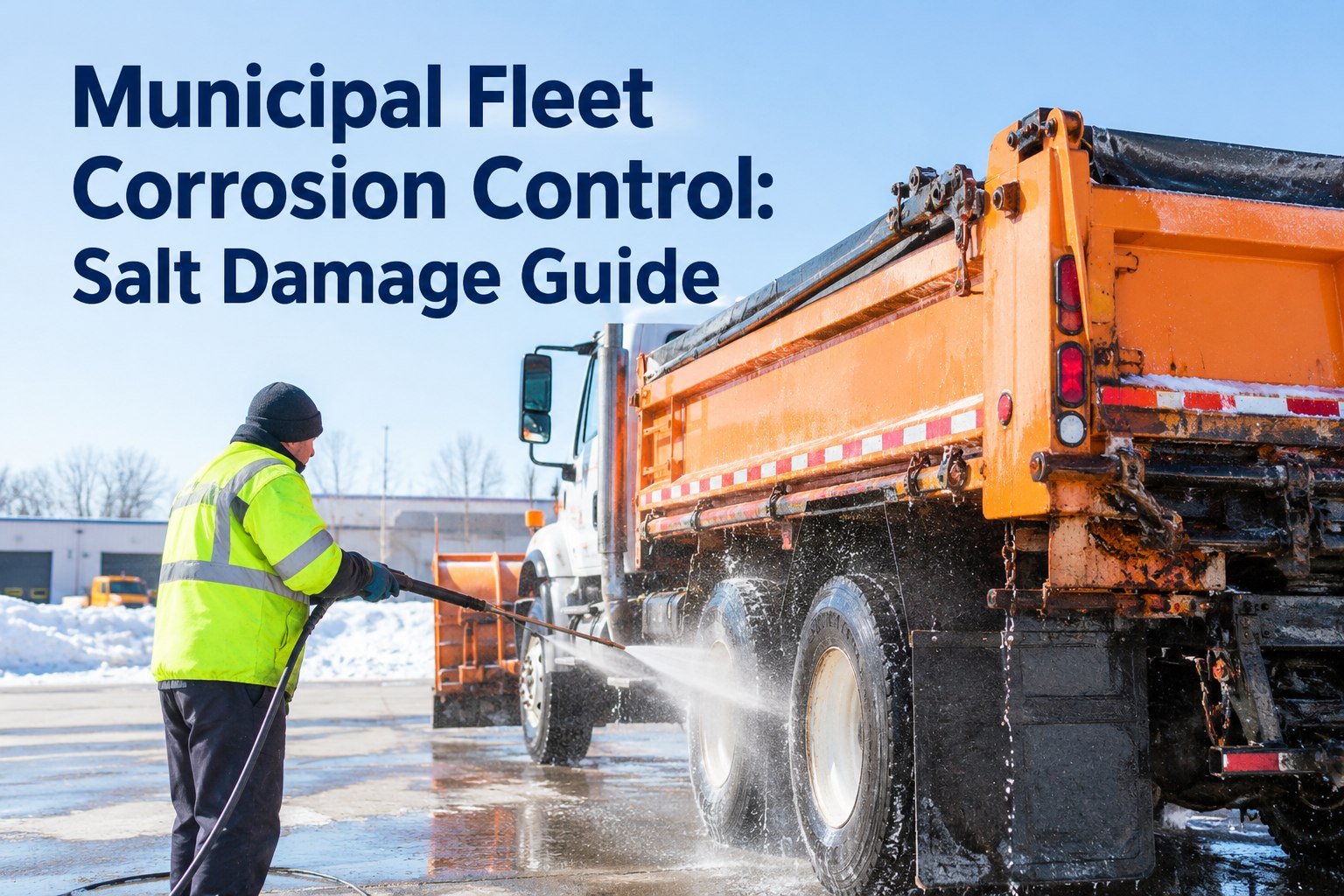
Every winter, your snowplows drive straight through the thing that destroys them fastest — the brine they're spreading. Road salt doesn't rust a truck evenly; it packs into the frame rails, brake lines, and electrical connectors underneath and eats them from the inside out, silently, until a brake line ruptures or a frame is condemned. That's why municipal fleet corrosion control isn't a cosmetic exercise — it's an asset life-extension programme, and a documented one is the strongest case you'll ever make for a replacement budget. See corrosion tracked by zone, with photos, per truck
Road Salt Attacks Five Zones — and the Worst Ones Are the Ones You Can't See
Tap a zone to see what salt does there, and how severe it gets before it fails. The most dangerous corrosion is underneath, out of sight.
Ground zero. Salt-laden slush packs into box sections and crossmembers that external washing can't reach, corroding from the inside. Structural section loss here condemns the truck — the single most expensive corrosion failure there is.
Where it hides: closed box sections, spring hangersSteel lines run exposed beneath the truck and pit from the outside in. A corroded brake line can rupture without warning — a public-safety failure, not just a repair. AAA flags these among the most salt-affected components on any vehicle.
Where it hides: line runs along the frame, near mountsCorroded connectors and grounds cause voltage drops, false sensor readings, and ECM faults — the maddening intermittent problems that defy diagnosis. On a plow with hydraulics and controls, one bad ground can take the whole unit down mid-storm.
Where it hides: chassis grounds, harness connectorsBody mounts, cab corners, and door sills trap moisture that never dries. What starts as cosmetic rust becomes structural when a mount lets go — and it's often the visible warning that the hidden zones are worse.
Where it hides: cab corners, door sills, mount pointsExhaust components and fuel-tank straps corrode from constant road spray. Rarely a safety failure, but a steady drain of repair spend — and a straps failure drops a fuel tank, which is a very bad day.
Where it hides: tank straps, exhaust hangersThose numbers are the whole argument. Corrosion is the most expensive thing quietly happening to a municipal fleet, and it's largely preventable — if the programme is run and documented. Here's how to build it: the vehicles most at risk, the wash discipline that works, the treatments that last, and the tracking that turns rust into a replacement case.
The trucks that get hit hardest are the ones spreading the salt
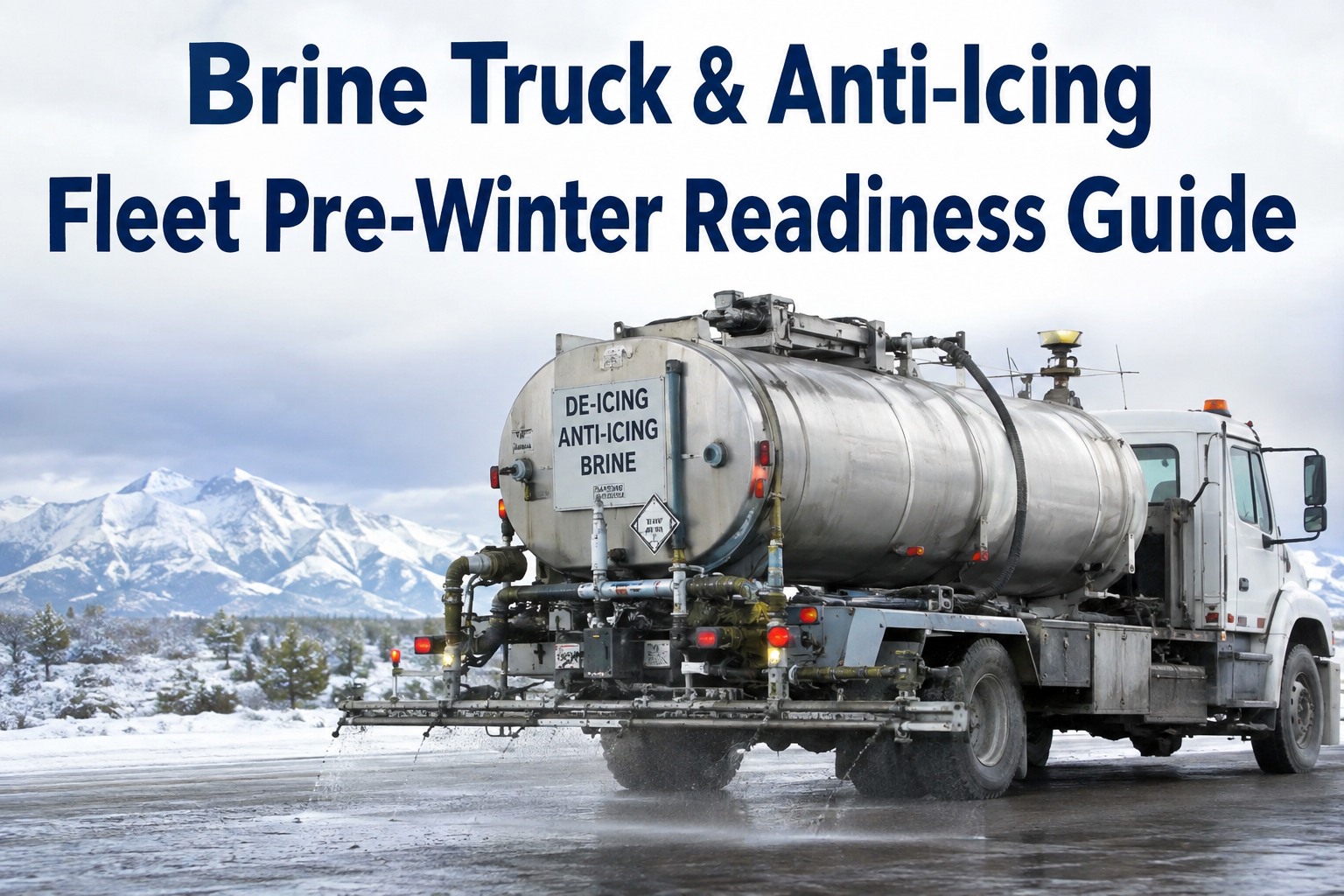
There's a bitter irony in a winter-service fleet: the vehicles doing the most damage to public roads' ice are doing the most damage to themselves. A snowplow or spreader spends its whole shift driving through brine — and needs a corrosion programme built around that reality, not a generic one.
Highest exposure
Snowplows, salt spreaders, brine trucks, street sweepers — they carry and drive through de-icer all shift. Assume constant, direct salt contact and wash them most aggressively.
Moderate exposure
Refuse trucks, utility and public-works vehicles on salted routes all winter. Heavy exposure, just not carrying the salt themselves — a strong wash cadence still pays.
Lower exposure
Admin cars and vehicles that mostly stay off salted roads. Lower risk, but not zero — the odd salted commute still warrants seasonal inspection.
Grading your fleet by exposure is the first step, because it tells you where to spend the wash and inspection effort. The plow that self-salts every shift needs a different programme from the admin sedan — and tracking exposure per asset makes that obvious. Book a demo to see exposure and corrosion tracked per vehicle.
Washing: the cheapest life-extension you can buy
The single most effective corrosion control is also the cheapest: rinse the salt off before it can work. But timing matters more than frequency — a wash right after salt exposure beats a wash on a fixed weekly calendar, because the damage starts the moment the brine sits on wet metal.
Wash by exposure, not the calendar
Trigger a wash after a salt route, not on a fixed day. Washing within 48 hours of exposure cuts undercarriage corrosion dramatically versus a weekly schedule that lets salt sit.
Hit the undercarriage, with pressure
Surface washing does little. High-pressure underbody washing is what removes the packed slush from frame rails and crossmembers — a neutralising agent helps where plain water can't.
Accept what washing can't reach
Closed box sections and cavities trap salt no external wash removes — which is exactly why washing alone isn't enough, and protective treatment and inspection have to back it up.
The economics aren't close: a wash costs $15 to $30, a frame repair $8,500 or more. A documented wash programme — scheduled by exposure and logged per vehicle — is the highest-return maintenance a winter fleet runs. Book a demo to schedule washes by salt exposure per truck.
Protective treatments: seal what the wash can't clean
Washing removes salt; treatment stops it reaching the metal in the first place. Applied before salt season, a good undercoating buys years of frame life — but the type matters, because the wrong one traps moisture and makes it worse.
Lanolin / oil-based
Penetrates existing rust, displaces moisture, and re-flows to fill micro-cracks — a self-healing barrier that doesn't trap water beneath it. The go-to for frames and cavities in salt-belt fleets.
Petroleum / wax undercoating
A thicker physical barrier, well suited to high-exposure frame rails. Effective when applied and maintained properly — reapplication matters, as coatings wear.
Hard rubberised coating — caution
Can trap moisture underneath if it cracks or is applied over existing rust, accelerating corrosion in the very place it's meant to protect. Use knowingly, not by default.
Whichever treatment you choose, it's a scheduled, recurring task — applied pre-season, reapplied as it wears, and logged so you know which trucks are protected and which are overdue. Treatment you can't verify is treatment you can't rely on. Book a demo to schedule and log corrosion treatments per asset.
Score corrosion 1–5 per zone — and watch the trend
Prevention slows corrosion; tracking catches the truck that's losing anyway. Rating each zone on a consistent 1–5 severity scale, with a dated photo, turns a vague "it's getting rusty under there" into a measured trend you can act on — and defend.
- 1Surface oxidation — cosmetic, monitor
- 2Light scaling — treat & watch
- 3Moderate pitting — plan repair
- 4Heavy loss — repair soon
- 5Structural section loss — out of service
Score the same zones the same way each inspection and a photo timeline builds itself — a frame rail going from a 2 to a 4 over two winters is a replacement case with evidence attached. That documented corrosion history is what lets a fleet spot a deteriorating asset early and prove it to finance. Start free and score corrosion severity per zone.
The seasonal corrosion inspection checklist
Run this at the start and end of salt season, photographing and scoring each zone, and you build the corrosion history as you go. Use this corrosion inspection checklist online free, so every score and photo attaches to the asset and the cost trend builds automatically.
Frame rails & crossmembers
Probe box sections and spring hangers for hidden section loss — the vehicle-ending zone.Brake & fuel lines
Inspect line runs for pitting and flaking — a corroded brake line is a safety failure.Electrical connectors & grounds
Check chassis grounds and harness connectors for green corrosion — the cause of intermittent faults.Body mounts & cab corners
Look at mounts, cab corners, and door sills where moisture sits and structural rust starts.Score, photograph, prioritise
Rate each zone 1–5, capture a dated photo, and flag the worst for repair before failure.Compare to last season
Trend each zone against last year's score to catch the trucks losing ground fastest.From a public works director who stopped losing frames
We were condemning a plow or two every spring to frame rot, and every time it was a surprise — the truck looked fine on top, and the frame was gone underneath. We had no way to see it coming, so we couldn't budget for it, and finance hated the emergency capital requests.
Now every unit gets its zones scored and photographed at both ends of salt season. A frame rail that was a 2 last year and a 4 this year is a flag, not a surprise — and the photo timeline makes the replacement request obvious. We wash by exposure, treat before the season, and the frame losses have basically stopped. When one does age out, I can prove it.
Frequently asked questions
How does road salt damage municipal vehicles?
Salt holds moisture against metal and accelerates oxidation on any surface that stays wet, and salt-laden slush packs into the least-accessible parts underneath. It attacks the zones that matter most: frame rails and crossmembers (where structural loss condemns the truck), brake and fuel lines (a safety failure if they rupture), electrical connectors and grounds (causing intermittent faults), and body mounts. The worst damage is hidden inside closed sections, corroding from the inside out until something fails.
How often should a winter fleet wash off road salt?
Wash by exposure rather than a fixed calendar — ideally within 48 hours of a salt route. Industry data shows vehicles washed within that window experience far less undercarriage corrosion than those washed weekly regardless of exposure, because the damage begins as soon as brine sits on wet metal. Focus on high-pressure undercarriage washing, not just the surface, and wash the highest-exposure vehicles — plows and spreaders — most aggressively, since they carry the salt themselves.
What's the best rust protection for fleet undercarriages?
Lanolin or oil-based sprays are widely favoured for frames and cavities: they penetrate existing rust, displace moisture, and re-flow to fill micro-cracks without trapping water beneath the coating. Petroleum or wax undercoatings give a thicker barrier for high-exposure frame rails. Hard rubberised coatings can trap moisture and accelerate corrosion if they crack or are applied over rust, so use them knowingly. Apply before salt season and reapply as coatings wear — and log which vehicles are treated.
Which components should a corrosion inspection target?
Prioritise the zones where corrosion causes safety failures or ends a vehicle: frame rails and crossmembers, brake and fuel lines, electrical connectors and grounds, body mounts and cab corners, and exhaust and fuel-tank mounts. Pay special attention to closed box sections and cavities that trap moisture external washing can't remove. Score each zone on a consistent severity scale with a dated photo, so the inspection produces a measured record rather than a general impression.
How does corrosion tracking support replacement planning?
Consistent, documented corrosion history lets a fleet spot a deteriorating asset early rather than discovering it at failure. Scoring each zone 1–5 with dated photos each season builds a visual degradation timeline — a frame rail moving from a 2 to a 4 over two winters is an evidence-backed replacement case. Paired with the rising corrosion-repair cost trend, that documented history turns a subjective "this truck is rotting" into the objective data a finance office or council will act on.
Turn hidden rust into a managed, budgetable number
HVI runs corrosion inspections on configurable templates, captures dated photos per zone, scores severity, trends the repair cost per asset, and exports the record for capital planning — alongside age and utilisation data. So the salt damage eating your fleet from underneath becomes a tracked, evidence-backed programme that extends asset life and proves the replacement case.
No credit card · Zone severity scoring & photos · Cost trend & exportable reports