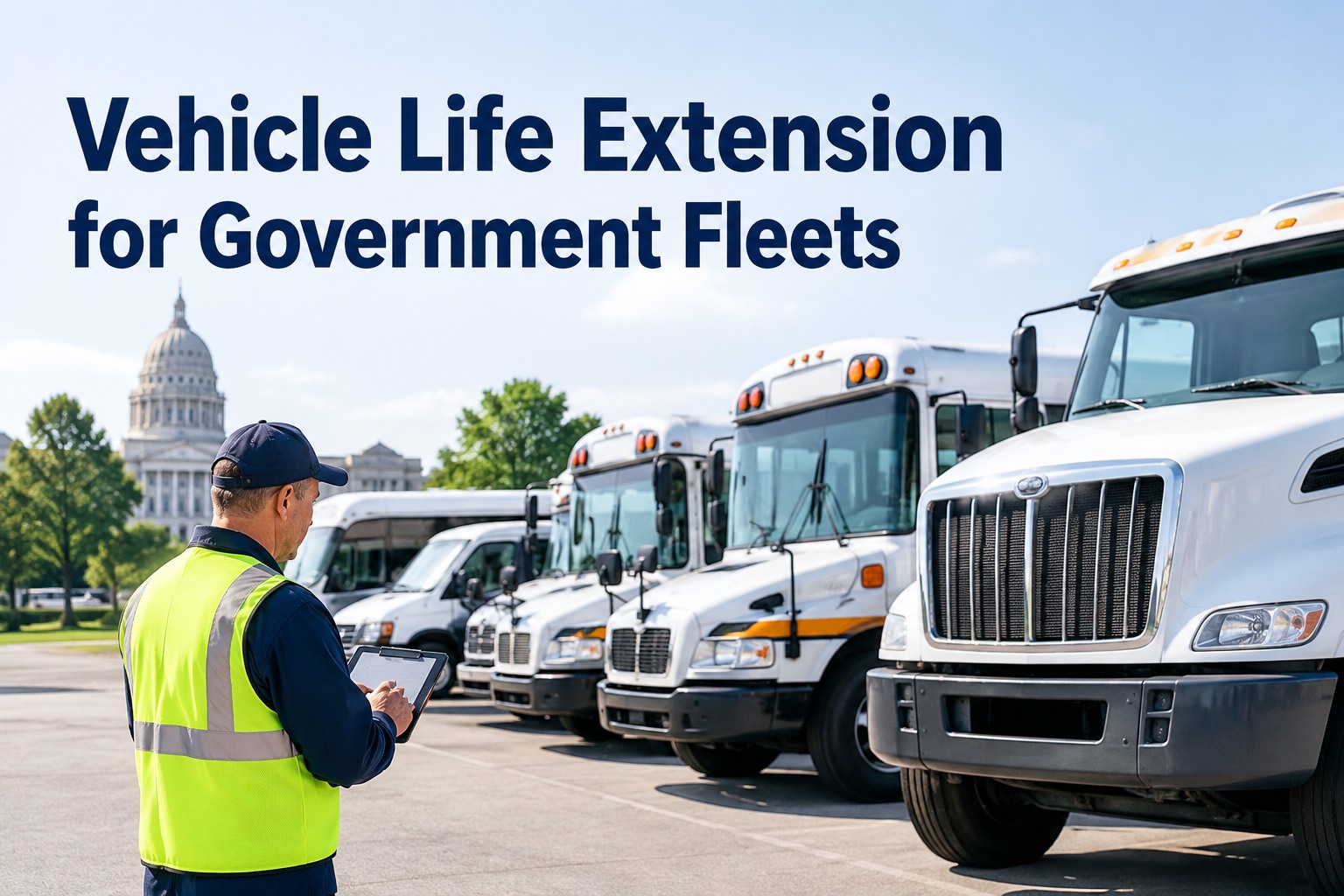
When a replacement budget is years away, keeping the trucks you have running longer becomes the strategy — but "keep it going" isn't one decision, it's several, and some of them lose money or lives. Real vehicle life extension for a fleet means knowing which moves genuinely add safe, economical service life, which are false economies dressed up as savings, and the hard line where an asset should never be extended at all. See the cost data that separates a smart extension from a trap
Not Every Way to Keep a Truck Running Is a Way Worth Running It
Tap a move to extend a vehicle's life. Some genuinely pay. Some quietly cost you. One you should never make.
The cheapest life you can buy. Every dollar of on-time PM returns several in avoided failures, and it keeps a sound truck sound. The foundation of any real extension programme — tightened for the vehicle's age.
In salt-belt fleets, rust ends trucks before the drivetrain does. Washing and undercoating a structurally sound asset protects the one thing you can't rebuild cheaply — the frame — and buys years for little money.
A new engine or transmission in an otherwise-sound chassis can add years for a fraction of replacement cost. It pays only when the frame and body are good and one clear component is worn — not when several systems are failing at once.
Each repair looks cheaper than a new truck, so you keep saying yes — and never see that the cost curve already turned. Once repairs cluster and the monthly spend keeps crossing the line, you're funding a replacement one invoice at a time.
When structural, mechanical, or operational risk outweighs the financial case, there is no extension to make. A cracked frame or a compromised brake system isn't a budget decision — the asset comes off the road, whatever the numbers say.
Life extension is a real fleet strategy, not just delaying the inevitable — but only when you can tell the moves that add value from the ones that bleed it, and stop at the safety line. Below is what genuinely extends life, the traps that look like savings, the decision test, and the boundary that overrides the whole calculation.
What genuinely extends a vehicle's life
Three approaches reliably add safe, economical service life to a sound asset. They share one trait: each protects or restores something specific while the rest of the vehicle is still worth keeping. Extension works when it's targeted, not when it's just "don't replace it yet."
-
Disciplined, age-adjusted PM
On-time preventive maintenance, tightened as the vehicle ages, is the highest-return life extension there is — it keeps a sound truck sound and catches wear before it fails.
-
Corrosion control in salt regions
Washing and undercoating protect the frame — the one thing you can't cheaply rebuild. In salt-belt fleets, controlling rust is often what decides whether a drivetrain-sound truck lives or dies.
-
Targeted major-component replacement
A rebuilt or replaced engine, transmission, or axle in an otherwise-sound chassis buys years for a fraction of a new unit — when one clear component is worn and the core structure is good.
The common thread is a sound core. Each of these pays because the frame, body, and remaining systems still have life — you're restoring one worn part, not propping up a failing whole. Book a demo to see which sound assets are worth extending.
The false economies that look like savings
The dangerous part of life extension is that the traps feel responsible — each looks like the frugal choice in the moment. They're how a fleet ends up spending more to keep old trucks than replacements would have cost, without a single obviously bad decision.
-
Deferring preventive work to save now
Skipping a service looks like a saving today and becomes a 3–9× emergency repair later. Deferring PM doesn't extend life — it shortens it while pretending to help the budget.
-
Repeatedly repairing a turned-curve asset
Each repair beats a new-truck price on paper, so you keep approving them — missing that the cost curve already crossed the line and you're now funding a replacement in instalments.
-
Rebuilding into a failing whole
Dropping a new engine into a truck whose brakes, suspension, and electrics are all near the end isn't extension — it's the domino effect, where fixing one system just exposes the next.
What all three share is a missing number: the cost trend that would have shown the curve turning. Without it, every individual repair looks justified right up until the total is indefensible. Start free and catch the turned cost curve before it costs you.
The extend-or-replace decision test
Between "keep repairing" and "buy new" sits a clear test — the same one whether you're weighing a simple extension or a full refurbishment. It replaces sticker-shock and sunk-cost instinct with four questions, answered on data.
Remaining useful life
How many more years will the sound core realistically give — frame, body, and the systems you're not touching?
Expected repair & upkeep cost
The extension cost plus the maintenance the vehicle will need across that remaining life — not just today's invoice.
Reliability & downtime risk
How likely is another failure, and what does a truck stuck in the bay cost the operation — counted as a real number.
Realistic replacement timeline
If new-unit lead times run 12+ months, extension may be the only option that keeps the service running — weigh that honestly.
If the extension cost plus remaining life beats the annualised cost of replacing — and the core justifies it — extension wins. If not, the honest answer is replace, and the data says so. For the full rebuild-versus-replace math, our refurbishment analysis walks the numbers with you. Start free and run the test on your own cost data.
The safety boundary that overrides the maths
Every calculation above assumes the choice is financial. Sometimes it isn't. There's a line where structural, mechanical, or operational risk makes extension wrong at any price — and no cost saving buys it back. This is the one part of life-extension planning that isn't a trade-off.
- Frame or structural members cracked, or corroded past safe section
- Brake, steering, or safety systems that can't be reliably restored
- Multiple critical systems failing together — the domino pattern
- Any condition that would put a worker or the public at risk in service
The value of a documented condition and cost history here is that it makes this call early and clean — you retire the asset on evidence, before a failure forces the decision at the worst possible moment. Safety is the one boundary the budget never gets to move. Book a demo to see condition and safety flags tracked per asset.
The vehicle life-extension decision checklist
Run this before committing to extend any aging unit — it sorts a smart extension from a false economy and flags the safety stop. Use this life-extension checklist online free, with cost, age, and condition tracked against each asset automatically.
Confirm the core is sound
Frame, structure, and untouched systems have real life left — extension only pays on a sound core.Target one clear worn item
Extension works on a specific component or protection — not as a blanket "don't replace it yet".Check the cost curve hasn't turned
Repeated monthly repair crossings past 1% of replacement value mean the curve has already turned.Run the four-part decision test
Remaining life, extension cost, reliability risk, and replacement timeline — weighed together on data.Clear the safety boundary first
No structural, brake, steering, or domino-failure risk — this check overrides every financial one.Document the decision for council
Export the cost, age, and condition evidence so the extend-or-replace call is defensible in the budget meeting.
From a fleet director stretching a budget-frozen fleet
Our replacement budget got frozen, so extension went from a nice-to-have to the whole plan overnight. The trap was that everything looked extendable — every truck "still ran," and every repair was cheaper than a new one. Without the cost history I'd have kept saying yes to all of it.
What changed the game was sorting them: three units were genuinely sound and worth a component rebuild, four were false economies whose cost curve had clearly turned, and one had frame corrosion that took it off the road no matter what the budget said. I extended the right ones, retired the rest with evidence, and for once the safety call and the money call pointed the same way.
Frequently asked questions
What actually extends the life of a fleet vehicle?
Three targeted approaches: disciplined preventive maintenance tightened for the vehicle's age, corrosion control in salt regions to protect the frame, and replacing one clearly worn major component — engine, transmission, or axle — in an otherwise-sound chassis. What they share is a sound core: each restores or protects something specific while the rest of the vehicle still has life. Extension works when it's targeted at a sound asset, not when it's simply deferring replacement on a truck that's failing throughout.
When does refurbishing a vehicle make economic sense?
Refurbishment pays when the frame and chassis are structurally sound but the powertrain or body is worn, because rebuilding costs a fraction of a new unit and can add years of service. It's especially compelling for custom-upfitted vehicles whose specialised equipment has second-life value, and when new-unit lead times run 12 months or more. The deciding test is whether the refurbishment cost plus remaining life beats the annualised cost of replacement — and whether the core structure justifies the investment.
What are the false economies in extending vehicle life?
The main traps are deferring preventive work to save money now — which turns into a far costlier emergency repair later — repeatedly repairing a vehicle whose cost curve has already turned, and rebuilding one system in a truck where several others are near failure. Each feels like the frugal choice in the moment, which is what makes them dangerous: a fleet can spend more keeping old trucks running than replacements would have cost without any single obviously bad decision. Tracking cost per vehicle over time is what exposes them.
How do you decide between extending and replacing a vehicle?
Weigh four things together: the remaining useful life of the sound core, the expected extension and maintenance cost across that life, the reliability and downtime risk of keeping it, and the realistic replacement timeline. If the extension cost plus remaining life beats the annualised cost of replacing — and the core structure justifies it — extension wins. Screening rules help: a repair over 50% of market value, or repeated monthly repairs above 1% of replacement value, signal that the economic case has shifted toward replacement.
When should a vehicle not be extended at any cost?
When structural, mechanical, or operational risk outweighs the financial case. A cracked frame or one corroded past safe section, brake or steering systems that can't be reliably restored, multiple critical systems failing together, or any condition that would put a worker or the public at risk means the asset comes off the road — regardless of what the budget or the cost saving says. Safety is the one boundary in life-extension planning that isn't a trade-off, and a documented condition history helps you make that call early rather than after a failure.
Extend on evidence, not on hope
HVI trends repair cost per vehicle against age and utilisation, tracks condition and safety flags, and exports the analysis for council and budget. So you extend the sound assets worth keeping, catch the false economies before they compound, retire what's crossed the line, and document every call — the smart extension, the replacement, and the safety stop — on data a budget meeting can't argue with.
No credit card · Cost curve, condition & age per vehicle · Exportable capital-planning reports