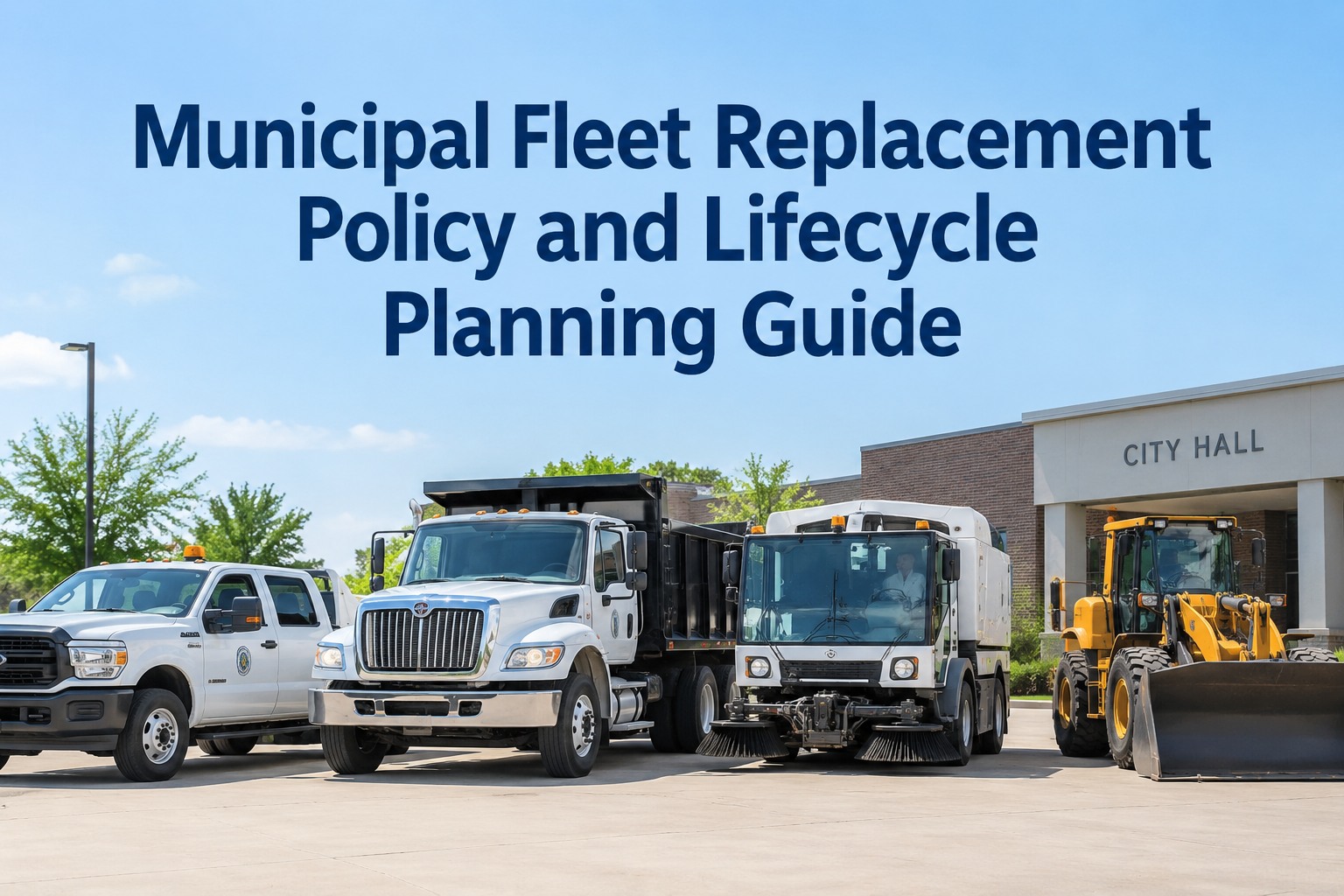
Every fleet has that one truck — not that old, not that many miles, but it lives in the shop — and the opposite, a high-mileage unit everyone wants to retire that's actually cheap and reliable. Age and mileage can't tell them apart. Government fleet vehicle replacement done right is the full cost picture that shows which unit is quietly bleeding the budget. Book a demo to build replace-or-retain decisions on evidence.
Age says replace it. The data says keep it
A replacement decision you can defend in budget season isn't built on the odometer — it's built on maintenance cost, downtime, utilization and condition, per asset. Let the record decide.
Most public fleets still replace on a flat rule — so many years, so many miles — because it's simple and it's easy to defend. The problem is it's wrong in both directions: it retires good units that still have cheap, reliable years left, and it keeps money-pit units on the books because they haven't hit the magic number yet. Government fleet vehicle replacement is an economic decision, and the economics live in data most fleets never pull together — the maintenance cost climbing year over year, the downtime that idles a crew, the unit that's only used 40% of the time. Put those in one place and the right call is usually obvious.
Why age alone gets the decision wrong
Every vehicle hits a point where it costs more to keep than to replace. That crossover is driven by rising repair cost and downtime — not by the calendar, and it lands in a different year for every unit.
Replace too early and you waste the cheap years on the left; too late and you pay the shaded climb on the right. The data tells you where the lines actually cross for that unit. Book a demo to find each unit's crossover.
What actually decides replace or retain
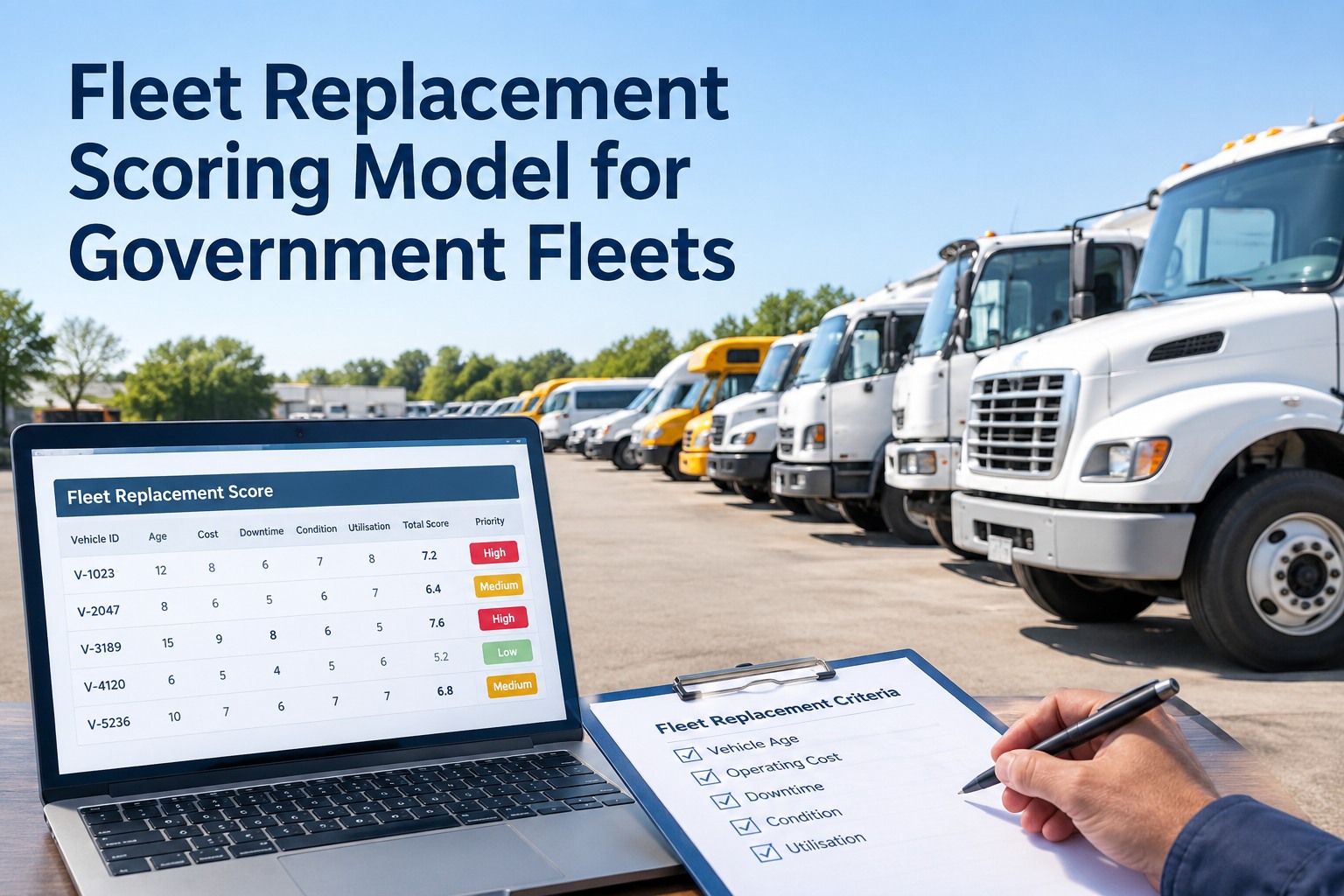
A defensible decision weighs five inputs together — no single one is the answer, and the record has to hold all of them per asset.
Age & mileage/hours
The starting context, not the verdict. A baseline that only means something next to cost and use.
Maintenance cost trend
The real signal — repair spend climbing year over year, and the share going to major components, not oil changes.
Downtime
Days out of service. A cheap-to-fix unit that's always in the shop still costs you a crew and a route.
Utilization
How hard it actually works. A low-use unit may be a downsizing or pooling candidate before it's a replacement.
Condition & reliability
The inspection-driven picture — structural wear, recurring defects, safety items — that tells you whether the unit is dependable for another season or a roadside failure waiting to happen. It's the factor a spreadsheet of costs misses, and the one your inspection records already capture.
HVI already holds four of these in the asset record and the fifth in your inspections — so the decision is assembled, not reconstructed from scratch each budget cycle. Book a demo to bring the inputs together.
Replace, retain — or something in between
The data rarely says only "replace" or "keep." It points to one of four calls, and naming the right one saves money a blunt replace-it rule never would.
Rising cost past the crossover, high downtime, poor condition. The economics are clear — budget it now with the record as justification.
Low, stable cost and solid condition despite age or miles. Keep it and redirect the capital to a unit that actually needs it.
Sound but under-used. Pool it, reassign it or downsize the class before spending on a like-for-like replacement.
Trending toward the crossover but not there yet. Flag it, keep logging, and plan it into next cycle's budget early.
A flat age rule only knows "replace"; the data knows all four — and the three that aren't "replace" are where the savings hide. Book a demo to score every unit.
The record is your justification
A replacement request lives or dies on whether you can defend it. "It's old" loses to a budget cut; a documented cost-and-downtime trail wins the line item.
- Age and mileage, no cost context
- No proof the unit is actually expensive
- Easy for finance to defer another year
- Same argument every cycle, no traction
- Three-year maintenance cost trend per unit
- Downtime days and the cost of lost use
- Crossover point shown against ownership cost
- A ranked, scored replacement list to fund
When the data does the arguing, replacement stops being a yearly fight and becomes a plan finance can trust. Start free and build a defensible plan.
Replace-or-retain decision checklist
Before you rank a unit for replacement, make sure the decision stands on all of this — every box is a question a budget committee will ask.
On a spreadsheet this takes weeks to assemble each budget cycle. In HVI it's already in the asset record, ready to rank. Book a demo to run the worksheet on live data.
A fleet director on defending the list
Budget season used to be me walking in with a list of old trucks and finance walking out having cut half of it, because "old" isn't an argument. The year I showed up with cost-per-mile trends, downtime days and a crossover chart per unit, the conversation flipped — we weren't debating opinions, we were reading the same numbers. They funded the whole priority list. The surprise was which units made it: a couple of high-mileage ones I'd assumed were done were actually cheap, and a newer one nobody suspected was the worst money-pit we owned. Without the data I'd have replaced exactly the wrong trucks.
Terrance E.Government Fleet Director · City fleet · 300+ assets
Build replacement decisions on HVI
Maintenance cost history
Every repair and PM dollar logged against the unit in maintenance records, so the cost trend is real, not estimated.
Downtime & utilization
Days out of service and how hard each unit works, captured per asset — the costs age and mileage hide.
Mileage, hours & condition
Meter readings and inspection-driven condition feed the picture, so the record reflects real wear, not just a date.
Fleet reporting
Reporting ranks the fleet by replacement priority and exports the evidence for the budget committee.
One asset record that already holds the decision — see how it connects to fleet asset lifecycle management and the replace-vs-refurbish question. Start free and score your fleet.
Government fleet replacement questions
Q1When should a government fleet vehicle be replaced?
When the cost to keep it — rising maintenance plus downtime — passes the cost of replacing it, which is the lifecycle crossover point. That lands in a different year for every unit depending on how hard it's worked and how it's held up, so a flat age-and-mileage rule misses it in both directions. The decision should be driven by cost, downtime, utilization and condition data, not the odometer alone.
Q2Why isn't age and mileage enough?
Because two units at the same age and mileage can have completely different economics — one cheap and reliable, the other a money-pit. Age and mileage are context, not a verdict. A good decision weighs maintenance cost trend, downtime, utilization and condition together, which is where the real difference between replace and retain shows up.
Q3What data do I need to justify a replacement?
A multi-year maintenance cost trend per unit, major-component spend separated from routine PM, downtime days and their cost, utilization, current condition and open defects, and a comparison of cost-to-keep against replacement cost. Scored and ranked across the fleet, that package is what turns a replacement request into a defensible budget line finance can trust.
Q4Is replacing always the right answer?
No. The data often points to retaining a sound low-cost unit, right-sizing an under-used one by pooling or reassignment, or watching a unit trending toward its crossover so you can budget it next cycle. A blunt replace-it rule only knows one move; the three alternatives are usually where a fleet saves the most money.
Q5How does HVI support replacement decisions?
HVI keeps maintenance cost history, downtime, mileage, hours, utilization and inspection-driven condition in each asset's record, and reports rank the fleet by replacement priority with exportable evidence. That makes replace-or-retain a scored, defensible decision rather than a yearly guess. It's a data and reporting layer, not a replacement for your jurisdiction's procurement or budgeting process.
Build fleet replacement decisions with HVI
Bring maintenance cost, downtime, mileage, hours, utilization and condition into one asset record — so every replace-or-retain call is scored, ranked and ready to defend in budget season. Live in weeks, not quarters.
Cost history · Downtime & utilization · Condition · Budget-ready reports