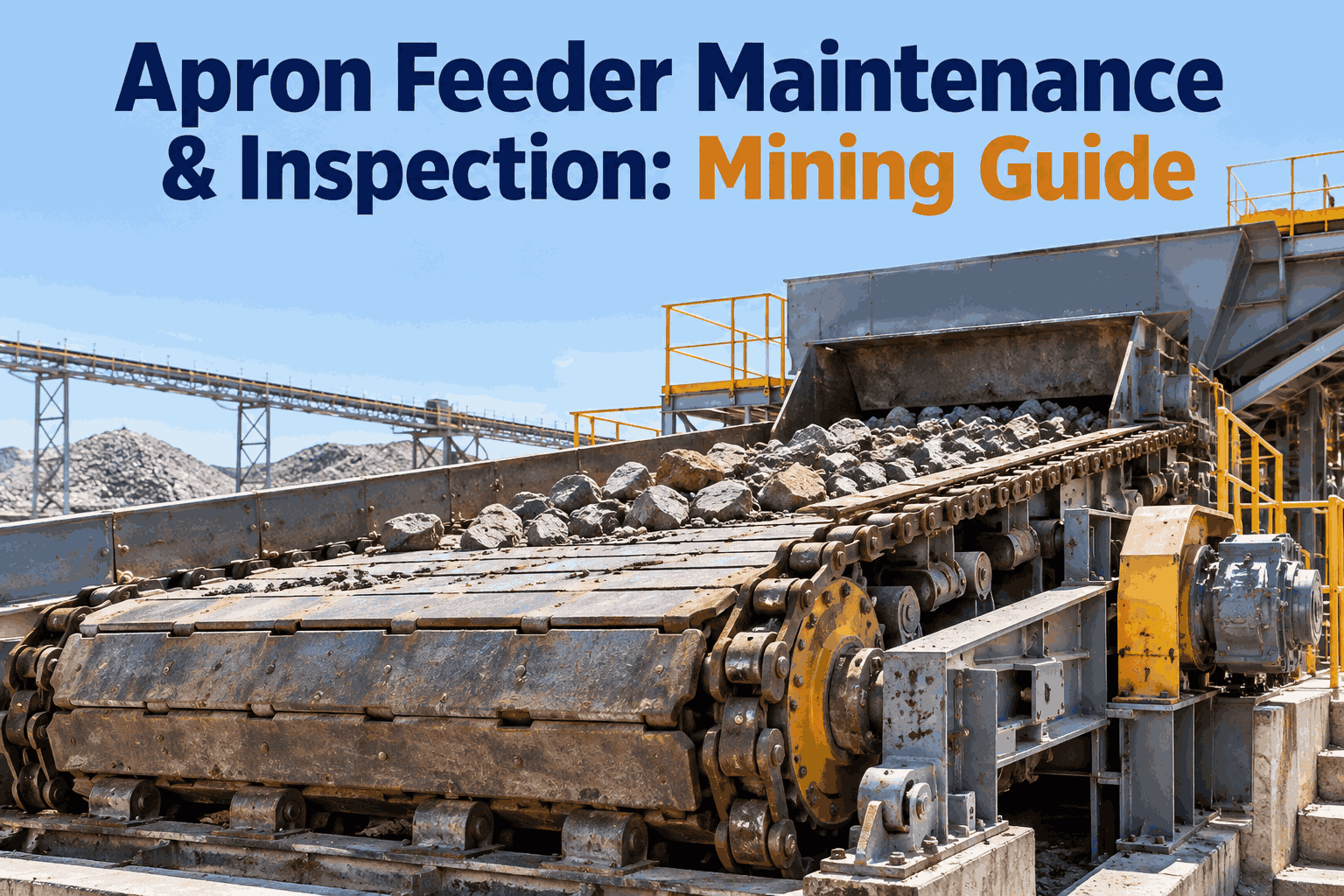
Apron feeder maintenance is easiest to control when wear is found along the material path before it becomes a feeder-wide problem. Chains, pans, rollers, sprockets, bearings, drives and supporting components work as one system under heavy impact and abrasive material. A structured inspection program helps mining teams document deterioration, plan wear-part replacement and coordinate maintenance before a developing condition dictates the shutdown.
Follow the load path. Find wear before it controls the shutdown.
Build apron feeder maintenance around the components that carry, support, tension and drive the material load—from the first pan to the head shaft.
An apron feeder is a connected wear system
The feeder does not experience wear as isolated components. Heavy material loads the pans, the pans transfer forces through the chain, rollers support movement, sprockets engage the chain and the drive keeps the system moving. A problem at one point can change loading and wear elsewhere, which is why inspections should follow the machine as a system.
Pans / flights
Inspect for visible damage, deformation, excessive wear, loose attachment points and conditions that may allow abnormal material loss.
Chains
Check condition, wear, alignment and equipment-specific tension or take-up indicators according to manufacturer procedures.
Rollers
Look for abnormal wear, rotation problems, lubrication concerns, buildup and visible conditions around the supporting track.
Sprockets
Examine tooth condition, engagement, alignment and related chain wear using OEM-defined inspection and replacement criteria.
Drive & bearings
Record lubrication condition, leaks, unusual noise, temperature observations and drive-system condition where applicable.
Want the same inspection route completed and recorded against every feeder? Book an HVI demo for digital fixed-plant inspections.
Turn visible symptoms into useful maintenance records
Apron feeder troubleshooting starts with an observation, not a guess. Capture what changed, where it was found and which components need closer examination. That gives maintenance planners better information than a generic note such as “feeder noisy” or “chain worn.”
Abnormal chain condition
Check wear condition, alignment, sprocket engagement and the equipment-specific tensioning or take-up system.
Loose or damaged pans
Inspect pan condition, attachments and surrounding components for impact damage, distortion or abnormal wear.
Rotation or wear concern
Examine the roller, supporting surface, lubrication condition and nearby buildup before deciding the maintenance response.
Unusual noise or motion
Review applicable bearings, coupling, gearbox, motor or hydraulic drive components according to the feeder design.
Misalignment signs
Look beyond the visible symptom to chain path, sprockets, rollers, shafts, frame and take-up condition where applicable.
Material buildup
Document accumulation around accessible components and determine whether it is associated with pan condition, spillage or carryback.
Give technicians a direct path from a feeder finding to planned maintenance. Book an HVI demo to see inspection findings become work orders.
Record the trend—not just “good” or “worn”
Chain and sprocket condition should be evaluated against the feeder manufacturer's specified inspection method and wear limits. When the same measurements and locations are recorded over time, planners gain a much clearer view of deterioration than they get from isolated pass/fail checks.
Measure consistently
Use the OEM procedure and the same reference points so successive readings can be compared.
Compare both sides
Where applicable, compare chain paths and related components for uneven condition or alignment concerns.
Check sprocket interaction
Chain and sprocket wear should not be reviewed as completely unrelated maintenance histories.
Plan from the trend
Use documented condition and manufacturer limits to support inspection frequency and replacement planning.
Need a traceable history of chain inspections, measurements and repairs? Book an HVI demo for asset-level maintenance history.
Apron feeder maintenance checklist
Use this as a planning framework rather than a substitute for the feeder manufacturer's inspection procedure. Component design, lubrication requirements, adjustment methods and allowable wear vary by machine.
Wear, alignment and equipment-specific tension/take-up condition.
CHECKWear, cracks, deformation, attachment condition and visible damage.
CHECKRotation, wear, supporting surfaces and lubrication condition.
CHECKTooth condition, engagement, wear and applicable alignment checks.
CHECKLubrication, leakage, noise and condition indicators required by the OEM.
CHECKMotor or hydraulic drive, gearbox, coupling and related components.
CHECKAccessible critical fasteners, protective guards and mounting condition.
CHECKVisible structural condition, buildup, spillage and accessible supports.
CHECKWant this apron feeder checklist available to technicians on a phone or tablet? Book an HVI demo for digital mining inspections.
One feeder needs several maintenance rhythms
A strong apron feeder preventive maintenance program separates routine operating observations from scheduled inspection, lubrication work, condition measurement and shutdown tasks. The actual frequencies should be based on OEM guidance, operating hours, material severity and site history.
Feed size, impact loading, abrasiveness, operating hours, contamination, lubrication system and feeder design can all affect the appropriate maintenance interval. Build schedules around the OEM requirements and refine them using documented site condition.
Manage different PM schedules for the same feeder without separate spreadsheets. Book an HVI demo for preventive maintenance scheduling.
The inspection should tell the parts room what is coming
A useful wear finding gives planners time to verify the correct component before the maintenance window. Keeping parts availability connected to planned work helps avoid reaching shutdown day with the feeder isolated but the required pan, roller, chain component or bearing unavailable.
Wear found
Record component, position and condition.
Part confirmed
Match the required component to the correct feeder.
Stock verified
Confirm quantity and location before the job starts.
Work prepared
Connect parts, scope and priority to the work order.
Usage recorded
Retain the component replacement in asset history.
Connect feeder work orders with the parts required to complete them. Book an HVI demo for parts and inventory management.
Build the work package before the feeder stops
Planned feeder work becomes easier to coordinate when the condition, repair scope, parts and verification requirements are known in advance. Inspection history should progressively define the job rather than leaving the maintenance team to discover the full scope after isolation.
Condition evidence
Inspection findings, measurements and photos attached.
Work scope
Components and required maintenance identified.
Parts availability
Correct replacement items and quantities confirmed.
Site procedure
Approved isolation, access and task requirements applied.
Use the shutdown for the repair—not for discovering the repair.
Good inspection records reduce uncertainty around the scope. The team arrives knowing what was found, where it is located and what has already been prepared.
Plan feeder maintenance from inspection findings before the shutdown window opens. Book an HVI demo for work-order planning.
Repeated replacement is a signal—not the end of the analysis
When the same side, roller position, pan area or chain component repeatedly develops problems, the repair history becomes valuable reliability data. Comparing previous findings can help teams decide where a deeper investigation is justified.
Roller position R-06 flagged
Abnormal wear observation recorded.
Roller replaced
Part and completed work added to history.
Same position flagged again
Repeated location is now visible to the planner.
What else should be reviewed?
Make recurring apron feeder problems visible across inspections and repairs. Book an HVI demo to see complete asset maintenance history.
Close the maintenance loop after the repair
A completed repair should leave the next technician with a better baseline. Record what was changed, the parts consumed and the required post-maintenance checks so future inspections can distinguish normal condition from a new change.
Repair recorded
Document what was adjusted, repaired or replaced.
Parts consumed
Link replacement components to the completed work order.
Assembly checked
Complete applicable OEM and site verification requirements.
Operating condition
Follow the approved return-to-service and operating checks.
History closed
Keep findings and completed work against the same feeder.
Apron feeders contain moving components, stored energy and heavy material hazards. Inspection or maintenance requiring access to hazardous areas must follow site isolation/lockout procedures, OEM instructions and applicable mine safety requirements.
Keep completed feeder repairs, parts and inspection findings in one asset record. Book an HVI demo for fixed-plant maintenance records.
Apron feeder maintenance FAQs
What should an apron feeder maintenance checklist include?
An apron feeder maintenance checklist should cover chain condition and applicable tension or take-up checks, pans or flights, rollers, sprockets, bearings, lubrication, drive components, critical fasteners, guards, supporting structure and material buildup. Equipment-specific inspection points and limits should follow the manufacturer's requirements.
What are common apron feeder wear points?
Important wear areas can include chain components, pans or flights, support rollers and sprockets. Bearings, drive components, take-up systems and supporting structures also require inspection even though they may not be consumable wear parts in the same way as pans or chain components.
How often should an apron feeder be inspected?
Inspection frequency depends on the feeder design, manufacturer recommendations, operating hours, loading, material abrasiveness, environmental conditions and site experience. Routine operating observations can be combined with more detailed scheduled inspections, measurements and planned shutdown maintenance.
How should apron feeder chain wear be tracked?
Use the manufacturer's specified inspection and measurement procedure, record readings at consistent reference locations and retain the date, feeder side or position, observed condition and related maintenance. Consistent records make changes over time easier to identify and support planned intervention using the correct OEM wear limits.
How can HVI support apron feeder preventive maintenance?
HVI can help maintenance teams schedule preventive maintenance, perform digital inspections, create work orders from findings, manage replacement parts and retain completed maintenance history against each asset. This keeps feeder condition, planned work and repair history connected instead of spread across paper forms and spreadsheets.
Want to see inspections, PM, work orders and feeder history in one workflow? Book an HVI mining maintenance demo.
Know what is wearing before the feeder decides the maintenance date
Connect apron feeder inspections, preventive maintenance, work orders, replacement parts and repair history so your team can plan from documented condition instead of scattered notes.