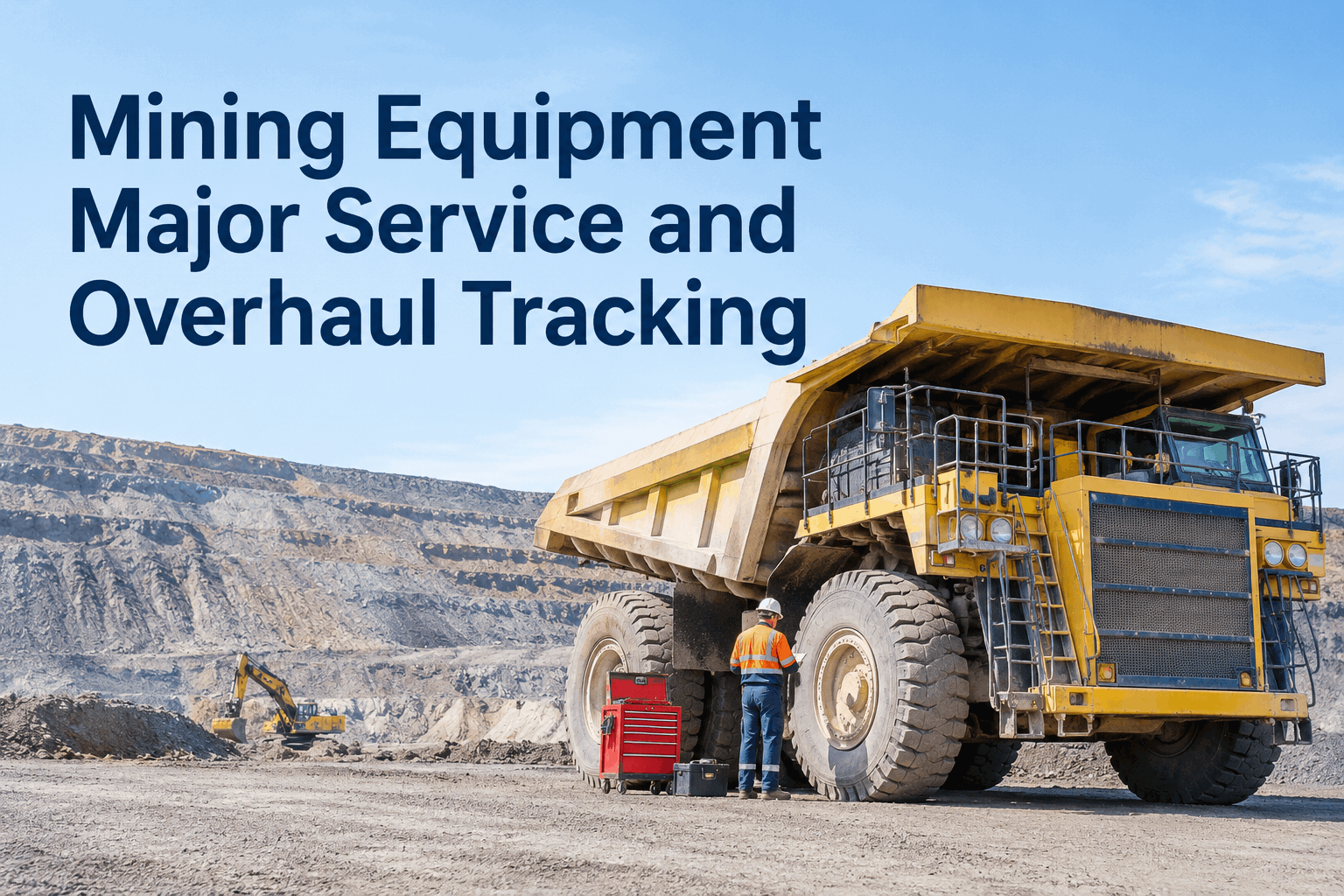
Component rebuild specifications are what separate a final drive that runs another 9,000 hours from one that grenades at 1,500 — and on a mine site, the difference is rarely the parts. It's whether the rebuild was measured against a real spec, verified at every gate, and signed off with the numbers on file. A rebuilt transmission that "looks done" and one that actually meets OEM clearances are the same part until the moment it fails. This is about making "to spec" something you can prove, not hope. Book a demo of rebuild QA recordkeeping.
"Rebuilt" Means Nothing. Verified to Spec Means Everything.
A quality rebuild passes through gates — strip, measure, replace, assemble, test, sign off — each with an acceptance criterion and a recorded number. Here's the passport a component should carry out of the workshop.
The hard truth every workshop manager learns the expensive way: a rebuild you can't document is a rebuild you can't trust. When a component comes back early, the first question is always "what was it measured at?" — and if the answer is a shrug, you've got no warranty leverage, no root-cause trail, and no way to tell a good rebuilder from a lucky one. A rebuild specification is just the written version of "done right," and QA is the proof you followed it.
Spec, not vibeswhy "rebuilt" and "remanufactured" aren't the same promise
The words get used loosely, and that's where fleets get burned. The scope of work — not the label on the invoice — decides whether a component actually meets specification. Here's the ladder, from a quick patch to a full spec-verified rebuild.
The jump that matters is from recondition to rebuild — the point where every part gets measured against an acceptance criterion instead of eyeballed. That's also the point where your own written spec and QA record become the thing protecting you, whether the work is in-house or sent out. Which path to send it down is a separate call — Read our OEM vs third-party rebuilders comparison.
The QA checklistthe component rebuild quality assurance acceptance checklist
This is the gate sequence a spec-verified rebuild passes through, grouped the way a QA supervisor signs it off. Each line is an acceptance criterion — a measured value against a limit, not a "looks good." Run it as the standing checklist on every component, in-house or returned from a rebuilder.
- Component fully disassembled, parts cleaned and laid out
- Root cause of the original failure identified and recorded
- Collateral damage and contamination path traced
- Critical dimensions measured against OEM wear limits
- Bores, shafts, bearings checked for clearance and runout
- Crack / NDT inspection on high-stress parts, results logged
- Out-of-limit parts replaced, not reused — recorded per part
- Genuine or spec-equivalent parts used and traceable
- Reassembled to spec torque and clearance, values captured
- Dynamic / dyno / pressure test run to original performance spec
- Test results within acceptance band and recorded
- QA sign-off by name, tied to the component serial
Built as a digital template, each line becomes a pass/fail with the measured value and a photo attached, and any out-of-limit reading auto-raises a defect before the component ships. See how digital inspection checklists capture it. Sign up free and load your rebuild QA checklist.
Pass or rejectwhat acceptance criteria actually look like at each gate
An acceptance criterion is a measurement with a limit — the part is in or it's out, no judgment call. The exact numbers are OEM- and component-specific, but the gates are the same across any serious rebuild. These are the four that decide whether a component ships or goes back on the bench.
Measured clearance, diameter, and runout compared to the OEM wear limit. Over the limit → the part is replaced, not reused.
Crack detection, scoring, and surface finish on high-stress parts. Any crack or disqualifying defect is an automatic reject.
Torque, preload, and end-play set and verified to the service manual value. Recorded, not assumed — the number goes on the record.
Dyno, pressure, or dynamic run checked against the original performance band. Outside the band → it doesn't pass, full stop.
The discipline isn't the measuring — any good tech measures. It's that the measured value gets recorded against the limit, so a pass is provable and a reject is traceable. That record is also the evidence that protects a later warranty or goodwill claim — which ties straight into how you Read our mining warranty & goodwill claims guide.
Strip to sign-offthe rebuild workflow with a QA gate at every stage
A spec-verified rebuild isn't one inspection at the end — it's a sequence where the component can't advance until the current gate passes. Build the gates into the workflow and a bad rebuild gets caught on the bench, not back in the machine three weeks later.
-
1Receive & strip
Log the component against its serial, open the work order, strip it down, and run the failure analysis before anything gets cleaned away.
-
2Inspect & measure
Every critical dimension and NDT check against limits. Out-of-spec parts flagged as defects, replacement parts recorded against the job.
-
3Assemble to spec
Rebuild to torque, preload, and clearance values — each captured as it's set, so the build is documented while it happens.
-
4Test & sign off
Performance test to the acceptance band, QA sign-off by name, and the full rebuild record sealed against the serial — ready for its next life.
Each gate is a checklist that has to pass before the next opens, and the whole chain lives against the component — so the rebuild history travels with the part, not in a technician's memory. Explore component-level maintenance records, and Book a demo of the gated rebuild workflow.
The recordthe rebuild documentation package that proves the spec was met
A rebuild is only as good as what you can show for it. The documentation package is what turns a verbal "yeah, we rebuilt it" into an auditable record — and it's the same file that backs a warranty claim, a reliability review, or the next buyer's due diligence.
When all six live in one place tied to the serial, the rebuild record is complete the moment the component ships — not reconstructed when someone asks months later. Sign up free and build your rebuild record.
From a workshop manager who tightened up rebuild QA
We had two guys rebuilding the same transmission to two different standards and no way to tell until one came back early. The fix wasn't a lecture — it was a checklist that won't let the job close until the measured clearances and the dyno numbers are actually in it. Now every rebuilt component carries its own record against the serial, so when reliability asks "what was it built to," I pull it up in seconds instead of guessing. The early returns dropped off almost immediately.
Component rebuild specifications & QA — FAQs
What are component rebuild specifications?
They're the written acceptance criteria a rebuilt component must meet — dimensional wear limits, assembly torque and clearance values, and performance test bands, measured against OEM specs. A part outside the limit is replaced, not reused. The spec is what makes "rebuilt" verifiable.
What belongs in a rebuild QA checklist?
Four gates: strip-down with failure analysis, dimensional and NDT inspection against limits, parts decision and assembly to spec torque, then a performance test and QA sign-off. Each line is a measured value against an acceptance criterion, recorded against the component serial.
What's the difference between a rebuild and a reman?
A rebuild is a full strip, measure, replace, and test to spec. Remanufacturing follows a fixed published procedure, dyno-tests to original spec, and carries a full warranty and report. Reman is the more standardized, consistent promise; a rebuild's quality depends on the spec and QA behind it.
Why document rebuild acceptance criteria?
Because an undocumented rebuild can't be trusted or defended. The recorded measured-values-vs-limits file proves the component met spec, supports a warranty or goodwill claim if it fails early, and lets reliability compare rebuilders on real numbers instead of reputation.
How does HVI help with rebuild QA?
HVI doesn't set engineering tolerances or rebuild components — it runs the QA checklist, captures each measured value against its limit, flags out-of-spec readings as defects before sign-off, and keeps the full rebuild record tied to the component serial, so "to spec" is a provable record.
Make every rebuilt component prove it meets spec
You know the gates — strip, measure, replace, assemble, test, sign off. HVI makes each one a checklist the job can't skip, captures the value against every acceptance limit, and keeps the whole QA record tied to the component serial. The next person sees exactly what it was built to.
No credit card · No hardware · Component-level rebuild records from day one