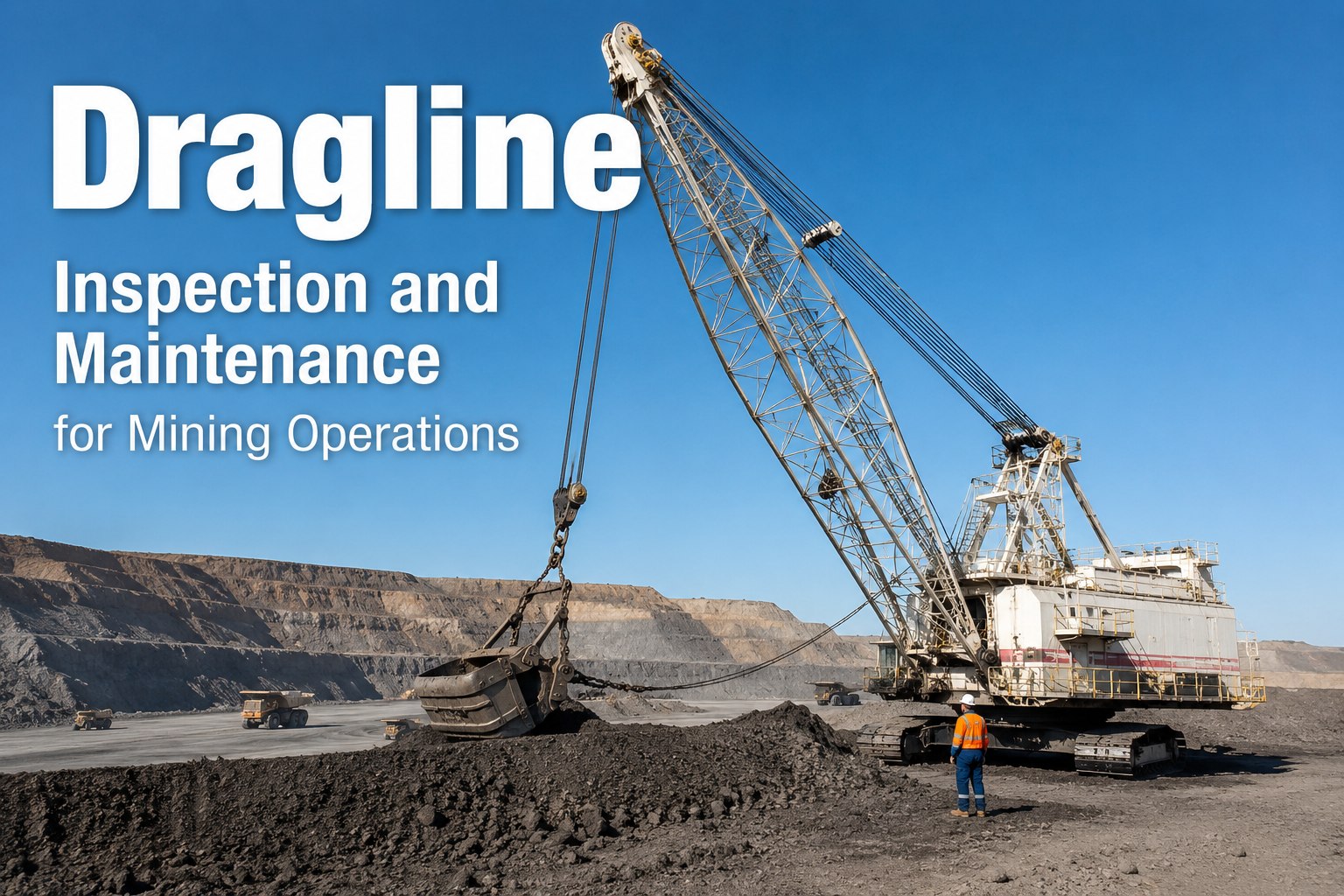
You know the sound a dragline makes when something is wrong. Not the normal groan of steel under load, but the sharp ping of a broken wire strand snapping back against the boom, or the grinding hesitation in the swing gear that tells you the lubrication system has been starving for three days. Dragline inspection and maintenance is not like maintaining a haul truck or a loader. These machines run for thirty, forty, sometimes fifty years, and their availability is the single largest lever on stripping cost. When a dragline sits, the entire mining sequence backs up behind it. The difference between a dragline that runs 92% availability and one that limps along at 78% is measured in millions of dollars of moved overburden per year. If you are still tracking rope condition in a binder and scheduling boom NDT on a whiteboard, walk through how digital inspection cycles work on your own units before the next planned shutdown.
Dragline Maintenance & Inspection
Your dragline is a 40-year asset. Is your maintenance programme built to match?
Rope, structure, gearing, electrical and walking gear on planned cycles. HVI gives you custom templates per system, calendar and meter PM triggers, and inspection history that supports condition trending across decades of service.
What Poor Dragline Maintenance Actually Costs
Four numbers that decide whether your stripping cost stays competitive
Every dragline superintendent knows these figures. The question is whether you are tracking them per machine, per system, and per inspection cycle.
Per hour of unplanned downtime
A mid-size walking dragline moving 3,000 BCM per hour at $1.40 per BCM. One 12-hour rope change that could have been planned costs $50,000 in lost production alone.
Typical hoist rope service life
With proper inspection and lubrication. Without it, you are lucky to see 14 months. Rope cost per machine runs $80,000 to $120,000 per set depending on diameter and construction.
Of maintenance budget goes to gearing and lubrication
Swing, hoist, drag and propel gearboxes. Oil analysis, filter changes and planned component swaps dominate the cost curve on machines past 15 years of service.
Boom cracks found during planned NDT
Industry experience shows roughly one-third of boom inspections on machines over 20 years old find fatigue cracking at known stress points. Finding them early means a planned repair. Missing them means a catastrophic failure.
The Six Systems That Decide Dragline Reliability
Where to focus your dragline inspection and maintenance programme
A dragline is not one machine. It is six interdependent systems, each with its own failure modes, inspection intervals and cost profile. Treat them separately or you will miss the early warnings.
Hoist, Drag and Dump Ropes
Daily visual checks for broken wires, diameter reduction and corrosion. Monthly caliper measurements at known wear points. Rope life depends on lubrication, sheave condition and fleet angle. A broken wire count above 6% of total wires in one lay length means change now, not next week.
Bucket and Rigging
Weekly checks on teeth, adapters, lip wear and trunnion pins. Monthly inspection of spreader bars, dump links and equalizer sheaves. Bucket rigging takes constant impact and abrasion. A worn trunnion pin that fails under load can drop a 60-tonne bucket.
Boom Structural Inspection
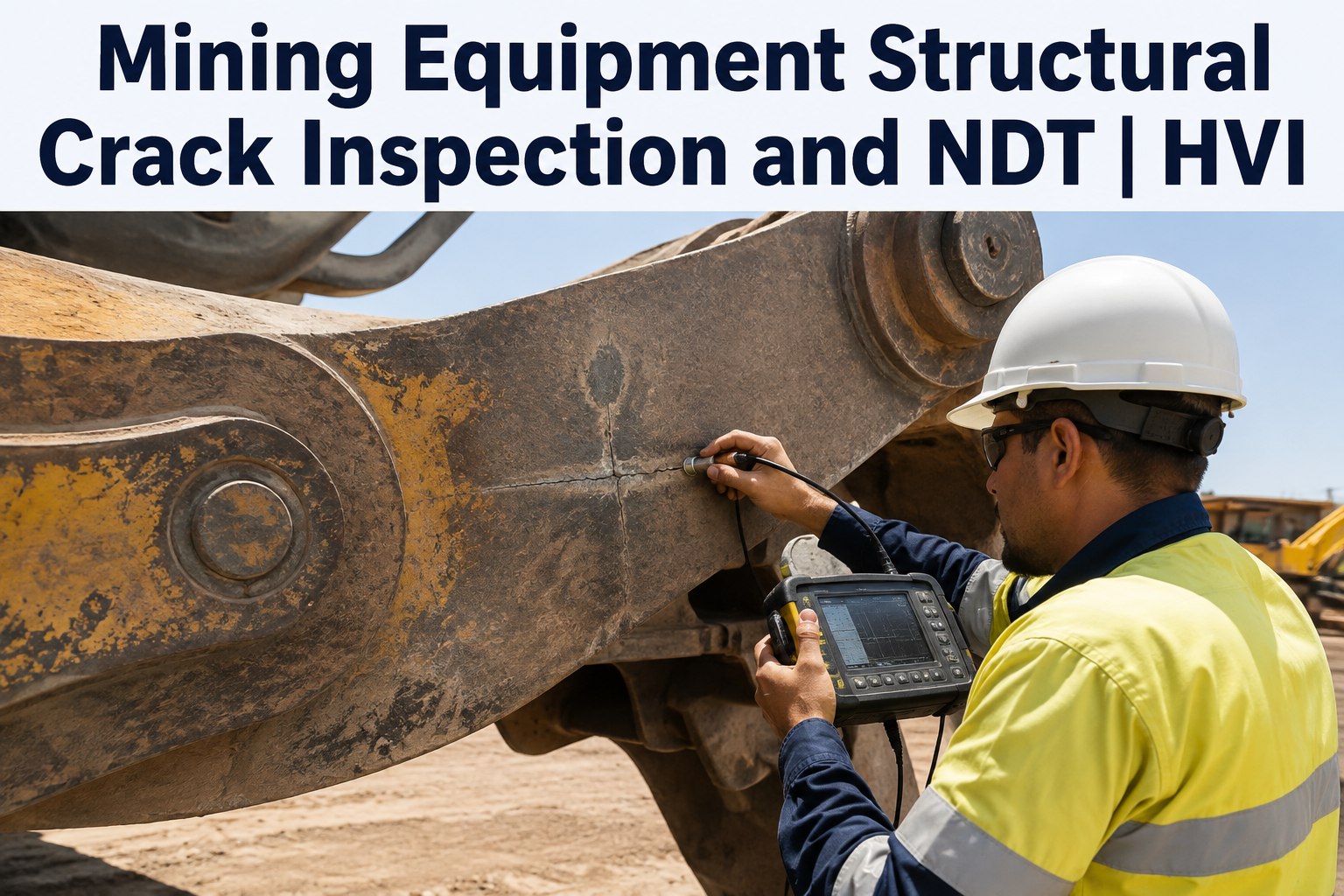
Annual NDT on known fatigue locations: boom foot welds, chord splices, lacing connections and mast attachment points. Magnetic particle or ultrasonic testing depending on joint geometry. Cracks grow under cyclic loading. Catch them at 50mm and you weld a doubler plate. Miss them until 500mm and you are replacing a boom section.
Gearing and Lubrication
Monthly oil analysis on swing, hoist, drag and propel gearboxes. Quarterly filter changes and magnet checks. Annual gear tooth contact pattern inspection. Gearbox failures are the single largest unplanned cost on older draglines. Oil analysis catches bearing wear and gear tooth distress months before failure.
Electrical System
Weekly checks on trailing cable for cuts, abrasion and plug condition. Monthly motor brush inspection and commutator cleaning. Quarterly drive system diagnostics and insulation resistance testing. Electrical faults cause intermittent trips that kill productivity without leaving obvious damage.
Walking Mechanism
Daily checks on walking shoes, cam rollers and guide rails. Weekly lubrication of walking gear bearings and eccentric shafts. Monthly inspection of tub support structure and walking frame welds. Walking draglines put enormous cyclic loads through the tub and walking frame. Cracks here are rare but catastrophic.
The Planned Shutdown Model
How major dragline work actually gets done
You do not fix a dragline during production. You plan the work, order the parts, schedule the crew and shut the machine down for a defined window. Everything else is triage.
Condition Monitoring
Daily and weekly inspections feed a condition log. Oil analysis, vibration readings, rope measurements and visual defects all get recorded with photos and timestamps. This is where you catch the early warnings.
Work Order Planning
Defects become work orders. Each one gets a priority, an estimated labour hour cost, a parts list and a required skill set. Long-lead items like gear sets or boom sections get ordered months ahead.
Shutdown Scheduling
Work orders are grouped into shutdown windows based on priority, parts availability and production schedule. A typical major shutdown runs 5 to 10 days and happens every 18 to 24 months.
Execution and Close-Out
Work gets done, inspections get signed off, parts get consumed from inventory and the machine goes back to work. Every task is documented for warranty, compliance and future planning.
The difference between a good shutdown and a bad one is preparation. If you are still tracking this in spreadsheets and email, see how HVI handles shutdown planning and parts tracking on a live demo.
Rope Inspection and Change Planning
The rope inspection criteria that keep you out of trouble
Rope failure is the most common cause of unplanned dragline downtime. It is also the most preventable. The criteria are well known. The discipline is not.
| Inspection Item | Frequency | Reject Criteria | Action Required |
|---|---|---|---|
| Broken wire count | Daily visual | More than 6% of total wires in one lay length | Change rope within 48 hours |
| Diameter reduction | Weekly caliper | More than 7.5% from nominal | Change rope at next planned stop |
| Corrosion pitting | Monthly detailed | Visible pitting with wire necking | Increase inspection frequency, plan change |
| Rope lubrication | Weekly application | Dry rope, visible rust, core exposure | Relubricate immediately, inspect for damage |
| Sheave condition | Monthly | Groove wear, cracks, bearing play | Repair or replace before rope damage occurs |
Rope change planning is about lead time. A set of hoist ropes for a mid-size dragline costs $90,000 and takes 8 to 12 weeks to manufacture and deliver. If you are not tracking rope condition and forecasting change dates, you will pay for emergency freight or run a worn rope past its safe life. Start logging rope inspections free and build the history you need to plan changes on your schedule, not the rope's.
See HVI running on your own draglines
Book a 30-minute demo and we will walk through rope inspection templates, shutdown planning and parts tracking using your actual machine setup.
How HVI Helps
Four ways HVI keeps your dragline inspection and maintenance programme on track
HVI is built for heavy equipment that runs for decades. It handles the inspection cycles, the condition trending and the long-lead parts planning that draglines demand.
Custom Templates Per System
Build inspection templates for ropes, boom structure, gearing, electrical and walking gear. Each template has its own checklist items, photo requirements and reject criteria. Technicians see exactly what to check and what failure looks like.
Calendar and Meter PM Triggers
Set preventive maintenance by date, engine hours or production volume. HVI sends due and overdue alerts so nothing slips. Rope inspections every shift, oil samples every month, boom NDT every year - all tracked automatically.
Inspection History and Trending
Every inspection is timestamped, photo-backed and stored against the asset. Track rope diameter reduction over months, oil analysis trends over years, crack growth over shutdowns. This is the data that justifies component changes and capital planning.
Parts and Inventory for Long-Lead Items
Track rope sets, gear sets, boom sections and electrical spares across multiple sites. Set reorder points based on lead time. Know what you have, where it is and when you need to order the next one. No more emergency air freight on a $90,000 rope set.
HVI works on any phone or tablet. Technicians inspect in the field, defects become work orders instantly, and managers see condition trends in real time. Book a demo and see it running on dragline-specific templates.
Key Takeaways
What good dragline maintenance actually looks like
Availability is the metric that matters. A dragline at 92% availability moves 20% more overburden per year than one at 78%. That difference pays for a lot of inspections, oil samples and planned component changes.
Rope inspection is non-negotiable. Daily visual checks, weekly caliper measurements and monthly detailed inspections. Broken wire count, diameter reduction and corrosion are the criteria. Miss them and you are planning an emergency rope change at 2 AM.
Boom cracks grow under cyclic loading. Annual NDT on known fatigue locations is the only way to catch them early. A 50mm crack is a doubler plate. A 500mm crack is a boom section replacement and six weeks of downtime.
Gearing and lubrication dominate the cost curve. Monthly oil analysis, quarterly filter changes and annual gear tooth inspections. Gearbox failures are the largest unplanned cost on older machines. Oil analysis catches them months ahead.
Major work happens in planned shutdowns. Condition monitoring feeds work order planning. Work orders are grouped into shutdown windows. Parts are ordered months ahead. Execution is documented for warranty and compliance.
Digital tracking beats paper binders. Dragline inspection and maintenance generates decades of condition data. If that data lives in binders and spreadsheets, you cannot trend it, forecast from it or defend it in an audit. Start building your digital inspection history free.
"I track rope diameter every Tuesday morning before first shift. Takes me 20 minutes with a caliper and a clipboard. Last year I caught a rope at 6.8% reduction and we changed it on a planned maintenance day instead of having it part under load. That one catch saved us probably $60,000 in downtime and emergency freight. The problem is I have three draglines and the records live in three different binders. When the corporate reliability engineer asks for trending data, I am photocopying pages for two days. We are moving to digital inspections this year specifically so I can pull a rope condition report in 30 seconds instead of 30 hours."
Marcus Delaney
Maintenance Superintendent, Surface Coal Operation
Frequently Asked Questions
Dragline inspection and maintenance questions
How often should you inspect dragline ropes?
Daily visual checks for broken wires and obvious damage, weekly caliper measurements at known wear points, and monthly detailed inspections including lubrication condition and sheave contact. Rope life depends on catching wear early. A broken wire count above 6% of total wires in one lay length means change the rope within 48 hours, not next week.
What is the typical service life of a dragline boom?
A well-maintained dragline boom can last 30 to 40 years, but only with annual NDT on known fatigue locations. Boom foot welds, chord splices and lacing connections are the high-stress areas. Industry experience shows roughly one-third of boom inspections on machines over 20 years old find fatigue cracking. Catch cracks early and you weld doubler plates. Miss them and you are replacing boom sections.
How do you plan a major dragline shutdown?
Start with condition monitoring data from daily and weekly inspections. Turn defects into work orders with labour estimates and parts lists. Order long-lead items like gear sets and rope sets months ahead. Group work orders into a shutdown window based on priority and production schedule. A typical major shutdown runs 5 to 10 days every 18 to 24 months. See how HVI handles shutdown planning and parts tracking on a live demo.
What causes most unplanned dragline downtime?
Rope failures, gearbox failures and electrical faults are the big three. Rope failures are usually preventable with proper inspection and lubrication. Gearbox failures are caught early with monthly oil analysis. Electrical faults are intermittent and frustrating but rarely catastrophic. The common thread is that all three give early warnings if you are looking for them.
How does HVI handle dragline-specific inspection requirements?
HVI lets you build custom inspection templates for each dragline system: ropes, boom structure, gearing, electrical and walking gear. Each template has its own checklist items, photo requirements and reject criteria. PM triggers can be set by date, engine hours or production volume. Inspection history is stored against the asset for condition trending and audit defence. Sign up free and build your first dragline template in about 15 minutes.
Stop tracking dragline inspections in binders
HVI gives you custom templates, automated PM triggers, condition trending and parts tracking built for machines that run for decades. See it on your own units.
Free to start - Works on any phone - No card needed