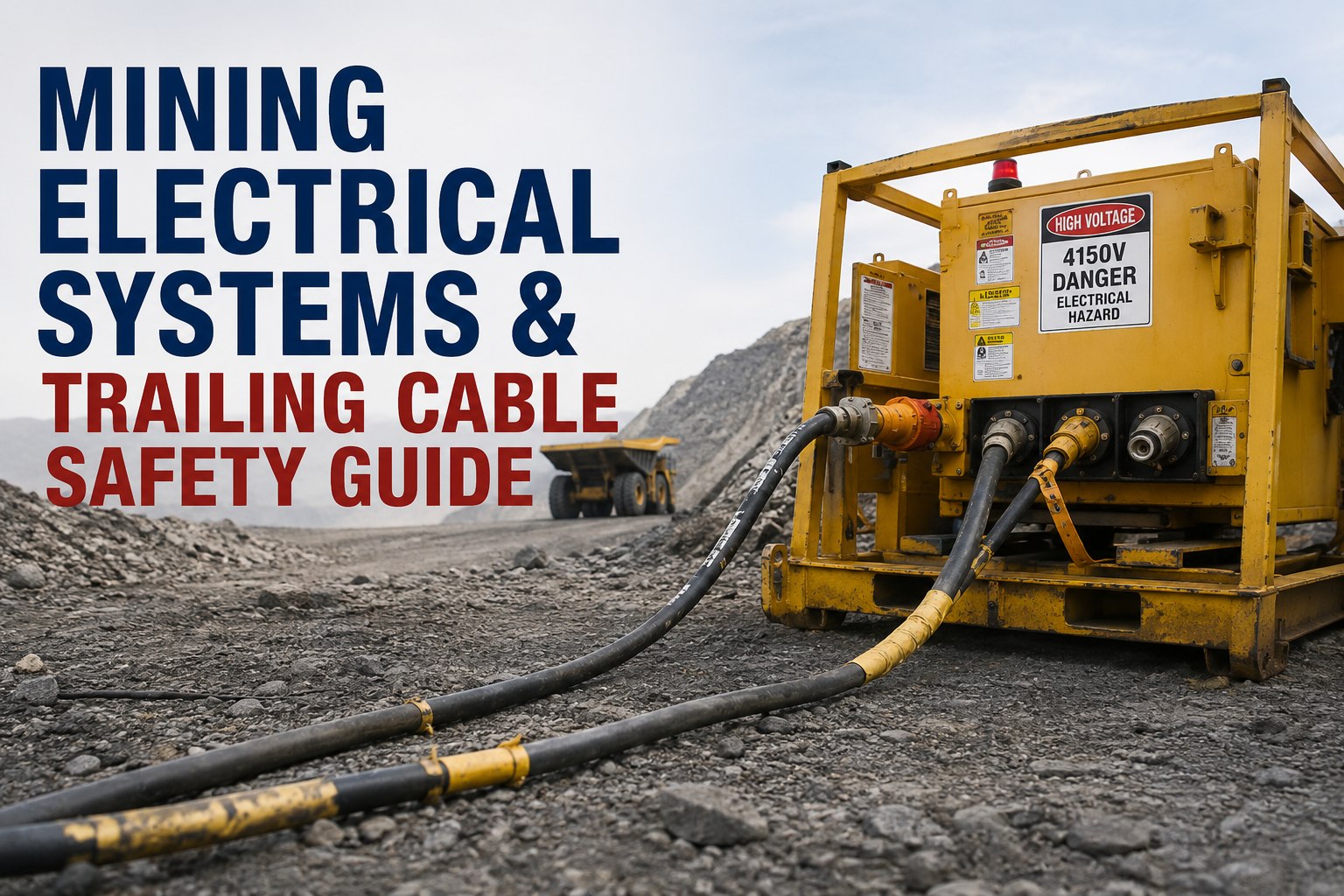
An electric rope shovel is the single most complex asset on most mine sites: a machine that runs on 6.6 kV or higher, lifts its payload on wire rope, and swings a structure that can weigh more than a thousand tonnes. When one goes down, the whole loading face feels it within the hour. Yet on many sites the daily check is still a laminated card and a grease pencil, the hoist rope condition lives in one fitter's notebook, and the trailing cable gets walked only after someone trips over a damaged section. If you are responsible for keeping a P&H 4100XPC or a Cat 7495 class machine digging, this page lays out how a proper rope shovel inspection and maintenance program works, what it costs you when it is informal, and how to see it running on your own shovels in a 30-minute demo before your next planned shutdown.
ELECTRIC ROPE SHOVEL INSPECTION AND MAINTENANCE
One machine, three trades, zero margin for a missed check
High voltage, wire rope and massive structure all live on the same asset. Your shift inspection has to cover all three, every shift, with proof it happened. Here is the system that keeps rope shovel availability above target without adding headcount.
What a missed check costs
- A parted hoist rope on a loaded dipper: structural damage, days of downtime, and a reportable incident.
- A trailing cable fault at the wrong moment: arc flash exposure and an injury investigation, not just a repair.
- A boom crack found late: emergency welding under production pressure instead of a planned repair in a scheduled shutdown.
What a digital program gives you
- Shovel-specific checklists for electrical, rope, crowd and structure, completed on any phone or tablet at the machine.
- Photo evidence and meter readings on every defect, converted to a work order before the shift ends.
- Calendar and engine-hour PM triggers that line up with your planned shutdown model, not against it.
WHAT INFORMAL SHOVEL MAINTENANCE COSTS YOU
The numbers your GM will ask about
Rope shovel availability is a production number, not a maintenance number. These are the four figures that decide whether your program survives the next budget review.
85%+
Availability target
Well-run rope shovel fleets hold mechanical availability in the mid-to-high 80s. Every point below that is ore your trucks are not hauling.
3 trades
In one shift check
Electrical, mechanical and structural findings all surface in the same walk-around. A paper card cannot route them to three different shops. A CMMS can.
1,000+ hrs
Between major rope events
Hoist and drag rope life is measured in operating hours and inspected against broken-wire and wear criteria. Miss the trend and the rope decides the timing for you.
6.6 kV+
On board, every shift
The trailing cable and high-voltage cabinet are a live injury source. Isolation discipline and cable condition checks are the two controls that actually prevent contact.
ROPE SHOVEL COMPONENTS, SYSTEM BY SYSTEM
What your electric rope shovel checklist has to cover
A generic heavy-equipment checklist misses most of what fails on a rope shovel. These six systems each need their own inspection points, their own criteria and their own escalation path.
Trailing cable and high voltage
Walk the cable route every shift. Look for cuts, crushing, scorch marks at couplers and tight bend radii where the cable feeds onto the reel. Confirm the cable handling crew is using insulated tools and rated gloves, and that isolation and lockout are verified before any cabinet work. The trailing cable is one of the most common contact-injury sources on a shovel, and most of those injuries trace back to a damaged section somebody saw and did not report.
Hoist and drag ropes
Inspect against broken-wire counts per lay length, diameter reduction, corrosion, kinking and birdcaging. Log the count and location every time, because the trend matters more than any single reading. A rope that is losing wires faster week over week gets changed in the next planned window, not when it parts. Photo evidence of the worst section, tied to the meter reading, is what turns a rope change from an argument into a schedule line.
Dipper, handle and crowd system
Check dipper teeth and adapters for wear and cracking, the dipper door and latch for proper closure, and the handle for cracks at the known stress points near the saddle block. On the crowd system, inspect the rack and pinion or rope crowd for wear, alignment and lubrication. Crowd problems show up first as slow cycle times and odd wear patterns, long before anything breaks, so the checklist has to capture condition, not just pass or fail.
Boom and house structure
Every shovel model has known fatigue locations: boom foot welds, gantry connections, revolving frame joints and the tub. Your structural inspection should name those locations explicitly, not just say "check for cracks". A crack found at 20 mm in a weekly check is a planned repair. The same crack found at 200 mm during a failure is a shutdown you did not schedule and a conversation you did not want.
Gears, pinions and lubrication
Open gearing on the swing, hoist and crowd is one of the biggest consumable costs on the machine. Check lubricant film condition, coverage and contamination, and track consumption per operating hour. A swing gear running dry or dirty wears in months instead of years, and the replacement is a major-component event with a long lead time. Lubrication findings belong in the same system as everything else, not on a separate clipboard in the lube truck.
The planned shutdown model
Most rope shovel work is scheduled, not opportunistic. Rope changes, gear inspections, structural repairs and major component swaps all land in planned windows. That only works if every defect found in daily checks flows into a backlog you can scope, kit and schedule. If your shutdown scope is built from memory and sticky notes the week before, you are leaving availability on the table every single quarter.
SHIFT CHECK TO SHUTDOWN SCOPE
How findings should route, and who owns them
The reason paper checks fail on rope shovels is not effort, it is routing. A high-voltage finding and a structural crack need different people, different urgency and different sign-off. This is the routing a decent CMMS enforces automatically.
| Finding | Typical trigger | Owner | Action window |
|---|---|---|---|
| Trailing cable damage | Shift walk-around, photo of section | Electrical supervisor | Immediate: isolate and repair before next dig |
| Hoist rope broken-wire count rising | Weekly rope inspection with meter reading | Maintenance planner | Next planned window, rope kitted in advance |
| Dipper handle crack at saddle | Shift check or crack-detection PM | Structural / weld shop | Monitor or repair based on length and growth |
| Swing gear lubricant contamination | Lube route reading and consumption trend | Lube technician + planner | Correct within days, inspect gear at next shutdown |
| Boom foot weld crack | Structural PM at known fatigue location | Maintenance manager | Scoped into next planned shutdown with engineering sign-off |
If you want to see this routing live, book a walkthrough on a demo shovel and we will show a defect moving from a phone photo to a scheduled work order in under two minutes.
A WORKED EXAMPLE YOU CAN DEFEND
What one avoided rope event is worth
You do not need a business case with forty assumptions. One avoided unplanned event usually pays for the whole program. Here is the arithmetic a fleet manager can put in front of a GM without flinching.
The unplanned version
A rope parts or fails inspection at the wrong time. The shovel stops mid-pattern, trucks queue or park, and you pull a crew off planned work to react. Depending on your operation, a down shovel can idle a loading face worth tens of thousands of dollars per shift, and the emergency change typically costs far more in labour and hire than a planned one. Add the incident investigation if anything was damaged or anyone was exposed.
The planned version
The same rope is changed in a scheduled window because your inspection trend said it was time. The rope, the crew and the crane are already there. The shovel is back on schedule, production barely notices, and the record shows a controlled decision with photos and meter readings. The difference between these two versions, even once a year, dwarfs the cost of starting a free account and digitising the checks that catch the trend.
HOW HVI HELPS
Built for machines that cannot hide a missed check
HVI is cloud plus mobile inspection and maintenance software for fleet-heavy operations. These four capabilities map directly to the rope shovel problems above.
Shovel-specific templates
Build one checklist per machine class: P&H 4100XPC, Cat 7495, or your own configuration. Electrical, rope, crowd and structural sections each carry their own criteria and photos, so a fitter at the machine sees exactly what to check, in order, on any phone or tablet.
Outcome: no more generic cards that skip the boom foot welds.
Photo evidence and instant work orders
Every defect carries a timestamped photo, a meter reading and the operator's name. One tap converts it to a work order routed to the right shop: electrical, mechanical or structural. Nothing lives in a notebook or a group chat ever again.
Outcome: defects become scheduled work before the shift ends.
Meter and calendar PM triggers
Set rope inspections by operating hours, structural PMs by calendar, and lubrication routes by both. Due and overdue alerts go to the planner, so the shutdown scope builds itself from real findings instead of memory.
Outcome: the planned shutdown model actually runs as planned.
Logbook history plus parts planning
Every inspection, repair and rope change sits in a searchable asset history. Parts and inventory tracking means the rope, the gear lubricant and the wear parts for the next window are on site before the window opens, across one shop or several.
Outcome: major components stop being surprises, and audits take minutes.
If you manage a mixed fleet, the same platform covers your trucks, loaders and light vehicles too. Book a demo and bring your worst shovel - we will build its checklist live.
Your next shutdown scope is being written right now, one shift check at a time
Make sure it is written in a system that routes, schedules and proves every finding. See HVI on your own machines in 30 minutes.
KEY TAKEAWAYS
Rope shovel maintenance, in one screen
01
An electric rope shovel is three assets in one: high-voltage electrical, wire rope and structure. Your inspection program has to treat all three with the same discipline, every shift.
02
The trailing cable and isolation discipline are your biggest injury exposure. Cable condition checks with photo proof are cheap. The alternative is not.
03
Rope, gear and structural life are all trend problems. Broken-wire counts, lubricant consumption and crack growth only protect you if they are logged, comparable and acted on inside planned windows.
04
A rope shovel inspection program lives or dies on routing. Findings must reach the right trade, with evidence, fast enough to be scheduled. That is exactly what a CMMS like HVI enforces, and it is why sites that digitise hold availability while others argue about notebooks.
The thing that used to keep me up was the rope report living in one guy's diary. He goes on leave, nobody knows the broken-wire trend, and suddenly we are changing a hoist rope in panic mode with trucks parked. Now every rope reading goes into the system with a photo and the hours, and I can pull the trend in a meeting. My planner builds the shutdown scope from actual findings, and I have stopped losing arguments about when a rope is due. I track one number religiously: unplanned shovel hours per month. It is a third of what it was.
Daniel Reeves, Maintenance Manager, open-pit copper operation
FREQUENTLY ASKED QUESTIONS
Electric rope shovel inspection questions, answered
How often should an electric rope shovel be inspected?
What are the inspection criteria for hoist and drag ropes?
Why is the trailing cable such a big safety focus?
Can one system handle shovels and the rest of our fleet?
How does digital inspection help at audit or incident time?
Keep the shovel digging and the record clean
Digitise your rope shovel inspections, route every defect to the right trade, and walk into your next audit or shutdown review with proof, not notebooks.
Free to start - Works on any phone or tablet - No card needed