A feeder breaker doesn't wear out by accident — it's designed to. The picks, the chain, the flight bars, the liners: every one is a consumable, meant to take the abrasion and impact so the machine's frame doesn't. That changes what feeder breaker maintenance actually is. You're not trying to stop wear; you're trying to measure it and change parts on your schedule, before a worn pick or a stretched chain fails underground where access is tight and a breakdown chokes your whole material flow. This guide covers the wear components, the drives, and how to plan change-outs before the machine forces the timing on you. Book a demo to see wear tracked and parts staged ahead.
A Machine Built to Wear Out — on Purpose
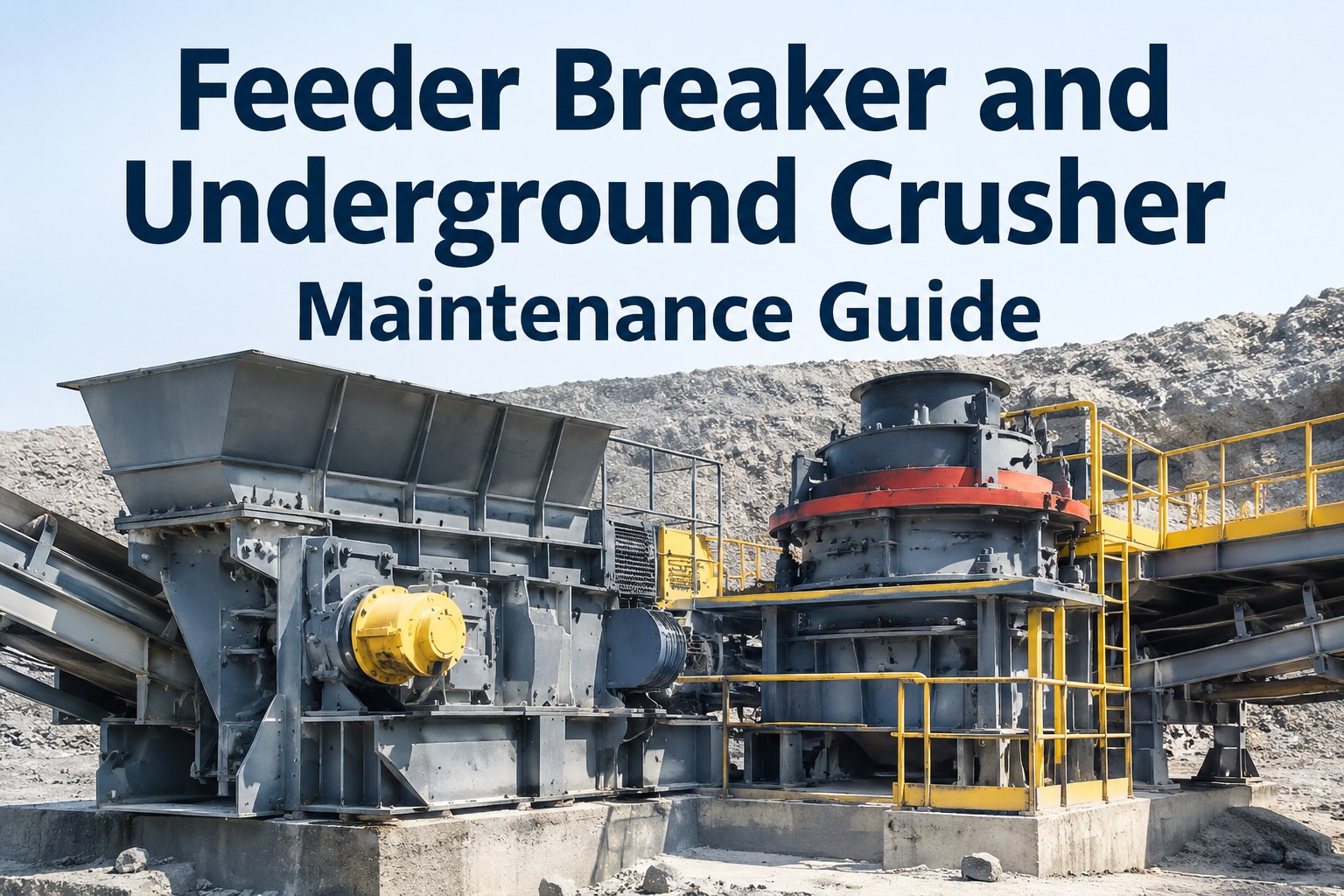
A feeder breaker is two machines in one: a chain-and-flight conveyor that meters material, and a crushing roll that breaks it down. Both are lined with consumable wear parts that grind away by design. The only question is whether you replace them on your plan — or on the machine's, mid-shift, underground.
Feeder breakers and underground crushers sit at a chokepoint: they take run-of-mine material from haulage, break oversize lumps down to a conveyable size, and meter it onto the belt at a controlled rate. When they stop, the material behind them backs up and production halts — and because they live underground in confined space, a repair that would be routine on the surface becomes a difficult, access-limited job. The whole discipline of feeder breaker maintenance is built around one fact: this is a wear machine, so managing its consumable components is managing the machine.
The wear componentsthe consumables that define the machine
Almost everything that fails on a feeder breaker is a designed wear part — a component meant to be sacrificed and replaced so the expensive structure survives. Knowing them, and knowing how each wears, is the core of the inspection. These are the parts you're watching, measuring, and changing.
The pick segments on the crushing roll do the breaking and take the hardest abrasion and impact. They're replaceable — typically held by retaining rings for quick change-out — and worn picks crush poorly, produce oversize, and raise load on everything else. Inspect the pick pattern for wear, missing teeth, and damage, and measure remaining life against a discard point.
The drag chain and its flight bars move material through the machine and wear steadily against abrasive rock. Inspect for chain stretch and worn links, cracked or worn flights, and correct tension — too tight accelerates wear and energy use, too loose risks the chain jumping the sprocket. Chain is changed at detachable links, matched to markings.
Drive and tail sprockets wear where they engage the chain, and the conveyor deck — often a hardfaced or chromium-carbide overlay surface — erodes under the dragged load. Worn sprocket teeth accelerate chain wear and vice versa, so they're inspected and often replaced together.
The pre-screen grid intercepts tramp material — metal, wood, oversize rock — before it reaches the crusher, and hopper liners take the impact of dumped loads. Both wear and both protect costlier components downstream, so a damaged grid that's letting tramp through is an urgent, not a cosmetic, finding.
The common thread is that none of these is a pass/fail check — each is a measurable wear curve. A pick isn't "good" or "bad"; it's 60% worn and trending toward change-out. Capturing that measurement over time is what turns wear from a surprise into a schedule. Book a demo to measure and trend wear-part life
Protect the drive trainwhat the wear parts are there to save
Every wear component exists to absorb punishment so the drive train doesn't. The motor, reducer, and couplings that power the crushing roll and the chain are the expensive heart of the machine — low-speed, high-torque units built to survive surge loading — and protecting them is the real payoff of diligent wear management.
Check the motor and right-angle or inline reducer for temperature, oil level and condition, and abnormal noise. A crusher stalling on oversize material hammers the whole drive, so surge events are worth logging.
Drive and gearbox couplings must be correctly torqued to OEM spec — a loose or worn coupling is both a failure point and a symptom. Verify torque and inspect for wear and misalignment as a routine check.
Rotating and crushing zones demand intact guarding, and any work in the crushing chamber requires proper isolation and lockout. A missing or defeated guard is an immediate stop-work item, not a note for later.
Two things protect the drive train above all: keeping the wear parts in good order so load stays normal, and keeping tramp material out so the crusher never takes an impact it wasn't designed for. Correct chain tension, sharp picks, and a sound grid screen aren't just about crushing well — they're what keep surge loads off the gearbox. Start free and template drive-train and guarding checks
Measure wear, plan change-outthe strategy that beats a wear machine
Here's the maintenance philosophy that separates a well-run feeder breaker from a constant firefight: because the machine's failures are predictable wear, you can get ahead of every one of them — if you measure. The OEM approach is explicit about it: plan component change-out intervals around known wear patterns. That only works if you're capturing the wear.
The practical method is to record a measurement each inspection — remaining pick height, chain stretch, liner thickness — and trend it. A single reading tells you little; a trend tells you when a part will hit its discard limit, which lets you schedule the change-out into a planned maintenance window instead of taking it as an unplanned breakdown mid-production. It also feeds parts planning directly: if you know the picks will be due in three weeks, you order and stage them now, so the change-out is a quick swap rather than a wait for delivery to a remote site. This is where wear measurement, work orders, and parts inventory connect into one loop — the measurement predicts the need, the need becomes a scheduled work order, and the work order draws on a part you already stocked because the trend warned you. Guessing change-out by calendar wastes good parts or misses worn ones; measuring gets both timing and cost right. Book a demo to connect wear trends to parts and work orders
Underground makes it harderwhy access and connectivity shape the program
Everything about feeder breaker maintenance is complicated by where the machine lives. Underground, access is confined, moving parts and spares is a logistical exercise, and the crushing chamber is an awkward, hazardous place to work. Two practical consequences follow, and both shape how the maintenance program has to run.
Underground fixed plant often sits beyond network coverage, so an inspection tool that needs a signal fails at the machine. Crews need to complete wear measurements and checks on a device at the crusher, capturing photos of a cracked flight or a worn pick pattern, with everything syncing when they're back in coverage — not written on paper and keyed in later, if at all.
You can't nip to a store underground. When access is this limited, the part you didn't stage is the breakdown you can't fix — so wear-driven parts planning matters more here than almost anywhere. Knowing a pick set or chain is due, and having it staged near the machine before the window, converts a potential multi-shift stoppage into a planned swap.
Together these turn feeder breaker maintenance into a planning discipline as much as a wrenching one. The crews measure wear offline at the machine, the trends predict the change-outs, the parts are staged before they're needed, and the work is done in a planned window with everything on hand. That's how a wear machine in a hard-to-reach place stays a metered, reliable chokepoint instead of a recurring production stoppage. Book a demo to run offline inspections tied to staged parts Or start free and bring your underground plant into one system
From a fixed-plant maintenance lead
The feeder breaker was our worst offender for a while — not because it's a bad machine, but because we treated its wear parts like they'd surprise us. Picks would wear down, crushing would go to hell, the drive would start labouring, and we'd change them reactively, usually mid-shift with the belt banked up behind us.
What flipped it was just measuring. We started logging pick height and chain stretch every inspection, right there at the machine on a tablet, offline. Once we could see the trend, we knew a fortnight out when the change was due, staged the parts down there ahead of time, and did it in a planned window. Same machine, same wear — but now on our clock. The stoppages basically went away.
Frequently asked questions
What is a feeder breaker and what does it do?
A feeder breaker is a material-handling and primary crushing machine that combines two functions in one unit: a chain-and-flight drag conveyor that feeds and meters material, and a crushing roll fitted with pick or tooth segments that reduces oversize lumps to a conveyable size. Run-of-mine material is dumped from haulage into the machine's hopper, the chain conveyor drags it horizontally into the crushing zone, the roll breaks it down to a controlled product size, and the machine discharges it onto a belt conveyor at a metered rate. In effect it sits at the transfer point between mobile haulage and fixed belt conveyors, providing size reduction, a controlled feed rate, and often some surge storage capacity. Feeder breakers are widely used in underground and open-pit mining of friable minerals such as coal, salt, and gypsum. A closely related machine is the mineral sizer, which uses toothed rolls for size reduction and is often used in series with or in place of a feeder breaker for harder or finer sizing duties. Because the machine both crushes and conveys abrasive material continuously, it is built around consumable wear components designed to be replaced.
What are the main wear parts on a feeder breaker?
The main wear parts are the components deliberately designed to absorb abrasion and impact so the machine's structure survives. The crusher picks or teeth on the crushing roll take the hardest duty, doing the actual breaking; they are replaceable, commonly held by retaining rings for quick change-out, and worn picks crush poorly and increase load on the rest of the machine. The drag chain and its flight bars move material through the machine and wear against abrasive rock, requiring inspection for chain stretch, worn links, and cracked flights, as well as correct tension. The drive and tail sprockets wear where they engage the chain and are often replaced together with it, since a worn sprocket accelerates chain wear and vice versa. The conveyor deck, frequently a hardfaced or chromium-carbide overlay surface, erodes under the dragged load. And the pre-screen grid and hopper liners take impact and intercept tramp material, protecting downstream components. Because all of these are consumables on a wear curve rather than pass/fail items, the key to managing them is measuring remaining life and trending it toward a defined change-out point.
How do you plan feeder breaker component change-outs?
You plan change-outs by measuring wear and trending it, rather than guessing by the calendar. The approach equipment manufacturers recommend is to plan component change-out intervals around known wear patterns, which only works if the wear is captured. In practice, each inspection records a measurement for the key consumables: remaining pick height, chain stretch, and liner thickness. A single measurement means little, but a trend over several inspections reveals when a part will reach its discard limit, letting the replacement be scheduled into a planned maintenance window instead of an unplanned mid-production breakdown. That trend also feeds parts planning: if the picks will be due in a few weeks, they can be ordered and staged in advance, which matters enormously underground where a part not on hand cannot simply be fetched. The result is a connected loop — the measurement predicts the need, the need becomes a scheduled work order, and the work order draws on parts already stocked. Compared with calendar-based change-outs, which either waste serviceable parts or miss worn ones, this gets both timing and cost right.
Why is underground crusher maintenance more difficult?
Underground crusher and feeder breaker maintenance is harder mainly because of access and environment. The machine sits in confined underground space, so moving replacement parts and tools to it is a logistical exercise, and working in and around the crushing chamber is awkward and hazardous, requiring proper isolation and lockout. A repair that would be straightforward on the surface becomes slow and difficult underground, which raises the cost of every unplanned failure. On top of that, these locations often sit beyond network coverage, so inspection and record-keeping have to work without a signal. Two consequences follow for the maintenance program. First, inspection tools need to function fully offline, letting crews complete wear measurements and capture photos on a device right at the machine and sync later, rather than relying on paper that gets transcribed afterward or not at all. Second, parts planning becomes critical, because you cannot quickly obtain a part underground — the component that was not staged in advance is effectively a breakdown you cannot fix promptly. This is why wear-driven change-out planning, which stages the right parts before they are needed, delivers even more value underground than it does on the surface, converting potential multi-shift stoppages into planned swaps.
How does software improve feeder breaker maintenance?
Software improves feeder breaker maintenance by turning wear management into a measured, connected process rather than a reactive one. Custom inspection templates let crews run a consistent, structured check of the picks, chain and flights, sprockets, liners, grid, and drive train every time, so nothing is skipped. Wear-measurement capture records remaining pick height, chain stretch, and liner thickness at each inspection and trends them over time, so a component approaching its discard limit is visible weeks ahead rather than discovered at failure. Offline capability is essential underground, allowing full inspections and photo capture at the machine with no signal and automatic syncing when connectivity returns. When a measurement crosses its limit, it can generate a work order automatically, ensuring the change-out is scheduled rather than forgotten. And integrated parts and inventory tracking, informed by the wear trends, ensures the specific consumables that wear on the machine are stocked and staged before they are needed — which is decisive underground where a missing part cannot be quickly sourced. Together these connect the full loop of measure, predict, schedule, and stock, so a machine designed to wear out is serviced on the operation's schedule instead of failing on its own.
Turn predictable wear into planned maintenance
HVI templates the feeder-breaker and underground-crusher inspection, captures wear measurements on picks, chain, and liners so change-out is predicted, works fully offline at the machine, and turns a part reaching its limit into a work order that draws on staged inventory. The wear was always going to happen — this is how you meet it in a planned window with the parts already on hand, instead of mid-shift with the belt banked up behind you. Live in under two weeks.
No credit card · Offline wear measurement & parts staging from day one · Built for underground operations worldwide