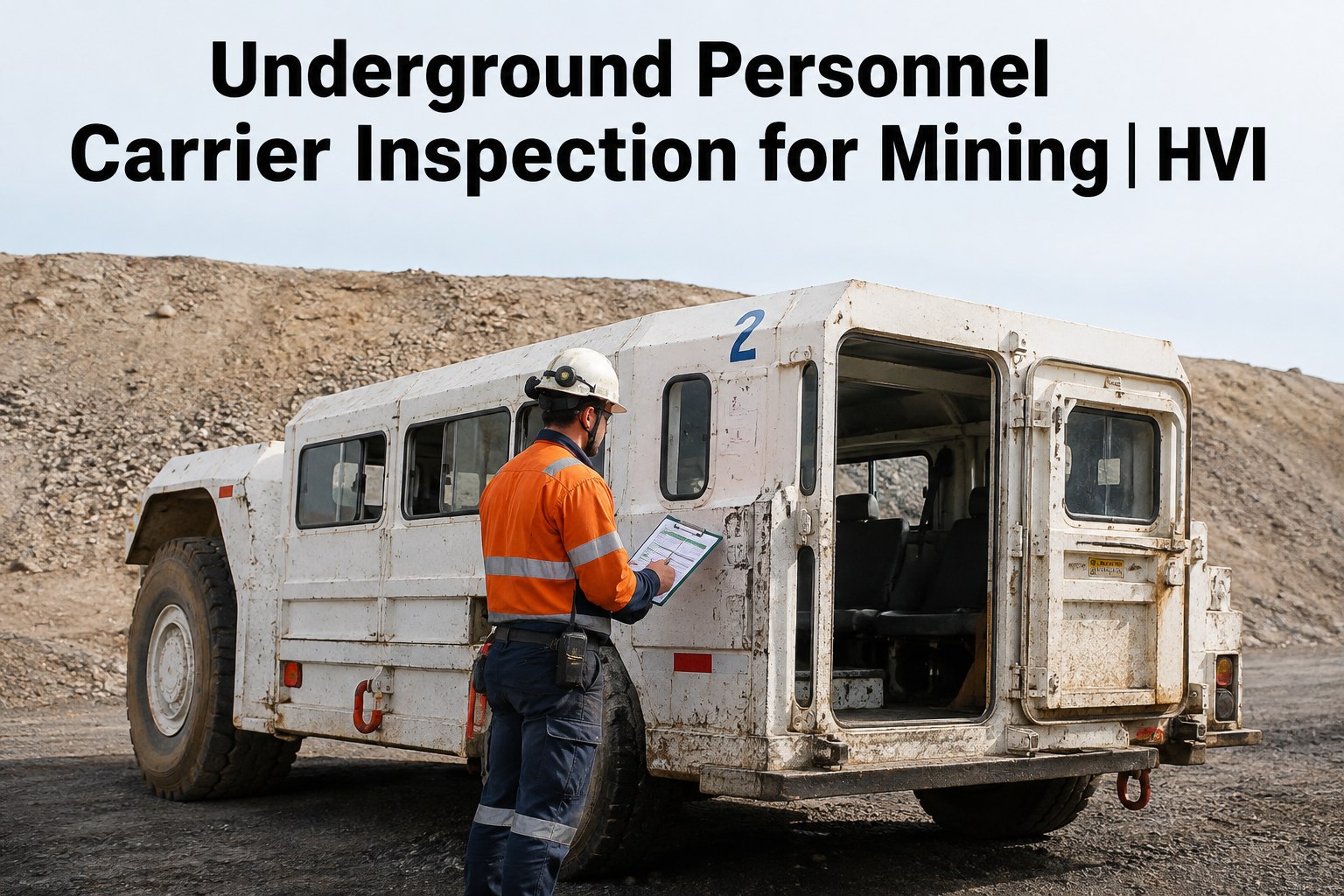
It's 5:40 in the morning and twelve of your crew are standing at the portal waiting for a ride. The underground personnel carrier that takes them down has a soft brake pedal the night shift mentioned to the supervisor but never wrote down, and the fire suppression bottle hasn't had its gauge checked in weeks because nobody owns that checklist. Underground personnel carrier inspection is the highest-consequence check on any mine site, yet these units routinely get the least attention because they are not production equipment. They don't move ore, so they slip outside the production maintenance routine, and the people riding in them carry the risk. This guide covers what a proper personnel carrier inspection looks like, why light vehicles fall through the cracks, and how to close that gap before it becomes an incident. If you want to see how this works on your own units, book a 30-minute walkthrough and we'll show you on your actual fleet.
The vehicle that carries your people gets the least inspection attention on site
Production gear gets checked because it makes money. Personnel carriers get skipped because they "just drive people." That logic fails the first time brakes fade on a 1-in-7 decline with eleven seats full.
What an unchecked personnel carrier actually costs you
These are not abstract risks. Each number below is a cost, a delay or a consequence that lands on your desk when a light vehicle carrying people fails underground.
A loaded crew bus underground carries more people per vehicle than anything else in your fleet. One brake failure affects a dozen families, not one driver.
Steep ramp grades put sustained thermal load on service brakes. A vehicle that passes a flat-lot brake test can fade badly on a loaded descent.
In a confined underground environment, an engine fire can reach untenable conditions in minutes. A discharged or corroded suppression bottle is not a defect — it is an absent life-safety system.
That is the number most sites find when they audit their light vehicle records. Not because people are lazy — because nobody assigned the task and there is no system to catch the gap.
Underground personnel carrier inspection checklist: the eight systems that matter
Every item below is a life-safety check, not a maintenance nicety. If any one of these fails underground with a full crew aboard, you are dealing with an emergency, not a breakdown.
Brake System
Pedal feel, travel distance, parking brake hold on grade, visible line condition, fluid level and any sign of fade. Test under load, not just in the yard. A soft pedal that "still stops" on the surface can become no brakes on a loaded descent.
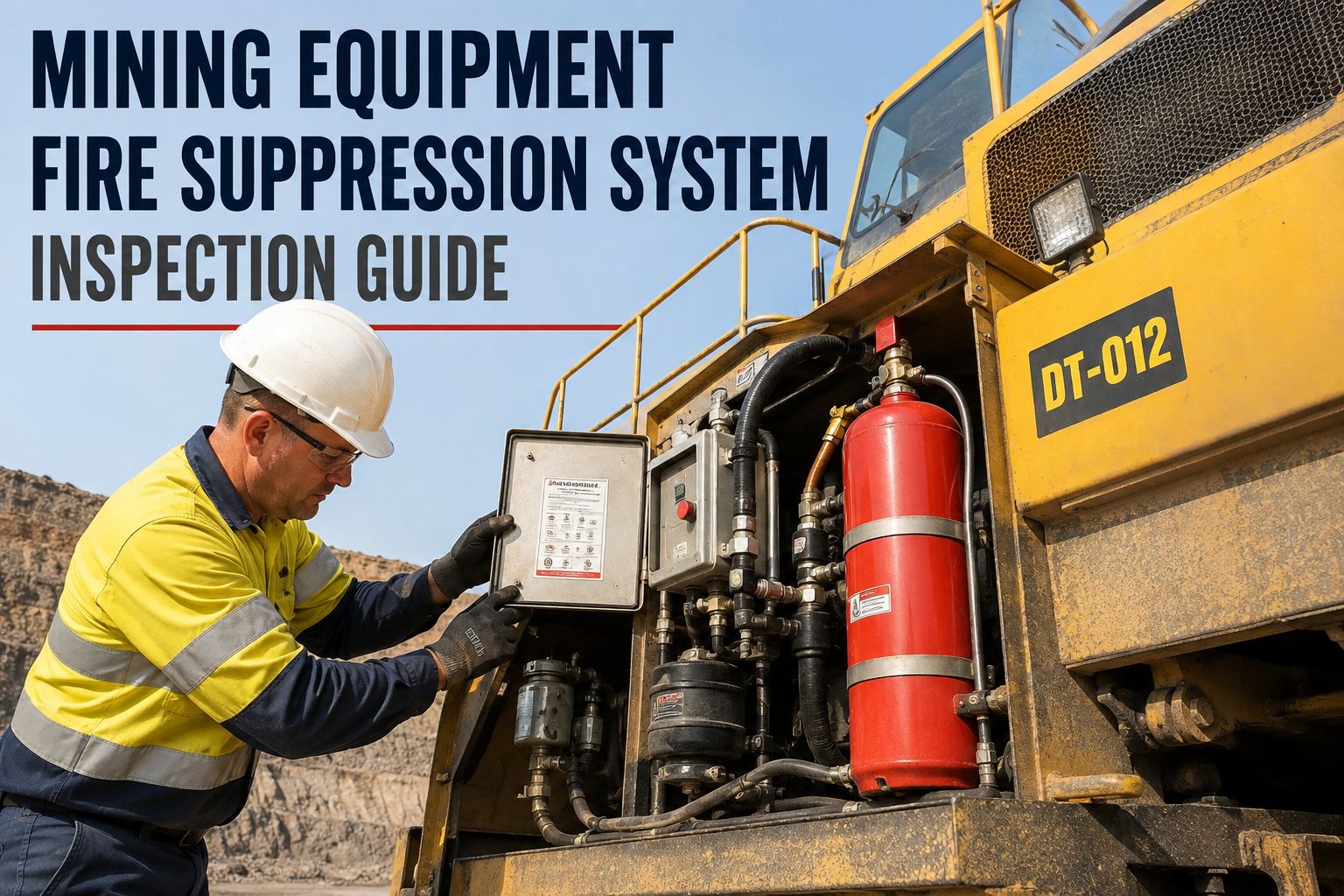
Fire Suppression
Bottle gauge in the green, nozzle condition and aim, actuator function, last service date and manual pull accessibility. In a confined space this is the difference between a scare and a fatality. Photo evidence should be mandatory, not optional.
Seating & Restraints
Every seat bolted and intact, every belt present and functional, no torn webbing, no missing buckles. Count the seats against the capacity plate. If the plate says 10 and there are 12 people aboard, you have an overloading problem before the vehicle even moves.
Canopy & Structure
ROPS/FOPS canopy integrity, mounting bolts torqued, no cracks or deformation from previous contact. Underground, the canopy is what stands between your crew and a rockfall or a low back. A bent canopy that "still looks fine" has already absorbed its design load.
Lighting & Visibility
Headlights, tail lights, brake lights, reverse alarm, beacon function, mirror condition and wiper operation. Underground there is no ambient light. A dead headlight is not a minor defect — it is a vehicle that cannot see or be seen.
Communication Equipment
Two-way radio or leaky-feeder handset present, charged and tested. If the carrier breaks down or catches fire mid-ramp, the operator's ability to call for help is the only lifeline. A radio with a dead battery is the same as no radio.
Exhaust & Emissions
Exhaust system integrity, DPF condition where fitted, no visible smoke beyond normal, no exhaust leaks into the cabin. Every litre of diesel burned underground adds to the ventilation load. A poorly maintained engine is taxing the system that keeps everyone breathing.
Tyres & Steering
Tread depth, sidewall condition, inflation pressure, wheel nut torque indicators and steering free play. Underground roads are rough, wet and tight. A tyre failure or steering fault in a narrow drive with passengers aboard leaves no room for error.
Why light vehicles fall outside the production inspection routine
This is the pattern on almost every site: the haul trucks, loaders and drills get rigorous pre-starts because downtime costs production. The personnel carriers, mine buses and light vehicles get a glance and a wave because they are "just transport." The result is a two-tier safety system where the vehicles carrying the most people get the least scrutiny.
What happens without a system
- Night shift mentions a soft brake pedal to the supervisor. It is never written down. Days shift does not know.
- The fire suppression bottle was last checked 14 months ago. Nobody knows because there is no record.
- The capacity plate says 10. Twelve people climb in because the alternative is a second trip and the crew is already late.
- The pre-start book for the personnel carrier has not been filled in for three weeks. Nobody noticed because nobody checks.
What happens with HVI
- The operator scans a QR code on the dash, the personnel carrier checklist loads on their phone, and a soft brake pedal becomes a flagged defect with a photo — instantly visible to the maintenance team.
- Fire suppression requires a photo of the gauge before the checklist can be submitted. No photo, no pass.
- The capacity plate is a checklist item with a photo requirement. Overloading is documented before it becomes normal.
- Missed inspections trigger an alert. If the carrier has not been checked by 6:00 AM, the supervisor knows before the crew does.
The gap is not about effort. Your people are not careless. The gap exists because there is no system that assigns, tracks and verifies light vehicle inspections the same way production equipment is tracked. See how HVI closes that gap on a live demo with your own vehicle list.
How HVI keeps your underground personnel carriers inspected and audit-ready
Four capabilities that directly solve the problems above, built for fleet-heavy operations running mixed equipment in mining, construction and industrial sites.
QR-Loaded Templates
Scan the QR code on the dash and the correct personnel carrier checklist loads instantly. No app searching, no wrong form, no "I couldn't find it." Works offline underground and syncs when the device reconnects.
Mandatory Photo Evidence
Fire suppression gauge, brake components, seating and capacity plate all require a photo before the checklist can be submitted. You get timestamped, photo-backed proof that the check actually happened — not a ticked box on a form nobody filled in.
Dispatch Block on Critical Defects
A failed brake check or a discharged fire bottle triggers an automatic dispatch block. The vehicle cannot be assigned until the defect is cleared by a qualified person. No more "we'll get to it after the shift."
Audit-Ready Records
Every inspection is timestamped, geotagged and stored with photos. When the client, the regulator or the insurer asks for your personnel carrier inspection history, you pull it in seconds — not days of digging through filing cabinets and text messages.
Stop hoping the night shift wrote it down
See HVI running on your own personnel carriers. Book a 30-minute demo and we will load your actual vehicle list, build your checklist and show you the dispatch block in action.
What a digital personnel carrier inspection looks like in practice
This is the actual sequence your operator follows, from the moment they reach the vehicle to the moment the record is stored. Total time: under five minutes.
Scan the QR code
The operator points their phone at the QR code on the dash or door frame. HVI loads the correct checklist for that specific vehicle — not a generic form, the one built for that unit's configuration, seating layout and suppression system.
Walk the checklist
Brakes, suppression, seating, canopy, lights, radio, exhaust, tyres. Each item is a tap. Critical items require a photo. The whole walk takes three to four minutes. If the site has no signal, everything is captured offline and syncs later.
Defects become work orders
A flagged item — say, a cracked seat belt buckle or a low suppression gauge — automatically creates a work order assigned to the right technician with the photo attached. No phone calls, no text messages, no lost sticky notes.
Critical defects block dispatch
If the defect is classified as critical — brakes, fire suppression, steering — the vehicle is blocked from dispatch until a qualified person clears it. The supervisor sees the block in real time. The crew waits for a safe vehicle, not a convenient one.
Record stored, audit-ready
The completed inspection is timestamped, geotagged and stored with all photos. Six months from now, when someone asks "was this vehicle checked on the 14th?" you pull the record in seconds. Start logging inspections free and see the difference on your first shift.
The bottom line on underground personnel carrier inspection
The risk is real
Personnel carriers carry more people per vehicle than anything else in your fleet, on steep grades, in confined spaces, with no ambient light. The consequence per failure is the highest of any asset you manage.
The gap is cultural
Light vehicles fall outside the production inspection routine because they do not make money. The fix is not more training or more posters — it is a system that assigns, tracks and verifies every check.
The fix is simple
QR-loaded checklists, mandatory photo evidence, automatic work orders and dispatch blocks on critical defects. Five minutes per vehicle per shift. Walk through it on your own units and see how it fits your operation.
I used to find out about brake problems on the crew bus when the afternoon shift supervisor mentioned it in passing at the crib room. Now I get a notification with a photo before the vehicle leaves the surface. Last month we caught a suppression bottle that had been sitting on empty for who knows how long. That one check paid for the whole system.
Underground personnel carrier inspection: your questions answered
How often should an underground personnel carrier be inspected?
What is the most commonly missed item on a personnel carrier check?
Does HVI work underground where there is no phone signal?
Can I use HVI for both production equipment and light vehicles?
How do I enforce the passenger capacity plate?
Your crew deserves a checked vehicle, not a lucky one
Book a 30-minute demo and we will load your personnel carriers, build your inspection template and show you the dispatch block on a live critical defect. Or sign up free and start logging inspections today.
Free to start — Works on any phone — No card needed