The most expensive number in a grinding mill isn't the liner — it's the reline date, and getting it wrong costs you either way. Mill liner wear is slow, uneven, and hidden inside a rotating drum, so sites either reline too early and waste liner life and production days, or too late and risk the mill shell. The way out isn't guessing; it's turning thickness measurements into a wear-rate trend that forecasts the change point. This page shows how to plan the reline on data. Book a demo to see wear trended to a forecast reline date.
Reline on Data, Not on a Guess
A liner that's changed too early wastes life and production; one changed too late risks the mill shell. The answer is a wear-rate trend that projects the change point — so the reline lands in a planned shutdown, right when the liner's earned it.
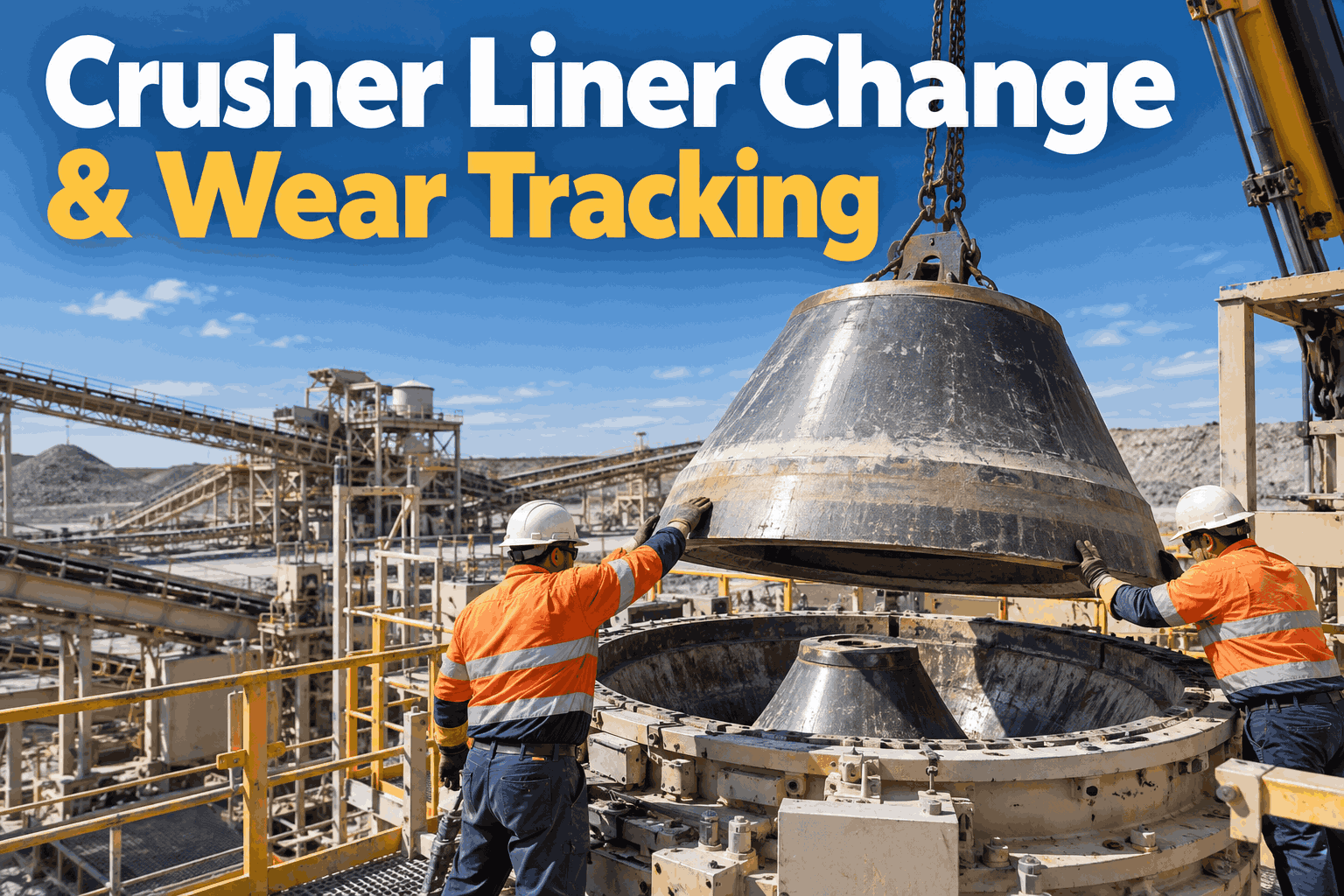
A grinding mill is one of the most expensive things a processing plant owns, and the liner is the sacrificial layer protecting its shell from ore and grinding media. Because a reline is a major planned shutdown — not a quick swap — the entire skill is timing it: late enough to use the liner fully, early enough to protect the shell and hit a scheduled window.
Why the Reline Date Is the Whole Game
Every dollar in mill liner management flows from one decision: when to reline. Miss it in either direction and it costs real money — which is exactly why guessing is so expensive.
Wasted liner life & lost days
Reline before the liner's spent and you throw away usable liner — expensive alloy or rubber, and the production days a full reline costs. You paid for wear you never used.
Shell damage & unplanned outage
Run past the limit and ore reaches the mill shell — the one part you can't easily replace. Now it's an emergency reline outside a planned window, at the worst possible cost.
The sweet spot is narrow: reline the liner as late as you safely can, but inside a planned shutdown, before the shell is at risk. Hitting that window by eye or by calendar is luck. Hitting it consistently takes a wear trend that tells you the date in advance — the difference between a scheduled reline and a scramble. Book a demo to see the reline window forecast.
How Liner Wear Is Actually Measured
You can't trend what you don't measure. Liner thickness gauging ranges from a quick manual check to a full digital scan — and the method sets how good your forecast can be.
Visual inspection
The eyeball check on a shutdown. Fast and free, but subjective, misses hard-to-reach areas, and gives no number to trend — a starting point, not a program.
Ultrasonic & physical gauging
Ultrasonic thickness gauging on steel liners, or a physical probe (a nail into rubber) on rubber liners. These give real thickness numbers at set points — the raw data a trend is built from.
3D laser scanning
A full scan captures millions of thickness points across the whole mill in one shutdown — the most complete picture, mapping the wear pattern rather than a handful of spots.
Whatever the method, the value is only unlocked when the readings are captured against the mill, at consistent points, over time. A number scribbled on a shutdown sheet and lost is worth nothing; the same number logged to the liner's record becomes the second point on a wear curve. Capturing it consistently is where monitoring starts. Start free and log thickness readings against each mill.
From Measurement to Wear Rate to Forecast
A single thickness reading tells you where the liner is today. Two or more, spaced over time, tell you how fast it's going and when it'll get to the limit. That's the whole engine of reline planning.
Measure at fixed points, repeatedly
Take thickness at the same locations every shutdown. Consistency is what makes the readings comparable — a wear rate needs the same spot measured twice.
Calculate the wear rate
Thickness lost divided by hours or tonnes run gives the wear rate — millimeters per period, per location. That rate is the slope of the curve heading toward the limit.
Project the reline date
Extend the wear rate from today's thickness to the change limit and you have a forecast date — the input every reline shutdown, liner order, and crew booking hangs on.
This is where mill liner management stops being reactive: a forecast reline date, updated every time you take a fresh reading, lets you book the shutdown weeks out, order the liner set against its lead time, and stage the reline crew — instead of discovering at the next inspection that you're already past due. The trend does the planning for you. Book a demo to see the wear rate projected to a date.
Liner Wear Isn't Uniform — Measure the Critical Path
Here's what makes a single average reading dangerous: a mill liner doesn't wear evenly. Some zones wear far faster, and it's the fastest-wearing spot — not the average — that sets your reline date.
Wear rates differ along the mill length — the ends and the belly rarely wear at the same pace.
Lifter bars take the lifting impact and often wear differently from the shell plates between them.
Flow patterns and charge behavior create high-wear zones that outrun the rest of the mill — the true critical path.
This is why the forecast has to follow the fastest-wearing critical zone, not a mill-wide average that hides it. Track the hot spots individually, and the reline date is set by the part that actually reaches the limit first — which is the whole point of measuring at fixed points rather than eyeballing the drum. Start free and trend each wear zone separately.
How HVI Turns Readings Into a Reline Plan
The whole strategy depends on measurements, trends, and the schedule living in one place — not a scan report in one folder and a shutdown plan in another. Three capabilities connect them.
Thickness capture per zone
Log liner thickness at fixed measurement points each shutdown — feed, discharge, belly, lifters — against the mill's record, so every reading is comparable and nothing is lost between shutdowns.
Wear-rate analytics & forecast
Trend the wear rate per zone and project each toward its limit — the fastest zone sets the forecast reline date, updated with every new reading.
Shutdown & work-order planning
The forecast date drives a planned reline shutdown, the liner order against its lead time, and the crew booking — all as scheduled work, with the mill's full wear history on record.
The result is a grinding mill you plan around instead of react to: every liner reading trended, the reline date forecast and refreshed, the shutdown booked in advance, and the shell protected because you never run blind past the limit. That's what turns liner wear from a shutdown surprise into a line on the plan. Book a demo to see it on your mills. Start free and forecast your next reline.
From a reliability manager who stopped relining by calendar
We used to reline on a fixed schedule and it was always wrong — either we pulled liners with real life left, or we cut it too fine and sweated the shell. Once we logged thickness at the same points every shutdown and let the wear rate set the date, the reline became a planned line on the calendar. We order liners against their lead time now, and haven't been caught past the limit since.
Frequently asked questions
How is mill liner wear measured?
By gauging liner thickness, using one of several methods: visual inspection (fast but subjective, no number to trend), ultrasonic thickness gauging on steel liners, physical probing on rubber liners, or 3D laser scanning that captures millions of thickness points across the whole mill in a single shutdown. The key in every case is measuring at the same fixed points repeatedly, so the readings can be compared over time to calculate a wear rate — a one-off number tells you today's thickness but nothing about when you'll need to reline.
When should you reline a grinding mill?
As late as you safely can, but inside a planned shutdown and before the liner wears through to the point of risking the mill shell. Reline too early and you waste usable liner life and production days; too late and ore can damage the shell, forcing an emergency outage. The reliable way to hit that window is to trend the wear rate from repeated thickness measurements and forecast the date the liner reaches its change limit, then schedule the reline into a planned shutdown around that date.
Why does mill liner wear need to be trended, not just inspected?
Because a single inspection tells you where the liner is, not when it will reach its limit. Only a trend — thickness measured at the same points over time — gives you a wear rate, and only a wear rate lets you forecast the reline date. That forecast is what makes planning possible: booking the shutdown, ordering liners against their lead time, and staging the crew. Inspecting without trending leaves you discovering you're past due at the worst moment instead of planning around a known date.
Does a mill liner wear evenly?
No — wear varies across the mill. The feed end, discharge end, and belly wear at different rates, lifter bars often wear differently from the shell plates, and flow patterns create local high-wear hot spots. Because the fastest-wearing zone reaches the limit first, that critical path — not a mill-wide average — sets the reline date. This is why measuring at fixed points and trending each zone separately matters: an average can hide a hot spot that's about to force an early reline.
How does software help with mill liner reline planning?
A platform like HVI captures thickness readings at fixed measurement points against each mill, trends the wear rate per zone, and projects the reline date from the fastest-wearing zone — updating the forecast with every new reading. That forecast drives the planned shutdown, the liner order against its lead time, and the crew booking, all as scheduled work with the mill's full wear history on record. It turns a folder of disconnected scan reports into a reline date you can plan a shutdown around, instead of relining by calendar or reacting to a surprise.
Forecast the Reline, Protect the Shell, Plan the Shutdown
Capture liner thickness per zone each shutdown, trend the wear rate, and forecast the reline date from the fastest-wearing critical path — so the change lands in a planned shutdown, the liners are ordered against their lead time, and the mill shell never runs at risk. Live in under two weeks, trusted by 25,000+ users worldwide.
No credit card · No hardware · Wear-tracking analytics ready on day one