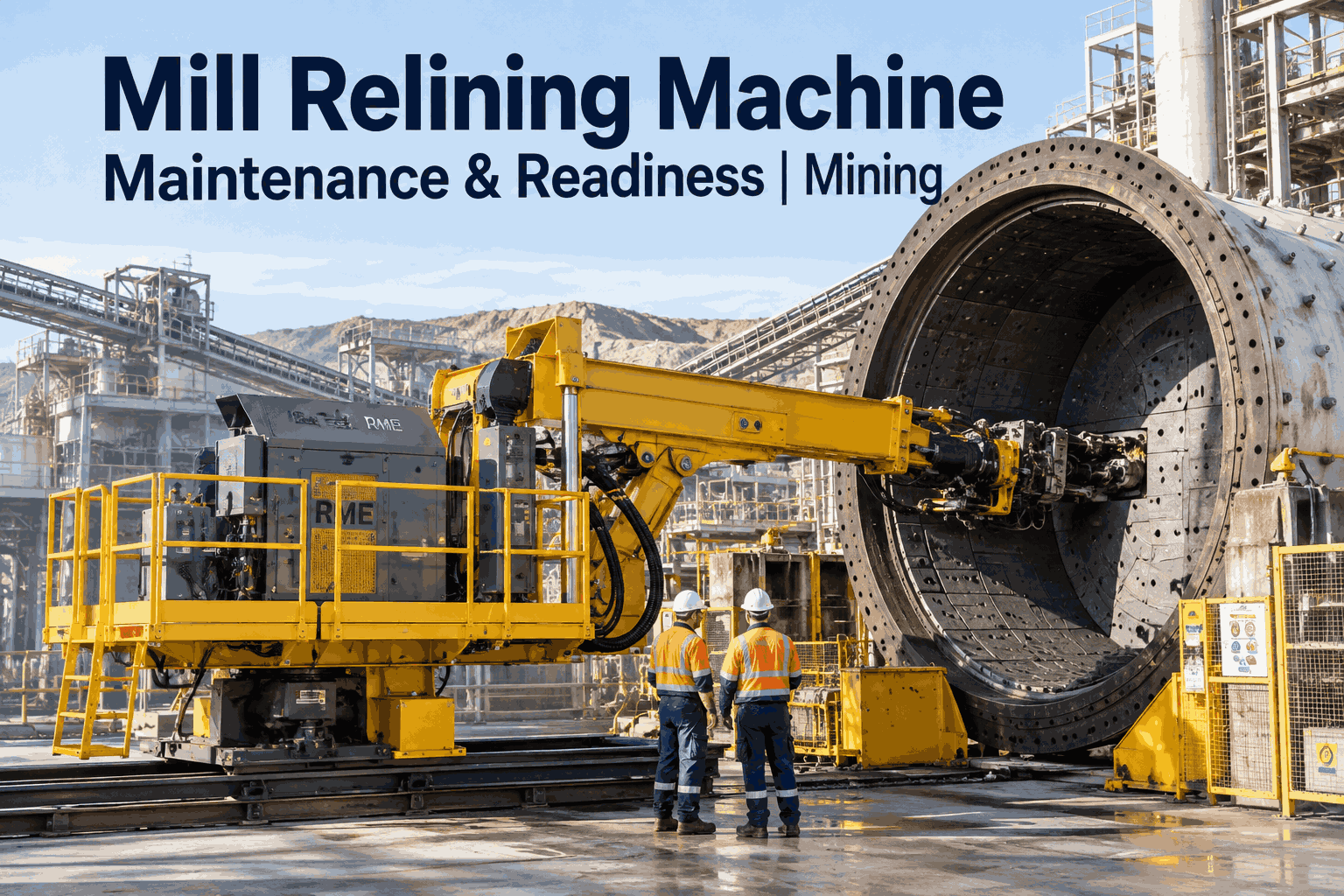
A mill relining machine sits idle for most of the year, then becomes the single most critical piece of equipment in the plant for a few days. When the shutdown clock starts and the reline crew is waiting, an MRM that won't function-test or has a leaking hydraulic ram isn't a minor delay — it's holding up the entire mill restart. And a machine used two or three times a year rarely gets maintained between relines. This page shows how to keep the reline machine ready. Book a demo to see MRM readiness checks scheduled.
The Reline Clock Is Running — Is the Machine Ready?
A mill relining machine is idle 350 days a year, then shutdown-critical for three. The time to find a leaking ram or a dead control is before the crew arrives — not mid-reline with the mill down and the whole plant waiting.
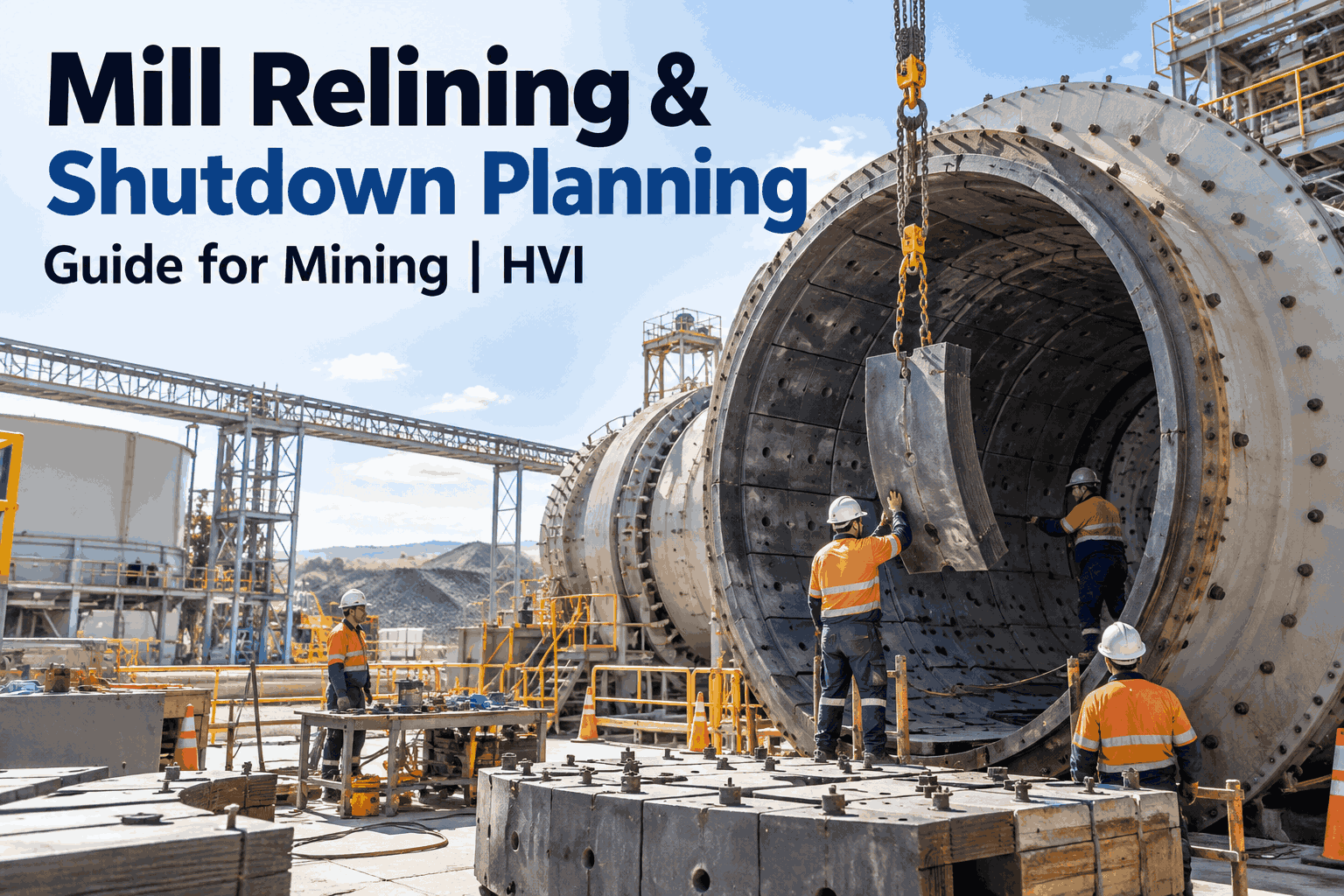
Grinding mill relining is one of the biggest planned-downtime events a processing plant runs, and the mill relining machine — a heavy-capacity hydraulic manipulator working in a confined space over a crew — is at the center of it. Everything about the reline schedule assumes the machine works. The one thing that assumption skips is that the machine has been sitting untouched since the last reline.
The One Machine That Can't Fail During a Reline
Most equipment failures cost you that machine. An MRM failure costs you the whole shutdown — because until it's fixed, no liners move, the crew stands idle, and the mill can't restart. That's what makes it the highest-stakes machine in the building for the days it's in use.
A site relines maybe two or three times a year, so the MRM sits parked for months between events — long enough for seals, hydraulics, and controls to quietly degrade with no one running it.
During the reline it's the pacing item — every liner passes through it. A fault mid-reline stops liner handling dead and pushes the mill restart back by the length of the repair.
It moves multi-tonne liners in a confined space above the crew. A degraded control or hydraulic fault isn't just downtime — it's a safety event waiting for the worst moment.
Put those together and the conclusion is blunt: the reline machine is the one asset where "we'll deal with it when we need it" is the most expensive possible policy. Its readiness has to be built and verified before the shutdown, not discovered when the crew powers it up. Book a demo to see readiness verified before the reline.
Why an Idle Machine Is a Risky Machine
The counterintuitive part is that sitting still is what makes the MRM unreliable. A machine run every day tells you when something's wrong; one parked for months hides its faults until you ask it to work. Here's what quietly goes bad between relines.
Seals and rams that sat unpressurised can weep or fail on first load — the classic idle-machine failure that only shows under working pressure.
Wireless controllers, PLCs, and backup batteries drift, discharge, or fault while powered down for months — and you find out on the first function test, if you run one.
Hydraulic oil and greased points sit, separate, and attract moisture. What was fine at the last reline may be contaminated or dry by this one.
The niggle from the last reline — a sticky axis, a flaky control — often never gets recorded, so it's rediscovered the hard way next time.
None of this is exotic; it's exactly what happens to any complex hydraulic machine left standing. The fix isn't heroics during the shutdown — it's a scheduled readiness check ahead of it, treating the idle period as the risk it is rather than assuming the machine froze in working order. Start free and schedule a pre-reline readiness check.
The Systems to Inspect on a Mill Relining Machine
An MRM is a stack of demanding systems, each of which can stop a reline on its own. A readiness inspection has to cover all of them — not just the ones that failed last time.
Hydraulic system & rams
The muscle of the machine. Check for leaks, seal condition, ram operation, fluid level and quality, hose and fitting integrity — anything that fails under load fails at the worst time.
Boom & multi-axis manipulator
The multi-axis boom and grapple that position each liner. Check every axis for smooth, full-range movement, and the grapple-roll axis that corrects deflection for precise bolt-hole alignment.
Wheels, drive & steering
The independently driven wheels and steering that let the beam align with the mill port and enter the mill. Check drive motors, tires, and the lateral-movement function.
Wireless controls & safety systems
The remote wireless controls, E-stops, interlocks, and safety-rated control system that protect the crew. These are the most idle-sensitive items and the ones a function test must prove.
Structure & load path
The beam, stand, walkways, and load-bearing structure that hold multi-tonne liners over the crew. Check welds, fasteners, wear pads, and fall-protection points.
Rated capacity & certification
Confirm the machine is within its rated capacity for the liners it'll handle, and that lifting and safety certifications are current before it goes to work.
The point of covering every system is that a reline machine is only as ready as its weakest one — a perfect hydraulic system means nothing if a control channel is dead. A readiness inspection that checks all of them, and records the result per system, is what turns "should be fine" into "verified ready." Book a demo to see the full MRM inspection template.
The Pre-Shutdown Readiness Routine
Readiness isn't a single walk-around — it's a sequence run in the days before the reline, with time built in to fix what it finds. This is the workflow that gets the machine to the shutdown proven, not hoped.
Service after the idle period
Before anything, service the machine out of storage — fluids, filters, grease, battery, and a visual over seals and structure. Undo what months of standing did.
Inspect every system
Work the systems list — hydraulics, boom and axes, drive, controls, structure, certification — and record each as pass or defect against the machine.
Function-test under no load
Run every axis, ram, control, and safety function through its full range with no liner on it. This is where an idle fault reveals itself — safely, with time to fix.
Clear every defect first
Any fault the test finds becomes a work order closed before the shutdown — the machine reaches the reline window with a clean sheet, not an open list.
The whole routine works because it happens on your schedule, not the shutdown's. A control fault found on a quiet Tuesday is a part order and an afternoon; the same fault found when the crew powers up on day one of the reline is a plant-wide delay. Sequence and timing are the point. Start free and run the readiness routine on schedule.
Function-Test Before the Crew Arrives, Not During
If there's one habit that separates a smooth reline from a stalled one, it's this: prove the machine works before the reline starts, when a fault is cheap to fix.
A plant-wide delay
A control or hydraulic fault discovered when the crew powers up stops liner handling, idles the whole reline team, and pushes the mill restart back by the length of the repair — parts, wait, and lost production stacked together.
A part order and an afternoon
The same fault caught in a pre-shutdown function test is a quiet fix — order the part, repair it, re-test, and the machine reaches the reline window ready. No crew waiting, no mill held down.
Same fault, wildly different cost — and the only variable is when you found it. The pre-shutdown function test is the cheapest insurance in the whole reline plan, and the one most easily skipped because the machine "worked fine last time." Last time was months ago. Book a demo to see the function test built into the plan.
How HVI Keeps the Reline Machine Ready
The reason readiness slips is that a machine used three times a year falls off everyone's routine. Three capabilities put it back on — automatically, ahead of every shutdown.
Readiness scheduled to the reline
The pre-shutdown service and function-test schedule as preventive maintenance tied to the reline date — so the check fires with time to fix, not the morning the crew arrives.
Full function-test checklist
Every system and axis is a required inspection step — hydraulics, boom, controls, safety — so no part of the machine gets skipped because it wasn't the problem last time.
Defect routing & history
A failed check routes to a work order, and every reline's findings stay on the machine's record — so last time's niggle is this time's first check, not a repeat surprise.
The result is a reline machine that arrives at every shutdown proven, not assumed — serviced out of its idle period, function-tested clean, and carrying a history so nothing repeats. That's the difference between a reline that starts on time and one that starts with a repair. Book a demo to see it on your reline gear. Start free and get your MRM reline-ready.
From a reline technician who's been burned by an idle machine
Day one of a SAG reline, we powered up the MRM and a control channel was dead — sat fine for four months, died in storage. We lost most of a shift chasing a part while the crew stood around. Now the machine gets serviced and fully function-tested a week out, every axis and control, logged against the unit. We find the idle faults on our time now, not with forty people waiting.
Frequently asked questions
What is a mill relining machine?
A mill relining machine (MRM), or liner handler, is a heavy-capacity hydraulic manipulator used to remove and install the liner plates inside grinding mills — SAG, AG, and large ball mills. Modern MRMs carry rated capacities from around 1,000 kg up to 4,000–6,000 kg for the largest mills, use a multi-axis boom with a grapple to position each liner precisely, and are operated by wireless remote control to keep the operator clear of the load. It's the central piece of equipment in a mill reline.
Why does a mill relining machine need special maintenance attention?
Because it's used only two or three times a year and sits idle for months between relines — and idle is exactly what makes a complex hydraulic machine unreliable. Seals dry and leak, controls and batteries degrade, and fluids settle while it's parked, so faults that weren't there at the last reline appear at the next one. Since the MRM is shutdown-critical and safety-critical when in use, it needs a scheduled readiness check before each reline rather than being assumed ready.
What should a mill relining machine readiness inspection cover?
Every system that can stop a reline: the hydraulic system and rams (leaks, seals, fluid), the multi-axis boom and grapple (full-range movement, deflection correction), the wheels, drive and steering, the wireless controls and safety-rated systems (E-stops, interlocks), the structure and load path, and current rated-capacity and lifting certification. Crucially, it should include a full function test of every axis and control under no load, because idle faults only reveal themselves when the machine is actually operated.
When should you function-test the reline machine?
Before the reline starts — ideally days ahead, in a scheduled pre-shutdown check with time built in to fix anything it finds. A control or hydraulic fault discovered when the crew powers up on day one of the reline stalls the whole shutdown, idles the crew, and delays the mill restart. The same fault found in a pre-shutdown function test is a quiet part order and repair. The test costs little; skipping it can cost a plant-wide delay.
How can maintenance software help with reline machine readiness?
A platform like HVI schedules the MRM's pre-shutdown service and function-test as preventive maintenance tied to the reline date, so the readiness check fires ahead of the window with time to fix. Every system and axis becomes a required inspection step, a failed check routes to a work order, and each reline's findings stay on the machine's record — so recurring niggles are caught first next time. It turns a machine that falls off the routine between relines into one that's verified ready before every shutdown.
Get the Reline Machine Ready Before the Shutdown Starts
Schedule the MRM's pre-reline service and full function-test as preventive maintenance, make every axis, ram, control, and safety system a required check, route defects to work orders with time to fix, and keep a history so idle faults don't repeat — so the reline starts on time, not with a repair. Live in under two weeks, trusted by 25,000+ users worldwide.
No credit card · No hardware · MRM inspection templates ready on day one