MSHA's silica final rule (30 CFR Part 60), effective June 17, 2024, lowered the respirable crystalline silica PEL to 50 µg/m³ as an 8-hr TWA with an action level of 25 µg/m³. Coal mines complied by April 2025; MNM by April 2026. What the rule doesn't do is verify a control that was effective at installation is still effective 18 months in. Engineering controls degrade silently — filters clog, seals fail, cab pressurization drops. This 2026 guide walks the 4 control categories. Book a demo .
Four Dust Control Categories — Installed Doesn't Mean Effective
Every control degrades. The question isn't whether it was working when it was installed. It's whether it's working today.
Respirable crystalline silica exposure causes silicosis, lung cancer, chronic bronchitis, and kidney disease — chronic, irreversible, and potentially fatal conditions. MSHA's 2024 silica final rule under 30 CFR Part 60 tightened both the permissible exposure limit and the enforcement mechanism, but the rule assumes engineering controls are installed and maintained. The rule doesn't inspect nozzles, verify cab pressurization, or check drill dust collector filter loading. Those verifications live with the fleet and safety programs. The gap between the rule's assumption and the daily maintenance reality is where over-exposure incidents happen — often silently, without an operator noticing until months of cumulative exposure show up on personal sampling.
Enclosed cab filtration — where silent failures concentrateThe engineering control most miners assume is working — and the one that fails without symptoms
Enclosed pressurized cabs with HEPA-grade filtration are the primary respirable-dust exposure control for haul truck, LHD, loader, and dozer operators. The cab is spec'd to deliver a positive-pressure filtered environment protecting the operator from ambient dust. When any component in the pressurization chain degrades, the cab still looks and feels the same — but exposure protection drops silently. Book a demo to see cab-filtration PM scheduling in HVI
Filter loading — the primary failure vector
HEPA and pre-filters accumulate dust and lose airflow capacity. When airflow drops below spec, positive pressure drops and unfiltered ambient air enters through seal leaks. Filter replacement at manufacturer interval (typically 250–500 hours for pre-filters, 1,000–2,000 hours for HEPA) is the baseline; condition-based replacement in dusty environments is the reality.
Door + window seal wear
Cab pressurization depends on the door and window seals being intact. Seal wear is progressive — a cab that held 0.5 in H₂O positive pressure at commissioning drops to 0.2 in H₂O with worn seals, then to 0 in H₂O when a seal fully fails. Visual seal inspection at PM catches deterioration before pressurization loss.
Positive pressure verification
Direct measurement of cab positive pressure with a magnehelic gauge or equivalent, checked at PM interval and after any door/window/filter service. A pressure gauge visible in the cab lets operators see current pressure in real time — catching issues between formal PM intervals.
HVAC blower & ducting
The HVAC blower drives filtered air into the cab. Blower degradation reduces airflow; ducting damage (cracks, loose connections) allows unfiltered air ingress. Blower amperage draw and airflow measurement at PM interval catches degradation before it drops pressurization.
Operator-behavior breakdown
The most-controlled cab loses its protection when the operator opens a window for airflow or props the door open. Operator training + supervisor observation + closed-window policy is the layer that engineering controls cannot enforce on their own. Common issue during summer with degraded HVAC cooling.
PM record for audit defense
When personal sampling shows exposure above the action level, MSHA and safety review will pull the cab filtration maintenance record for the operator's assigned equipment. Documented filter changes, seal inspections, and pressure measurements are the audit-ready evidence that the engineering control was in fact maintained.
Cab filtration is the highest-leverage dust control in a haul-truck operator's shift — and the one most operators cannot see failing until sampling catches it. Book a demo to see cab-filter tracking per unit in HVI
Water spray suppression — the highest-visibility control that fails firstHaul roads, transfer points, crushers — and the failure modes that let dust escape
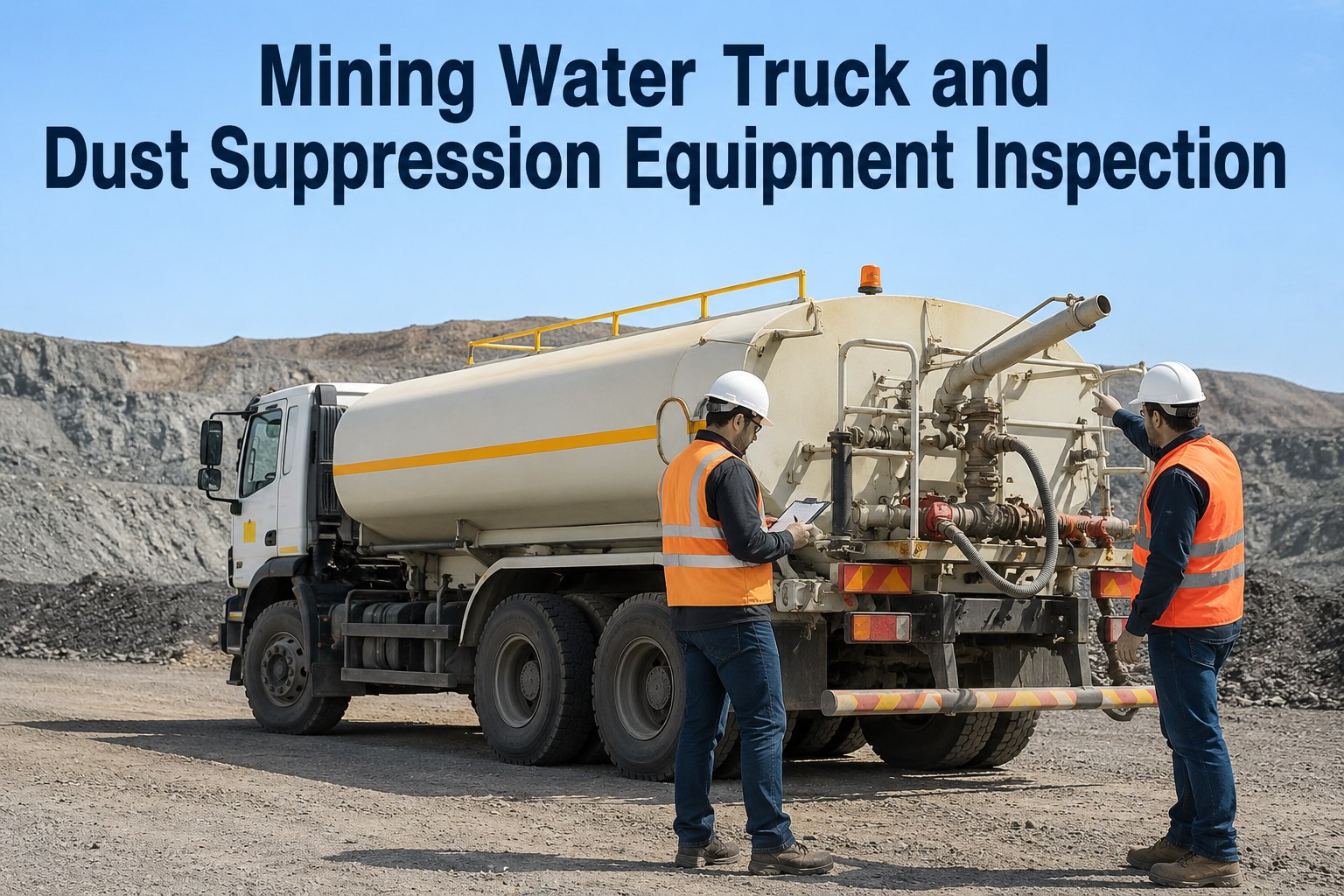
Water spray suppression is the most visible dust control on a surface mine — water trucks watering haul roads, spray bars at conveyor transfer points, mist systems at primary crushers. Because it's visible, everyone assumes it's working. Because it's water-based, it fails in many predictable ways.
Clogged nozzles
Low pressure / dry sections
Water truck reliability
Winter freeze-out
Drill dust collection — where the highest silica exposures happenBlast-hole and rock drilling generate the fine respirable dust that MSHA sampling targets
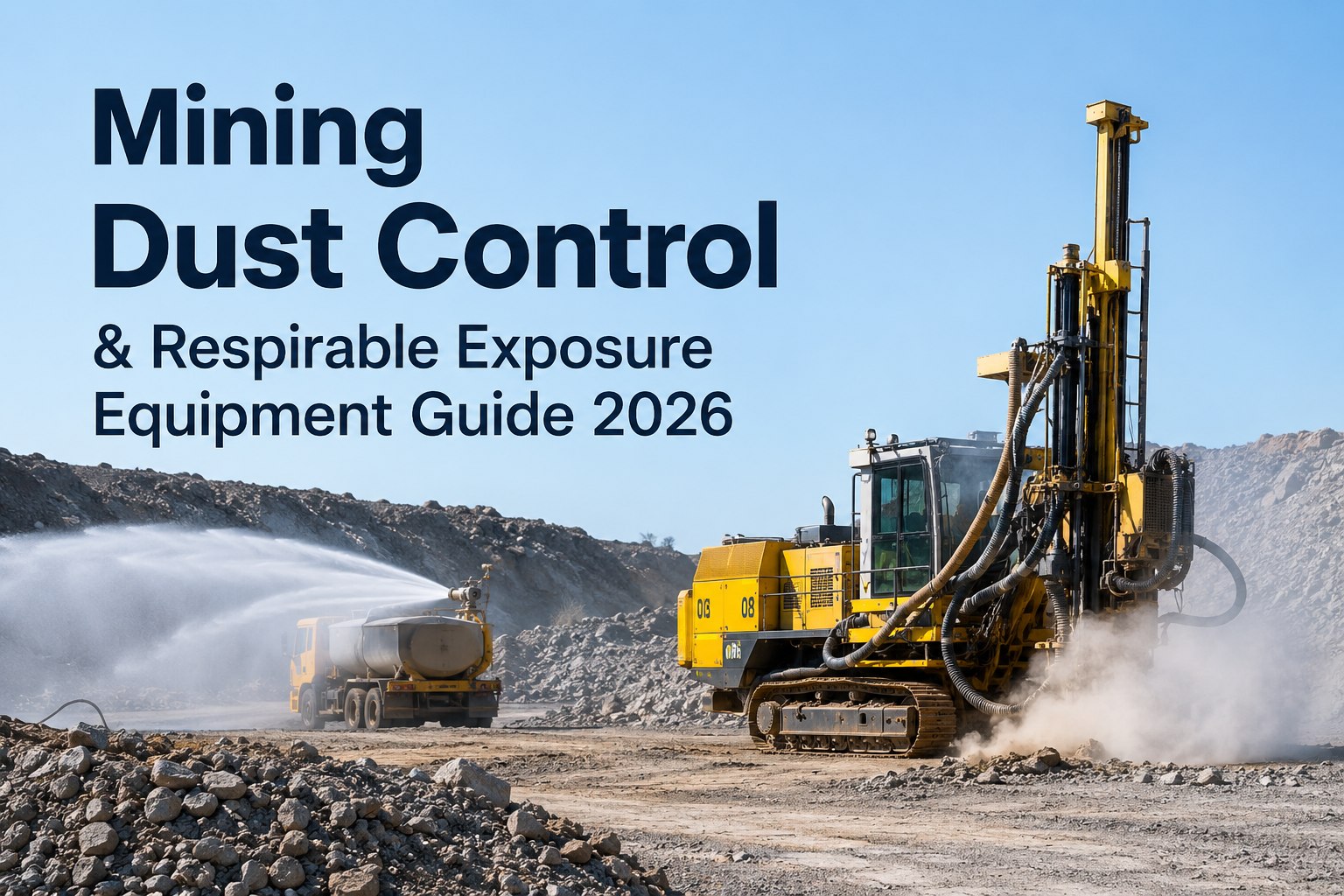
Drilling in silica-bearing rock generates respirable dust at concentrations that can exceed the PEL by orders of magnitude without engineering control. Dry dust collectors (cyclone + filter systems) and wet suppression (water injection at the bit) are the two primary controls. Both have distinct degradation profiles. Start a free trial and configure drill dust control inspections as an equipment class.
Filter loading
Dust collector cartridge filters load with fine silica dust and lose airflow capacity. Filter differential-pressure gauge tracks loading; replacement at manufacturer ΔP threshold or hours interval, whichever comes first. Overloaded filters not only reduce collection efficiency but eventually blow through as dust concentration downstream rises.
Hose & shroud damage
Vacuum hoses from bit shroud to collector are exposed to abrasion, sunlight, and impact damage. A cracked hose or gapped shroud dumps dust to atmosphere instead of routing it to the collector. Visual inspection at every drill move, formal inspection at PM interval.
Cyclone separator fouling
Pre-filter cyclone separator drops out coarse dust before the fine-filter stage. Cyclone fouling reduces separation efficiency and overloads downstream filters faster. Cyclone cleaning at scheduled interval extends filter life and maintains collection performance.
Wet suppression water flow
Wet-suppression drills inject water at the bit to trap dust at source. Water flow rate, pump condition, water quality, and freeze protection all affect performance. Water flow verification at drill start-up, pump condition at PM interval.
Dust hood + skirt condition
Dust hoods and skirts around the drill contain generated dust for collection. Wear, tears, and improper positioning let dust escape before capture. Weekly inspection during active drilling season catches wear before hood integrity fails.
Dust discharge disposal
Collected dust has to go somewhere. Discharge into open drums or improper disposal locations can re-suspend dust into the operator's breathing zone. Enclosed dust discharge with proper containment closes the collection loop.
Every degradation vector on every control needs an owner, an interval, and a record — not a "we know it's important" understanding. Book a demo to see dust-control PM discipline in HVI
From a mine safety manager on the maintenance-verification gap
We invested significantly in enclosed pressurized cabs for our haul truck fleet after the silica rule was finalized. All 24 units retrofitted with HEPA filtration and pressure gauges. Personal sampling in the first 90 days showed 3 operators over the action level anyway. My first assumption was faulty install — but the OEM signed off on every cab.
What we found was maintenance drift. Filters were on a "when we get to it" schedule, seals hadn't been inspected since commissioning, and two operators were opening windows because the AC was underperforming. None of that was visible to anyone until we started tracking cab filtration as maintainable assets — filter change dates per truck, seal inspection at every PM, cab pressure logged monthly. Next round of sampling came back with all 24 operators under the action level. The engineering was fine. The maintenance record was what was missing.
Frequently asked questions
What does MSHA's silica final rule require for mining dust control?
MSHA's silica final rule under 30 CFR Part 60, effective June 17, 2024, lowered the permissible exposure limit for respirable crystalline silica to 50 µg/m³ as a full-shift 8-hour time-weighted average and set an action level of 25 µg/m³. Compliance deadlines were staggered: coal mine operators April 14, 2025, and metal/nonmetal mine operators April 8, 2026. The rule requires operators to use engineering controls (water suppression, drill dust collection, enclosed pressurized cabs, ventilation) as the primary means of reducing exposure — respirators are permitted only when engineering controls alone cannot achieve compliance, not as a substitute for them. When personal sampling shows exposure above the PEL, operators must notify MSHA, provide compliant respirators before the next shift, and take corrective actions. MNM mines are subject to medical surveillance requirements modeled on existing coal mine surveillance. The rule assumes the engineering controls are installed and maintained; verifying that they are effective in daily operation is the fleet and safety program's responsibility.
Why do dust control systems fail even when they're installed correctly?
Every engineering dust control degrades over time in predictable ways that don't produce obvious operational symptoms. Enclosed pressurized cabs lose protection when filters load (reducing airflow and positive pressure), door and window seals wear (allowing unfiltered air ingress), HVAC blowers degrade (reducing airflow), or operators open windows for cooling when HVAC underperforms. Water spray suppression fails when nozzles clog (reducing coverage even as the system appears to be spraying), pump pressure drops (creating dry sections at end of coverage), water trucks are down for maintenance (leaving haul roads dry), or winter freeze conditions render water ineffective. Drill dust collectors lose efficiency when filter cartridges load, vacuum hoses crack, cyclone separators foul, dust hoods and skirts wear, or wet-suppression water flow drops. Mine ventilation performance drifts as workings expand, ducting damages, or fan performance degrades. In every case, the equipment can still appear to be operating while delivering substantially less exposure protection than it did at commissioning. Personal sampling shows the gap; maintenance verification prevents it.
What should a mining dust-control PM program cover?
A dust-control PM program should treat every engineering control as a maintainable asset with defined inspection intervals, condition triggers, and documented records. For enclosed cabs: pre-filter and HEPA filter replacement at manufacturer hour intervals (typically 250–500 hours for pre-filters, 1,000–2,000 hours for HEPA), door and window seal inspection at every PM, cab positive pressure measurement with magnehelic gauge or equivalent, HVAC blower airflow verification, ducting integrity check. For water spray suppression: individual nozzle inspection at every PM (walk-past inspection misses clogged nozzles), spray pressure verification at each installation, water truck PM schedule that avoids peak-dust-season simultaneous downtime, seasonal transition procedures for winter. For drill dust collection: filter cartridge replacement at differential-pressure threshold or hours interval, vacuum hose and shroud inspection at every drill move, cyclone separator cleaning at scheduled interval, wet-suppression water flow verification at drill start-up, dust hood integrity check weekly during active drilling. For mine ventilation: fan performance measurement at defined interval, ducting inspection, ventilation-plan review as workings change.
Does HVI support tracking mining dust-control equipment maintenance?
Yes. HVI supports tracking dust-control equipment (enclosed cabs and their filtration systems, drill dust collectors, water spray systems, ventilation components) as maintainable assets in the fleet inspection and maintenance platform. Features include PM scheduling by hours or calendar per control type, filter replacement records with next-due-date tracking, cab pressurization verification records, water spray nozzle inspection templates, drill dust collector differential-pressure logging, work-order generation when a control component is flagged as out of spec, and searchable maintenance history per asset for MSHA audit review or incident investigation. HVI is not an air quality monitor, a silica personal sampler, a cab filtration OEM, a respiratory protection program, or an MSHA compliance certification service — those responsibilities remain with industrial hygienists, equipment manufacturers, and the mine's certified safety program. What HVI does is document the maintenance of the engineering controls that determine whether the sampling and compliance functions have the underlying equipment performance to work with.
How do exposure sampling and equipment maintenance work together?
Exposure sampling under 30 CFR Part 60 measures actual airborne respirable crystalline silica at the miner's breathing zone using MSHA-approved sampling methods, calculated as a full-shift 8-hour TWA. Results below the action level (25 µg/m³) permit continued operation under the current controls. Results between the action level and PEL trigger increased sampling frequency. Results above the PEL (50 µg/m³) trigger MSHA notification, respirator provision before next shift, and corrective action — often meaning immediate engineering control review. In every case, the first question during corrective action is "were the engineering controls maintained?" A well-documented maintenance record showing filter changes, seal inspections, pressurization measurements, and nozzle inspections on schedule shifts the corrective action from "we don't know what went wrong" to "here's specifically what we need to fix or add." Poor maintenance records shift the compliance conversation toward whether the operator was maintaining a functional dust control program at all. Sampling and maintenance are separate functions that produce meaningful compliance data only when both are running well.
Document the maintenance that determines whether exposure sampling shows compliance
HVI supports tracking dust-control equipment as maintainable assets, PM scheduling per control type, filter and seal inspection records, water spray and drill collector maintenance history, and searchable audit-ready documentation for MSHA silica rule compliance review. Exposure sampling and PEL compliance measurement remain with industrial hygienists using MSHA-approved methods. HVI documents the engineering control maintenance that determines whether the sampling and compliance functions work.
No credit card · No hardware · Dust-control asset templates ready on day one