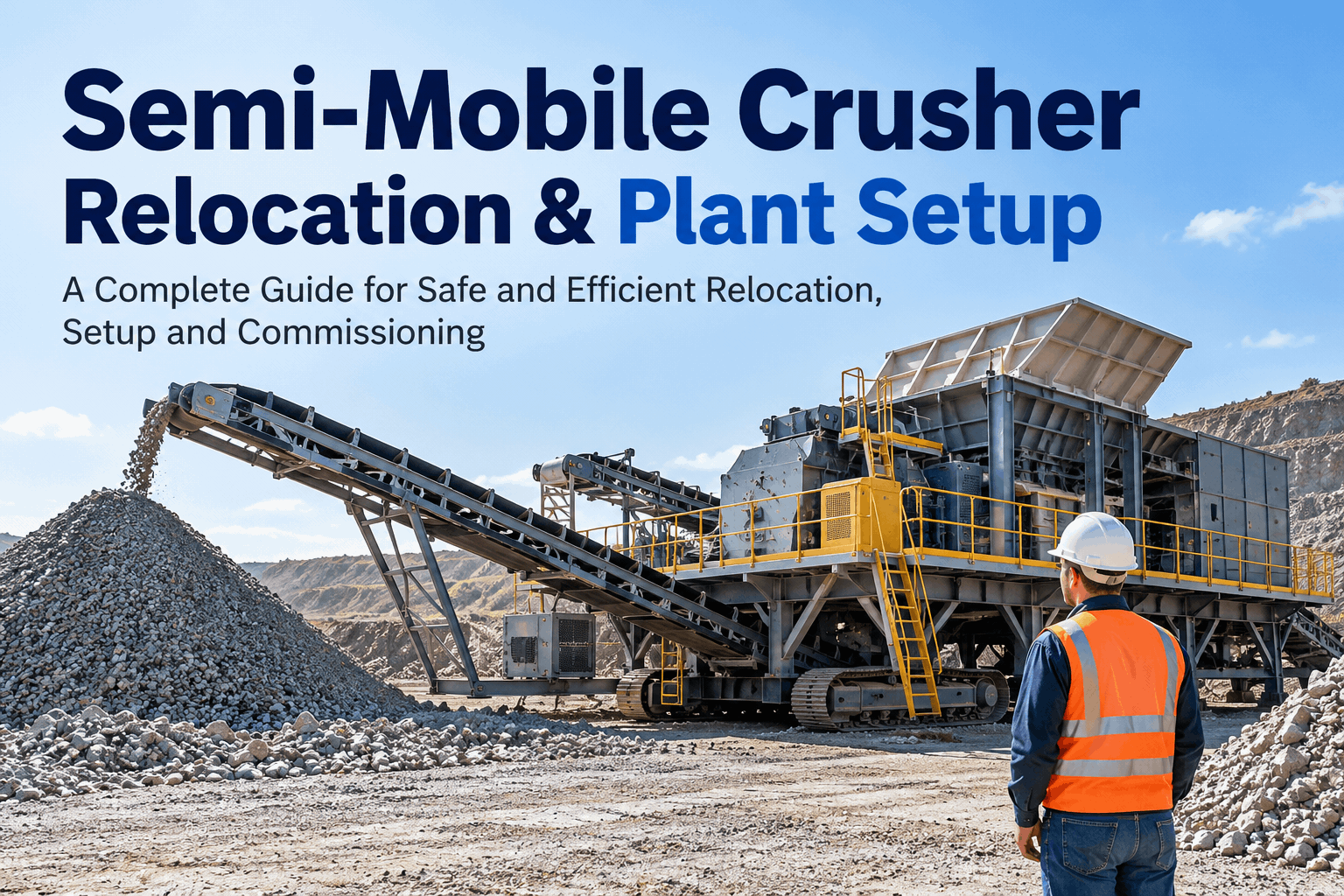
A semi-mobile crusher exists to follow the pit — but the day you move one, it stops being a machine and becomes a project, with a hundred ways to lose a week and a few ways to hurt someone. Semi mobile crusher relocation is where structural, electrical and mechanical work all land at once, under pressure to get crushing again. This guide lays out the phases, the inspection sign-offs that gate each one, and the commissioning that proves it's safe to run. Book a relocation-planning demo to see it managed.
Moving a crusher is a project, not a maintenance task
Tear-down, transport, re-erection and commissioning each carry their own structural, electrical and safety risks. Gate every phase with a signed inspection, and the move lands on schedule instead of in an incident report.
- 1Tear-down & isolateSigned off
- 2Transport & re-erectIn progress
- 3CommissionGated — awaiting sign-off
Unlike routine maintenance, a relocation touches foundations, high-voltage, heavy lifts and a fresh commissioning — all on a clock, because the pit needs crushing again. The failure modes aren't worn liners; they're an unisolated circuit, an unlevel foundation, or a commissioning skipped under schedule pressure. Below is the phase sequence, the inspection gates between phases, the relocation checklist, and the commissioning that turns "re-assembled" into "safe to run".
Four phasesthe semi-mobile crusher relocation sequence, gated end to end
A relocation runs in order, and each phase ends with a sign-off before the next begins. Skip a gate and the risk compounds into the phase after it.
-
1Plan & risk-assess
Route survey, lift plan, new foundation design, isolation plan, and a documented relocation risk assessment before anything moves.
-
2Tear-down & isolate
Lock out and isolate power, drain fluids, disconnect services, remove the crusher and modules, and verify isolation before any lift.
-
3Transport & re-erect
Move modules to site, set on the new foundation, level and align, re-connect structural, electrical and mechanical systems.
-
4Commission
Pre-start checks, no-load then loaded trials, protection and interlock testing, and authorized sign-off to return to production.
The gate between phases 2 and 3 is the one that hurts people when skipped — a lift started before isolation is verified. The gate between 3 and 4 is the one that wrecks the machine — load applied before alignment is confirmed. See phase sign-off inspections, or book a demo of gated relocation workflow.
The sign-off gatesthe inspections that must pass before work continues
Three disciplines gate a relocation. None of them is optional, and each produces a signed, dated record you can stand behind.
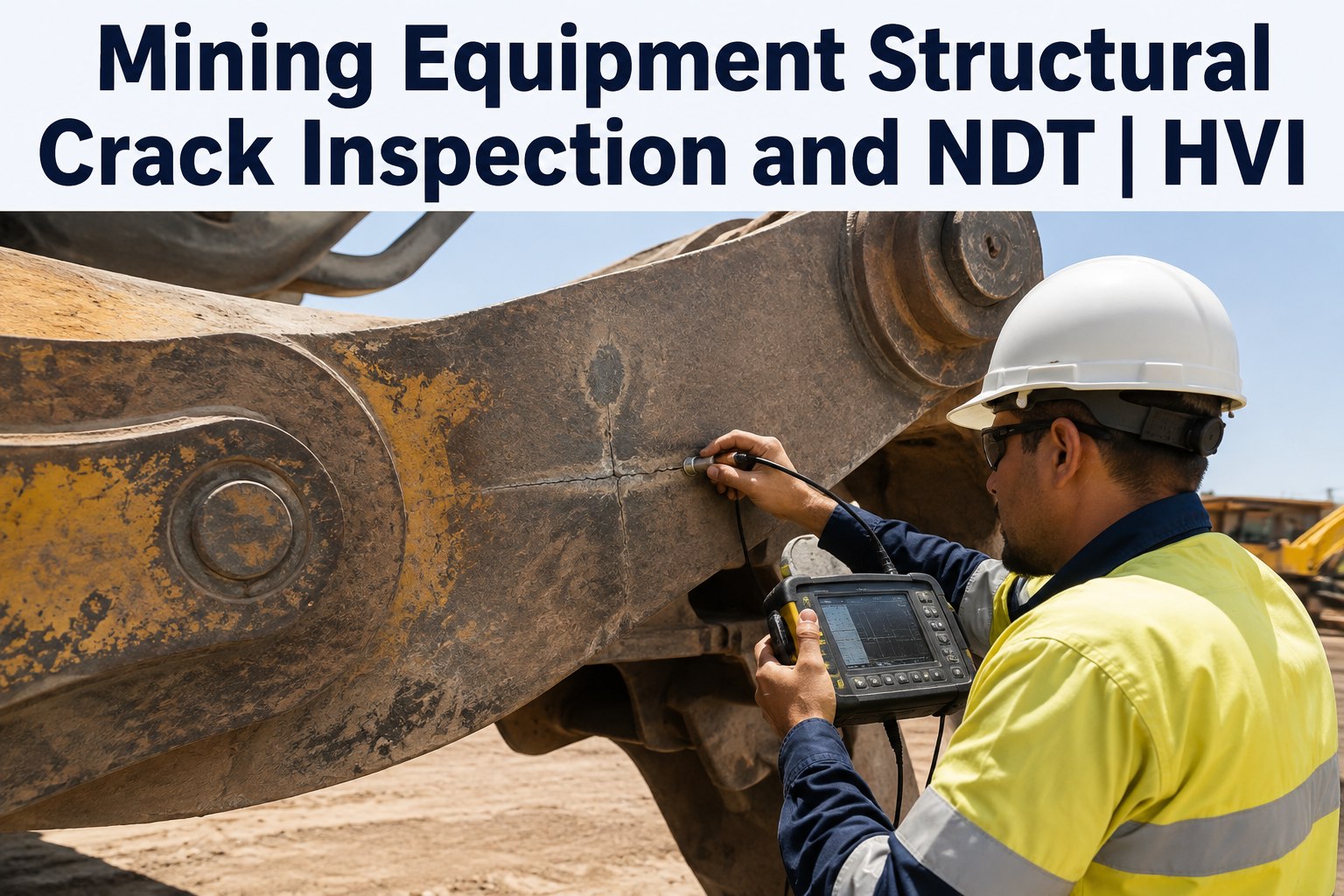
Foundation level and cured, anchor bolts torqued, frame and chassis crack-checked, lifting points certified before each lift.
Isolation verified and tagged, cabling re-terminated, earthing confirmed, insulation tested, protection and interlocks proven before energizing.
Drive alignment, guarding re-fitted, lubrication primed, fluids filled, rotation direction confirmed, no-load run before any feed.
Each gate is a go/no-go: the next phase simply doesn't start until the inspection is signed. That discipline is what keeps schedule pressure from quietly becoming an incident. See safety sign-off management for high-risk project work, or book a demo of inspection gates.
The checklista semi-mobile crusher relocation & setup checklist, grouped by discipline
Run every line before you sign a phase. Each is observable and sits with the discipline that owns it.
Structural & foundation
- New foundation level, cured and surveyed
- Anchor bolts torqued to spec
- Frame/chassis inspected for cracks
- Lifting points and lugs certified
Electrical
- Isolation verified, locked and tagged
- Cables re-terminated and labelled
- Earthing and insulation tested
- Protection & interlocks function-tested
Mechanical
- Drive and coupling alignment checked
- Guarding re-fitted and secure
- Lubrication primed, fluids to level
- Rotation direction confirmed
Safety & access
- Walkways, handrails and platforms secured
- Emergency stops reachable and tested
- Dust and fire systems reconnected
- Exclusion zones and signage in place
Logged on a phone and signed per line, the checklist becomes the evidence the phase was done right — the record a regulator, an insurer or the next shift can trust. Sign up free and build your relocation checklist into gated inspection templates.
Commissioningproving the crusher is safe to run before it crushes
Re-assembled is not the same as commissioned. The crusher earns its return to production by passing these in order.
- 1Pre-start checksLubrication, fluids, guarding, isolations cleared
- 2No-load trialRun empty — rotation, vibration, temperature, noise
- 3Protection & interlock testE-stops, trips and interlocks proven live
- 4Loaded trialRamp feed, monitor draw, settings and throughput
- 5Sign-off to productionAuthorized release, PM baseline reset
The loaded trial is where a missed alignment or a wrong setting shows up — far better here, under control, than three shifts into production with a damaged mantle. See how PM resets at commissioning so the new location starts with a clean maintenance baseline.
What moves with itwhy the asset record should travel with the crusher
A relocation is where asset history gets lost — new site, new team, fresh binder. Keep the record with the machine and the next PM cycle doesn't start from zero.
That continuity is the quiet payoff of treating the crusher as a tracked asset rather than a fixture: wherever it moves, its history, its PM plan and its relocation record move with it. See how HVI manages mining fixed-plant assets, or book a demo of asset history that travels.
In practicea commissioning gate signed before production restart
- Pre-start checks — complete
- No-load trial — pass
- Protection & interlocks — tested
- Loaded trial — scheduled, authority to sign pending
Three gates green, one pending — and the system blocks the production release until the loaded trial is signed. No crusher goes back to feed on a verbal "it's fine". See work-order and sign-off tracking across every relocation phase.
From the project desk
Our last crusher move before we tightened this up nearly went wrong — a lift was called before someone had actually verified the electrical isolation, and we caught it by luck, not process. Now every phase is a gated inspection that won't let the next crew start until it's signed, and the asset's whole history and PM plan follow it to the new pit. The move still takes the time it takes, but it's a controlled project now, not a scramble with a crane.
Crusher relocation FAQs
What is a semi-mobile crusher relocation?
It's the planned move of a semi-mobile crushing plant to a new location as the pit advances — tearing it down, transporting the modules, re-erecting on a new foundation, and commissioning it back to production. Unlike a fully mobile crusher it isn't self-propelled, so relocation is a managed project with structural, electrical and mechanical work.
What are the phases of a crusher relocation?
Four: plan and risk-assess; tear-down and isolate; transport and re-erect; commission. Each ends with a signed inspection gate before the next begins. The critical gates are verifying isolation before any lift, and confirming alignment before any load is applied.
What inspections gate a relocation?
Three disciplines: structural (foundation, anchors, frame, lifting points), electrical (isolation, re-termination, earthing, protection), and mechanical (alignment, guarding, lubrication, rotation). Each is a go/no-go — the next phase doesn't start until the inspection is signed and dated.
What does commissioning a relocated crusher involve?
Pre-start checks, a no-load trial, protection and interlock testing, then a loaded trial before authorized sign-off to production. Re-assembled isn't commissioned — the loaded trial is where a missed alignment or wrong setting surfaces under control, not three shifts into feeding.
Why should the asset record move with the crusher?
A relocation is where maintenance history gets lost to a new site and team. Keeping the record attached to the asset means past repairs, the PM schedule and the relocation sign-offs all travel with the machine, so the new location starts with a clean baseline, not a blank page.
Run your next crusher move as a controlled project
HVI gives crusher relocations structural, electrical and mechanical sign-off templates, gated work orders per phase, a commissioning sequence that blocks release until signed, and the asset's full history carried to the new pit. Asset management, inspections and PM — live in under two weeks.
No credit card · Relocation sign-off templates from day one