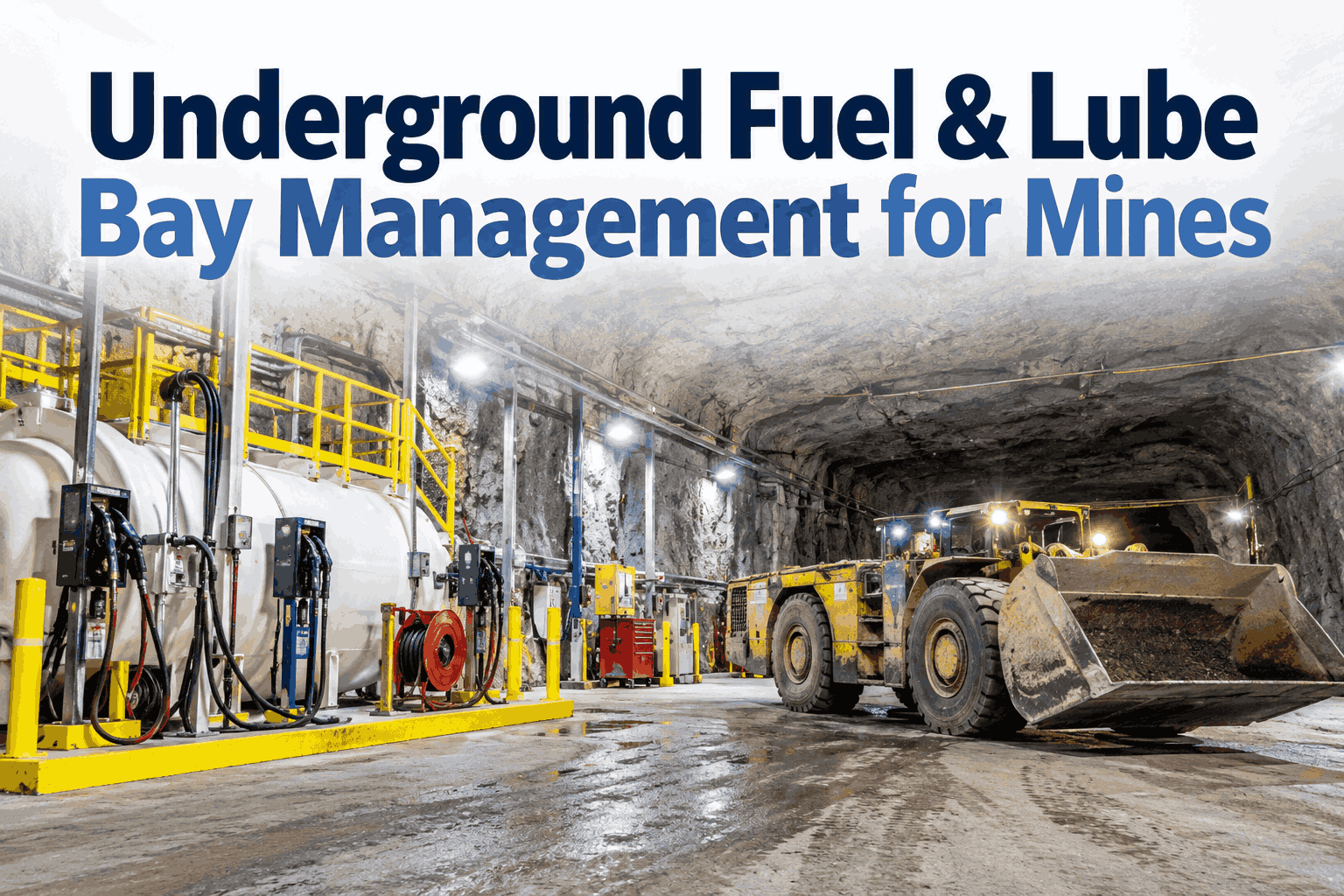
A loader operator pulls up to the bay and finds the nozzle weeping again. Nobody can say whether that hose was flagged last shift, so the machine waits, the face waits, and the supervisor writes the delay on a clipboard that may or may not reach the office. A well-run underground fuel bay keeps equipment working at depth without extra trips to surface, but it also packs fuel, lubricants and maintenance into one confined space. Getting control of that space is a safety job, a compliance job and a reliability job. See how HVI records bay inspections and fuel use underground
One Bay, Five Things That Have to Work Together
If one of these slips, the others can't make up for it. This is the control map for any underground fuel and lube bay.
- 1StorageTanks, containment, identification
- 2DispensingPumps, hoses, nozzles, valves
- 3LubricantsOils, coolant, grease, labeled
- 4SafetySpills, fire protection, ventilation
- 5RecordsFuel issued, inspections, service history
Sources: MSHA diesel fuel rules, 30 CFR Part 75, Subpart T (US underground coal). Requirements differ by jurisdiction and mine type, so confirm what applies at your site.
The regulations are specific for good reason. The sections below show how to inspect, control and record the bay so you can prove it's under control.
Step 1: Know what's inside your underground fuel and lube bay
Walk the bay and list every component by asset ID. If it holds, moves or contains fuel or oil, it belongs on an inspection list.
Storage tanks
Condition, level, labeling, venting
Dispensing equipment
Pumps, hoses, nozzles, shutoffs
Fittings & valves
Leaks, cracks, deteriorated seals
Lubricant storage
Engine, hydraulic, transmission, coolant, grease
Spill containment
Sumps, drains, absorbents, floor slope
Fire protection & ventilation
Suppression, extinguishers, airflow
Housekeeping counts too. Oily rags, blocked access and clutter make every other hazard worse. Put the bay's equipment and components under one asset register so each has its own inspection and repair history.
Step 2: Set up underground fuel bay inspection routines that get done
A good bay inspection is short, specific and done the same way every time. Set frequencies to match your site procedures and regulator, and record every result, not just the failures.
| Item | Look for | Record |
|---|---|---|
| Hoses & nozzles | Cracks, abrasion, leaking fittings, sticking valves | Condition, photo, replaced or tagged |
| Tanks & pumps | Leaks, damage, weeping seals, labeling | Result, defect raised, work order |
| Containment | Cracked sumps, blocked drains, full absorbents | Condition and cleanup action |
| Fire protection | Suppression and extinguisher status, access | Check result and date |
| Ventilation & housekeeping | Airflow, clutter, oily waste, signage | Result and corrective action |
Underground, you can't count on a signal. That's why mobile inspections with offline capture matter: the check is logged where it happens and synced when the device reconnects. Book a demo to see an offline bay inspection in action.
Step 3: Build dispensing controls into underground mine refueling
Regulations vary by country, state and mine type, so use the ones that apply to you. As an example, MSHA's rule for US underground coal mines (30 CFR 75.1905) lays out what safe dispensing looks like. Each control is also something you can inspect and log.
Where fuel comes from
- Safety cans, fuel transport units or stationary tanks
- Not from unapproved containers
How it's dispensed
- Self-closing nozzles, no latch-open device
- Powered pumps with emergency shutoffs and anti-siphoning
How it's done
- No refueling with the engine running
- No compressed gas for dispensing
- Pumps off when not in use
Check your own regulator's text before you write a procedure, as metal/non-metal mines, Canadian provinces, Australian states and the UK each have their own requirements. HVI doesn't replace that advice, but it does give you the inspection and records trail to show the controls were checked. See safety management features for incident and checklist tracking.
Step 4: Track fuel by machine and link it to hour-based PM
Fuel issued without a machine ID is just a number. Fuel tied to a loader, LHD or haul truck tells you about utilization, idling and hours-to-service, and that's what lets you plan maintenance from data.
- 1Issue Fuel logged to the machine
- 2Hours Meter reading captured
- 3PM due Interval triggered by hours
- 4Service Work order and history
When refueling and service records live together, an unusual consumption spike becomes an early warning, not a mystery. Pair fuel logs with hour-based preventive maintenance and your service intervals come from real operating data. A short demo shows how fuel, hours and PM connect.
Step 5: Control the underground lube bay to stop wrong-fluid events
Putting the wrong oil into a hydraulic system or transmission is a mistake that's easy to make in a dim bay at the end of a shift. Make it hard to do.
- Unlabeled or faded containers
- Shared funnels and dispensers
- Fluid added without a record
- Clear identification on every container
- Dedicated dispensing for each fluid type
- Every fill logged against the machine
Cover engine oil, hydraulic oil, transmission fluid, coolant and grease. Log each fill by machine so contamination or an incorrect-fluid event can be traced and corrected. You can start free and set up bay checklists to try this on one machine first. For spills, use one simple sequence every crew knows:
- 1Report Log the spill straight away
- 2Contain Stop the source, protect drains
- 3Clean Follow site procedure
- 4Correct Fix the cause, record it
Paper logs vs. one connected record for your underground fuel bay
If you're deciding whether to keep the clipboard, this is the comparison that matters. The inspection is the same. What changes is whether you can find, trust and use the result.
| Task | Paper logs | With HVI |
|---|---|---|
| Bay inspection | Handwritten, filed later, sometimes lost | Mobile checklist with photos, captured offline |
| Fuel issued | Logged on a sheet, rarely linked to the machine | Recorded per asset with hours |
| Defects & repairs | Verbal or on a separate form | Tracked to a work order and closed out |
| PM planning | Estimated from memory | Triggered from operating hours |
| Audit or incident review | Hunt through binders | Search by asset and date |
That's the difference between a binder and an auditable service history for every machine. Book a demo to see a complete equipment history built from underground records.
From a mine maintenance manager
Our fuel bay was always "fine" until someone asked for proof. We had sheets in three places and nobody could tell me which loader had taken what. Now every fill is logged to the machine, hose checks have photos, and PMs come off the hour meter. When the auditor asked about one LHD, I pulled it up underground and had the answer in a minute.
Your underground fuel and lube bay checklist
Every bay component on the asset register
Tanks, pumps, hoses, valves, containment.Routine inspections with photos
Captured offline, synced later.Dispensing controls verified
Matched to your regulator's rules.Fuel logged to each machine
With hours and operator.Lubricants identified and logged
Clear labels, dedicated dispensing.Spills and defects closed out
Reported, contained, corrected, recorded.Frequently asked questions
What is an underground fuel and lube bay?
It's a designated area underground where mobile mining equipment is refueled and serviced, so machines don't need to return to surface for every fuel or lubrication event. It typically includes storage, dispensing equipment, containment and safety systems.
What should be inspected in an underground fuel bay?
Tanks, pumps, hoses, nozzles, fittings, valves, spill containment, fire protection, ventilation and housekeeping. Look for leaks, damaged hoses, deteriorated fittings and containment condition, and record every inspection result.
Which regulations apply to underground diesel fuel storage?
It depends on country, state or province and mine type. In the US, MSHA's 30 CFR Part 75, Subpart T covers diesel fuel in underground coal mines. Confirm the rules for your jurisdiction with your regulator or safety team.
Why track fuel issued to each machine?
It links consumption to utilization, hours and maintenance history. You can spot unusual use, plan hour-based service from reliable data and answer audit questions about any specific machine.
Can HVI capture records underground without a signal?
Yes. HVI supports mobile inspections with offline data capture, so inspections, fuel records and defects are logged at the bay and synced when the device reconnects. It also covers preventive maintenance schedules and complete equipment histories.
Bring your underground fuel bay under control
A well-managed underground fuel bay protects people, keeps equipment running and gives you the records to prove it. HVI helps mining teams document inspections, track fuel and maintenance activity, capture records underground and keep an auditable service history for mobile equipment.
No credit card · Offline capture · Fuel logs · Service history