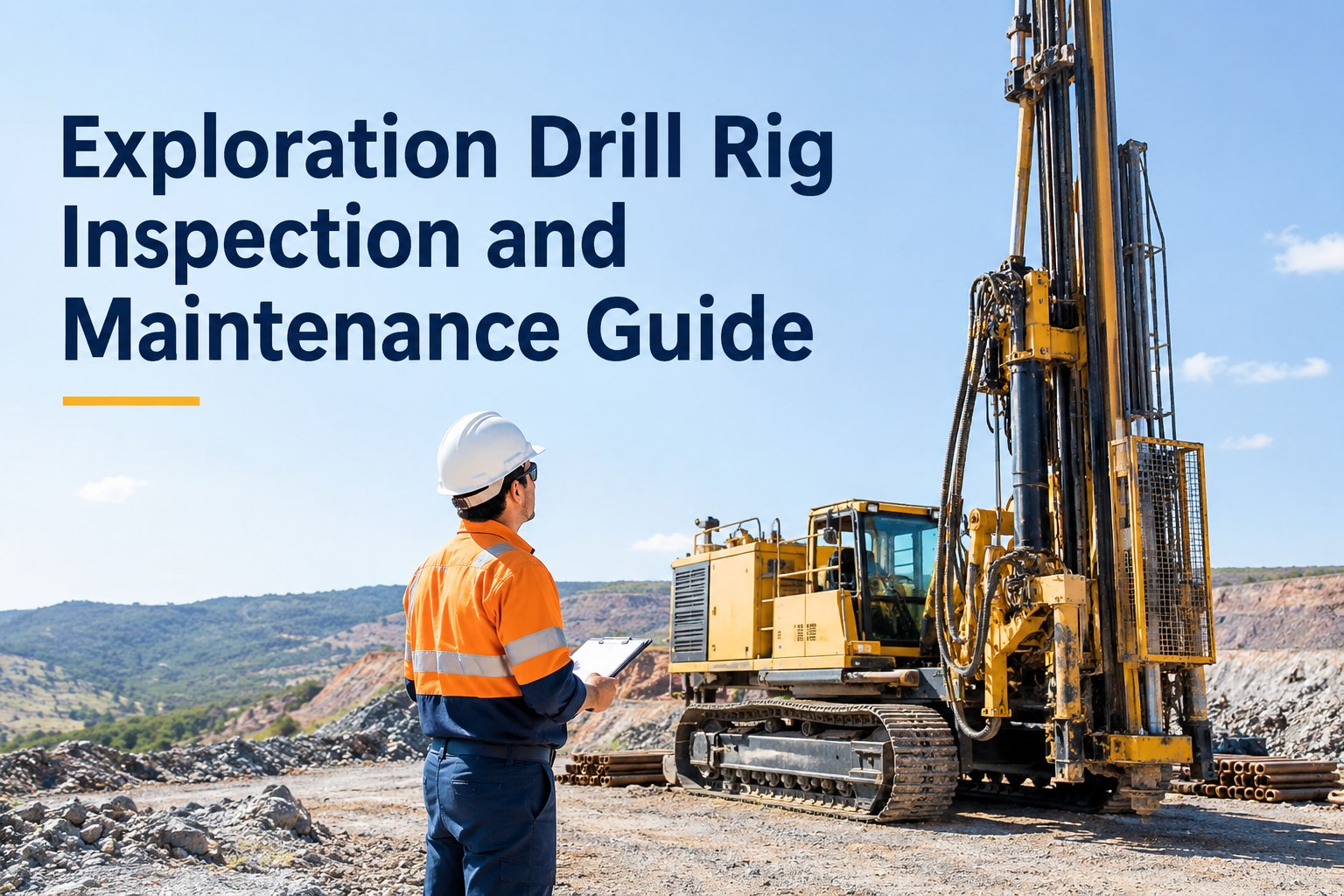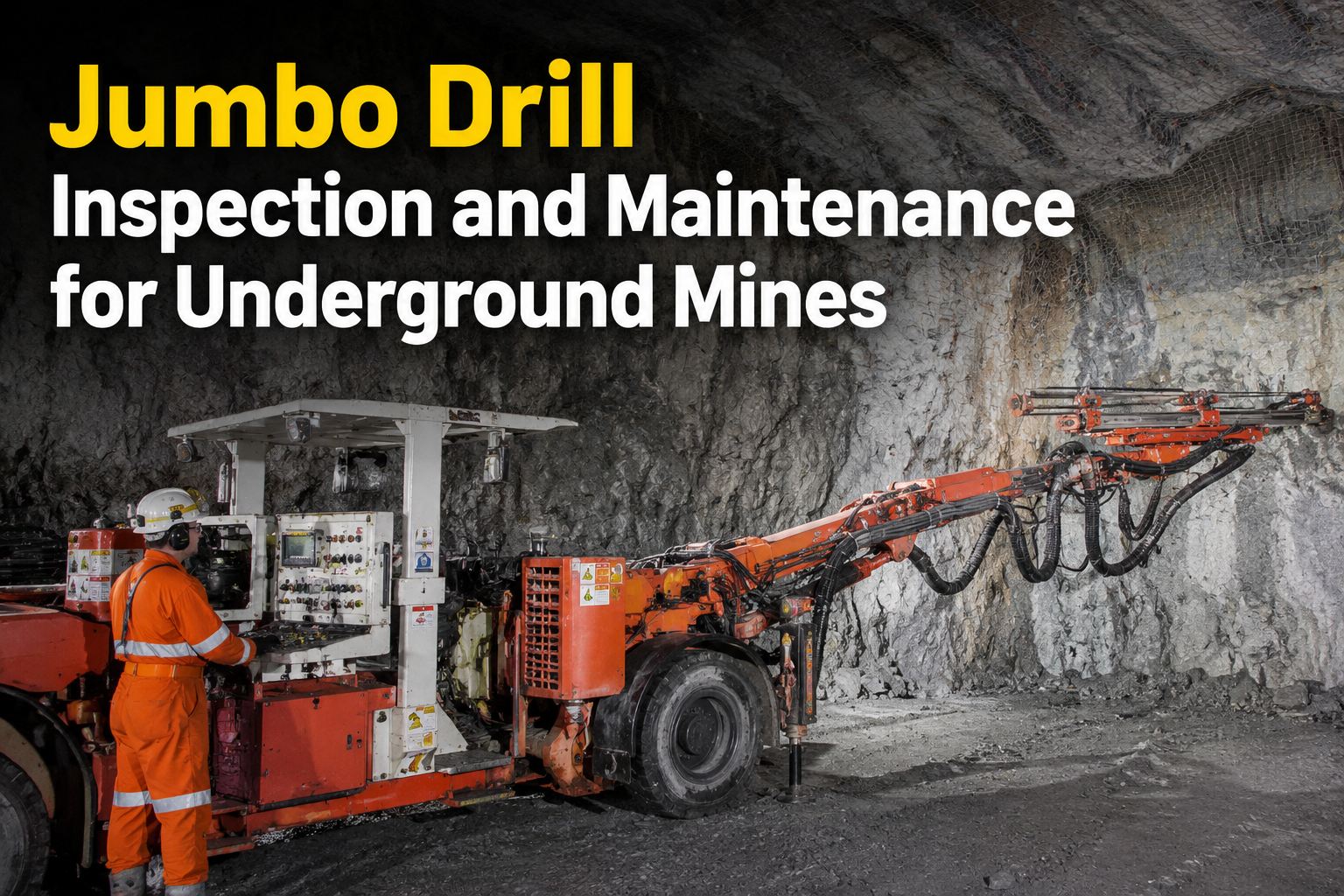
It's 6:40 on a Tuesday morning, the night shift drilled 22 holes instead of the planned 40, and the day shift jumbo operator is standing at the face with a drifter that's hammering soft and a feed that won't hold its angle. Every hour that rig sits, the heading doesn't advance — and every heading that doesn't advance pushes the blast, the muck-out, the bolting, and the entire mine plan behind it. A disciplined jumbo drill inspection and maintenance routine is what separates mines that hold their development schedule from mines that spend the quarter explaining why they didn't. This page breaks down what to check on a development jumbo, why each system matters, and how digital inspection keeps high-wear components from failing mid-round. If you want to see how this works on your own rigs, book a 30-minute walkthrough and we'll show you on your actual fleet.
What does one jumbo breakdown actually cost your advance rate?
A single mid-round drifter failure can idle the face for 4 to 8 hours. At typical development rates, that's a full round lost, a blast delayed, and every downstream task — mucking, bolting, services — pushed back by a shift or more.
Why jumbo drill availability controls the whole mine plan
Development drilling is the pacemaker of an underground mine. When the jumbo stops, nothing downstream can start. These are the numbers that matter when you're defending a maintenance budget internally.
What to inspect on a development jumbo, system by system
A proper jumbo drill checklist covers seven systems. Each one has its own failure modes, its own wear pattern, and its own consequence if it goes unchecked. Here's what your operators and fitters should be looking at every shift.
Boom & Feed Structure
- Cracks or deformation at boom pivot welds and feed rail mounting points
- Feed rail straightness — a bent rail causes hole deviation and premature steel wear
- Boom cylinder pin and bushing play — excess play means positioning drift
- Feed extension hoses for chafing where they route over moving sections
- Centralizer and stinger condition — worn guides let the steel wander off collaring point
Drifter / Rock Drill
- Percussion hours since last service — log every shift, not every week
- Impact pressure readings at the manifold vs. OEM spec
- Shank adapter condition — check for spline wear and flushing seal leaks
- Rotation motor noise and temperature — grinding or heat means bearing wear
- Front guide and seal housing for hydraulic oil weeping
Hydraulic System
- Main pump pressure and flow — continuous percussion duty degrades pumps fast
- Hose condition at every flex point, especially around boom joints
- Oil temperature after 30 minutes of drilling — overheating kills seals
- Accumulator pre-charge pressure — low charge causes pressure spikes and hose fatigue
- Filter condition indicators — a bypassed filter sends contamination through every valve
Water & Flushing
- Flushing water pressure and flow at the face — low flow means poor hole cleaning and dust
- Water pump seals and impeller condition — abrasive fines wear them fast
- Inline strainer and filter — a blocked strainer starves the drifter of cooling water
- Hose routing and couplings for leaks that reduce pressure at the bit
- Dust suppression function — this is a respirable dust control, not just a drilling aid
Electrical & Boom Positioning
- Cable reel condition — cuts and exposed conductors are a shock and fire hazard underground
- Boom positioning sensors and encoders — drift here means holes drilled off pattern
- Control panel function — test every boom movement and interlock before tramming
- Work lights and warning beacons — you need these for tramming and for the LHD operator to see you
- Emergency stop function at every station — test it, don't assume it
Tramming, Brakes & Canopy
- Service brake and park brake test on grade — hold test before every tram
- Tire condition and pressure — sidewall cuts from rib contact are common underground
- Steering articulation joint for play and pin wear
- ROPS/FOPS canopy structural condition — check for cracks, corrosion, and bolt torque
- Fire suppression system charge and nozzle condition
The drifter is your highest-wear component — track it by hours, not by calendar
A drifter running development rounds in hard rock accumulates percussion hours fast. Most OEMs specify a major service somewhere between 300 and 500 percussion hours depending on the model and rock conditions. Miss that window and you don't just lose penetration rate — you risk a catastrophic failure that takes the boom out of service for days while you wait on a rebuild or exchange unit.
That math is simple on paper. The problem is that most operations track percussion hours in a logbook that stays in the cab, or worse, in the operator's memory. When the fitter asks "how many hours on that drifter?" the answer is usually a guess. A CMMS that logs meter readings at every pre-shift inspection and triggers a work order when the interval hits takes the guesswork out. If you want to see how meter-based PM works in practice, book a demo and we'll set it up on one of your rigs during the call.
Your flushing system is also your dust control — treat it that way
Every underground operation has respirable crystalline silica obligations. On a development jumbo, the flushing water system is the primary engineering control for dust at the face. When flushing pressure drops — blocked strainer, worn pump impeller, kinked hose — you're not just drilling poorly, you're exposing the operator and everyone downwind to silica dust above the exposure limit.
Without documented flushing checks
- Operator notices poor hole cleaning but doesn't report it — "it still drills"
- Dust levels at the face creep up over days without anyone connecting the cause
- Hygiene sampling shows elevated silica — now you have an exposure event and no maintenance record to show why
- Regulator or client auditor asks for flushing system inspection records — you have a logbook with gaps
With photo-verified digital checks
- Pre-shift checklist includes flushing pressure reading and a photo of the gauge
- Low reading triggers a defect that becomes a work order before the next shift
- Every inspection is timestamped, photo-backed, and linked to the asset
- Audit request answered in seconds with a complete inspection history
This isn't theoretical. Safety and compliance managers at underground operations are increasingly asked to demonstrate that engineering controls — not just PPE — are maintained and verified. Your flushing system inspection records are part of that evidence chain. Walk through how this works on a live rig and see how photo-verified checks close the gap.
Stop losing rounds to preventable jumbo failures
See how HVI handles underground drill inspections, meter-based PM, and defect-to-work-order tracking — on your own equipment, in 30 minutes.
From pre-shift check to work order: how a digital inspection flow works underground
Underground operations have a connectivity problem that surface fleets don't. You can't rely on a live signal at the face. Here's how a practical digital inspection workflow handles that reality.
Operator scans the rig's QR code at the portal
The correct jumbo drill inspection template loads on their phone or tablet — boom checks, drifter hours, hydraulics, flushing, brakes, canopy. No paper, no wrong form, no "I'll fill it in at the crib room."
Inspection completed offline at the face
The app works without signal. Every reading, photo, and defect note is captured and stored on the device. Critical items — brake test, canopy condition, flushing pressure — require a photo before the operator can submit.
Data syncs when the operator surfaces
As soon as the device has a connection — at the surface, in the workshop, on site Wi-Fi — everything uploads automatically. The maintenance planner sees defects in real time, not at the end of the week when the paper forms land on their desk.
Defects become work orders automatically
A flagged hydraulic leak or a drifter hour reading that's hit its PM interval generates a work order with the photo, the operator's note, and the asset history attached. The fitter knows what they're walking into before they open the toolbox.
Meter-based PM triggers the next service
Drifter hours, engine hours, and tramming hours logged at every inspection feed the preventive maintenance schedule. When a component hits its interval, the system flags it — no spreadsheet, no whiteboard, no guessing.
If you're running a mixed fleet of jumbos, bolters, LHDs, and surface gear, this same workflow covers all of them. Start logging inspections free and see how it handles your first rig.
Four ways HVI keeps your jumbo drilling and your records clean
QR-Loaded Underground Templates
Scan the rig, get the right checklist. Jumbo-specific templates cover boom, drifter, hydraulics, flushing, tramming, and canopy — no generic truck DVIR forced onto a drill rig.
Offline Capture with Surface Sync
Inspections work without a signal at the face. Data syncs automatically when the device connects. No lost forms, no re-entry, no gap between what the operator saw and what the planner knows.
Photo-Verified Critical Sections
Brake tests, canopy condition, flushing gauge readings — the operator can't submit without a photo. Every record is timestamped and audit-ready for your safety manager, your client, or your regulator.
Meter-Based PM on High-Wear Parts
Drifter percussion hours, engine hours, tramming hours — logged at every inspection, tracked against OEM intervals, and flagged automatically when service is due. No more guessing when the drifter was last rebuilt.
The five failures that idle development jumbos most often
Ask any underground maintenance superintendent what stops their jumbos and you'll hear the same list. These aren't exotic failures — they're wear items that a structured inspection catches early.
| Failure | Root Cause | What It Costs You | Inspection That Catches It |
|---|---|---|---|
| Drifter loses impact | Percussion hours past service interval, worn piston or valve | Penetration rate drops 20–30%, then full failure mid-round | Hour meter logging + impact pressure check every shift |
| Feed rail bends or cracks | Over-pressuring feed cylinder, contacting the face, worn centralizer | Hole deviation, steel wear, eventual feed replacement | Visual check of rail straightness and centralizer wear daily |
| Hydraulic hose burst | Chafing at boom flex points, heat degradation, pressure spikes from low accumulator charge | Oil spill, fire risk, 2–4 hours to replace and clean up | Hose routing inspection + accumulator pre-charge check weekly |
| Flushing pump failure | Abrasive fines wearing impeller, blocked strainer causing cavitation | Poor hole cleaning, dust exposure, bit wear accelerates | |
| Brake fade on grade | Worn pads, contaminated oil, untested park brake | Safety incident, potential regulator involvement, rig out of service | Brake hold test on grade before every tram |
Every one of these is a wear item, not a surprise. The difference between a planned repair in the workshop and an unplanned failure at the face is whether someone checked, recorded it, and acted on it. Book a demo and we'll show you how HVI turns those checks into automatic work orders.
What to take back to your next maintenance meeting
The jumbo sets the advance rate. Every hour of jumbo downtime is an hour the heading doesn't move, and every downstream task — blast, muck, bolt, services — waits with it.
The drifter is the highest-wear component. Track percussion hours at every shift, not every week. A 400-hour service interval at 6 hours per shift means a service every five and a half weeks.
Flushing water is a dust control. Low flushing pressure means poor hole cleaning and elevated respirable silica. Your inspection records are part of your dust management evidence.
Paper checklists don't work underground. They get lost, they get pencil-whipped, and they can't trigger a work order. Digital inspection with offline capture and photo verification closes the loop.
A structured jumbo drill inspection and maintenance program doesn't require new people or new equipment. It requires a system that captures what your operators already see, turns it into action, and proves it happened. Sign up free and run your first underground inspection this week.
We used to track drifter hours on a whiteboard in the workshop. Half the time the operator forgot to write it down, and the other half the number was wrong. I had a drifter let go at 520 hours because nobody flagged it — that cost us three days on the heading and an exchange unit we didn't have budgeted. Now the hours get logged at every pre-shift and the system tells me when we're inside 50 hours of a service. I haven't been surprised since.
Jumbo drill inspection and maintenance — common questions
How often should a jumbo drill be inspected underground?
What is the most common cause of jumbo drill downtime?
How does flushing water relate to dust suppression compliance?
Can digital inspections work underground without a signal?
How do I track drifter service intervals across multiple jumbos?
Your jumbo sets the pace. Keep it drilling.
See HVI running underground drill inspections, meter-based PM, and defect-to-work-order tracking on your own fleet — in a 30-minute demo built around your equipment.
Free to start — Works offline underground — No card needed