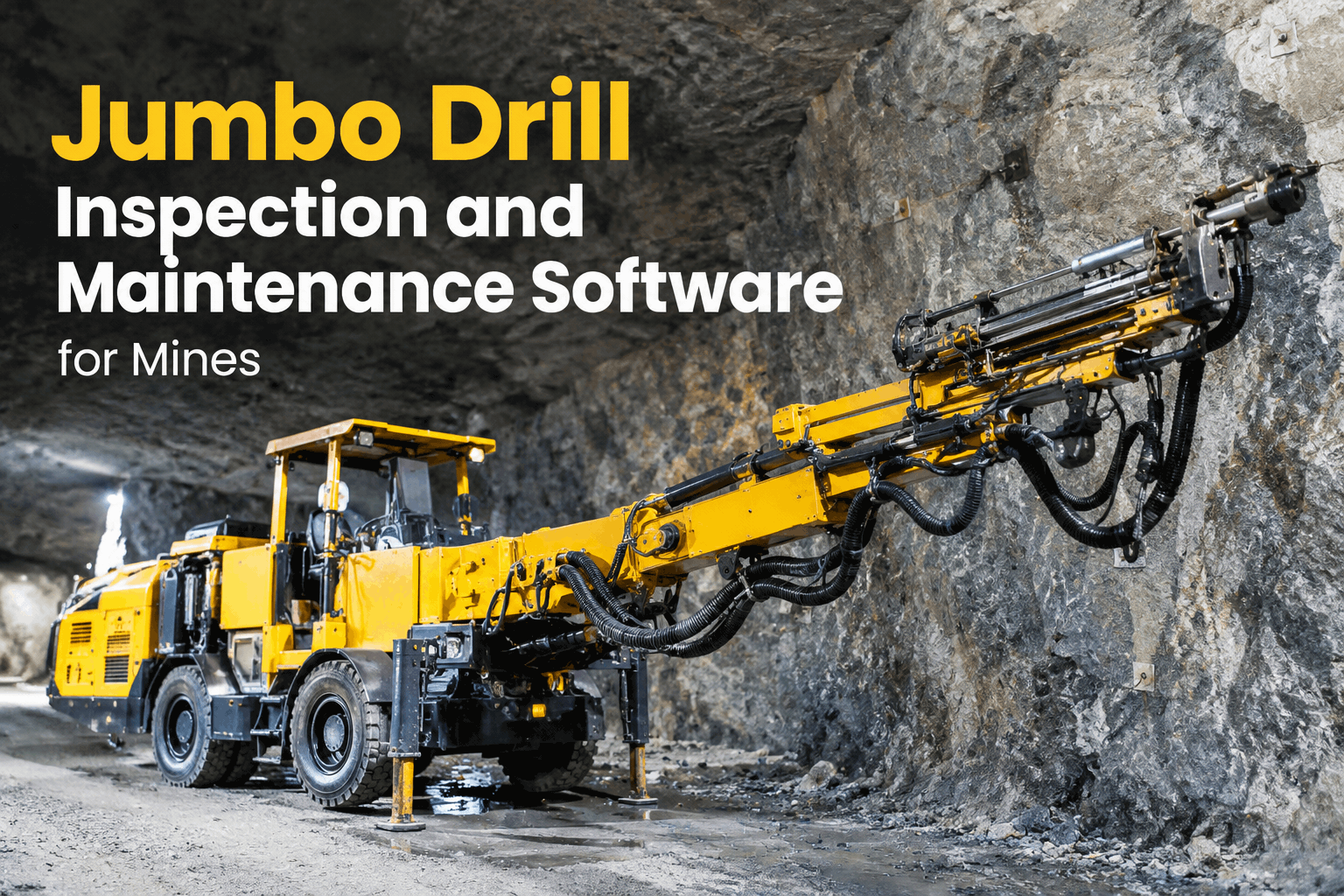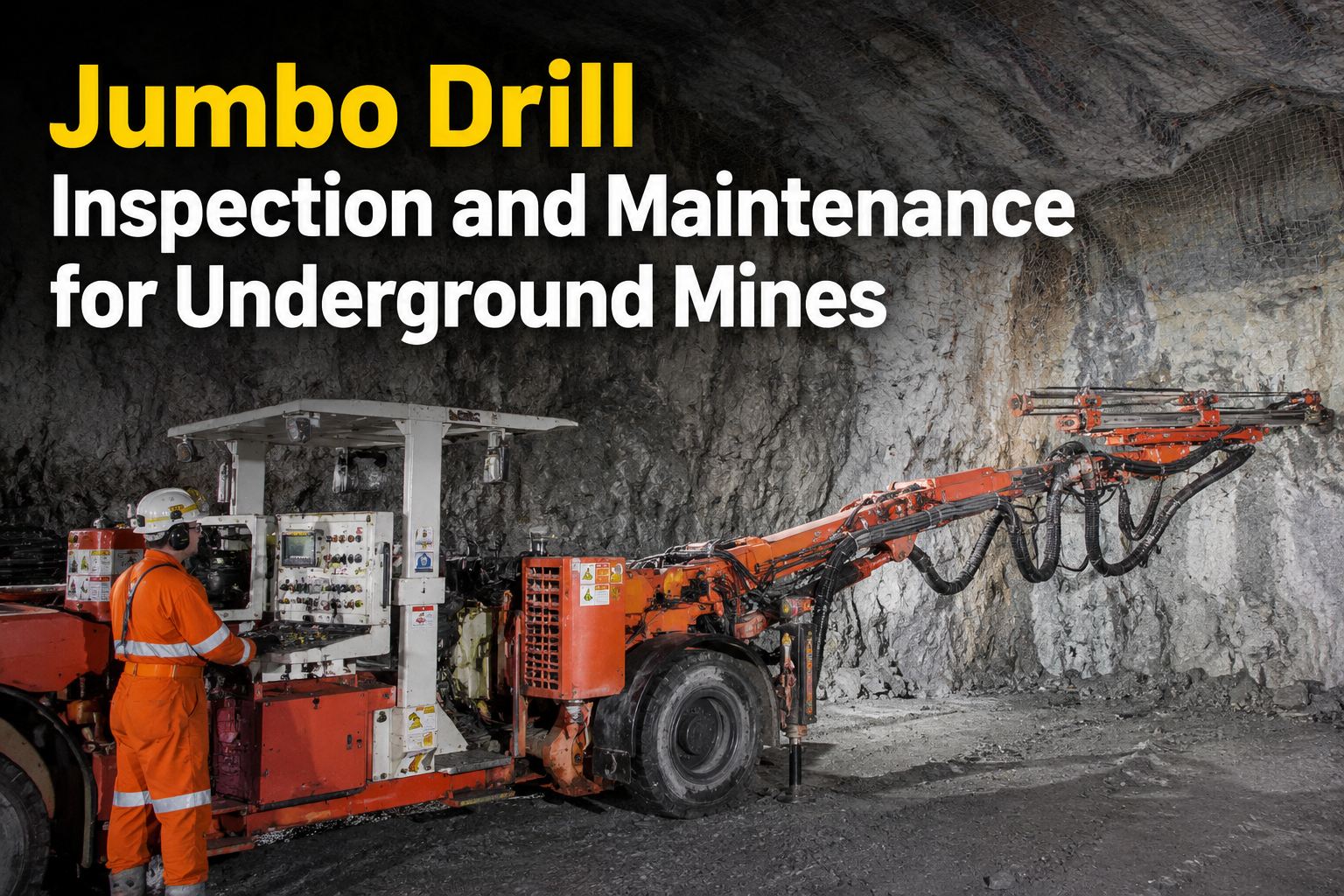
A jumbo drill doesn't need to be running to hurt someone — a boom or feed beam that isn't properly isolated during service has paralyzed a maintenance fitter on a routine hydraulic repair. Jumbo drill inspection software builds that isolation check into the daily checklist alongside the drifter, feed beam and hydraulics, so nothing critical rides on memory. Book a demo to see it on your drill fleet .
The Jumbo Doesn't Need to Be Running to Hurt Someone
A jumbo drill digital inspection checklist covers the drifter, feed beam, boom, and hydraulics — and confirms isolation is actually verified before anyone works near the booms, not assumed.
Most jumbo drill checklists focus on whether the machine runs well — drifter condition, feed alignment, hydraulic leaks. All of that matters, but regulator safety alerts point at a different failure mode that costs more: maintenance performed near a boom or feed beam that wasn't actually isolated. In one documented case, a maintenance fitter repairing a hydraulic leak on a feed beam rotation motor was crushed and paralyzed when the beam moved — the check valves meant to prevent that movement were exactly what was being repaired. A jumbo drill inspection checklist that only asks "does it run" misses the question that actually protects the person standing next to it during service.
Why isolation belongs on the inspection, not just the work permitwhat a pre-start and a pre-maintenance check should both confirm
Isolation and immobilization of drill rig booms and drifters is flagged repeatedly in mine safety-regulator reviews — not because the procedure doesn't exist on paper, but because it isn't consistently verified in practice. A separate incident involved an operator unaware that a laser-curtain guard meant to immobilize the rig wasn't functioning as intended.
A digital pre-maintenance check that requires a photo or signed confirmation of isolation closes the gap between "the procedure exists" and "the procedure happened."
The documented incidents above didn't happen because no isolation procedure existed — they happened because the step wasn't checked the one time it mattered.
HVI builds an isolation-and-immobilization confirmation directly into the jumbo drill's pre-maintenance checklist, requiring a photo or sign-off before the work order can close — the same discipline as any other critical safety item on the form. Start a free trial and add an isolation check to your jumbo drill template
The jumbo drill daily digital inspection checklistwhat a pre-start should cover before drilling and before service
Our broader jumbo drill inspection and maintenance guide covers the drifter, feed, and rotation systems in depth, and our 30 CFR §57.14100 guide covers the underground competent-person requirement. Here's the digital pre-start shortlist, isolation included.
In HVI this is a guided mobile template — tick, flag, photo — working fully offline underground and syncing the moment signal returns, timestamped to the right rig. The isolation step requires a photo or sign-off before a maintenance work order can close. Book a demo and see this checklist live on one screen
Meter-hour PM for drifter, feed & drill steelwhy feed-beam alignment is a drill-steel cost problem, not just a drilling problem
A misaligned feed beam doesn't just drill a crooked hole — it stresses the steel and shank with every pass, burning through consumables faster than the drilling itself would suggest. Catching that on a measured interval, not a visual guess, is where PM earns its cost back.
-
250 hr
Basic service
Drifter oil and filter, feed and boom greasing, drill steel wear check, isolation function test.
-
500 hr
Intermediate service
Hydraulic filter and fluid sample, feed beam alignment check, drifter percussion inspection.
-
1,000 hr
Major service
Full drifter rebuild inspection, boom structural and pin check, rotation and water flush system overhaul.
HVI's meter-hour PM scheduling auto-generates the work order when a rig's hours cross an interval, and keeps drill steel consumption logged against the same machine record — so a feed-alignment problem shows up as a cost trend before it shows up as a cracked shank. Book a demo to see tiered PM set against your jumbo drill fleet
From flagged defect to closed work orderhow an isolation check becomes part of the maintenance record, not a separate step
A defect found underground needs to reach the shop whether or not there's signal in that heading — and the isolation confirmation needs to travel with it, not live on a separate permit.
-
1
Operator runs the pre-start, offline
Drifter, feed, boom, hydraulics, guards — the full checklist, on a phone, working whether or not there's signal underground.
-
2
A defect is flagged with photo & severity
A hydraulic weep at the feed beam rotation motor gets logged with a photo, tied to that exact rig, and queued to sync.
-
3
Isolation is confirmed before the work order opens
The work order requires the isolation step signed off before maintenance begins on the boom or feed system — built into the flow, not a separate form.
-
4
Repair closes against that rig's history
Parts, labor, and sign-off record against the jumbo's own file, feeding cost-per-hour analytics across the whole drill fleet.
From an underground drill & blast maintenance supervisor
Every maintenance fitter on our crew knows the isolation procedure. That was never the problem. The problem was proving it actually happened on a given day, on a given rig, before the wrench came out — and paper doesn't prove anything after the fact.
Building the isolation confirmation into the work order itself, with a photo required before it can close, changed the conversation entirely. It's not a trust question anymore. Either the step is documented or the work order isn't done, and that's exactly how it should work on a boom that can move with someone standing next to it.
Frequently asked questions
What is jumbo drill inspection software?
A mobile digital checklist built around a jumbo drill's systems — drifter, feed beam, boom, hydraulics — that flags defects with photos, verifies isolation before boom maintenance, and routes it all to a work order.
Why does isolation matter more than most other checklist items?
Regulator safety alerts document cases where a boom or feed beam moved during maintenance because isolation wasn't actually verified — including an incident that paralyzed a maintenance fitter. A checklist that confirms it closes that gap.
How often should a jumbo drill be serviced?
Typically 250-hour basic, 500-hour intermediate (including feed beam alignment), and 1,000-hour major service tiers. HVI auto-fires the work order at each interval.
Does this meet MSHA's underground pre-shift requirement?
Yes. 30 CFR §57.14100 requires a competent-person inspection before each shift for jumbo drills and other self-propelled underground equipment; HVI's offline-capable checklist gives a timestamped record per rig.
Can HVI track multiple jumbo drills across a site?
Yes. Each rig gets its own inspection history, PM schedule, and cost record, with defects and work orders visible site-wide the moment they're flagged.
Make isolation a checked step, not an assumed one
HVI gives every jumbo drill operator a digital pre-start covering drifter, feed beam, boom, and hydraulics, builds isolation confirmation into every maintenance work order, fires PM on real meter hours, and keeps a cost-tracked history per rig — working fully offline underground. Live on site in under two weeks.
- Isolation confirmation built into maintenance
- Defect → work order in one tap, offline-capable
- Meter-hour PM with drill-steel cost tracking
- One record per rig, fleet-wide view