It's 5:40 a.m. at the pit and the blast-hole drill that signed off clean yesterday won't build air — the rotary screw compressor is bleeding off through a chafed hose nobody flagged, and the pattern it was supposed to collar is now holding up the shovel and two haul trucks behind it. A paper form waved the rig through on a single tick. A proper blast-hole drill digital inspection checklist would have put the compressor, the mast and the rotary head in front of the operator one at a time, caught the weep, and turned it into a work order before the drill ever tracked to the pattern. This page lays out what that check looks like on a phone, and how it keeps a drill earning instead of parked.
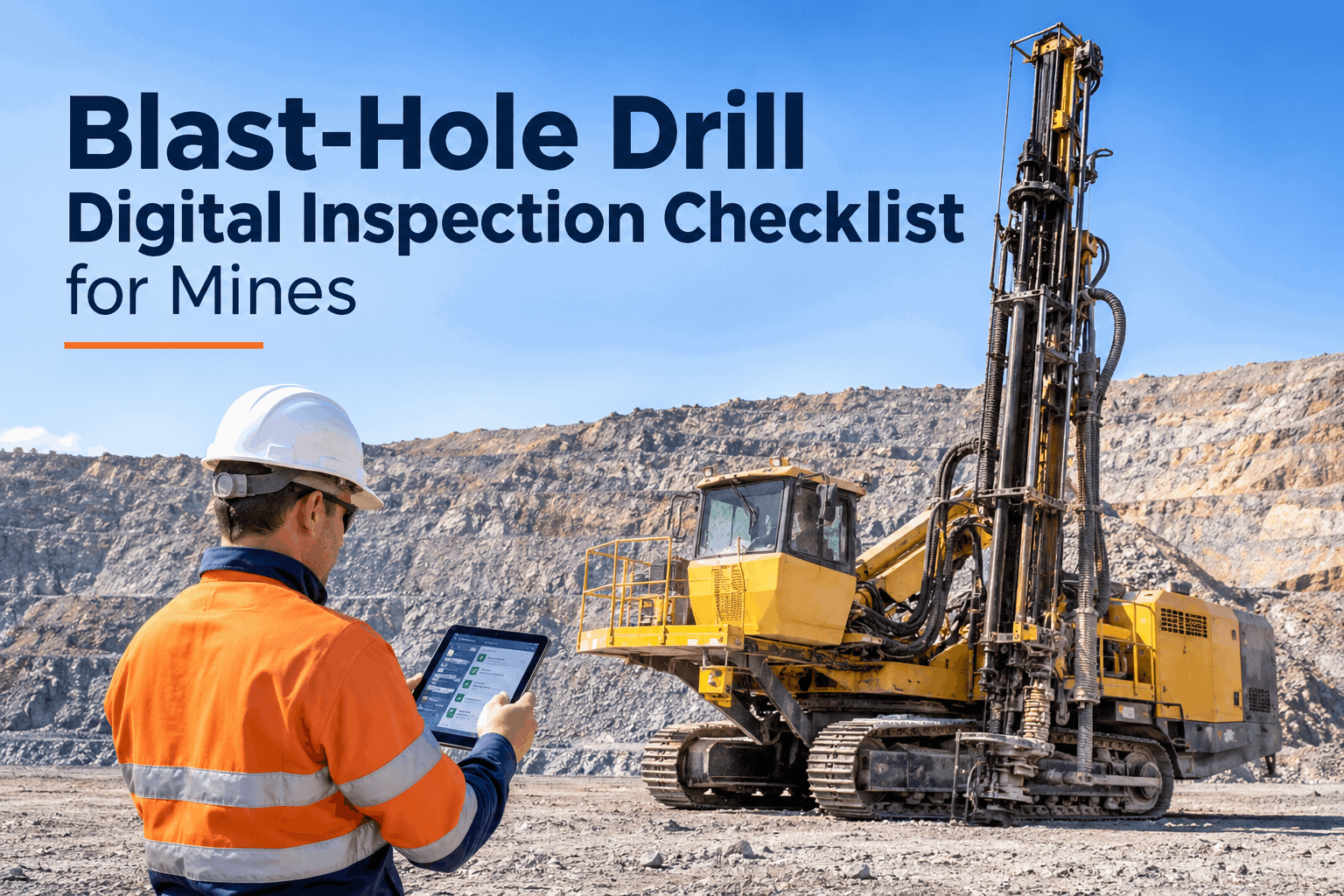
Blast-Hole Drill Digital Inspection Checklist for Mines
Give each rig a machine-specific check built around how a blast-hole drill actually wears — mast, rotary head, compressor, feed system. Run it from the operator's phone in minutes, photo the defect, route it straight to the workshop.
- Guided prompts by rig system, not one vague checkbox
- Works offline in a remote pit or underground, syncs on coverage
- Every flag becomes a one-click work order with a photo
- 1 Mast & guides — cracks, pins, worn wear-pads
- 2 Rotary head — air swivel seals, gearbox oil
- 3 Compressor — oil-flood level, hoses at pressure
- 4 Feed & pulldown — chains, cables, cylinders
- 5 Drill string & carousel — pipe, shock sub, bit
- 6 Undercarriage — trackpads, idlers, leveling jacks
Why a Generic Form Lets a Blast-Hole Drill Slip Through
Most mines run one mobile-equipment form for everything on tracks. A shovel, a dozer and a blast-hole drill all get the same ten boxes: fluids, lights, leaks, brakes, horn. That form was never written for a machine whose whole job is making 150 psi of rotary air — or 350 to 500 psi for down-the-hole work — and holding a rotary head steady under tens of thousands of pounds of pulldown. The parts that actually strand a drill aren't on the sheet.
The paper mobile-equipment form
- One "compressor OK?" box for a rotary screw unit, oil-flooded hoses and all
- Nothing on air swivel seals or rotary-head gearbox oil
- No prompt for feed-chain stretch, cable wear or shock-sub condition
- Handwritten, then lost in a ute for a week — no proof it happened
A machine-specific digital check
- Walks the compressor, mast, rotary head and feed in order, by prompt
- Forces a photo and a note on anything flagged — no vague tick
- Fires a work order to the workshop the moment a defect is logged
- Timestamped, signed, searchable by asset for the next MSHA visit
The fix isn't more paperwork — it's a check shaped like the rig. HVI's digital fleet inspection built for the blast-hole drill replaces the catch-all form with guided, system-by-system prompts the operator taps through before the rig ever collars a hole.
The Six Systems a Blast-Hole Drill Inspection Has to Cover
Build the check around the components that actually fail on a drill, and you catch the breakdown while it's still a weep or a stretched chain. Here's where crews on Sandvik, Komatsu, Epiroc and Cat rigs lose shifts — and what the inspection should ask at each one.
Mast & wear guides
Cracks at weld joints, loose mast pins and worn rotary-head guide pads let the head wander and chew the string. Check structure, pins and pad clearance before load.
Rotary head
Air-swivel seals and gearbox oil are the quiet killers — a tired swivel bleeds bailing air, a low gearbox cooks the bull gear. Log oil level, leaks and any play.
Air compressor
The rotary screw compressor and its hoses live at pressure all shift. A chafed hose or low oil-flood level drops air and strands the pattern. Check level, hoses and guards.
Feed & pulldown
Feed chains stretch, cables fray and pulldown cylinders seep. Any one lets the head jerk or stall mid-hole. Inspect tension, cable condition and cylinder rods.
Drill string & carousel
Bent pipe, a spent shock sub and a sticky carousel turn pipe changes into a hazard. Check thread condition, shock-sub wear and that the carousel indexes clean.
Undercarriage & jacks
Trackpads, idlers and leveling jacks take a beating tramming between patterns. Worn shoes and a soft jack make setup slow and unsafe. Inspect pads, pins and jack seal.
Each of those prompts can carry its own pass/fail, photo and note. When an operator flags a seeping pulldown cylinder, you don't want it buried in a form — you want it logged as a work order the workshop sees before smoko. That's the difference between a planned swap and a dead rig at the face.
Put the drill's real failure points in front of the operator
See how a machine-specific check runs on a phone — offline in the pit, synced when it hits coverage — and how every flag lands as a work order.
One Flag, One Loop: Inspection to Work Order to History
A good check is only half the value. What keeps a drill running is what happens after the operator taps "fail" — and on paper, the answer is usually nothing until someone notices the rig hasn't moved. HVI closes the loop so a defect can't die on a clipboard.
Operator flags it
Low compressor oil-flood level, photo attached, voice note on the hose — captured on the phone, offline if needed.
Work order fires
The flag becomes a one-click work order routed to the workshop with the asset, the defect and the image already filled in.
Parts & PM line up
The fix pulls the right hose from parts and inventory and ties into the rig's meter-based PM schedule.
History builds itself
Every check and repair stacks into a searchable record by asset — proof for the audit and a trail of what that drill keeps needing.
That loop is the whole point of a connected platform over siloed tools. Inspection feeds preventive maintenance by engine hours or meter reading, and a quick walk-through on a live demo shows it end to end on a real drill record.
The Blast-Hole Drill Pre-Start Inspection Checklist
Here's a working pre-start check, grouped by system, that an operator can run in a few minutes before the first hole. Adapt the detail to your OEM and site, then see it turned into guided digital prompts on a demo.
Mast & rotary head
- Mast structure, welds and pins — no cracks or movement
- Rotary-head guide/wear pads within clearance
- Rotary-head gearbox oil level and no leaks
- Air swivel — no audible bleed or seal weep
Air & compressor
- Compressor oil-flood level and no visible leak
- Air hoses, fittings and whip checks — no chafe at pressure points
- Coolers and screens clear of dust pack
- Dust collection / suppression working
Feed, string & undercarriage
- Feed chains/cables — tension set, no fray or stretch
- Pulldown cylinder rods — no scoring or seepage
- Drill pipe threads, shock sub and bit condition
- Carousel indexes and locks cleanly
- Trackpads, idlers and leveling jacks sound
Safety & cab
- Fire suppression charged and in date
- Access ladders, handrails and guards secure
- Lights, horn, backup alarm and E-stops functional
- Any flagged item has a photo + work order raised
Want it as part of a wider mining set? HVI's checklist center and the mining equipment pages cover shovels, haul trucks and loaders on the same platform.
"The thing that used to kill us wasn't the big failure — it was the hose nobody wrote down. An operator would 'mention' the compressor was off, it never made it onto the form, and we'd find out when the rig wouldn't build air at the pattern. Now the check makes him photograph it and it's a work order on my screen before he's off the ladder. I watch two numbers: how many drills got inspected this shift, and how many flags are still open. If both look right, I sleep."
If that's the visibility you're missing, the fastest way to see it is on your own asset list — start a free trial and load a drill in a few minutes.
Blast-Hole Drill Inspection — FAQ
What should a blast-hole drill digital inspection checklist actually cover?
Can operators run the inspection offline in a remote pit or underground?
How does a flagged defect become a repair instead of a lost note?
Does this help with MSHA workplace-examination records?
Will it work across my whole mining fleet, not just drills?
- Machine-specific checks by rig system
- Offline capture with photos & voice notes
- One-click work orders to the workshop
- Meter-based PM, parts and fuel in one place
- Signed, searchable records by asset
Give every blast-hole drill a check that matches the machine
Swap the catch-all mobile-equipment form for a blast-hole drill digital inspection checklist your operators run in minutes — and catch the weep before it parks the rig.
No credit card required