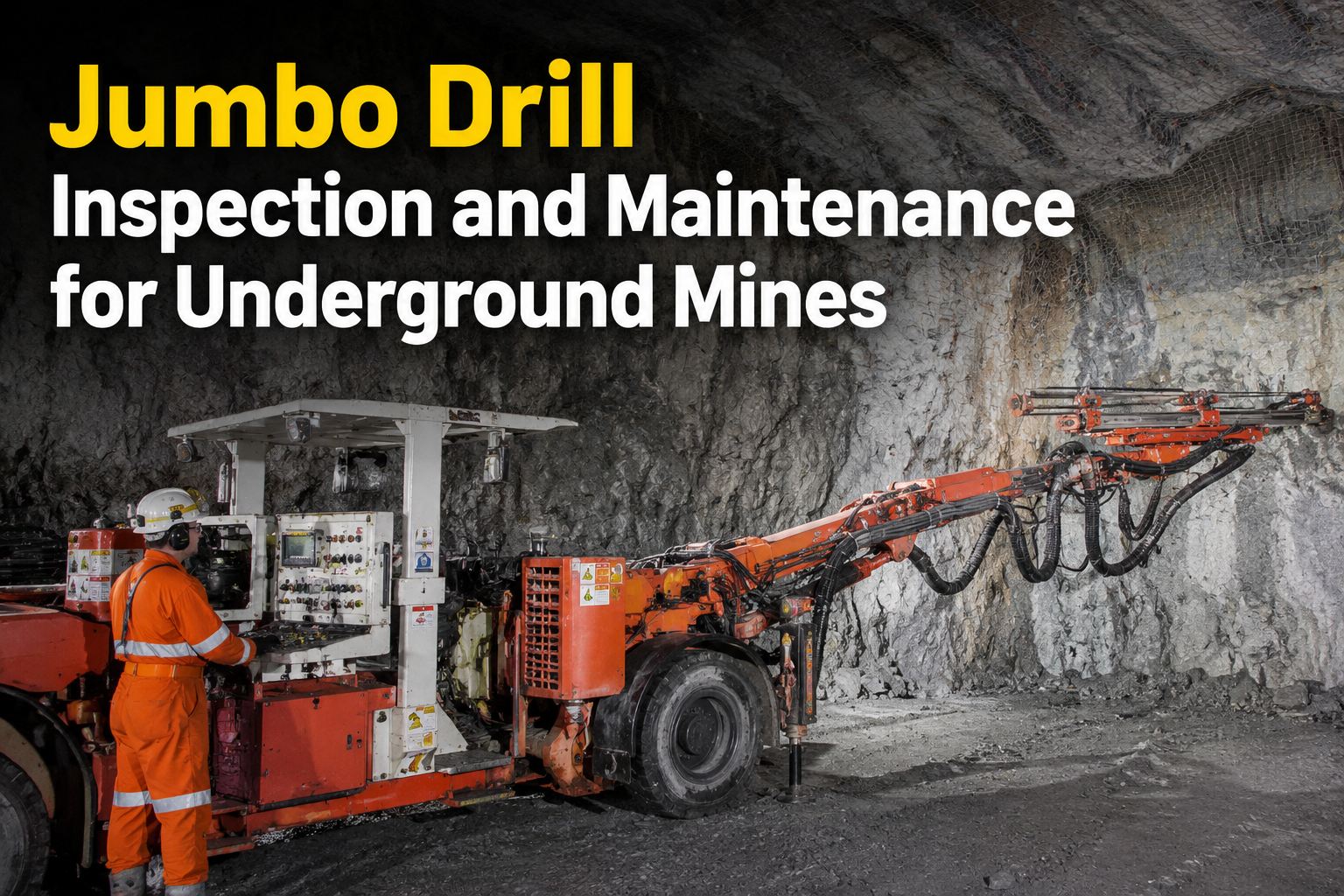
Blasthole drill inspection is the most neglected pre-shift check on most mine sites, yet the drill sits at the very head of the production chain: no holes means no blast, no blast means the shovels and trucks stand idle. You have probably seen it yourself - the operator climbs on, fires the compressor, and starts tramming to the first collar while the mast, jacks and dust collector get a quick glance at best. Meanwhile the pit plan for the whole week quietly depends on that one rig holding together. A cracked jack pad, a weeping rotary head seal or a blinded dust collector filter does not just stop the drill; it pushes the blast, the dig and the haul back by days. This guide breaks down the seven systems your operators should be checking every shift, why each one fails, and how a digital pre-shift routine with photo proof and meter-based PM keeps your drills drilling. If you want to see how that routine runs on a real rig, book a 30-minute walkthrough on your own units and we will load a drill checklist live.
The rig that feeds your whole pit gets inspected the least. Fix that this shift.
Drill availability caps blasting, which caps loading, which caps hauling. A structured pre-shift check on the mast, jacks, rotary head, compressor and dust system is the cheapest production insurance on site.
What one down drill actually costs your operation
Every hour a production drill sits waiting on a part or a weld, the constraint rolls downhill. These are the four numbers maintenance and safety managers end up defending in the Monday meeting.
The 7-system pre-shift blasthole drill inspection checklist
Ten minutes, seven systems, every shift. This is the drill operator checklist that catches the failures which actually stop rigs - not a generic walkaround copied from a highway truck DVIR.
Mast & raising system
Walk the mast looking for cracks at welds and gussets, bent or elongated pin holes, and wear on the raising chains or cables. Check sheaves for flange damage and confirm the mast lock pins seat fully. A mast that comes down uncommanded, or cracks through under pullback load, is a catastrophic event - this is a photo-verified section, not a tick box.
Levelling jacks & pads
Inspect each jack cylinder for weeping seals, bent rods and scored chrome, and check pads for cracking, bending or missing ground plates. Watch for slow drift after levelling - a jack that settles during drilling shifts the load path and is a genuine tip-over mechanism on bench edges and soft ground. Pad condition matters as much as the cylinder.
Rotary head & drill string handling
Check the rotary head gearbox oil level and look for leaks at the main seal. Inspect the carousel or rod handler for worn grippers, cracked welds and sluggish hydraulics, and confirm the breakout wrench and deck bushings are serviceable. Rod handling is one of the biggest injury sources around a drill - pinched hands and dropped steel - so guarding and interlocks get checked, not assumed.
Compressor & air system
Bailing air is penetration rate. Check compressor oil level and leaks, listen for unusual bearing noise, and inspect air lines, hoses and couplings for chafing and leaks. Confirm discharge temperature and pressure readings are in range. A compressor losing air to leaks burns fuel and slows every metre drilled - you pay for the same hole twice.
Dust collection & suppression
Check the dust collector filters, ducting and seals for blinding, tears and leaks, and verify the pre-cleaner and dump cycle operate. Where water suppression is fitted, confirm tank level, pump and spray pattern. This is both a productivity item - a blinded collector kills bailing velocity - and a respirable dust control measure tied directly to your silica exposure obligations.
Hydraulics
Walk the hydraulic tank, pumps and valve blocks looking for leaks, damaged hoses and chafe points, especially where hoses cross the mast and feed the rod handler. Check oil level and temperature. Pinhole leaks under pressure are an injection injury hazard, and a failed feed hose mid-hole leaves the string stuck and the shift gone.
Cab, controls & safety systems
Test all emergency stops, interlocks, horn, lights and cameras. Confirm gauges and warning lights function, the fire suppression system is in date and pinned correctly, and the cab glass, wipers and seat are serviceable. The operator spends the whole shift in that seat - fatigue and visibility are drill safety issues too.
What each skipped check turns into
Every line below is a failure mode that shows up on real sites. The left column is the ten-minute check; the right column is what you are dealing with when it gets skipped for a month.
| System | Pre-shift check | What skipping it becomes | Cost to you |
|---|---|---|---|
| Mast structure | Visual crack check at welds, pin and cable condition | Crack propagation under pullback, mast failure during raise | Weeks of downtime, major structural repair, serious injury risk |
| Levelling jacks | Seal weep, rod condition, pad integrity, drift test | Jack settles mid-hole on a bench edge | Tip-over - the single worst drill incident on a mine site |
| Rotary head | Oil level, main seal leak, gearbox noise | Head seizure or bearing failure mid-pattern | Lost shift plus a head rebuild; string possibly stuck in hole |
| Rod handling | Gripper wear, carousel welds, interlock function | Dropped or pinched drill steel during rod change | Hand and crush injuries - the most common drill-side harm |
| Compressor | Oil, leaks, discharge temp and pressure | Low bailing air, slow penetration, overheating | Fuel burned for half the metres; premature compressor failure |
| Dust collector | Filter condition, duct seals, dump cycle | Blinded filters, visible dust plume at the deck | Respirable silica exposure, regulator attention, lost bailing velocity |
| Hydraulics | Hose chafe, leaks, oil level and temp | Feed hose burst, injection injury, string stuck | Lost shift, injury, oil clean-up on the bench |
Dust collection is a compliance system, not a housekeeping item
Respirable crystalline silica is one of the most scrutinised exposures in mining and quarrying worldwide. Regulators in the US, Australia and elsewhere have tightened exposure limits and enforcement attention on silica over recent years, and drill operators sit in one of the highest-exposure seats on site - right above the hole, in the dust plume, for a full shift.
What good looks like
Dust collector filters changed on condition, ducting sealed, deck shroud intact, water suppression working, and a timestamped record proving the operator checked it before drilling. When an inspector or hygienist asks how you control drill dust, you show a history, not a shrug.
What it costs when it slips
Overexposure findings, improvement notices, personal exposure claims years down the line, and a dust plume visible from the pit office that nobody can explain. The check takes ninety seconds. The defence file takes years to rebuild if you never kept one.
The maths of one avoided drill-down day
Run the numbers on your own site. Here is a typical mid-size quarry or open-pit operation with two production drills feeding a weekly blast.
Add the emergency callout, the freight on the hose, and the fitter pulled off a planned service, and a single skipped check easily runs into five figures of lost production and reactive cost - against ten minutes with a checklist on a phone. If you want to see how the defect from that check becomes a work order automatically, walk through the defect-to-work-order flow in a demo.
See a drill-specific checklist running on your own rigs
Book 30 minutes and we will load your mast, jack and dust collector checks into HVI live - QR scan at the cab, photos on the critical items, defects routed straight to the shop.
Mining drill maintenance software that lives at the rig, not in the office
Paper checklists in a wet cab and photos in a group chat are where drill defects go to die. HVI puts the inspection, the PM schedule and the work order in one place - on any phone or tablet, at the bench, on a remote site with no signal drama.
Drill-specific checklists by QR scan
The operator scans the code on the cab door and gets your blasthole drill checklist - mast, jacks, rotary head, compressor, dust collector - not a generic truck DVIR. Different rigs carry different checklists, and every submission is timestamped to the unit.
Photo-verified critical sections
Mast welds, jack pads and dust collector seals can be set as mandatory photo items - the checklist will not submit without the picture. No more pencil-whipped walkarounds, and you hold visual proof the day an auditor or client asks.
Meter-based preventive maintenance
Drills wear by engine hours and compressor hours, not calendar dates. HVI schedules PM off meter readings captured at inspection, with due and overdue alerts, so the 500-hour compressor service happens at 500 hours - not whenever someone remembers.
Defect routing with severity
A weeping jack seal flagged at 6am becomes a severity-rated work order in the shop queue before the pre-start meeting ends. Critical defects can ground the unit in the system; minor ones queue for the next planned stop. Nothing lives in a text message. Start logging drill inspections free and route your first defect today.
What changes in the first 90 days on digital drill inspections
Sites moving their drills onto HVI typically follow the same arc. Here is what it looks like when a fleet or safety manager rolls it out across a drill fleet.
Build the checklists, stick the QR codes
Your seven-system drill checklist goes into HVI - most teams start from our template and adjust for their rigs. QR codes go on each cab. Operators run their first digital pre-shift the same week; if they can use a phone camera, they can run the check.
Defects start flowing to the shop with photos
The first month surfaces the backlog: the jack that has wept for a year, the collector filters nobody owned, the mast crack everyone assumed someone else reported. Each one arrives as a work order with a photo and a severity, so the shop can plan instead of react. See the severity routing in a live demo before you roll it out.
Meter-based PM takes over from the whiteboard
Compressor and engine services now trigger off hours, not memory. Your drill availability report, cost per rig and compliance rate are one dashboard - the numbers you take into the Monday meeting when someone asks why the drills are suddenly holding pattern schedule.
Blasthole drill inspection, boiled down
The drill is the constraint
Drill availability caps blasting, loading and hauling. Ten minutes of structured pre-shift checking is the cheapest production insurance on site - and the most commonly skipped.
Two checks carry life-risk weight
Levelling jack and pad integrity is a tip-over mechanism. Dust collection is a respirable silica control. Both deserve photo proof, not a tick, and both belong in your defence file.
Paper is where defects die
A checklist that lives in a wet cab and photos that live in a group chat cannot feed a shop, prove compliance or protect an operator. Digital inspection with defect-to-work-order routing closes that loop - you can sign up free and run it this week.
"The number I watch is holes per shift against plan, and nine times out of ten when we miss it, the cause was visible at pre-start - a weeping jack, a blinded filter, a lazy carousel. My gripe was always the same: the operator ticked the paper card in the ute and drove past the problem. Since we made the mast and jack photos mandatory on the phone checklist, my Monday argument with production has basically disappeared. The rig either passed or it did not, and there is a picture."
Dale Morrison - Maintenance Superintendent, contract drilling & blasting services
Blasthole drill inspection and maintenance FAQs
What should a blasthole drill pre-shift inspection include?
Why are levelling jacks such a critical check on a drill rig?
How does drill dust collection relate to silica compliance?
How often should a production drill get preventive maintenance?
Can operators really run digital inspections at a remote bench with poor signal?
Keep the drill drilling - and prove every check
Drill-specific checklists by QR scan, photo-verified mast and jack sections, meter-based PM and defects routed straight to the shop. See it on your own rigs in 30 minutes.
Free to start - Works on any phone - No card needed