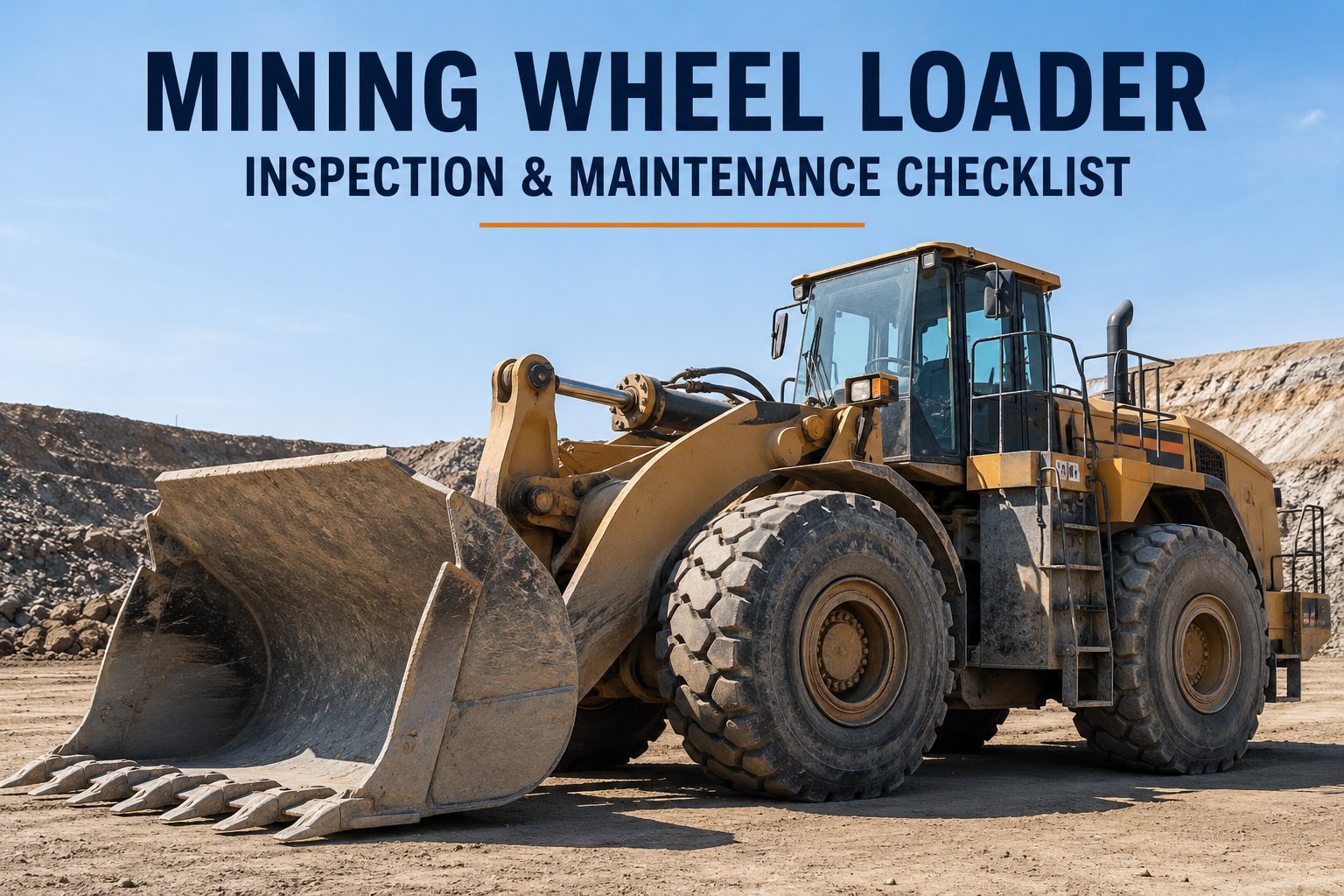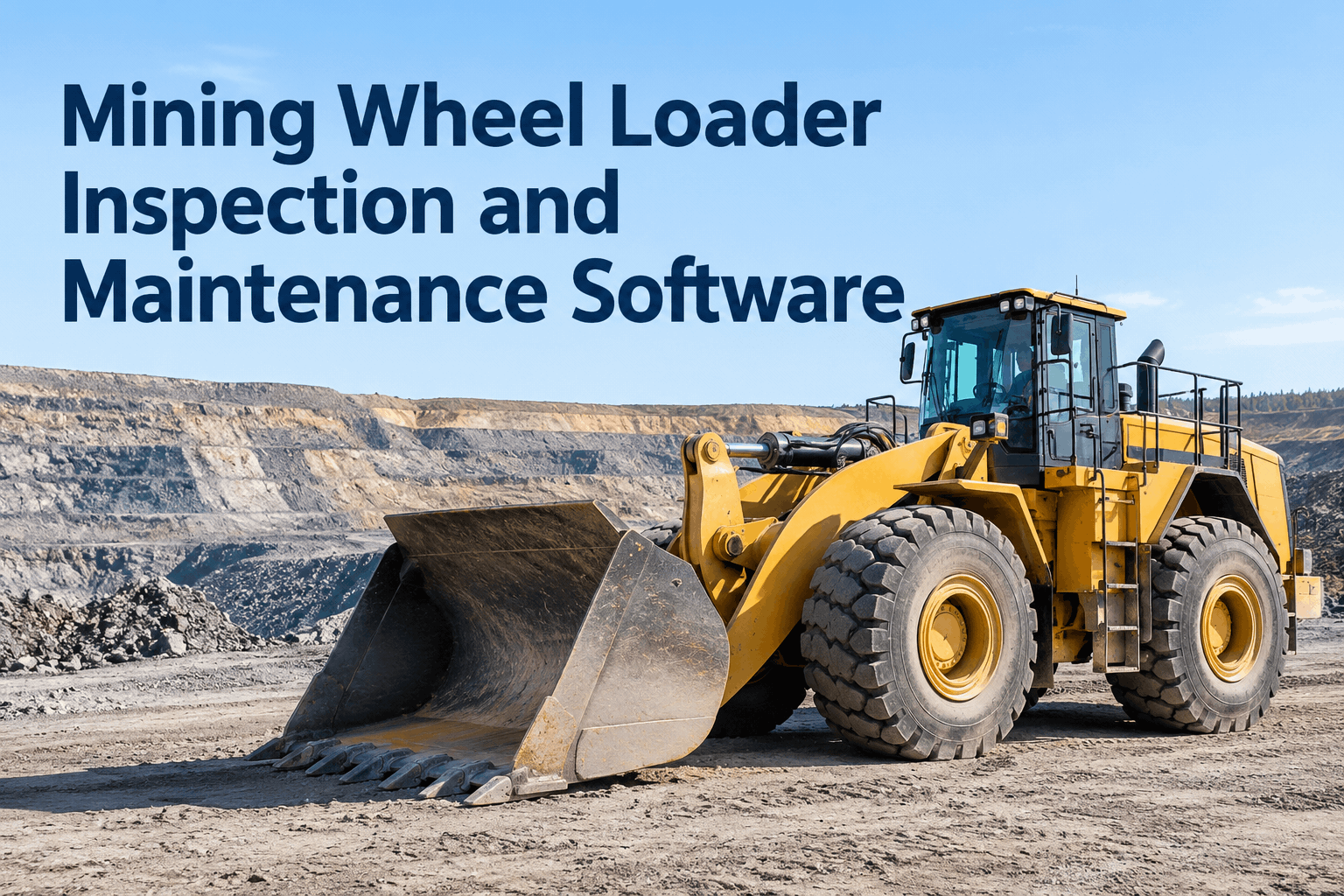
In a truck-and-loader pit, the loader is the constraint — when it stops, the trucks queue and the dig stalls. Mining wheel loader inspection software catches the worn articulation pin, the cut tire, the cracked bucket edge on the pre-shift walk-around, not after a mid-shift failure. See how loader-specific inspections, defect flow, and meter-hour PM work together, then book a demo to map it to your loaders .
Catch the Defect on the Walk-Around, Not Under a Full Bucket
Loader-specific digital inspections for articulation, lift arms, bucket, and tires — defects flow straight to a work order, and PM fires on real meter hours. One connected record per machine.
A mining wheel loader has more to inspect than almost anything else in the pit: it carries truck-scale hydraulics, mobile-equipment articulation, and constant ground-engaging wear in one machine, and it runs in short, brutal load-reverse-tram-dump cycles that punish every joint. Miss the wrong item and it isn't just downtime — roughly a quarter of loader fatalities involve articulation-point failure. The fix isn't a longer paper checklist. It's a loader-specific digital inspection where a flagged pin or cut tire reaches the shop the second it's logged.
The five zones that take a loader outwhere mining wheel loaders actually break — and what the inspection has to catch
Loaders don't fail randomly. Almost all unplanned loader downtime traces back to five inspectable zones. A guided digital checklist built around these is what separates a real loader inspection from a generic walk-around form.
Articulation joint & pins
Pin play, lock function, hose condition at the pivot. The defect most likely to cause loss of steering under load — and the one tied to a disproportionate share of loader fatalities. Measure, don't eyeball.
Tires & wheels
Cuts, chunking, bead damage, and pressure on every corner. Tires drive a huge slice of loader cost per hour; a cut sidewall under a full bucket is a blowout risk and a $3,000–$8,000 replacement.
Bucket, edge & GET
Cutting edge thickness, teeth and adapters, bucket cracks and wear plates. Ground-engaging tools wear continuously; measuring them over time predicts replacement instead of catching it at failure.
Lift arms & hydraulics
Cylinder leaks, hose chafing, lift-arm pivots and pins, pump and line condition. A developing hydraulic fault left running becomes an $18,000–$25,000 pump or motor job — caught early, it's a hose.
Driveline & brakes
Transmission and axle oil condition, final drives, service and park brakes, steering response. Tied to meter hours, these move from "hope it holds" to a scheduled check before the interval closes.
All five, one guided checklist
HVI's loader inspection walks the operator through every zone with photo capture and defect flags — configurable per loader model.
Book a demo to see it →Each zone is a line in HVI's mining wheel loader inspection checklist, with pass/fail, severity, photos, and notes tied to the exact asset. Nothing lives in a glovebox binder. Start a free trial and load your loader template this week
From flagged defect to closed work orderwhy a digital loader inspection beats a paper one every shift
A paper inspection finds the defect and then loses it in a pile on the supervisor's desk. A digital one turns the same flag into tracked work automatically. That gap — between finding a problem and fixing it — is where loader downtime actually lives.
-
1
Operator runs the pre-shift inspection
Guided, loader-specific checklist on a phone or tablet — under 12 minutes, every zone, with photos. Most developing failures are catchable right here, before the machine moves.
-
2
A defect is logged with photo & severity
A cut tire or articulation play gets flagged with a photo, note, and severity tag, attached to that exact loader — not a scribbled line that's illegible by end of shift.
-
3
It becomes a work order in one tap
The fault converts to a work order with the defect details and photos already attached, assigned to a technician, visible the second it's created — not hours later.
-
4
Parts, labor & sign-off recorded
Parts consumed deduct from inventory and link their cost to the job; labor logs against the loader; the technician closes it out on-site. The repair's true cost is captured, not estimated.
-
5
It all lands in the machine's history
Every inspection and repair writes to the loader's record and feeds cost-per-hour analytics — so you can finally see which loaders, sites, and operators are quietly draining the budget.
PM that fires on hours, not hopemeter-hour preventive maintenance tiers for mining wheel loaders
A loader doesn't care about the calendar — it wears by the hour. Tying each service tier to the machine's real meter reading means the 250-hour grease and the 1,000-hour component inspection happen when the loader has earned them, in severe mining duty where intervals tighten. Emergency repairs run 3–5× the cost of the same job planned.
Engine oil & filters, full greasing of loader-arm pivots and the articulation joint, cooling clean-out, quick condition checks.
Hydraulic and transmission service, axle oil inspection, brake and steering checks, articulation joint play measured and torqued.
The most critical interval — where developing wear in drivetrain, hydraulics, and structure gets caught before it becomes a major failure.
HVI auto-generates the work order the moment a loader's hours cross an interval, with the standard tasks and parts kit already attached, and alerts you X hours before it's due. Hour-based PM scheduling turns "we'll catch it next service" into a service that actually fires. Book a demo to see tiered PM on your loader models
The pre-shift loader checklistwhat every mining wheel loader inspection should cover before the machine moves
This is the daily walk-around that keeps a loader safe and hauling. In HVI it's a guided template — tick, flag, photo — so nothing gets skipped when the site is running hot and a defect flows straight to the shop.
Run this on paper and the defects scatter; run it in HVI and every flag becomes tracked work with a photo trail an auditor will accept. Book a demo and see the loader checklist live on one screen
From a pit maintenance supervisor who prioritizes the loader
On our site the loader sets the pace — if it's down, four trucks are parked behind it. So the loader inspection is the one I will not let slide, and before, that meant a clipboard I never actually read until something broke.
What changed the game was the photo on the defect. An operator flags articulation play with a picture, I see it on my phone before he's out of the seat, and it's a work order by the time he's walked to the crib. We caught two hose failures this quarter that would've been pump jobs. The inspection stopped being paperwork and started being the cheapest insurance on the biggest machine.
What loader-specific tracking pays backthe case for inspecting and maintaining loaders as the production constraint
Frequently asked questions
What is mining wheel loader inspection software?
It's a mobile-first digital checklist built around the parts that break on a loader — articulation, tires, bucket, lift arms, hydraulics — that flags defects with photos and sends them straight to the maintenance team. Book a demo to see it on your loaders.
What are the PM intervals for a mining wheel loader?
Most fleets run tiered meter-hour services around 250, 500, and 1,000+ hours, plus a daily pre-shift inspection. Severe mining duty tightens them. HVI sets each interval per loader model and auto-generates the work order when hours are due — see it in a demo.
Why is the articulation joint so important to inspect?
It's what lets a loader steer, and excessive pin play can cause loss of control under load — a disproportionate share of loader fatalities trace to it. It must be measured, not eyeballed, every shift. Book a demo to see how HVI captures it.
How does a defect become a repair in HVI?
A flagged defect converts to a work order in one tap, with the photo and details already attached and assigned to a technician. Parts and labor log against the loader, and it closes out on-site. Book a demo to walk the full flow.
Does it track cost per hour across all my loaders?
Yes. Every inspection and repair feeds a per-machine history and cost-per-hour analytics, so you can rank loaders and spot the ones quietly draining the budget. Start a free trial or book a demo to see the numbers.
Make your loaders the machine you never get surprised by
HVI gives every operator a guided loader inspection, routes flagged defects straight to a work order with photos attached, fires PM on real meter hours, and keeps one cost-tracked history per machine. Articulation, tires, bucket, and hydraulics get caught on the walk-around — not under a full bucket. Live in under two weeks.
- Guided loader inspection, with photos
- Defect → work order in one tap
- Meter-hour PM, per loader model
- Cost per hour, ranked across the yard