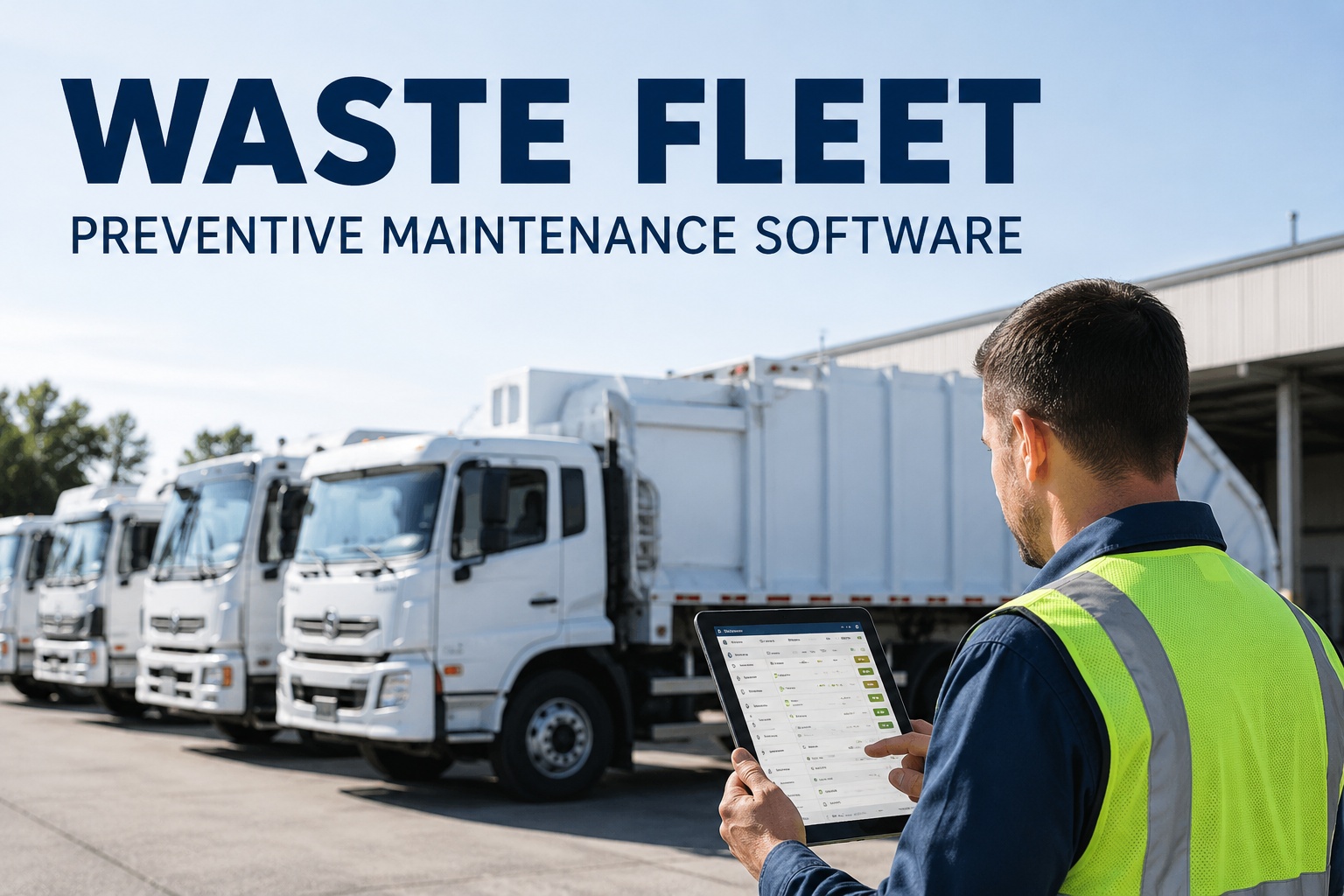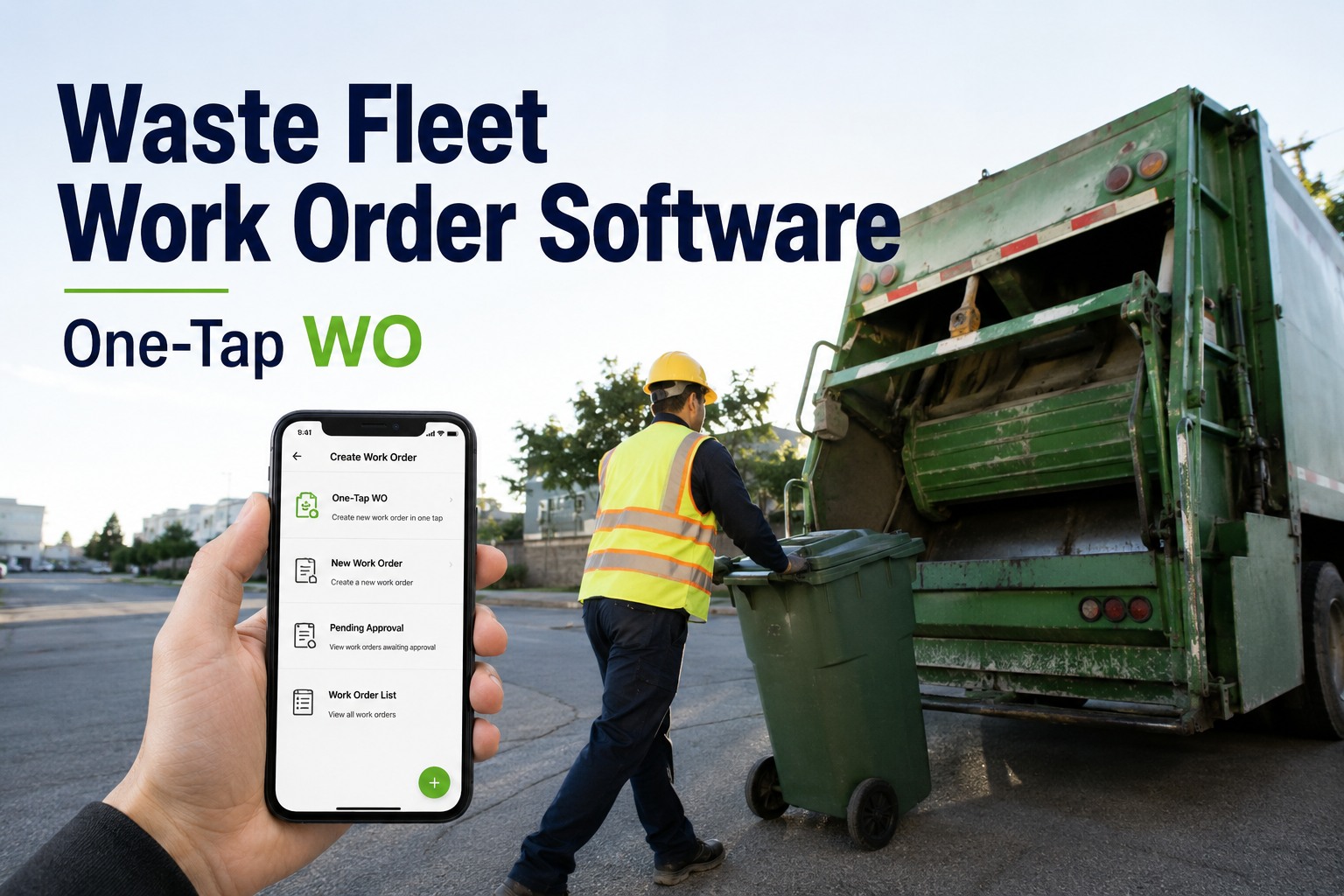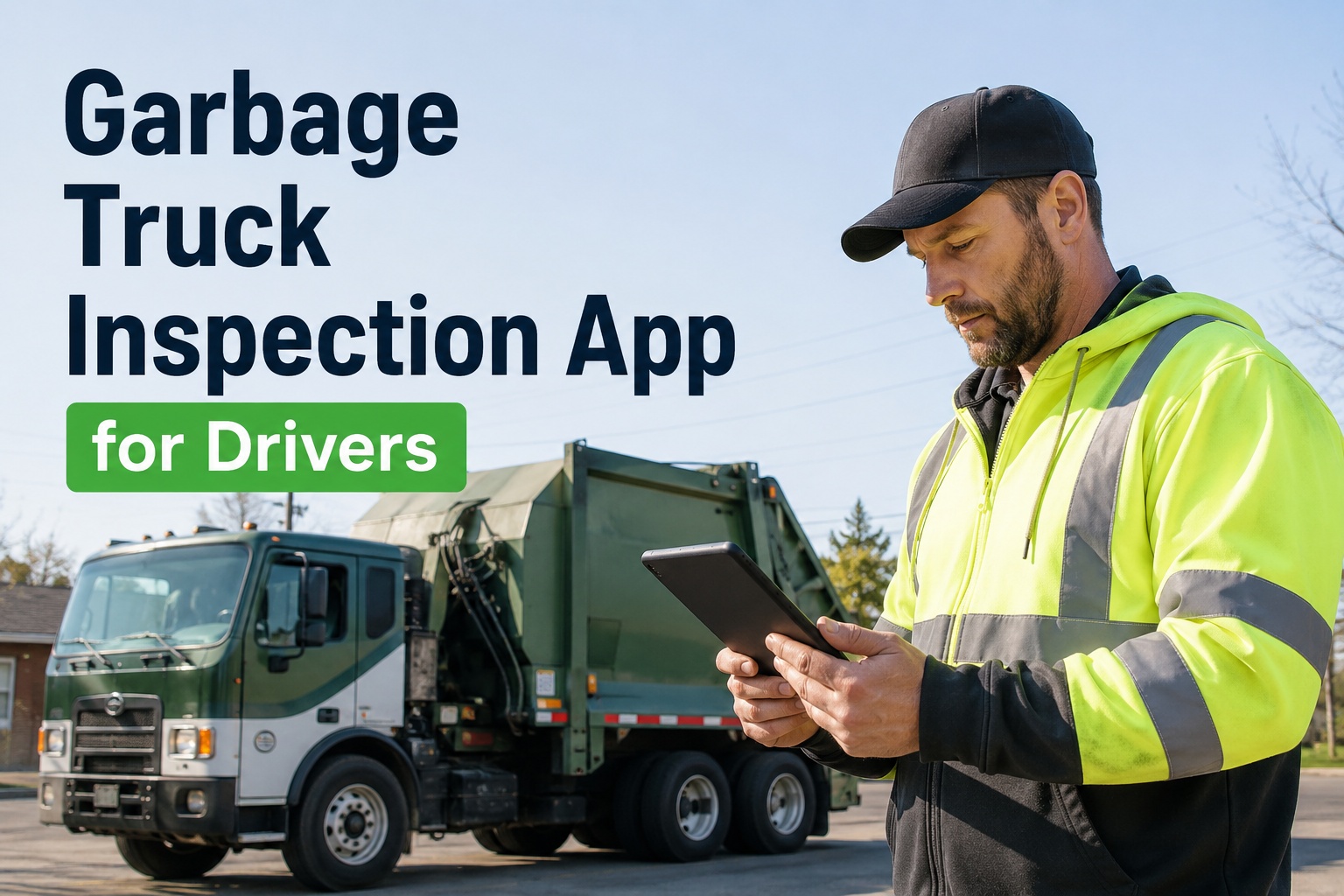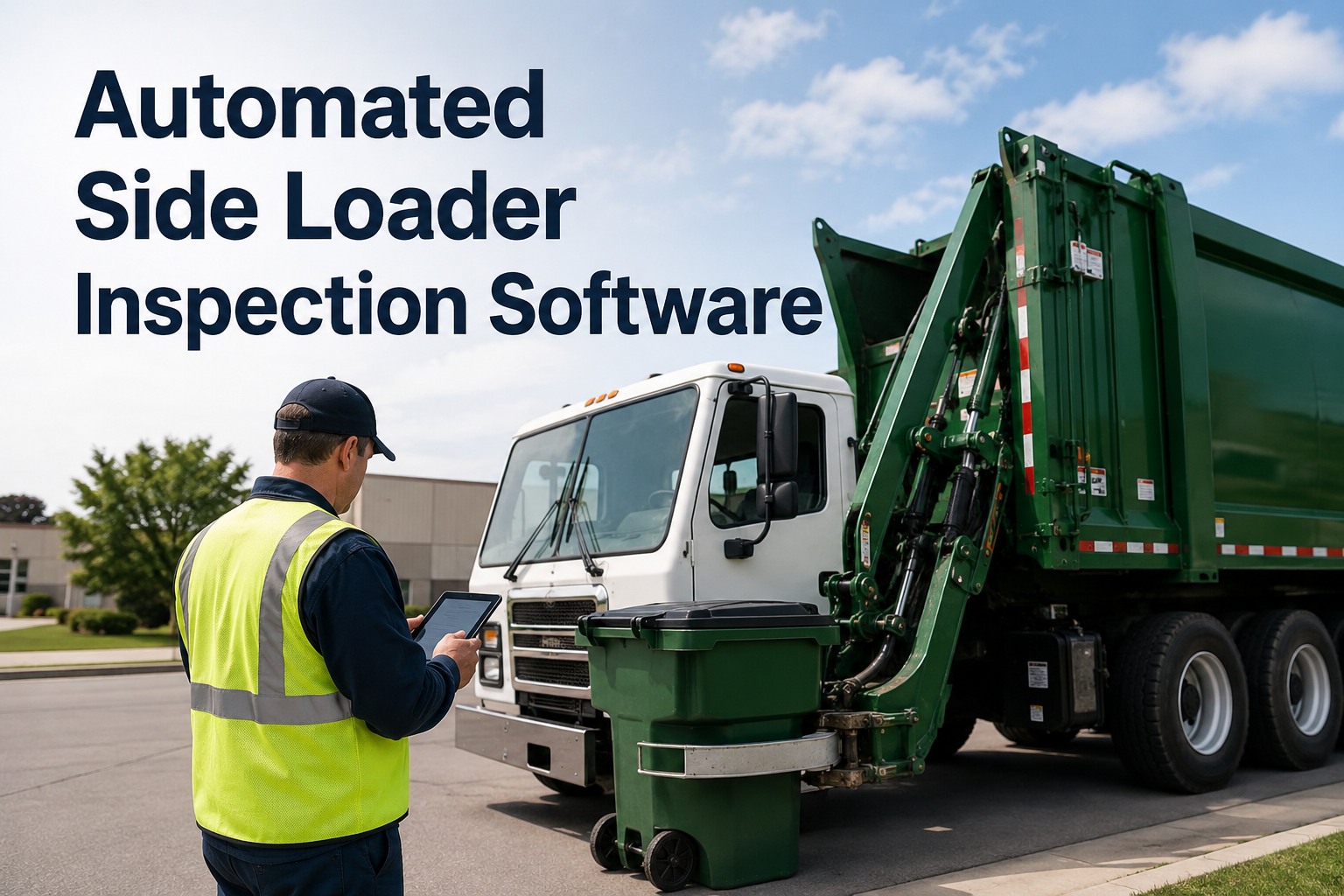
It is 6:12 a.m., your driver has 1,100 carts on the route sheet, and the grabber arm on truck 214 starts hesitating halfway up on the third stop of the day. By 9 a.m. that truck is parked behind the shop, the route is split across two other units, and you are paying overtime to finish what one hydraulic seal took down. Automated side loader inspection software exists to catch exactly this: the arm, hydraulic and packer wear that odometer-based schedules miss because an ASL cycles thousands of times per shift without the miles to show for it. HVI gives your drivers a guided pre-route check tuned to the arm, hydraulics, packer, brakes and cameras, turns flagged defects into one-tap work orders, and schedules PM by engine hours so service comes due on real cycling. If you want to see that flow on your own units before changing anything, you can book a 30-minute walkthrough with your route data and judge it against your current paper or spreadsheet process.
Is your PM schedule blind to the 2,000 cart cycles your ASL arm does every shift?
Mileage-based service intervals were built for highway trucks, not cart-based collection. HVI tracks engine hours, cycle-heavy wear and driver-flagged defects in one CMMS, so the arm that earns your revenue gets serviced before it strands a route.
The numbers behind a downed automated side loader
A single ASL covers roughly 800 to 1,200 carts per route. When one goes down mid-shift, the cost is not just the repair bill - it is the overtime, the missed stops and the second truck sent to finish the route.
A side loader DVIR checklist built for the arm, not adapted from a box truck
Generic DVIR templates ask about lights and tires and stop there. HVI's automated side loader inspection walks the driver through the components that actually fail on cart routes, in the order they naturally check them around the truck.
Grabber arm & gripper
- Gripper pad wear and cracking, both faces
- Arm pivot play and bushing slop at full extension
- Smooth lift and dump cycle, no hesitation or drift
- Cart grab alignment - no side-loading on pickup
Hydraulics & packer
- Cylinder rod scoring, weeping seals, wet fittings
- Hose chafe at rub points along the arm path
- Packer panel operation and unusual cycle noise
- Fluid level and fresh oil spots under the body
Safety systems & cameras
- Hopper and curb-side camera image clarity
- Arm work-light and strobe function
- E-stop and arm lockout response
- Brake feel, park brake hold on grade
Chassis & body
- Tire condition on the curb-side steer and drives
- Tailgate seal and latch - no liquid seepage
- Steering play from constant curb-side maneuvering
- Leaks, lights, mirrors and glass per DOT DVIR
Every item accepts a photo, a voice note and a Repair or Replace flag. The driver signs on screen, and HVI generates a timestamped, DOT-ready PDF before the truck clears the gate. If you want to compare this against your current paper form, bring your checklist to a demo and we will rebuild it live in front of you.
Side loader maintenance software that matches how ASLs actually wear
Four capabilities, each mapped to a failure mode your shop already knows by name.
Engine-hour PM scheduling
Arm cylinders, hydraulic filters and packer service come due on real cycling hours, not just odometer or calendar. Due and overdue alerts hit the shop before the interval passes.
One-tap defect to work order
A flagged gripper pad or weeping seal becomes a work order with photos and voice notes attached. The tech sees the exact component before the truck reaches the bay.
ASL parts inventory
Gripper pads, cylinder seal kits and hydraulic hose pulled against a work order auto-deduct from stock. Low-stock alerts mean the seal kit is on the shelf when the arm starts weeping, not five days later.
Cost-per-route analytics
Weekly cost per truck shows which units are getting expensive to keep. When truck 214's arm repairs outrun its replacement math, you see it in the numbers, not in a gut feeling.
The automated side loader work order flow, step by step
The gap between "driver noticed it" and "tech fixed it" is where most ASL downtime lives. Here is how that gap closes when the inspection and the work order live in the same system.
Driver flags arm hesitation at 6:20 a.m.
During the pre-route check, the lift cycle feels slow. The driver marks the arm item as Repair, adds a photo of a damp cylinder fitting and a 10-second voice note, and signs the DVIR. Total time added: about 90 seconds.
Work order opens automatically, tech is notified
HVI creates the work order with the defect photos, the truck's engine hours and its open PM list attached. The shop foreman sees it prioritized against today's other jobs - no text-message photos, no lost paper.
Parts pulled and auto-deducted
The seal kit and a section of hose are issued against the work order. Stock decrements, the cost posts to truck 214, and the parts manager sees the reorder point hit on seal kits across the fleet.
Truck back on route, cost logged per unit
A $40 seal and two shop hours replace a mid-route failure. The repair, the downtime and the parts all land on the unit's cost history, feeding the weekly cost-per-route view. You can watch this exact flow in a live demo using one of your own recent arm repairs as the example.
What one caught seal is worth: the math on a 12-truck ASL fleet
Take a municipal contractor running 12 automated side loaders on residential cart routes. This is an illustrative example, but every number in it is the kind your own cost reports already produce.
If structured pre-route checks and engine-hour PM catch just one arm or hydraulic failure per truck per year, a 12-truck fleet avoids roughly $30,000 in emergency repairs, overtime and service credits - before you count the audit value of signed, photo-backed DVIRs. Fleets that start logging ASL inspections free typically see the first caught defect pay for the conversation within the first month.
See your own ASL checklist running in HVI
Book a 30-minute demo and we will build your grabber arm and hydraulic inspection live, on one of your units, with your PM intervals.
Why side loader PM schedules fail on odometer alone
A residential ASL may drive only 60 to 90 miles in a shift while its PTO-driven hydraulics run near-continuously. The table below shows what each trigger actually measures for cart-based collection.
| Component | Odometer trigger says | Engine-hour trigger says | What HVI does |
|---|---|---|---|
| Arm cylinder seals | Service at 30,000 mi - months late | Due at 1,000 hrs of cycling | Alerts at whichever trigger hits first |
| Hydraulic filters & oil | Interval stretches on short routes | Tracks real PTO run time | Due and overdue alerts to the shop |
| Gripper pads | Invisible to mileage entirely | Correlates with cycle count | Driver photo flag plus scheduled swap |
| Packer wear plates | Underestimates dense-route wear | Reflects actual compaction time | PM kit reserved in parts inventory |
| Brakes & steer tires | Reasonable proxy, still checked | Stop-and-go wear tracked by inspection | Both triggers plus DVIR condition data |
HVI runs date, mileage and engine-hour triggers in parallel on every unit, so nothing on the truck depends on a single odometer reading. If your current side loader maintenance software cannot see engine hours, book a demo and compare the PM calendars side by side for one of your route trucks.
Fuel tracking for CNG and diesel ASLs, per truck, with receipts
Refuse trucks are among the heaviest fuel consumers in any fleet, and ASLs idle their hydraulics all shift. When a unit's fuel burn climbs 15% against its route siblings, something mechanical is usually wrong.
What you log per unit
- Every fill with a receipt photo - diesel, CNG or mixed yards
- Gallons or diesel-equivalent, odometer and engine hours at fill
- Fuel card imports matched to the truck automatically
- Cost per route and cost per cart, trended weekly
What the trend catches
- Hydraulic bypass or internal leakage loading the pump
- Dragging brakes from constant curb-side stops
- Fuel card misuse when one unit out-burns its route
- The right rebuild-vs-replace moment on aging units
Because fuel, inspections, work orders and parts all post to the same unit record, the weekly view answers the question every Director of Maintenance eventually faces: which of my ASLs is quietly becoming the expensive one? Fleets that sign up and load their units free usually have that answer inside the first reporting cycle.
The short version on automated side loader inspection software
- Cycles, not miles, kill ASL components. Thousands of arm lifts per shift mean odometer-based PM runs permanently late on the parts that earn your revenue.
- The pre-route check is your cheapest repair window. A seal caught at 6:20 a.m. costs hundreds; the same seal failing mid-route costs thousands plus overtime and missed stops.
- Defects must become work orders instantly. Paper DVIRs and texted photos leak repairs; a one-tap flag with photos and voice notes closes the loop before the truck leaves the yard.
- Cost per route decides replacements. When fuel, parts and labor post per unit, the truck that is quietly draining budget shows up in the report, not in a breakdown.
- Automated side loader inspection software pays for itself on one caught failure. HVI bundles the DVIR, engine-hour PM, work orders, parts and fuel in one CMMS with no per-user fees, so the whole crew uses it from day one.
I used to find out about arm problems when a driver called from the route, and by then the day was gone. Now the pre-trip flags hit my dashboard before the trucks roll, and I watch one number every Monday: cost per route, per truck. Last quarter we caught three hydraulic leaks at the seal stage. Three years ago each of those would have been a tow, a cylinder and a route finished on overtime.
Automated side loader inspection software FAQs
What should an automated side loader pre-trip inspection include?
Why should ASL preventive maintenance run on engine hours instead of mileage?
How does a flagged defect become a work order in HVI?
Does HVI work for mixed fleets, not just side loaders?
What does HVI cost for an ASL fleet, and how fast can we start?
Keep every arm cycling and every route on schedule
Start your ASL fleet on guided inspections, engine-hour PM and one-tap work orders - or let us show you on your own units first.
Free to start - Works on any phone or tablet - No card needed