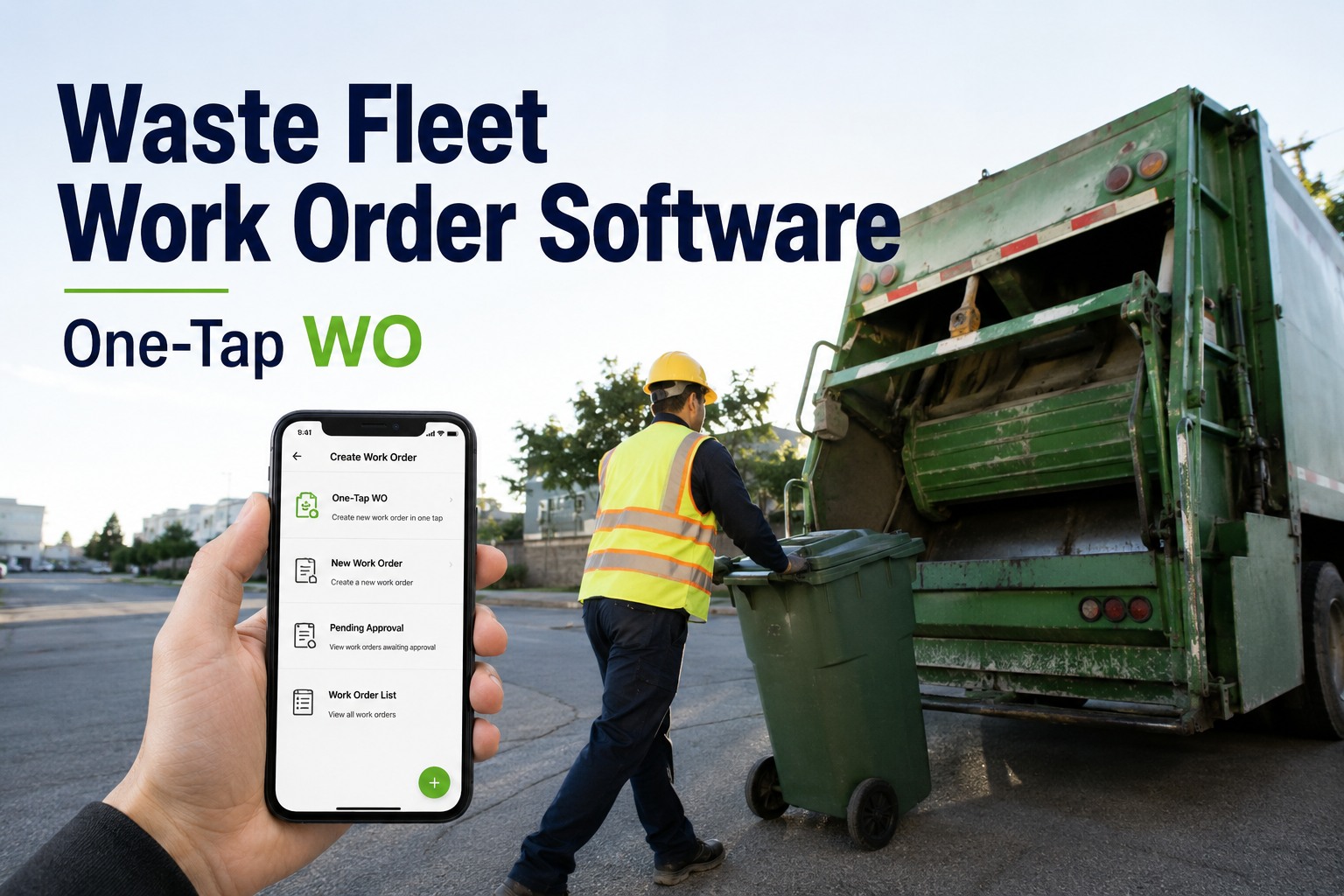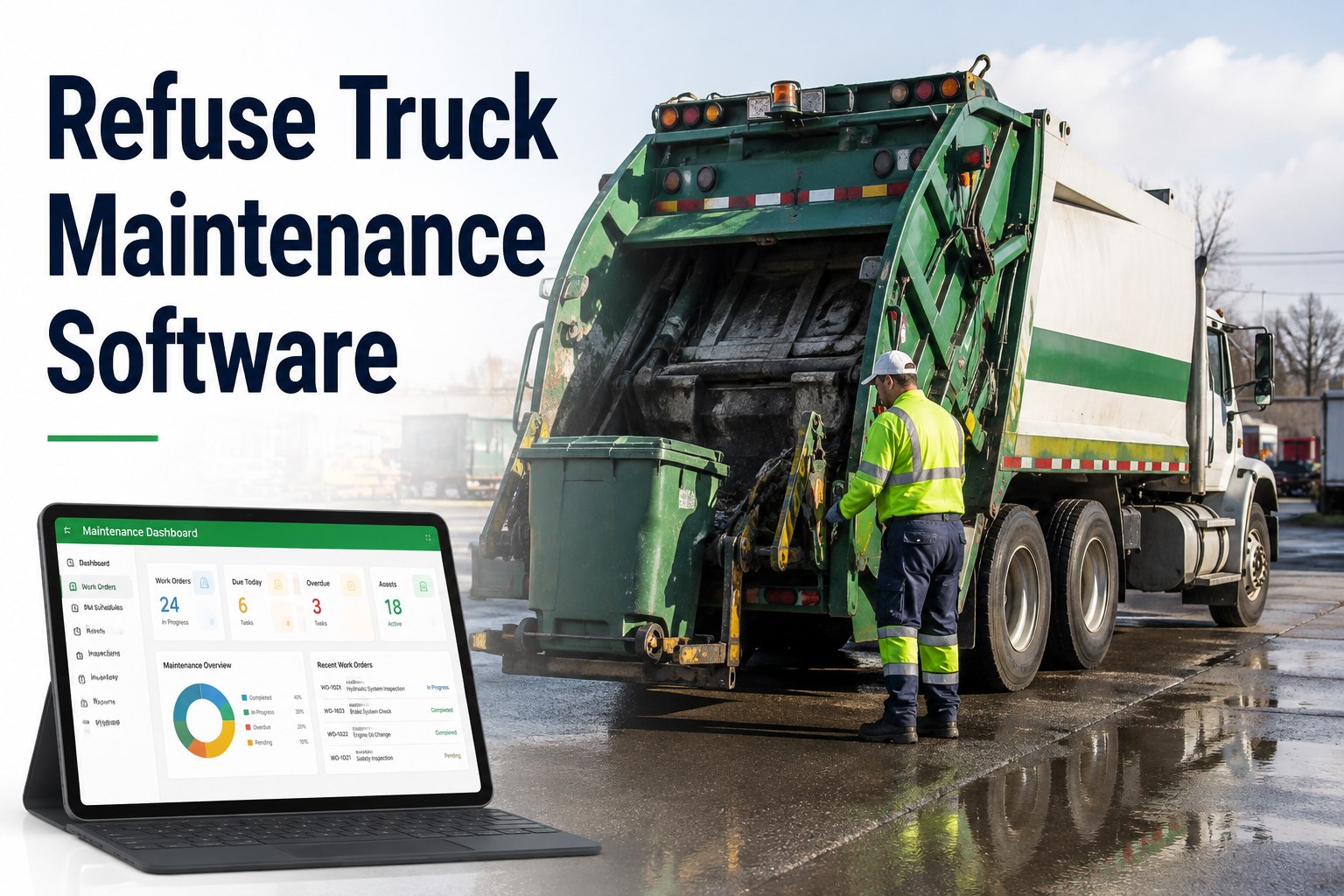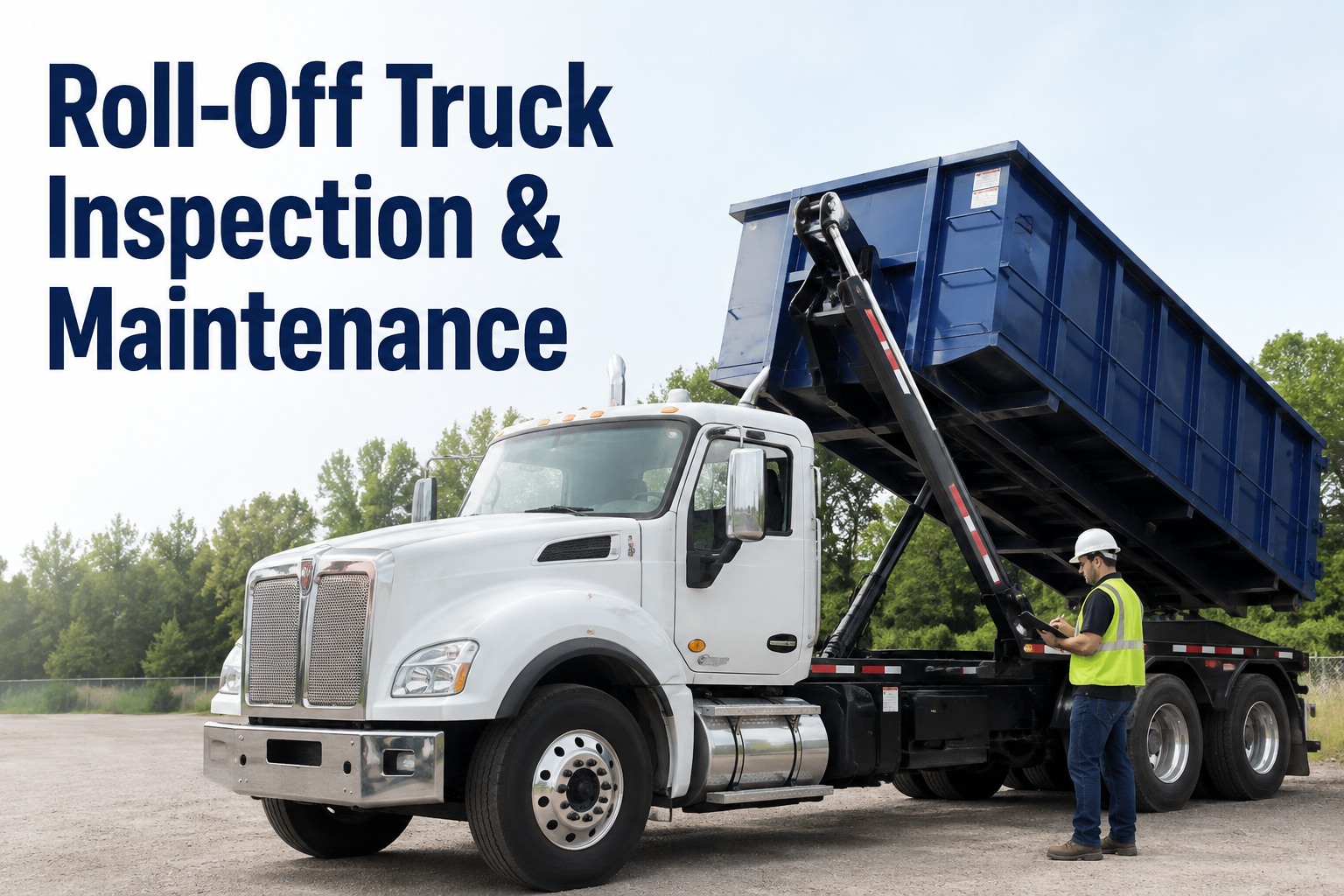
It is 6:40 on a Tuesday morning and your side-loader is dead at the curb with a full route still ahead, a driver on overtime, and residents already calling the office. The oil change that would have prevented it was due 400 miles ago, but the whiteboard said next week. This is exactly the problem waste fleet preventive maintenance software is built to kill: collection trucks run every single day, service intervals come due fast, and a missed interval quietly becomes a mid-route breakdown. HVI watches every truck by odometer, engine hours, or calendar and fires a work order the moment a threshold is hit, so the 10,000-mile oil and filter service or the 25,000-mile hydraulic and packer job never slips. If you want to see what that looks like on your own units, you can book a 30-minute walkthrough of the PM engine and map your intervals with the team.
Every truck serviced on time. Every route covered. Zero whiteboard guesses.
HVI tracks odometer, engine hours and calendar dates for every collection truck in your fleet and auto-creates the work order the instant a PM threshold is reached — before a missed service becomes a breakdown on route.
The real price of a skipped service interval
A refuse truck that misses one oil change rarely fails in the yard. It fails at 7 a.m. on a packed route, where every hour of downtime multiplies into overtime, missed pickups and a tow bill.
Haulers moving to automated PM scheduling report mid-route failure rates falling by roughly a third within the first few months.
Industry maintenance benchmarks consistently show an unplanned roadside repair costing around three times the same job done as scheduled shop work.
Between a missed route, driver overtime, a tow and catch-up runs, one down collection truck easily burns $760 or more per day — before the repair itself.
A packer body can cycle well over a thousand times on a single route — wear that accumulates by engine hour, not by mile, and that odometer-only schedules miss.
Why mileage-based PM alone fails garbage trucks
A line-haul tractor lives on its odometer. A refuse truck does not. It idles at the curb, cycles the packer a thousand times a day and may only add 60 miles while doing eight hours of brutal hydraulic work. That is why a serious collection truck PM schedule runs on three clocks at once.
| PM Trigger | What it measures | Best for | What it misses alone |
|---|---|---|---|
| Odometer (mileage) | Distance travelled | Oil and filter, transmission service, tire rotation, brake checks | Hydraulic wear from hours of idle-time packer cycling |
| Engine hours | Time under load, including idle | Hydraulic pumps, packer bodies, PTO systems, filters on high-idle routes | Distance-based wear like tires, brakes and driveline |
| Calendar | Elapsed time regardless of use | Annual inspections, DOT/periodic checks, fluid aging, seasonal service | Anything wear-related on hard-worked daily units |
HVI lets you stack all three triggers on one asset: the oil change fires at 10,000 miles, the hydraulic and packer service at 25,000 miles or a set hour count — whichever comes first — and the annual compliance inspection on the calendar date. The first threshold to arrive wins, and the work order goes out automatically. If you want to see how mixed triggers behave on a real fleet, walk through it on a live demo with your own intervals.
How auto work order PM runs a refuse shop
The gap in most fleets is not knowing the interval — it is the handoff between "due soon" and "actually in the bay." Here is the five-step flow HVI automates so nothing depends on a whiteboard or a foreman's memory.
Meters update themselves
Odometer and engine-hour readings flow in from GPS and telematics integrations, fuel entries or a quick driver update in the app. No manual log sheets, no chasing drivers for numbers.
Threshold crossed, work order created
The instant a unit crosses its PM interval, HVI generates the work order with the full task list attached — oil and filter at 10K, hydraulic and packer service at 25K, major service at 75K, or any custom checklist you build.
Technician notified in the app
The shop tech gets a push notification with the unit, the tasks, the parts list and the history. Nothing lives on a whiteboard, and nothing depends on one person being in the office that morning.
Scheduled around route windows
PM is booked into the gaps between routes — after the morning run, before the afternoon commercial block — so the truck earns while it is needed and gets serviced while it is spare.
Closed, costed and audit-ready
Labour hours, parts and photos are captured on the work order, cost per asset updates automatically, and the timestamped record sits ready for any DOT, client or insurance audit. You can set this flow up free on your first trucks and see it working this week.
A preventive maintenance schedule built for collection trucks
Refuse bodies fail where the work happens: hydraulics, packer panels, lift arms and the filters feeding them. A practical garbage truck preventive maintenance program layers services by severity, and HVI enforces each layer automatically.
Oil and filter service
- Engine oil and filter change
- Fuel and air filter check
- Fluid levels and leak inspection
- Brake, tire and light walk-around
Hydraulic and packer service
- Hydraulic fluid and filter replacement
- Cylinder, hose and fitting inspection
- Packer panel and blade wear check
- Lift arm pins, bushings and grease points
Major service
- Transmission service and driveline inspection
- Cooling system flush and pressure test
- Full hydraulic system overhaul check
- Body, frame and mount inspection
Your own intervals
- Per-unit or per-route-type schedules
- Engine-hour triggers for high-idle routes
- Seasonal and pre-winter service checklists
- Annual DOT and compliance inspections
Every tier carries its own task list, parts list and labour estimate inside HVI, so the technician opens one work order and sees the whole job. Fleets that want help tuning intervals to their body style and route density can map their PM schedule in a demo session before rolling it out.
Stop finding out about missed PM at the side of the road
See HVI's preventive maintenance engine running on your own fleet — bring your intervals and we will build the schedule live in 30 minutes.
Waste fleet preventive maintenance software that runs itself
Triple-trigger PM scheduling
Odometer, engine hours and calendar on every unit, with due-soon and overdue alerts. Outcome: no interval ever slips, and mid-route breakdowns fall by roughly a third.
Auto work orders with task lists
The threshold creates the work order, the technician gets the app notification, and parts attach automatically. Outcome: the whiteboard dies, and the shop runs on facts.
Photo-backed DVIR to work order
Driver defects from daily inspections convert to work orders in one tap, with photos attached. Outcome: small hydraulic weeps get fixed in the bay, not on the route.
Uptime and cost-per-asset analytics
See PM compliance rate, downtime hours and cost per truck at a glance. Outcome: you prove the program is working with numbers, not gut feel, at the next budget meeting.
What breakdown prevention is worth to a 25-truck hauler
Run the arithmetic on a mid-size residential fleet and the case for proactive maintenance stops being theoretical. These are conservative, illustrative numbers — plug in your own and the picture usually gets worse, not better.
That is the payback from breakdown prevention alone, before you count the audit time saved by timestamped records or the parts leakage caught by inventory tracking. Fleets that bring their own downtime numbers to a demo usually leave with a payback measured in weeks, not years.
The bottom line on refuse fleet PM
Mileage alone is not enough
Refuse trucks wear by the hour as much as by the mile. Any waste fleet preventive maintenance program that ignores engine hours is planning its own mid-route failures.
Automation beats memory
The interval is rarely the problem — the handoff is. Auto-created work orders with app notifications remove the whiteboard, the sticky note and the forgotten phone call from the chain.
The payback is fast and measurable
Cutting mid-route breakdowns by roughly a third is worth thousands per month to even a modest fleet, and PM compliance analytics let you prove it. If you are ready to move off spreadsheets, you can start scheduling PM free today and scale up when you are ready.
I used to find out a truck was due for service when it broke down on route. Now my phone tells me two weeks early, the work order is already written, and the tech has the parts pulled before the truck rolls in. The number I watch is unplanned downtime hours — we were losing about 70 a month across the fleet, and last month it was 22. My only gripe is I didn't do it three years earlier.
Waste fleet preventive maintenance FAQs
What is the best PM schedule for a garbage truck?
Why do refuse trucks need engine-hour maintenance tracking?
How does auto work order PM actually work in HVI?
Can PM be scheduled around collection route windows?
How fast can a waste fleet get started, and what does it cost to try?
Your next breakdown is already on the calendar — unless you schedule the service first
Put every collection truck on odometer, engine-hour and calendar PM that creates its own work orders. Book a demo and we will map your intervals live, or start free and build it yourself today.
Free to start · Works on any phone · No card needed