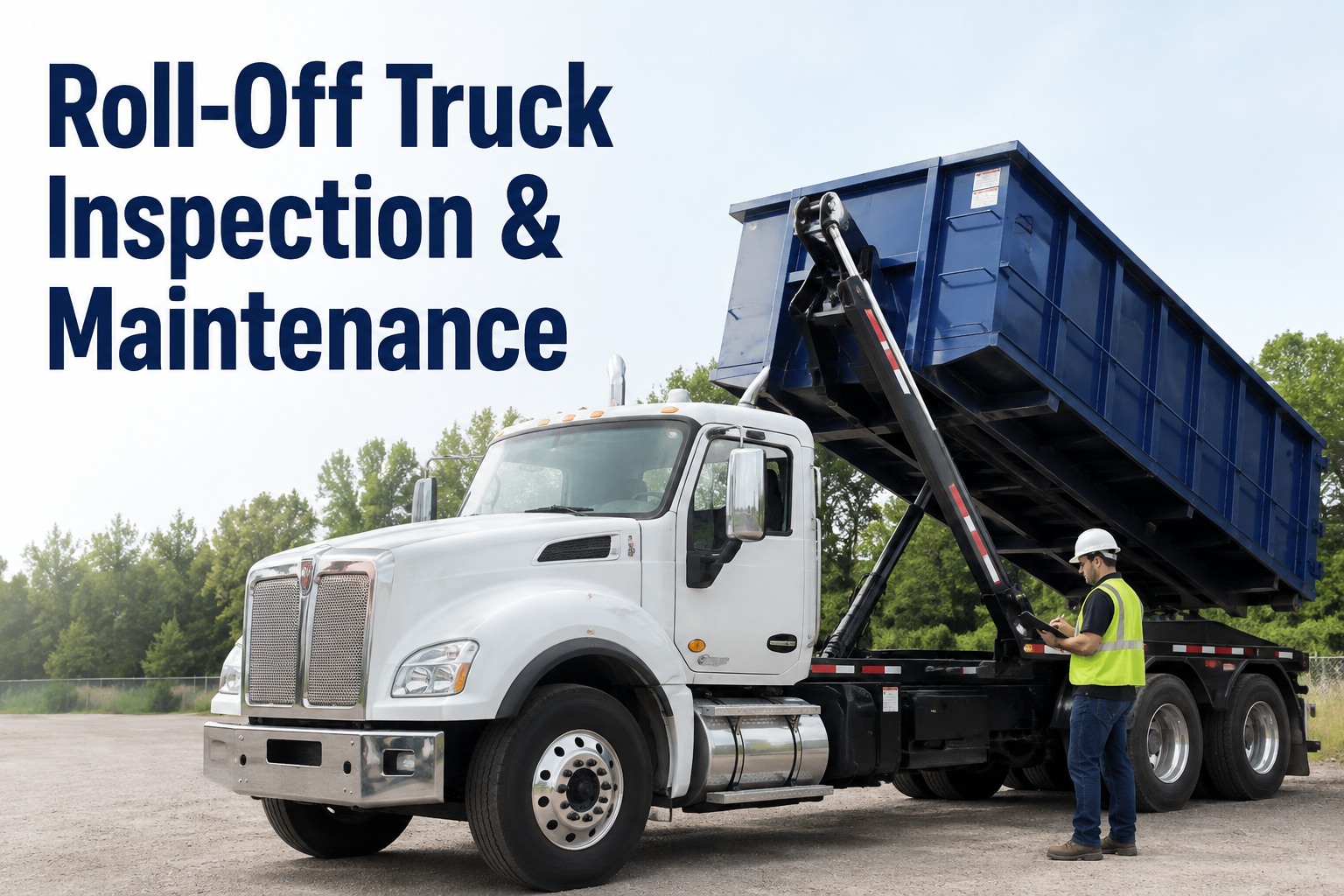
It is 6:40 a.m., your driver is standing next to a loaded 30-yard container at a customer's site, and the hoist will not lift it back on the truck. A frayed cable that nobody logged on Friday just became a stranded box, an angry customer, and a truck down for two days. Roll-off truck inspection software exists to catch exactly this, before the cable snaps instead of after. HVI gives your drivers a pre-route checklist built for the roll-off body — cable, hoist, hydraulics, subframe, brakes, lights — with photos, voice notes and Repair or Replace flags, and turns any defect into a work order in one tap. If you want to see that defect-to-work-order flow on your own units, you can book a 30-minute walkthrough here and watch it end to end.
A hoist failure strands the container, the truck and the customer. Catch it at 6 a.m., not at the jobsite.
Cable, hoist and hydraulic checks take your drivers under five minutes on any phone. Every flag reaches the shop before the truck leaves the yard.
- Cable, sheave and hook inspection with photo proof and wear flags
- Hydraulic cylinder, hose and fitting leak checks with severity levels
- Signed, DOT-ready PDF DVIR generated the moment the driver submits
- One-tap work order with the tech notified and parts pulled from stock
The numbers behind roll-off downtime
A roll-off truck inspection checklist that covers the hoist, not just the headlights
Generic pre-trip forms were written for highway tractors. A roll-off lives and dies by its hoist system, so HVI splits the checklist into the zones that actually fail on these trucks — and every item carries a photo option, a voice note and a Repair or Replace flag.
Hoist & Cable System
- Cable condition — frays, kinks, broken strands, corrosion
- Sheaves and rollers — wear, flat spots, free rotation
- Hook, latch and swivel — cracks, deformation, latch spring
- Winch drum — spooling, cable anchor, drum guards
Hydraulics
- Cylinders — rod scoring, seal weep, drift under load
- Hoses and fittings — chafing, weeping, abrasion points
- Reservoir level, breather cap and return filter condition
- PTO engagement and pump noise under load
Subframe & Locks
- Subframe rails — cracks at stress points and welds
- Container locks, hold-downs and rear hinge pins
- Rails and rollers — lubrication, wear, alignment
- Tarp system — arms, springs, mesh tears
Chassis & Safety
- Brakes, air system and gladhand condition
- Steering, suspension and tire condition/inflation
- Lights, reflectors, backup alarm and beacon
- Mirrors, glass, wipers, horn and fire extinguisher
Every completed check produces a signed, timestamped, photo-backed PDF that satisfies DOT DVIR requirements and client audit requests. Drivers finish on any phone in the yard or at a remote site — no app-store gymnastics, no paper book in the cab. If you want to see the checklist running on a real roll-off unit, walk through it on a live demo with your own truck list loaded.
How a flagged cable becomes a finished work order before lunch
The old way: driver texts a blurry photo to the group chat, the foreman sees it at 9 a.m., the truck is already on route, and the cable lets go at the third drop. Here is the same defect moving through HVI instead.
Driver flags the fray at 6:05 a.m.
During the pre-route check, the driver photographs three broken strands on the winch cable, marks it Replace, adds a voice note, and submits. The inspection PDF is signed and filed automatically.
The shop is alerted instantly
The defect alert hits the maintenance manager's phone with the photo, the truck number, the odometer and the severity. The unit is held in the yard — no debate, no lost message.
One tap opens the work order
The flagged item converts to a work order with the defect photos attached. The technician is assigned and notified, and the cable assembly is pulled from parts inventory against that truck.
Cost lands on the right truck
Parts, labour hours and any outside vendor cost are captured on the work order and roll up to cost-per-truck and cost-per-division reports — so you finally see which units eat the budget.
Truck back on route by 1 p.m.
The tech closes the work order with completion photos, the truck returns to service the same day, and the whole repair is documented for the next DOT or client audit.
That five-step loop is the difference between a same-day repair and a two-day stranding. You can start logging inspections free and run this exact flow on your first truck today.
Roll-off PM scheduling by mileage, engine hours or calendar — whichever hits first
Roll-off trucks live a strange life: low road miles, brutal PTO and hydraulic hours, and long idle time at sites. A mileage-only PM schedule under-services the hoist; a calendar-only one over-services quiet trucks. HVI tracks all three triggers at once and fires the service on whichever threshold arrives first.
| PM Task | Trigger | Typical Interval | What Happens If You Miss It |
|---|---|---|---|
| Winch cable inspection & lubrication | Engine hours | Every 250 PTO hours | Strand breakage under load — dropped container, injury risk, stranded box |
| Hydraulic oil & filter service | Engine hours | Every 1,000 PTO hours | Pump and valve wear, slow hoist cycles, cylinder seal failure |
| Sheave, roller & hinge-pin greasing | Calendar | Weekly | Seized rollers, cable chafing, cracked hinge pins |
| Chassis lube, brakes & DOT items | Mileage | Every 10,000–15,000 mi | Brake violations, out-of-service orders, CSA score damage |
| Subframe crack inspection | Calendar | Quarterly | Structural failure under a loaded box — the worst day your shop can have |
| Tarp system & safety equipment | Calendar | Monthly | Load-securement citations and failed site safety audits |
Every interval above runs as an automatic due-and-overdue alert in HVI, fed by odometer and hour-meter readings your drivers enter at inspection or your GPS/telematics integration pushes in. When a service comes due, the work order opens itself with the parts list attached. Maintenance managers who see the PM calendar in a demo usually spot their first missed interval within minutes.
See the defect-to-work-order flow on your own roll-off trucks
Book a 30-minute demo and we will load one of your units, run a pre-route inspection, flag a defect and open the work order live.
What one caught cable defect is worth to a 12-truck roll-off fleet
Run the arithmetic on a single prevented failure. The numbers below are conservative industry-typical figures, not best-case marketing math.
Failure found at the jobsite
- 2 truck-days lost × $760/day revenue = $1,520
- Emergency cable + cylinder call-out: $1,800
- Customer penalty / lost haul contract risk: $500+
- Driver idle time and re-dispatch chaos: $300
Same defect caught at pre-route
- Truck held in yard, spare covers route: $0 lost revenue
- Planned cable replacement, in-stock part: $650
- 4 labour hours at shop rate: $380
- Truck back on route same afternoon: $0 penalty
Catch one hoist or hydraulic defect a month across a 12-truck fleet and the software pays for itself many times over — before you count the audit time saved, the parts leakage stopped, or the fuel variance you finally see per truck. Fleets that book a demo with their own cost numbers leave with a payback figure specific to their operation.
Four capabilities, mapped to the four ways roll-off fleets lose money
Body-specific digital inspections
Cable, hoist, hydraulics, subframe and chassis checklists with photos, voice notes and Repair/Replace flags kill paper DVIRs and text-message defect photos — and every inspection is a signed, audit-ready PDF.
Instant defect-to-work-order
One tap converts a flagged sheave or cylinder into a work order with the tech notified and parts reserved — cutting unplanned downtime from days to hours and ending the group-chat black hole.
Triple-trigger preventive maintenance
Mileage, engine-hour and calendar PM run in parallel with due-and-overdue alerts, so hoist service and hydraulic maintenance happen on the truck's real duty cycle — not on a wall calendar guess.
Fuel, parts and cost-per-truck reporting
Fuel logs with receipt photos cover diesel and CNG side by side, parts pull from multi-shop inventory against each unit, and cost reports roll up per truck and per division — so the truck eating your margin has nowhere to hide.
Roll-off maintenance software that keeps containers moving
A roll-off truck is a hoist system bolted to a chassis, and the hoist system is where the money leaks. The fleets that stay ahead of it share three habits:
Inspect the body, not just the cab
Cable, sheave, cylinder and subframe checks belong on every pre-route, with photo proof — because those are the failures that strand a container at a customer's site.
Close the loop the same morning
A defect that reaches the shop at 6:10 a.m. is a same-day fix. A defect buried in a text thread is a two-day stranding and a $4,000 problem.
Service by duty cycle, not by guesswork
Roll-off trucks rack up PTO hours faster than miles. PM triggered by mileage, engine hours and calendar together keeps hoist and hydraulic service honest.
HVI wraps all three habits into one platform your drivers and techs actually use — with no per-user fees, no implementation fees and onboarding included. You can sign up free and run your first roll-off inspection today, or bring your toughest truck to a demo and watch the workflow handle it.
I used to find out about hoist problems when a driver called from a customer's driveway with a box half-on, half-off. Now the cable photo is on my phone before he leaves the yard. The number I watch is truck-days lost per month — we were at nine, and last quarter we averaged two. My only gripe is the drivers grumbled for exactly one week about doing inspections on their phones, and now they grumble if the signal is slow.
Roll-off truck inspection software — FAQ
What should a roll-off truck pre-trip inspection include beyond the standard DVIR?
How does a flagged defect become a work order in HVI?
Can HVI schedule PM by engine hours instead of mileage for roll-off trucks?
Does it handle both diesel and CNG roll-off trucks?
How long does it take to get a roll-off fleet off paper and onto HVI?
Keep every container moving — start with your next pre-route
Put the hoist, cable and hydraulic checklist in your drivers' hands this week, and give your shop a work order pipeline instead of a group chat.
Free to start — Works on any phone — No card needed