Fuel Tracking Software for Off-Highway Transport Fleets & Diesel Cost Control

By William Jerry on June 3, 2026

fuel-tracking-off-highway-transport-fleets

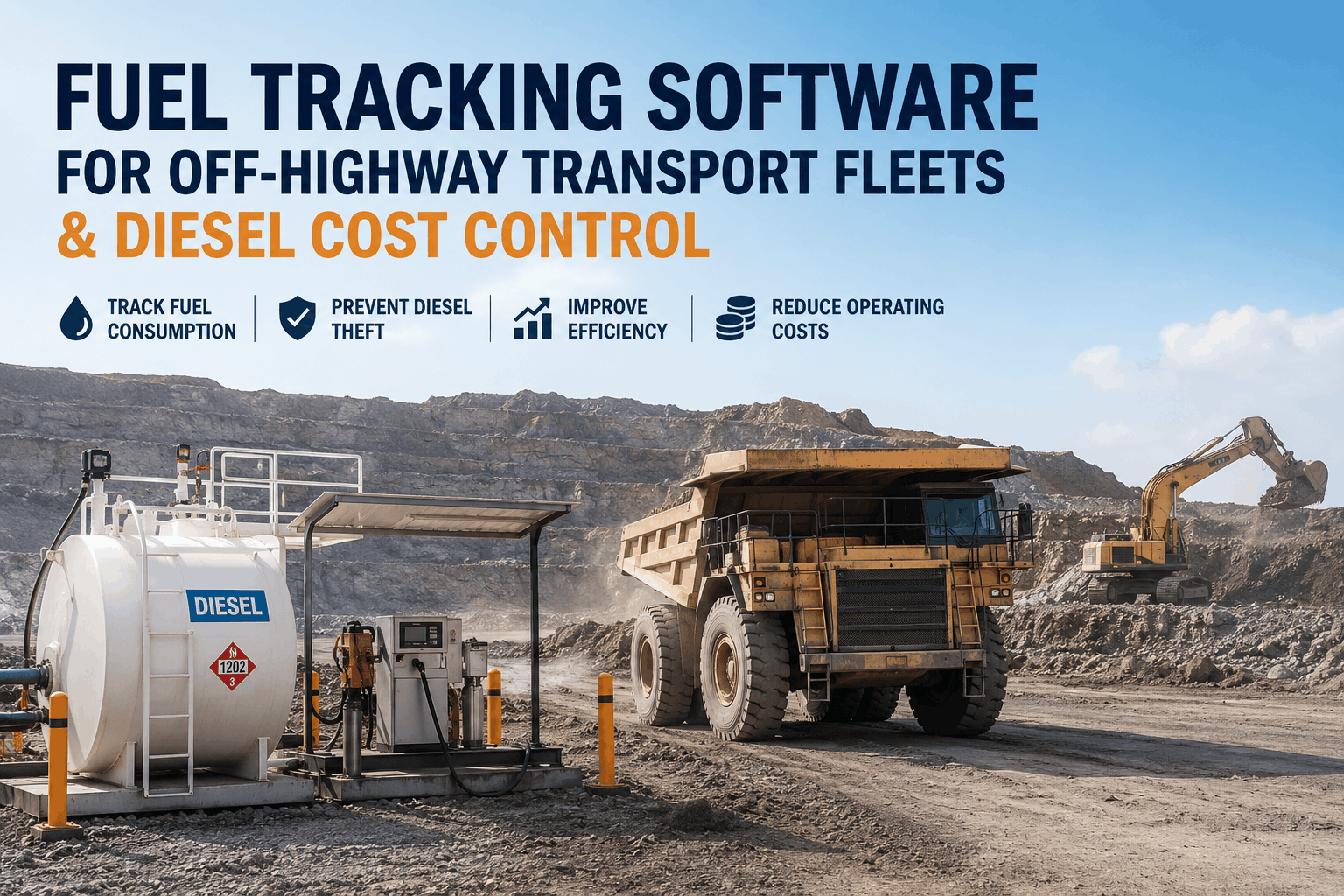
On a highway fleet, every gallon leaves a trail — a fuel card swipe, a station receipt, a transaction timestamp. Off-highway operations have none of that. A quarry, a mine, an aggregate site runs on bulk diesel pumped from on-site tanks into ultra-class haul trucks that never see a public pump, and a single one of those trucks can burn 300–500 litres an hour, around the clock. Consumption at one site climbs into hundreds of thousands of litres a week, diesel runs 20–40% of an open-cast operation's total cost — and in some studies up to 50% of operating expense — and yet most sites still reconcile that river of fuel against a clipboard reading and a delivery invoice. That blind spot is where the money goes: idle burning fuel for zero tonnes moved, a tank that "loses" 400 litres no one can explain, a truck quietly consuming 18% more than its identical sibling on the same haul road. Fuel tracking software built for off-highway fleets closes the blind spot — metering bulk fuel to the machine that burned it, flagging the loss that paper hides, and catching the idle and the theft that quietly inflate cost per tonne. This page breaks down where off-highway diesel disappears and how tracking it turns your single largest controllable cost into your biggest savings lever.

Bulk Diesel Has No Receipt. That's Exactly the Problem.
HVI meters every litre from the on-site tank to the haul truck that burned it, reconciles deliveries against consumption automatically, and flags idle, theft, and the units drifting off baseline — so the fuel your spreadsheet can't see becomes the savings your operation can bank.

The Scale of Off-Highway Diesel

Off-highway fuel isn't a line item — it's the line item. The numbers from mining and quarry operations make clear why even a few percentage points of control is worth a fortune.

20–40%
of total operating cost
Diesel's share of an open-cast operation's cost — reaching up to 50% in fuel-heavy haulage studies.
300–500 L
per hour, per truck
What a single ultra-class haul truck burns — running around the clock at most active sites.
$577K
idle waste, 20 trucks
Annual fuel lost to idle alone in a 20-truck operation — about 145,000 gallons doing zero work.
3–5%
cut = millions saved
A modest reduction in high-tonnage operations translates into millions in annual savings.

Where Off-Highway Diesel Actually Disappears

The fuel doesn't vanish all at once — it leaks through four channels that a delivery invoice and a tank dipstick can't separate. Tracking software splits them apart so each becomes visible and fixable.

01

Idle Burn

The #1 unnecessary energy drain in surface mining. Engines run during queuing, shift change, and breaks — burning fuel for zero tonnes moved. Eliminating it is the single biggest rapid win.

02

Tank Shrinkage & Theft

Bulk on-site storage with no transaction trail is a soft target — siphoning, overfills, and unexplained losses. Reconciling deliveries against metered dispensing catches the gap a dipstick never will.

03

Machine Drift

A haul truck burning more than its twin on the same road is telling you something — injector wear, a clogging filter, dragging components. Per-machine tracking catches the drift before it becomes a failure.

04

Load & Haul Inefficiency

Fuel rate tracks load factor and road condition. Poor shovel-truck matching and high-rolling-resistance roads spike burn per tonne — visible only when fuel is measured against production.

Idle is where the fast money is — a single 20-truck site loses over half a million dollars a year to engines running for nothing. HVI tracks idle per machine and flags the worst offenders first. sign up for a free HVI trial and find the diesel your site is burning for zero tonnes.

From Dipstick to Data: Closing the Bulk-Fuel Gap

The core off-highway problem is reconciliation — proving that fuel delivered equals fuel burned, with nothing unexplained in between. Here's the shift from guesswork to a closed loop.

CLIPBOARD & DIPSTICK

Fuel measured by tank level and delivery invoice — no per-machine truth
Losses found at month-end reconciliation, if ever
Theft and siphoning invisible until the numbers stop adding up
Idle and machine drift buried in a single site-wide total
No link between fuel burned and tonnes moved

METERED TRACKING WITH HVI

Every litre metered from tank to the specific machine that burned it
Deliveries auto-reconciled against dispensing every cycle
Unexplained loss flagged immediately, not quarterly
Idle and per-machine burn split out and benchmarked
Fuel-per-tonne tracked so efficiency is measurable

Fuel Data Is Maintenance Data

On off-highway equipment, a rising fuel rate is the earliest warning of a mechanical problem — weeks before a fault code. Tracking that connects fuel to machine health turns a consumption spike into a maintenance trigger, protecting both the fuel budget and the asset.

Burn climbs 15%

A haul truck's fuel rate drifts above its baseline and its identical siblings on the same haul.

Tracking flags it

Per-machine benchmarking catches the drift in days — not in a site-wide monthly average.

Work order, not failure

A filter or injector gets scheduled before the drift becomes downtime on a production-critical truck.

A haul truck down mid-shift stalls an entire load-and-haul cycle behind it. Catching the fuel drift early keeps the whole pit moving. HVI links fuel trends straight to maintenance scheduling. schedule a live demo to see fuel-to-maintenance tracking on your equipment.

The Off-Highway Fuel Control Loop

Sites that control diesel cost run it as a cycle, not a monthly surprise. Meter, reconcile, analyze, act — each pass tightens the gap between fuel delivered and value produced.

1

Meter

Capture every litre dispensed from bulk storage, tied to the exact machine and operator.

2

Reconcile

Match deliveries against dispensing so any unexplained loss surfaces the same cycle, not the same quarter.

3

Analyze

Benchmark each machine, split idle from work, track fuel per tonne to surface the real outliers.

4

Act

Cut idle, schedule the drifting unit, stop the leak — and watch cost per tonne fall.

Meter the Diesel Your Spreadsheet Can't See

Bulk-fuel metering, automatic delivery reconciliation, per-machine consumption benchmarking, idle tracking, and fuel-to-maintenance linking — built for mining, quarry, and off-highway transport fleets. Turn your largest cost into your biggest saving. Trusted by 25,000+ users worldwide.


Frequently Asked Questions

Why is fuel tracking harder for off-highway fleets than highway fleets?
Highway fleets fuel at public stations, so every gallon leaves a card swipe and a receipt. Off-highway operations run on bulk diesel pumped from on-site tanks into equipment that never touches a public pump — so there's no transaction trail at all. Fuel gets reconciled against a tank dipstick and a delivery invoice, which can't tell you which machine burned what, where idle waste hides, or whether a loss is theft. Metered per-machine tracking restores that visibility. Sign up for a free HVI trial to meter your bulk fuel.
How much does idling really cost a mining or quarry fleet?
Idle is the single largest unnecessary fuel drain in surface mining. In a typical 20-truck operation, eliminating idle saves roughly 145,000 gallons a year — about $577,000 at common diesel prices — plus hundreds of engine hours and the maintenance that comes with them. Because ultra-class haul trucks burn 300–500 litres an hour and run around the clock, every minute of needless idle compounds fast. It's the fastest, cheapest win available because it's behavior, not hardware.
Can fuel tracking actually detect diesel theft?
Yes — by reconciliation. When every litre dispensed from bulk storage is metered to a specific machine and matched against delivery volumes, any gap between fuel received, fuel dispensed, and fuel that should have been consumed surfaces immediately. Siphoning, overfills, and unauthorized draws that a monthly dipstick reading would bury become same-cycle flags. The first prevented theft incident often covers the cost of the system. Schedule a demo to see fuel reconciliation.
How does fuel data help with equipment maintenance?
A rising fuel rate is often the earliest symptom of a mechanical problem — worn injectors, a clogging air filter, or dragging components show up as higher consumption weeks before a fault code. HVI benchmarks each machine against its own baseline and identical units on the same haul, so a 15% drift becomes a scheduled work order instead of a mid-shift breakdown that stalls the whole load-and-haul cycle behind it. Sign up for a free HVI trial to link fuel and maintenance.
Is a small fuel reduction worth the effort on a big operation?
Disproportionately so. Because diesel is 20–40% of operating cost — up to 50% in fuel-heavy haulage — even a 3–5% reduction translates into millions in annual savings on a high-tonnage site. It also cuts related costs: delivery logistics, on-site storage and handling, engine hours, and the maintenance tied to idle running. Fuel efficiency is one of the most powerful profitability levers an off-highway operation has, which is why visibility into every litre matters.

Share This Story, Choose Your Platform!

Start Free Trial Book a Demo