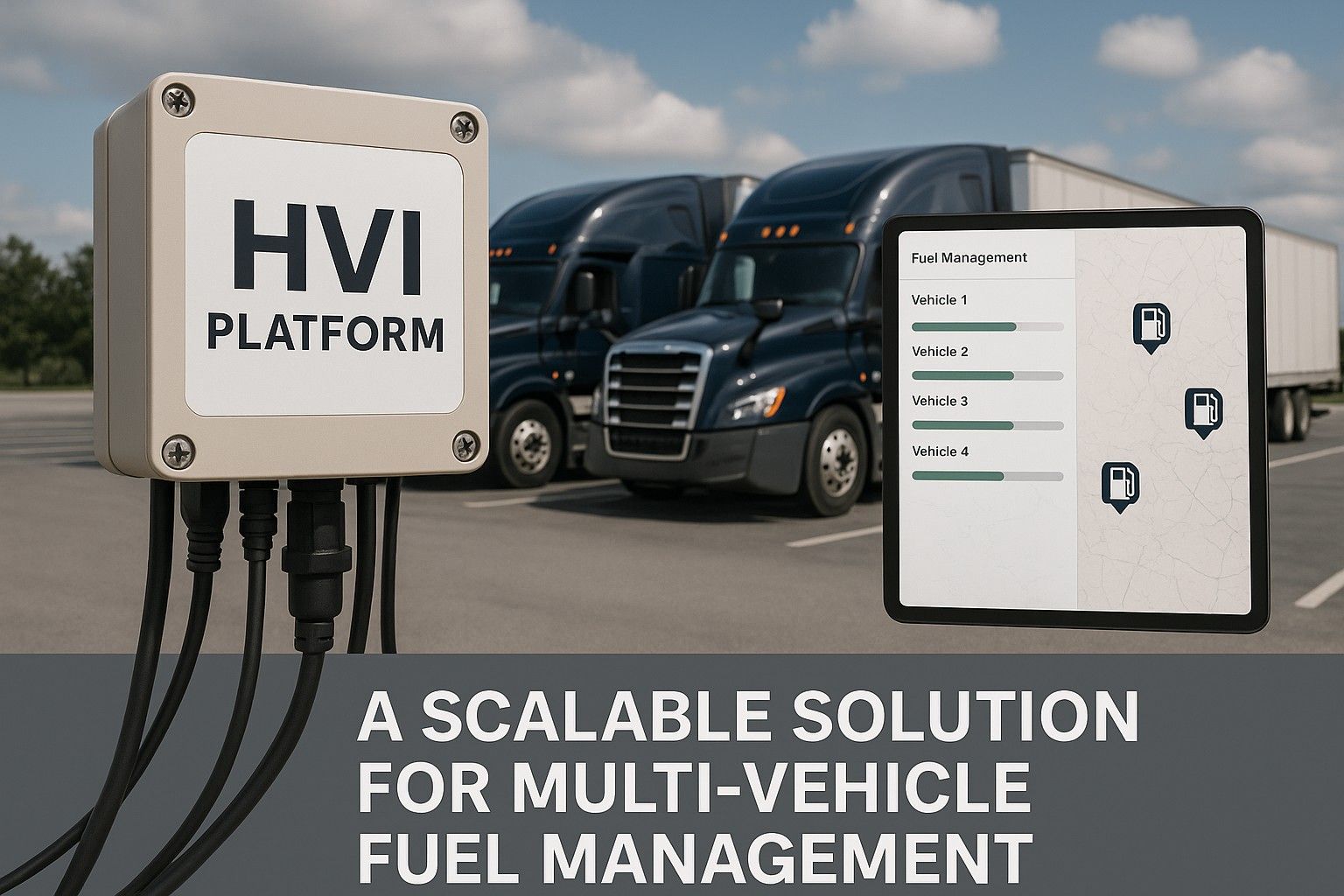
Fleet fuel management challenges cost US construction companies an average of $85,000 annually per 15-vehicle fleet, with inadequate monitoring systems creating 35% higher fuel expenses and operational inefficiencies that impact project profitability. The HVI Platform represents a revolutionary approach to multi-vehicle fuel management, delivering scalable solutions that grow with expanding fleets while maintaining operational simplicity through single base unit architecture. Systematic HVI Platform implementation reduces fuel costs by 45%, eliminates fuel theft by 90%, and increases fleet efficiency by 60% while providing comprehensive monitoring capabilities that scale seamlessly from single machines to enterprise fleets spanning multiple job sites.
The Hidden Crisis: Multi-Vehicle Fuel Management Complexity
Modern construction operations depend on diverse vehicle fleets operating across multiple locations, where traditional fuel management approaches create operational blind spots that enable waste, theft, and inefficiencies. Multi-vehicle fuel management complexity escalates rapidly as fleets grow, with each additional vehicle exponentially increasing monitoring challenges and administrative overhead.
Fuel Theft and Unauthorized Usage
68% of construction fleets experience regular fuel theft costing $8,000-$25,000 annually per fleet, with inadequate monitoring enabling systematic fuel diversion that impacts project budgets and operational efficiency.
Administrative Overhead Explosion
Traditional fuel management requires 12-15 hours weekly administrative time per fleet, with manual tracking systems creating documentation burdens that scale exponentially with fleet size expansion.
Operational Visibility Gaps
Limited real-time fuel monitoring creates decision-making delays and prevents optimization opportunities that could reduce fuel consumption by 25-35% through systematic efficiency improvements.
Scalability Infrastructure Limitations
Legacy fuel management systems require individual hardware installations per vehicle, creating $15,000-$30,000 additional costs for each fleet expansion and complicating maintenance requirements.
Compliance Documentation Challenges
EPA and DOT regulatory requirements demand comprehensive fuel usage documentation, with inadequate tracking systems risking $50,000+ penalties and operational license restrictions.
Technology Integration Complexity
Disparate fuel monitoring systems prevent unified fleet visibility and require multiple software platforms that increase operational complexity and reduce management effectiveness by 40%.
The Financial Impact of Inadequate Fuel Management
Before implementing the HVI Platform, construction fleet operations experience significant inefficiencies that impact both operational performance and financial results:
- Fuel cost unpredictability consuming 25-30% more budget than optimized operations through theft, waste, and inefficient usage patterns
- Administrative overhead burden requiring dedicated personnel for fuel tracking and documentation, costing $35,000-$55,000 annually per fleet
- Operational decision delays preventing real-time optimization and causing 15-20% efficiency losses through reactive management approaches
- Compliance risk exposure with inadequate documentation creating potential penalties and operational restrictions that can cost $25,000-$100,000 per violation
- Technology fragmentation costs requiring multiple systems and vendors that increase complexity and reduce integration effectiveness by 50%
Foundation Elements: HVI Platform Architecture and Scalability Framework
The HVI Platform revolutionizes multi-vehicle fuel management through innovative single base unit architecture that eliminates traditional scalability limitations while providing comprehensive monitoring capabilities that grow seamlessly with expanding fleet operations.
Core Platform Components and Scalability Design
HVI Platform scalability architecture integrates advanced sensor networks, intelligent data processing, and unified management interfaces into a cohesive system that maintains operational simplicity regardless of fleet size or geographic distribution.
Single Base Unit Architecture
Revolutionary design enabling one base unit to manage up to 50 vehicles simultaneously, eliminating traditional hardware multiplication requirements and reducing installation costs by 75% compared to individual system approaches.
Multi-Sensor Management System
Advanced sensor coordination enabling comprehensive monitoring across diverse vehicle types through standardized interfaces that adapt to different fuel systems and operational requirements automatically.
Intelligent Data Processing Hub
Centralized analytics engine processing real-time data from multiple vehicles, identifying patterns, detecting anomalies, and generating optimization recommendations through machine learning algorithms.
Unified Management Interface
Comprehensive dashboard providing fleet-wide visibility, individual vehicle monitoring, and operational analytics through intuitive interfaces that scale from single operators to enterprise management teams.
Advanced Digital Integration and Automation Capabilities
Smart Platform Integration and Predictive Analytics
HVI Platform integration capabilities extend beyond basic fuel monitoring to incorporate predictive analytics, automated optimization, and intelligent alert systems that maximize efficiency while minimizing operational complexity across growing fleet operations.
Real-Time Fleet Monitoring
Continuous fuel consumption tracking across all vehicles with instant anomaly detection, theft alerts, and efficiency monitoring that provides immediate visibility into operational performance and cost optimization opportunities.
Automated Compliance Documentation
Intelligent documentation generation meeting EPA, DOT, and insurance requirements through automated report creation, audit trail maintenance, and regulatory compliance verification across all fleet vehicles.
Predictive Optimization Analytics
Advanced algorithms analyzing consumption patterns, operational efficiency, and cost optimization opportunities to recommend fuel management strategies that reduce expenses by 25-40% through systematic improvements.
Integrated Alert and Response Systems
Comprehensive notification framework providing instant alerts for fuel theft, unusual consumption patterns, and maintenance requirements with automated response coordination that minimizes operational disruption.
Implementation Methodology and Best Practices
Phased Deployment Strategy for HVI Platform Implementation
HVI Platform implementation follows systematic deployment methodologies that minimize operational disruption while maximizing immediate benefits through proven installation processes and comprehensive support programs designed for growing businesses.
Phase 1: Infrastructure Assessment
Comprehensive fleet analysis including vehicle inventory, fuel management requirements, operational patterns, and scalability planning to customize HVI Platform configuration for optimal performance and future growth accommodation.
Phase 2: Base Unit Installation
Professional installation of single base unit with sensor deployment across initial vehicle subset, system configuration, and connectivity establishment requiring 1-2 days with minimal operational impact.
Phase 3: Fleet Integration
Systematic sensor installation across remaining vehicles with real-time testing, calibration verification, and performance optimization ensuring accurate monitoring and seamless operational integration.
Phase 4: Optimization and Scaling
Performance monitoring, optimization fine-tuning, and preparation for future expansion with scalability planning that accommodates fleet growth without additional base unit requirements.
Training and User Adoption Excellence
HVI Platform user adoption success depends on comprehensive training programs and intuitive interface design that enables immediate productivity while supporting long-term operational excellence across diverse user groups.
Operator Training Program
Role-specific training for equipment operators, fleet managers, and administrative staff covering system operation, monitoring procedures, and optimization strategies through hands-on instruction and certification programs.
Management Dashboard Training
Executive and supervisory training focused on analytics interpretation, performance monitoring, and strategic decision-making capabilities enabled by comprehensive fleet visibility and reporting features.
Technical Support Integration
Comprehensive technical support including remote monitoring, troubleshooting assistance, and system optimization guidance ensuring maximum platform effectiveness and minimal operational disruption.
Continuous Improvement Program
Ongoing optimization support including performance analysis, efficiency improvement recommendations, and platform enhancement updates that maintain competitive advantage and operational excellence.
Start your HVI Platform transformation with expert implementation support
Getting Started Book a DemoAnalytics and Performance Monitoring Capabilities
Advanced Analytics Dashboard and KPI Tracking
HVI Platform analytics capabilities transform raw fuel consumption data into actionable business intelligence that enables data-driven decision-making, cost optimization, and strategic fleet management across operations of any size.
Real-Time Performance Dashboards
Comprehensive fleet visibility providing instant access to fuel consumption patterns, efficiency metrics, and cost analysis across all vehicles with customizable reporting for different organizational levels and operational requirements.
Predictive Cost Analysis
Advanced forecasting capabilities analyzing historical data and operational patterns to predict fuel costs, identify optimization opportunities, and support strategic budget planning with 90%+ accuracy rates.
Efficiency Optimization Recommendations
Intelligent analytics identifying specific improvement opportunities, operational adjustments, and strategic changes that can reduce fuel consumption by 25-45% through systematic implementation of data-driven recommendations.
Compliance and Audit Support
Automated documentation generation providing comprehensive audit trails, regulatory reporting, and compliance verification that meets EPA, DOT, and insurance requirements while reducing administrative burden by 80%.
ROI and Operational Excellence Outcomes
Quantifiable Financial Benefits and Cost Optimization
HVI Platform implementation delivers measurable financial returns through multiple value streams that extend beyond direct fuel savings to encompass administrative efficiency, operational optimization, and scalability benefits that grow with expanding fleet operations.
Operational Excellence and Competitive Advantages
Comprehensive HVI Platform deployment creates operational advantages that enhance competitive positioning through improved fuel efficiency, predictable cost management, and scalable infrastructure that supports sustainable business growth.
- Simplified fleet expansion with single base unit architecture enabling cost-effective growth without infrastructure multiplication or complexity increases
- Enhanced operational visibility providing real-time fleet-wide insights that improve decision-making and optimize resource allocation across all operational levels
- Reduced administrative overhead through automated monitoring and documentation eliminating 80-90% of manual fuel management tasks and associated labor costs
- Improved regulatory compliance with automated documentation and reporting ensuring consistent adherence to EPA, DOT, and insurance requirements
- Enhanced cash flow predictability through accurate fuel cost forecasting and systematic waste elimination that stabilizes operational budgets
Compliance and Regulatory Alignment
Regulatory compliance requirements make systematic fuel management essential for construction operations, with EPA environmental standards, DOT transportation regulations, and insurance policy requirements demanding comprehensive monitoring and documentation capabilities.
EPA Environmental Compliance
Environmental protection standards requiring fuel usage monitoring and emission documentation, with HVI Platform ensuring regulatory adherence and supporting sustainability reporting requirements that reduce violation risks.
DOT Transportation Regulations
Department of Transportation requirements for commercial vehicle fuel management and documentation, with automated compliance tracking preventing violations and supporting audit requirements.
Insurance Policy Requirements
Insurance carrier mandates for systematic fuel monitoring and theft prevention programs, with HVI Platform documentation reducing premiums and supporting claim validation through comprehensive tracking records.
Tax and Financial Reporting
IRS and state tax requirements for accurate fuel expense documentation, with automated reporting capabilities ensuring compliance and supporting tax optimization strategies through detailed consumption tracking.
Future Outlook and Innovation Roadmap
The HVI Platform development roadmap continues expanding capabilities with emerging technologies that promise enhanced efficiency, automated optimization, and intelligent fleet management features that will further improve operational performance and cost effectiveness.
Artificial Intelligence Enhancement
Advanced AI algorithms providing enhanced consumption prediction, automated optimization recommendations, and intelligent anomaly detection based on complex operational pattern analysis and machine learning capabilities.
IoT Ecosystem Integration
Expanded Internet of Things connectivity enabling comprehensive equipment monitoring, environmental sensors, and operational optimization through integrated data streams and unified management platforms.
Blockchain Documentation
Immutable fuel management records and compliance documentation providing enhanced audit capabilities, regulatory verification, and fraud prevention through distributed ledger technology integration.
Autonomous Fleet Integration
Future-ready architecture supporting autonomous vehicle integration, intelligent routing optimization, and automated fuel management decisions that maximize efficiency across next-generation construction equipment.
Frequently Asked Questions
Ready to transform your fleet fuel management with the scalable HVI Platform?
Getting Started Book a Demo