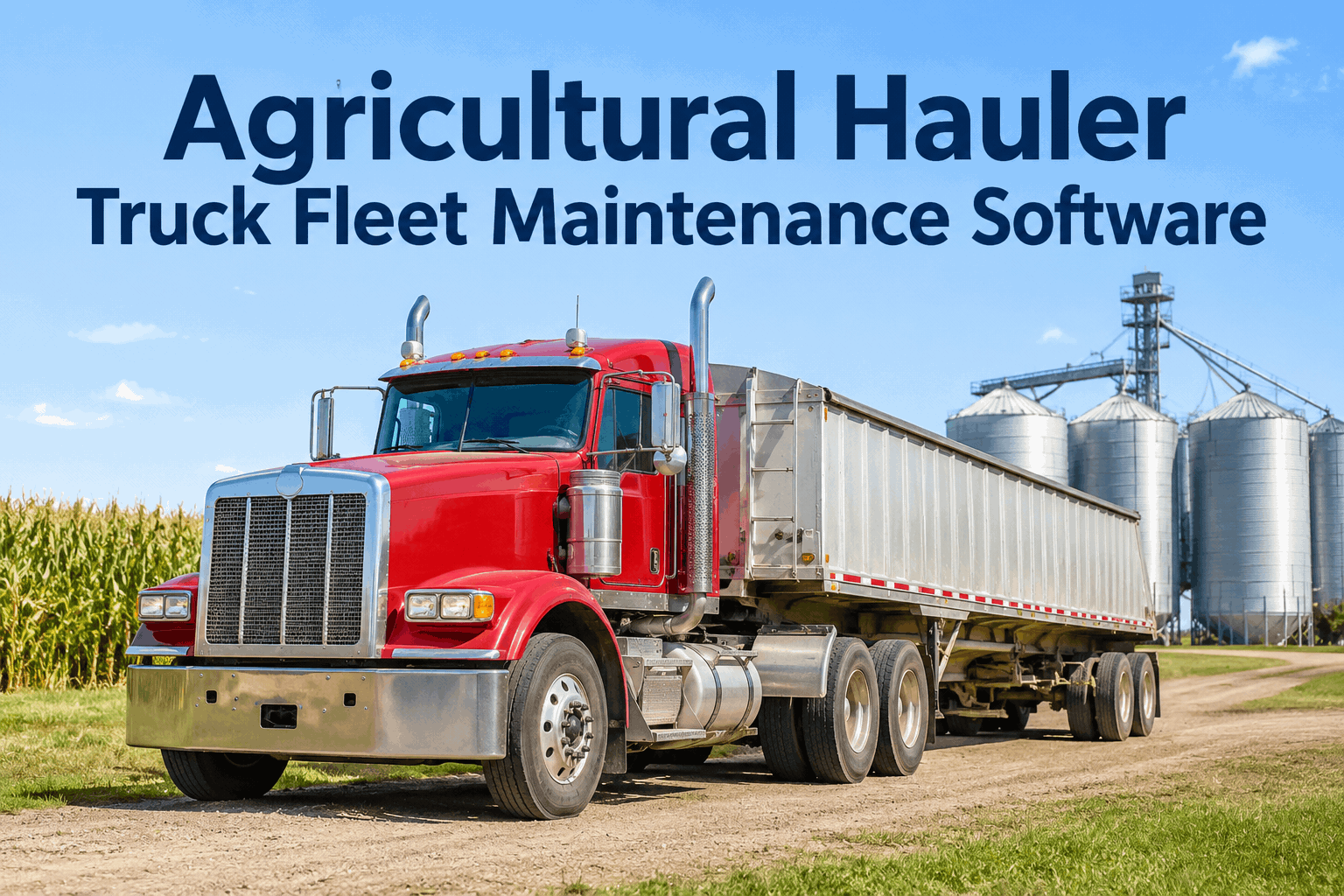
6 a.m., first day of harvest, and the grain cart's already backed up at the bin — but your newest hopper-bottom straight truck won't build air pressure. It sat in the shed since November and nobody checked the lines. Agricultural hauler fleet maintenance software is built for exactly this morning: every truck inspected and road-ready before the first load, not after it's stuck at the scale house. Book a demo to see it on your hauling fleet
Built for the 90 Days a Year Your Trucks Can't Afford to Sit
Digital pre-trip inspections for grain trucks, hopper and livestock trailers, defects that route straight to a work order, and preventive maintenance tied to real mileage — not a season you hoped to remember.
A truck that sat all winter isn't a truck that's readywhy pre-season readiness is the real agricultural truck maintenance problem
A grain hauler doesn't wear out like an over-the-road truck. It sits parked in a shed for months, batteries drifting flat and brake lines seizing, then gets asked to run loaded at or over weight on gravel roads for ten or twelve hours a day for as long as the crop keeps coming. The wheel seal that was already weeping in April is the one that lets go on a loaded run in September — and nobody wrote it down anywhere a shop could act on it.
This is where most ag hauling outfits are still running on a spiral notebook or a driver's memory, which works fine until the person who noticed the loose U-bolt isn't driving that truck this week. A connected digital inspection puts the same checklist in front of every driver, every truck, every day — so a flagged defect doesn't depend on who happened to notice it.
Pre-season prep vs. rolled out on hopewhat separates a truck that finishes the season from one that doesn't
- Battery, brake lines & hoses checked after storage, not assumed fine
- Hopper doors, augers & hoist cycled and greased before the first load
- Tire pressure and tread set for gross weight, not highway-empty weight
- Every defect logged and closed before the truck leaves the yard
- "It ran fine last year" stands in for an actual inspection
- A sticking hopper door gets forced open by hand, not fixed
- Low tire pressure isn't caught until it's a blowout on gravel
- Small defects pile up until one parks the truck mid-harvest
Start a free trial and load your grain-truck checklist before next season
The six systems a generic checklist misseswhat an agricultural hauler inspection actually needs to cover
A standard DOT walkaround form was written for a dry van, not a hopper-bottom grain truck or a stock trailer. These are the systems that actually take down an ag hauler.
Brakes & tires
Running at or near gross weight on gravel punishes brakes and sidewalls fast. Pad wear, air lines, pressure set for load — not an empty truck.
Hopper doors & hoist
Trap-door actuators, hinge pins, and the hydraulic hoist sit unused all off-season and seize or weep until they're cycled and checked.
Electrical & lighting
Trailer harnesses and marker lights corrode in storage. A dead light at dusk on a loaded grain run is a roadside stop you didn't need.
Engine, DPF & cooling
Hours idling at the elevator and dust-clogged radiators are routine. DPF regen discipline and a clear cooler keep it running past September.
PTO & driveline
Auger and hoist PTOs, U-joints, and grease points that only matter on hauling equipment — easy to skip on a form built for a dry van.
Trailer frame & coupler
Hopper trailer cross-members and the fifth-wheel or pintle coupler take a beating off-road. Cracks and worn pins get caught early.
HVI lets you configure the inspection template per truck and trailer type. Book a demo to see an ag-hauler template built for your fleet
From flagged defect to closed work orderhow agricultural hauler fleet maintenance software works day to day
Paper catches the weeping wheel seal and loses it in a truck cab somewhere. A connected system turns the same flag into tracked work — and keeps the record for your insurance file or the DOT auditor who shows up at the worst time.
-
1
Driver runs the pre-trip on a phone
An ag-hauler checklist — brakes, tires, hopper gear, lights, PTO — walked in minutes before the first load, with photos, even out of cell range at the field edge.
-
2
A defect is logged with photo & severity
A sticking trap door, a weeping seal, a dead marker light gets flagged and timestamped, tied to that exact truck's record.
-
3
It becomes a work order in one tap
The flag converts into a work order with the photo attached, assigned immediately — while the truck's still in the yard.
-
4
Parts, labor & sign-off recorded
Parts pulled from stock deduct against inventory and link cost to the job; the tech signs off on-site.
-
5
It lands in that truck's history
Every inspection and repair feeds cost-per-mile reporting, so you know which truck earns and which drains.
Preventive maintenance that follows the truck, not the calendarmileage-based PM scheduling for agricultural hauling fleets
A truck logging 40,000 miles a year and one logging 8,000 in a short harvest window wear out on different clocks. Meter-based PM scheduling ties service to the truck's actual odometer instead of a date on a calendar.
Battery, brake & air-line check, hopper gear cycled and greased, fluids and leaks before the truck leaves the shed.
Oil, fuel & air filters, brake pad measurement, tire rotation, DPF check — the interval most harvest trucks hit mid-season.
Full driveline & hydraulic inspection, fluid sample, wheel-end and U-joint check, diagnostic scan.
Fuel stabilizer, battery disconnect or maintainer, grease every fitting, documented condition before it sits.
The grain hauler pre-trip checklistwhat every agricultural hauling inspection should cover before the first load
The walkaround that separates a truck that finishes harvest clean from one that costs you a day at the worst time. In HVI it's a guided digital template — tick, flag, photo.
Covered-farm-vehicle rules can exempt a grain truck from some FMCSA requirements within roughly a 150 air-mile radius of the farm — worth confirming per load, since equipment condition requirements never go away. See the full exemption rules here. This checklist is the single highest-leverage thing you can put on every driver's phone this season. Book a demo and see it live on one screen
From a farm transport manager who runs the harvest fleet
We run eleven trucks and most only really work ninety days a year, so for a long time nobody wanted to spend time on a truck parked the other nine months. That thinking cost us — a hopper door seized up on day two of harvest two years back and we lost half a day finding a part for a truck that should've been checked before it left the yard.
Now every driver runs the same inspection before the first load, every day, and anything flagged is a work order before the truck's even loaded. We still run old trucks hard for ninety days, but we go into the season knowing what shape they're in instead of hoping.
What it's actually worth to get ahead of the seasonthe payback case for agricultural hauler maintenance software
Frequently asked questions
What is agricultural hauler fleet maintenance software?
It's a mobile-first digital inspection and maintenance system built around grain trucks, hopper trailers, and livestock haulers, so defects get flagged with photos and routed straight to a work order instead of a notebook. Book a demo to see it on your trucks.
How is maintaining a grain truck different from a regular semi?
A grain truck adds hopper doors, a hydraulic hoist or auger, and long off-season storage into the mix — systems a generic over-the-road checklist skips but that cause most seasonal breakdowns.
Do farm trucks need DOT inspections?
Covered farm vehicles can be exempt from some FMCSA rules within roughly a 150 air-mile radius of the farm, but equipment condition requirements still apply. See the full exemption rules here.
When should preventive maintenance run on a seasonal hauling truck?
By mileage or engine hours, not a calendar date — a pre-season check out of storage, mid-harvest service around 25,000 miles, and off-season storage prep when it parks again.
Can this work offline out in the field?
Yes. Drivers can complete inspections at the field edge or bin site without signal, and the record syncs once the phone picks up coverage. Start a free trial to try it on your route.
Get your hauling fleet ready for the next season, not just this one
HVI gives every driver a grain-truck-specific inspection, routes flagged defects straight to a work order with photos attached, fires PM on real mileage, and keeps one cost-tracked record per truck. Live on your fleet in under two weeks.
- Grain-truck & trailer pre-trip inspections
- Defect → work order in one tap
- Mileage-based PM, pre- & off-season tiers
- One cost-tracked record per truck