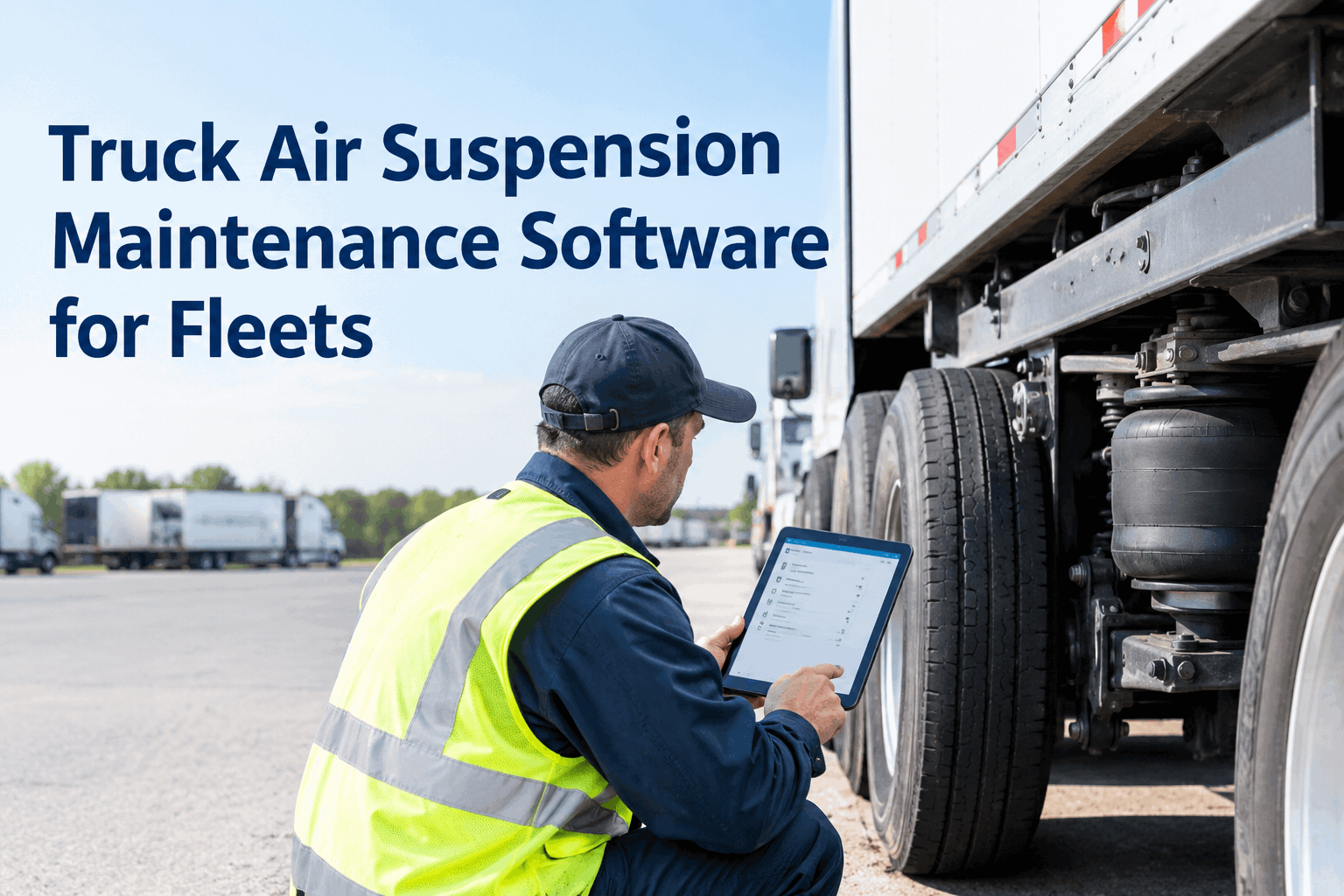
Walk the yard early enough and you'll spot it before anyone tells you: one truck sitting a little lower on the driver's side, trailer deck tipped just enough to notice. A deflated air bag doesn't announce itself — it just lets the frame settle closer to the tire until a driver mentions "it rides rough" or an inspector notices the gap looks wrong. Truck air suspension maintenance software exists to catch that sag on a phone screen during a pre-trip, before it's a roadside out-of-service order. See ride-height tracking on your fleet
An Inch Is the Whole Ballgame on Air Suspension
Most OOS criteria for air suspension trigger around an inch below spec — close enough that a driver's eye isn't a reliable check. HVI makes ride height, air bag condition, and leveling valve function a tracked, photo-backed part of every inspection.
Ride height matches the manufacturer's spec on both sides — the bag is doing its job and the axle sits where it should.
Frame sits roughly an inch or more below spec — the point where many air suspension OOS criteria kick in at roadside.
Air suspension maintenance software earns its keep right here, on the measurement a driver can't reliably eyeball from the cab. The difference between "rides a little firm" and "out of service" is often one inch, measured frame-to-axle, and that number only means something if someone's actually recording it — truck to truck, side to side, week to week — instead of trusting a glance across the yard.
Why suspension gets flagged at roadsidewhat the 2026 numbers say about steering & suspension checks
A single deflated air bag rarely shows up alone on the citation sheet — a truck running low on one corner wears tires unevenly, stresses the leveling linkage, and can let the frame rub a brake line or exhaust component it was never meant to touch. Catching the bag is cheap. Catching everything it damaged on the way down isn't. Book a demo to see ride height tracked per axle, per truck.
What actually fails in an air suspension systemthe components a truck air bag inspection checklist has to cover
Air bags / air springs
Cracks, chafing, dry rot, or a slow leak at the bead plate. The first thing to deflate and the first thing a ride-height check catches.
Height control / leveling valve
A stuck or disconnected linkage holds the wrong air pressure even with a perfectly good bag — a check that's easy to skip because the bag looks fine.
Shocks & bushings
Worn shocks let the axle bounce instead of ride, accelerating wear on everything else in the system, including the bag itself.
Air lines & fittings
A chafed line or a loose fitting bleeds pressure slowly — often the real cause behind a "bag that keeps going flat."
U-bolts, brackets & mounts
Loose or cracked mounting hardware lets the axle shift under load — rare, but serious enough to be its own out-of-service criterion.
Trailer axle suspension
Trailers carry their own air bags and leveling valves — frequently skipped because the tractor pulling them looks fine.
Every one of these is a line item HVI lets you build into a custom inspection checklist — per tractor, per trailer, with photo capture on anything flagged. Start free and load your own suspension checklist today.
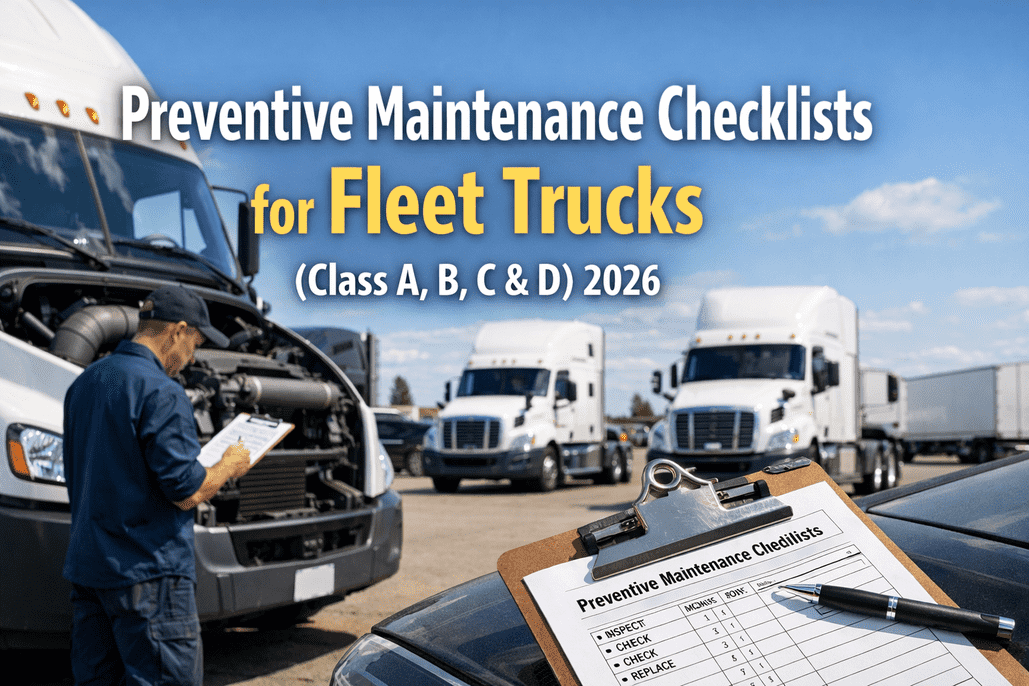
The air suspension & ride-height inspection checklistwhat a thorough truck air bag check covers, tractor and trailer
Ride height measured, both sides
Compared against manufacturer spec, not eyeballed against the truck parked next to it.Air bags checked for cracks & chafing
Especially at the bead plate and anywhere the bag can rub against the frame.Leveling valve linkage intact
Arm connected, not bent, not corroded seized — a disconnected link holds the wrong height silently.Listen & feel for air leaks
A hiss at a fitting or a bag that's noticeably softer after idle time, logged, not ignored.Shocks checked for leaks & play
Oil residue down the shock body or excess bounce on a push test.U-bolts & mounting hardware torqued
Loose or cracked hardware is its own out-of-service condition, separate from the bag.Frame & axle clearance checked
No contact with brake lines, exhaust, or the frame itself from a settled corner.Trailer suspension checked separately
Trailer bags and valves get their own line — not assumed fine because the tractor is.This checklist, built for tractor and trailer air suspension, ships ready to load into HVI — start free and run it on your fleet this week.
From a flagged bag to a closed work orderwhy a digital ride-height check beats a driver's guess
-
1
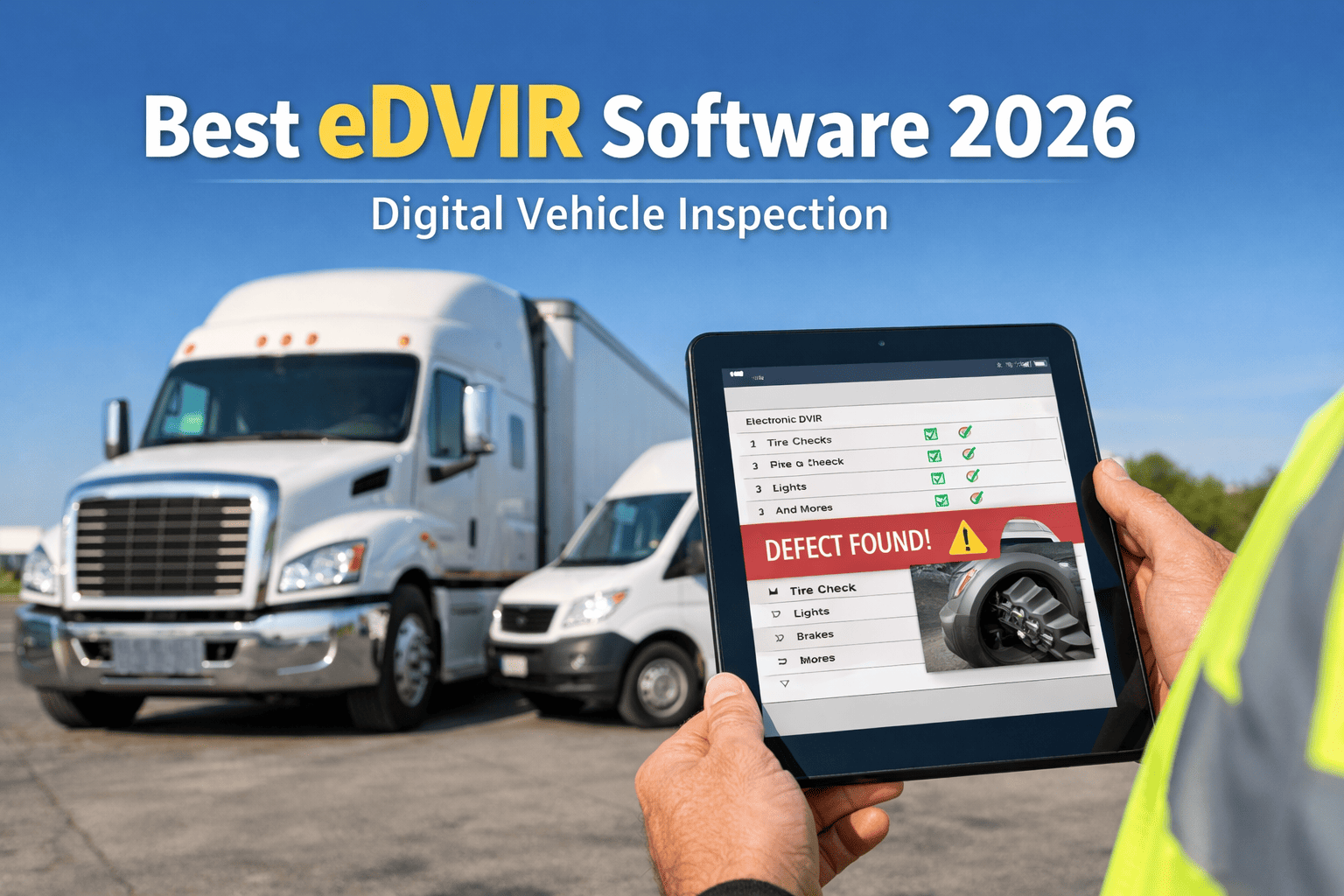
Driver checks ride height on the pre-trip
A guided prompt on the DVIR app asks for a measurement or a visual comparison against the baseline photo.
-
2
A low reading gets flagged with a photo
Below spec, it's logged with severity — not described from memory back at the yard three hours later.
-
3
It becomes a work order automatically
The flag turns into a work order with the photo and truck attached, assigned before the shift ends.
-
4
The fix & new height write to the record
Part replaced, height re-measured, closed — and it all feeds cost-per-truck reporting for that axle going forward.
Where suspension checks sit in the PM schedulebuilding ride height into preventive maintenance, not just pre-trips
Quick visual ride-height comparison and a listen for air leaks — part of the daily DVIR, not a separate task.
Ride height measured at each corner against spec, leveling linkage inspected, shocks and bags checked for wear.
Mounting hardware torqued, air lines traced end to end, and findings documented alongside the annual inspection record.
HVI fires the PM-level suspension check automatically on mileage or calendar interval through preventive maintenance scheduling, and parts used — a bag, a valve, a shock — pull straight from inventory and attach their cost to the job. Book a demo to see these intervals set for your models.
From a maintenance manager who used to chase sagging corners
We had a truck that kept coming back with the same complaint — "rides rough on the right." Three times we checked the bag, found nothing obvious, sent it back out. Turned out the leveling valve linkage had worked loose, so the bag was fine but never got told to fill properly. By the time we caught it, it had worn through a set of tires we didn't need to replace.
Now ride height is a number on the inspection, not a driver's impression. If a corner's low, it's flagged with a photo before the truck leaves, and the work order already knows which axle to check first. We stopped guessing, and we stopped losing tires to a problem that should've taken ten minutes to catch.
Want the same ride-height tracking on your fleet? Book a 20-minute demo and see it set up on your trucks.
Frequently asked questions
What is truck air suspension maintenance software?
It's a digital inspection and work order system built to track ride height, air bag condition, and leveling valve function per truck and trailer, flagging anything out of spec before it reaches roadside or causes further damage.
How is ride height checked during an inspection?
A measurement from frame to axle is compared against the manufacturer's specification, usually at each corner. HVI's checklist prompts drivers for this reading or a visual comparison against a baseline photo.
How low does ride height have to drop before it's an out-of-service issue?
Thresholds vary by criterion, but many air suspension out-of-service conditions trigger around an inch or more below the manufacturer's specified height, which is why a tracked measurement matters more than a visual guess.
Does it track trailer air suspension separately from the tractor?
Yes. Trailers get their own inspection checklist and PM schedule in HVI, since trailer air bags and leveling valves are frequently skipped when only the tractor is checked.
What happens after a defect is flagged?
The flagged defect converts into a work order automatically, with the photo and truck details attached, so a sagging bag or stuck valve gets scheduled for repair instead of noted and forgotten.
Stop finding out a bag was low from an inspector instead of a driver
HVI builds ride height and air suspension checks into every pre-trip and PM service, flags anything out of spec with a photo, and tracks it to a closed work order — for the tractor and every trailer behind it. Live on your fleet this week.